Facing the challenges of aligning development demands with sustainability policies, researchers from FGV EAESP (São Paulo School of Business Administration), alongside the international non-governmental organization ICLEI (Local Governments for Sustainability) and other partners, have created the Green and Blue Infrastructure Guide. The objective is to provide a step-by-step guide on how to make cities sustainable, focusing on improving local governance across three key factors: food, water, and energy.


According to the lead researcher of the project, José Puppim, unplanned, rapid urbanization, climate change, and biodiversity loss can lead to food insecurity and water and energy shortages, as the consumption of these three elements is expected to increase significantly in the coming decades, particularly in cities.
“These are some of the issues of greatest concern to the global population today, and they could have major consequences in the coming years, especially within cities,” stated Puppim.

The specialist notes that due to climate change and steadily growing demand, these resources have already left cities vulnerable to water, energy, and food crises. Therefore, the project aims to understand how better management of Green and Blue Infrastructure can prevent shortages of these resources.
Green and Blue Infrastructure
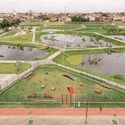
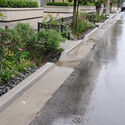
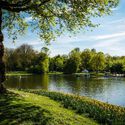
José Puppim explains that before considering the Guide, it is necessary to understand what these infrastructures are and why these elements were selected as parameters. "While green infrastructure is more focused on forests and urban agriculture, green roofs, street plantings, and area conservation, blue infrastructure is geared toward the urban water system, such as urban wetlands, lakes and ponds, urban rivers, coastal ecosystems like mangroves and bays, and the urban drainage system, among others."

The researcher also explains the importance of the three systems that make up the project: "A large increase in the consumption of food, water, and energy is projected over the next 50 years, and a significant portion of this consumption will come from cities. In terms of governance, it is clear that cities often have limited management over these systems," says Puppim. For instance, he points out that most food comes from outside cities, water systems are usually managed at the state level, and energy systems at the federal level. "It becomes clear that cities have little governance over these systems, which prevents them from managing 'green and blue infrastructure.'"

The Green and Blue Infrastructure (GBI) Guide proposes best governance practices in categories such as provisioning (water services, medicine, raw materials), regulation (local temperatures, carbon levels, water waste), and cultural (recreation, health, aesthetics), while also supporting the preservation of species and their habitats in cities. The "Food, Water, and Energy" themes covered in the GBI align with the United Nations Sustainable Development Goals (SDGs).
Applying the Solutions
The guide is aimed at communities, governments, leaders, and researchers. In total, 10 cities around the world were initially selected by researchers to implement different lessons in "Food, Water, and Energy." Subsequently, these lessons can be adopted by other cities with the help of the Green and Blue Infrastructure Guide.

More than 30 cities are expected to use the Guide. In Brazil, these include São José dos Campos (SP), which is deeply involved in using the tools, and Florianópolis (SC), which has already launched a new food security program based on this study.
More About the Guide
The development of the Green and Blue Infrastructure Guide was supported by JPI Urban Europe and the Belmont Forum—a program bringing together 30 funders and encompassing various projects to make cities sustainable through green and blue infrastructure. FGV’s participation in this Guide focuses on governance, specifically understanding how municipalities manage food, water, and energy systems, and how to improve resource management to reduce supply shortage risks and make cities more sustainable.
The study led by FGV is part of a larger project, IFWEN (Innovative Initiatives for Governing Food, Water, and Energy in Cities). This consortium is led by FGV EAESP and includes Yale University, Stockholm University (Stockholm Resilience Centre - SRC), ICLEI, Ming-Chuan University (Taiwan, China), and The Nature of Cities. It is funded by six research agencies, including the São Paulo Research Foundation (FAPESP) and the National Science Foundation (NSF).
Via CicloVivo.
This article was written by ArchDaily Team. The translation is powered by AI.