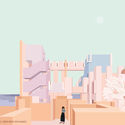


The history of architectural visualization has undergone numerous shifts over the centuries. Its intrinsic relationship with architecture itself has sparked expressions and critiques that, beyond serving as a tool for representing the inhabited world, directly influence how we perceive it and shape the production of the built environment. Every form of architectural representation—whether showcasing the final product or revealing the design process—is directly tied to a specific understanding of quality, class, interpretation, intention, and meaning. While certain trends may seem linked to specific artistic movements, each possesses its own biases, preferences, cultures, and economic, cultural, and personal impulses.
Today, it is fascinating to see how younger generations are increasingly adopting a perspective that borders on cinema and the arts. They construct scenes that are complemented and inspired by other disciplines, moving far beyond the boundaries of architecture itself. These visualizations open up the possibility of exploring the architectural process as an open-ended essay, giving rise to diverse possibilities and overt fictions that do not attempt to present themselves as real. At ArchDaily, we have explored the history of post-digital representation through various articles. However, there is still much to uncover about illustration, especially in a country like Mexico, where for thousands of years, visual language has been a fundamental pillar in structuring identity through stories that shape art, literature, painting, dance, and photography, among other disciplines.