
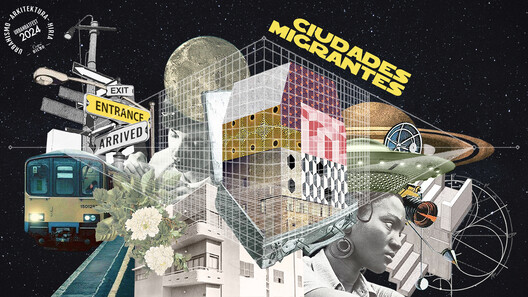
Migration has been a constant phenomenon throughout human history and has played a fundamental role in the formation and development of cities. While it may not appear to be a particularly novel approach at first glance, there are few topics more relevant today than migration, which is intersected by political, geostrategic, economic, environmental, and urban issues. Today, new structural factors are driving it with greater force than ever before. Instability in the Middle East, Africa, and Latin America, the war in Ukraine, climate change, poverty, and population growth only serve to increase the flow of people seeking a better place in the world.
Sociologist Saskia Sassen adds a new form of migration to that of immigrants fleeing political turmoil in their home countries or economic migrants seeking a better life in a new country. She refers to “economic refugees”—people fleeing what she calls “massive loss of habitat,” caused by economic activities such as corporate land grabbing for crops to feed the vast amount of meat consumed globally, or the resurgence of mining for the metals required for our electronic revolution. These activities cause desertification, soil and water pollution, droughts, and rising sea levels—all factors that are destroying the habitat of millions of people who will never be able to return home because their homes have either ceased to be habitable or have disappeared entirely.
