


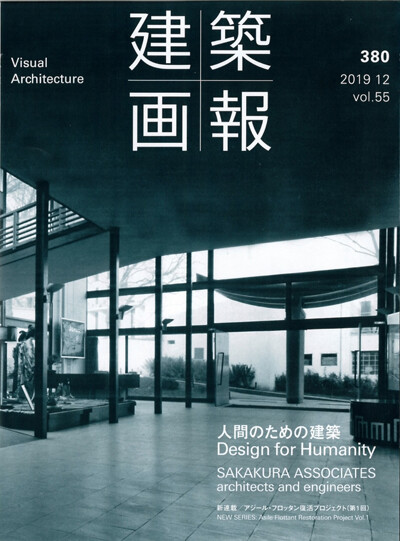
Junzo Sakakura was born in 1901 in Japan. After graduating from the liberal arts department of the First Higher School in Tokyo, he entered the Art History Department of Tokyo Imperial University, where he became interested in architecture. He resolved to study under Le Corbusier, who was then becoming known as a leader of the modern movement.
In 1929 he journeyed to France and at the recommendation of Le Corbusier enrolled in a course in architectural construction at college. From 1931 to 1936, he was an important member of the staff at Le Corbusier's atelier and participated in urban planning projects and the design of private houses.
After returning to Japan in 1936, Sakakura journeyed to France again to design the Japanese Pavilion at the 1937 Paris Exposition of Art and Technology, which received the architectural Grand Prix in 1937, gaining him worldwide recognition.
In 1940, he established his own office, SAKAKURA ASSOCIATES architects & engineers.
Seven alumni who have worked with Junzo Sakakura are interviewed about the theme of "Design for Humanity" which has been inherited by the Sakakura Associates since its founder, Junzo Sakakura. In addition to revealing the inner workings of this theme, the exhibition introduces representative works such as "Tsurugaoka Museum, Kamakura (The Museum of Modern Art, Kamakura / 1951)" and "Kanagawa Prefectural Office Building," as well as more recent works. In addition to contributions by Shuji Takashina (Director, Ohara Museum of Art) and Yoshiyuki Yamana (Professor, Tokyo University of Science), the book also contains a wealth of material for discussion, including an essay by Junzo Sakakura.
