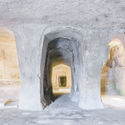
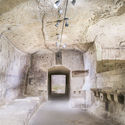
The Excavating Wilderness: A [re]Orienting Trajectory Across Central Park proposal by Syracuse University graduate Jeff Kamuda investigates the tensioning between natural wilderness and the built environment. With the rise of modern civilization, a fluctuating tenet between humans and nature can be observed in its reincarnation of the urban park. Situated in New York City’s Central Park, the project introduces a set of natural phenomena through a unique and atypical approach, which in turn serves to stimulate a dialogue between the individual, the park, the city, and the cosmos. Stretching a mile across Central Park from Grand Army Plaza at 59th street to the American Museum of Natural History at 77th Street, the triparted project achieves a dramatic juxtaposition of subterranean experience combined with elevated architecture. Read more after the break. read more »
subterranean
The Mine Plug proposal, by recent Louisiana Tech graduate Brandon Mosley, explores an innovative technique for appropriating a now defunct mine shaft in the once thriving city of Picher, Oklahoma. The city which peaked at a population of almost 20,000 during the mining boom of the 1900’s, has since suffered the inevitable after effects of such environmentally destructive activities. Designated as a superfund site in 1981 by the EPA, the state of Oklahoma began offering buyouts for residents to relocate in 2005. The remnants from years of lead and zinc mining have left mountains of waste called “chat” on the peripheries of the town, as well as contaminated water and over 14,000 underground voids that threaten the stability of the town above. Read more after the break. read more »