Luneburg University’s Libeskind Building / Daniel Libeskind

Courtesy of

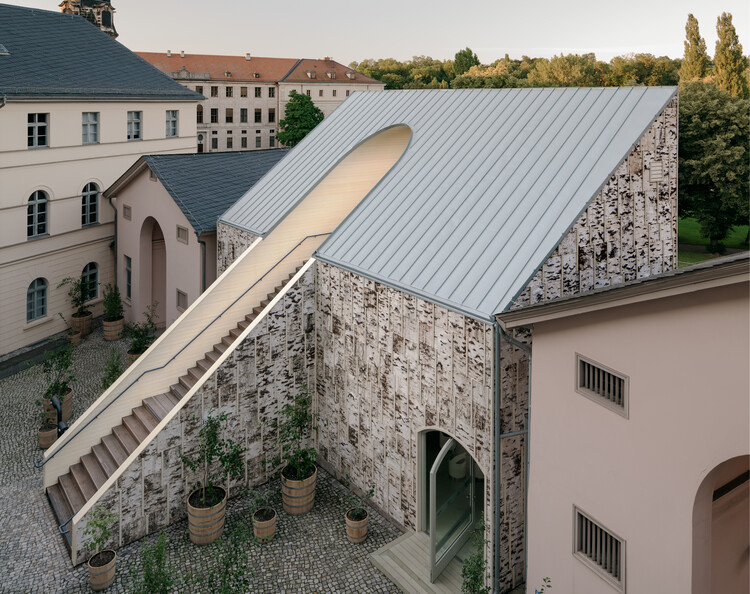
’s Lüneburg university wants to reinvent itself as an elite academic institution and is looking to generate buzz with a huge new building designed by star US architect Daniel Libeskind. Students and local politicians have criticized the ambitious plans, but construction is going ahead, now that funding has finally been secured. More images and description after the break.

Cognitive Cities Conference in Berlin

The Cognitive Cities Conference (#CoCities) aims to bring the vibrant global conversation about the future of cities to . We believe that collaboration and diversity lead to the best results. By inviting bright minds with different perspectives, it is our ambition to enable not only an in-depth exchange about the current state of affairs, but also to foster new projects and contribute to the ongoing global discussion.

We see CoCities as a platform for exchange and mutual inspiration. We invite urban planners, designers, technology geeks, environmental experts, public officials, urban gardening enthusiasts and cultural influencers to be part of the conversation. We can only make our cities more livable if we work together to improve them.
CoCities is a two-day event: Day 1 is a full-on conference (ticket required), Day 2 is dedicated to exploring the city through workshops, guided tours and exhibitions (free entry).

For more information click here.

Sharp Cut Workshop / Atelier st

© Bertram Bölkow

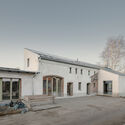
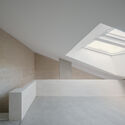
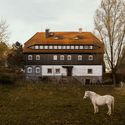
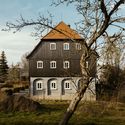
The architects began the design of Sharp Cut Workshop by referencing the characteristicly steep roofs by the surrounding historical buildings of the provincial town . The result is a sharp-angular construction body with five differently inclined roof surfaces that evolves from the surrounding environment.

More about this project after the break.

Architects: Atelier st
Location: Eibenstock,
Collaboraters: Ludwig Uphues, Luise Mayer
Structural Engineer: HHT Engineers
Client: Federal State Saxony
Project Area: 347 sqm
Project Year: 2010
Photographs: Bertram Bölkow

Plus-Energy House with Electromobility / ILEK

Visualization: © Stuttgart

ILEK at the University of Stuttgart has shared with us their winning proposal for the “Plus-Energy House with Electromobility” competition run by the German Federal Ministry of Transport. Learn more about this winning design and the ILEK after the break.

Westgarten / Stefan Forster Architekten

© Jean-Luc Valentin

Architects: Stefan Forster Architekten
Location: Frankfurt,
Project area: 2,352 sqm
Project year: 2002 – 2005
Photographs: Jean-Luc Valentin

Nhow Hotel / NPS Tchoban Voss

© Patricia Parinejad

Photographer Patricia Parinejad just shared with us the photographs she took to the Nhow Hotel in designed by NPS Tchoban Voss, with a huge cantilever and some colorful interiors by Karim Rashid.

Take a look at the complete photoset after the break.

AD Classics: Neviges Mariendom / Gottfried Böhm

©Yuri Palmin

When a miraculous engraving in copperplate of the Immaculata was brought to in the seventeenth century, it became a pilgrimage center for the religious.  Around 1960, the church decided that they wanted to construct a new building, starting a competition which would result in a new church amidst a Franciscan monastery and other late-baroque architecture. This led to a series of competitions, eventually won by architect Gottfried Böhm, although initially his design was not accepted as the judges thought it to be exaggerated and manneristic.

More on the Neviges after the break.

Lake House in Schrampe / Pfeiffer Architekten

Photo by Jens Rotzsch.

base Pfeiffer Architekten have designed a simplistic, yet elegant, weekend house on a waterfront site on Arendsee in Saxony-Anhalt.  Constructed using humble materials that allow the built to seamlessly become integrated with the natural, the residence takes advantage of its setting by offering great views of the wooded forests. The residence’s dominate pitch roof finds inspiration in the traditional cottages of the 1930s and gives the home a strong identity.

More images and more about the house after the break.

AD Classics: Jewish Museum, Berlin / Daniel Libeskind

© Mal Booth

In 1987, the government organized an anonymous competition for an expansion to the original Jewish Museum in that opened in 1933.  The program wished to bring a Jewish presence back to after WWII.  In 1988, Daniel Libeskind was chosen as the winner among several other internationally renowned architects; his design was the only project that implemented a radical, formal design as a conceptually expressive tool to represent the Jewish lifestyle before, during, and after the Holocaust.

The original Jewish Museum in Berlin was established in 1933, but it wasn’t open very long before it was closed during Nazi rule in 1938.  Unfortunately, the museum remained vacant until 1975 when a Jewish cultural group vowed to reopen the museum attempting to bring a Jewish presence back to Berlin.  It wouldn’t be until 2001 when Libeskind’s addition to the Jewish Museum finally opened (completed in 1999) that the museum would finally establish a Jewish presence embedded culturally and socially in Berlin.

AD Classics: Corbusierhaus / Le Corbusier

© Thomas Lewandovski

After World War II, post-war Europe was suffering from a lack of housing with many displaced people from the extensive bombing raids.  In response to the housing crisis in Europe, Le Corbusier began delving into designing large scale, communal residences for the victims of World War II. One of the most notable projects in this series was the Unite d’ Habitation in Marseilles, France. This project had inspired a continued implementation of the design type across Europe. The fourth building in the series is the Corbusierhaus in , . Completed in 1959, it was designed as a symbol for the modernization of after the war and the Cold War.

Wilhelminian Apartment / BERLINRODEO

© Adrian Schulz

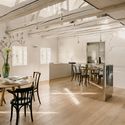
BERLINRODEO, a -based interior concepts office shared with us their renovation and conversion of a Wilhelminian apartment. More images and architect’s description after the break.

AD Classics: Dessau Bauhaus / Walter Gropius

© Thomas Lewandovski

Interested in creating a new form of design found at the intersection of architecture, art, industrial design, typography, graphic design, and interior design, was inspired to create an institution known as the at Dessau, with an emerging style that would forever influence architecture.

Initially a school in Weimar, growing political resentment forced the move to Dessau. Gropius took this as an opportunity to build a school that reflected his hopes for the education that would be had within it’s walls. The style of the Dessau facilities hints at the more futuristic style of Gropius in 1914, also showing similarities to the International style more than the Neo-classic style.

More on the Bauhaus after the break.

Hegau Tower / Murphy/Jahn

© Rainer Viertlboeck

Hegau Tower’s design is a direct result of close collaboration between architect and client; a clear modernist expression.

Located in , Germany, 20 km west of Lake Constance and in immediate proximity to the Swiss border, this design by Murphy Jahn is part of a larger development plan.  The redevelopment on the south side of the main train station is a representation of  the transition of this industrial town of roughly 45,000 people from production to service based businesses.

The building is full of highly functional and energy efficient details, including thermal mass activation and integration into the HVAC system, exterior flexible shading on southwest facing facades, natural ventilation, nighttime cooling, and daylight optimization.

More photographs after the break.

Architects: Murphy Jahn
Location:  Singen, Germany
Lead Designer: Helmut Jahn
Associate Architect: Riede Architekten, Fischer und Partner Architekten
Materials/Products: Clauss Markisen (exterior shades)
Structural Engineer: Werner Sobek Ingenieure
Mechanical Engineer: Transolar Energietechnik
Client: GVV Städtische Wohnungsbaugesellschaft
Project Area: 17,056 sqm
Project Year: 2008
Photographer: Rainer Viertlboeck

Exhibition Design: 800 years of Crosiers / HMGB Architects

© Christoph Rokitta

Architects: HMGB architects
Location: Rheine,
Photographs: Christoph Rokitta

AIA Chicago Distinguished Building Honor Award for the Field Chapel

© Brigida Gonzalez

In a very rare and prestigious occasion the students of the College of Architecture at Illinois Institute of Technology received the award for 2010 AIA Chicago Distinguished Building Honor Award.  The Field Chapel in Baden-Wurttemberg was part of Professor Frank Flury’s 2009 Design/Build studio.  Here you can check out our featured article about this project with photographs and sketches of the whole design/build process.

Jurors were quoted stating the following about the Field Chapel, ” we’re not able to contain our enthusiasm”, and “it’s such an honest building”.  One final juror noted that, “before I came here today, I didn’t want to see yet another building made out of sticks.  But I saw a great one here.”

Architects: Students of the College of Architecture at Illinois Institute of Technology
Location: Baden-Wurttemberg, Germany
Design Team: Jeffrey Burke, Andrew Clark, Carlie Douglas, Guanmin Hao, Kevin Kamien, Megan Lawler, Joseph Luciani, Juliana Masci, James Mellom, Milanko Milesic, Zhao Quian, John Ruffalo, Seth Ellsworth, Jeffrey Johnson
, Lexie Manke
Associate Architects: Ecker Architekten
General Contractor: Professor Frank Flury
Client: Lutheran Church of Bodigheim, Germany
Project Year: 2009
Photographs: Brigida Gonzalez

You can check the project on our previous article.

International Coffee Plaza / Richard Meier & Partners Architects

© Klaus Frahm

New York architects Richard Meier & Partners announced the opening of the new corporate headquarters for Neumann Kaffee Gruppe (NKG), the world’s largest green coffee service group located in ’s HafenCity. The site of the new building is a part of a redevelopment initiative of the post-industrial port into a business, commercial and cultural center. Overlooking the Sandtorpark, harbor basins and the traditional skyline of , the 12-story glass tower, now called Coffee Plaza, and its two adjacent office buildings, act as an anchor for the renovated harbor.

More information and images after the break.

RS+Yellow Distribution Centre / Bolles + Wilson

© Christian Richters

Architects: Bolles + Wilson
Location: Münster,
Partners in Charge: Prof. Julia Bolles-Wilson, Peter Wilson
Construction Supervision: Klaus Kuchenbuch
Client: Rainer Scholze
Project Area: 9,158 sqm
Project Year: 2008-2009
Photographs: Markus Hauschild, Rainer Mader, Christian Richters

Kaldewei Entrance Pavilion and Reception Rooms / Bolles + Wilson

© Rainer Mader

Architects: Bolles + Wilson
Location: Ahlen,
Project Managers: Prof. Julia B. Bolles-Wilson, Peter L. Wilson
Project Team: Andreas Polzer, Thomas Refflinghaus, Wojtek Kazmierski
Client: Franz Kaldewei GmbH & Co. KG, Ahlen
Structural Engineer: Ing.-Büro Pollmeier-Blume, Ahlen
Service Engineer: Ingenieurbüro Nordhorn, Münster
Project Area: 550 sqm
Budget: 1,2M Euro
Project Year: 2007
Photographs: Rainer Mader

Plasma Studio Nodal Landscapes Exhibition

In physics the term ‘plasma’ describes a particular state of matter in which energy is readily conducted through a material. Folding space into space, Plasma Studio draw landscapes into buildings, streets into facades, inside to outside.

The exhibition at the DAZ presents their characteristic approach within a jump in scale; from built projects in Europe to recent work-in-progress planning in China. It is the start of FORMULA_X, the new DAZ exhibitions series, dedicated to presenting architectural positions of the up-and-coming generation. In a triptych, three emerging offices will show their sustainable ideas and individual ways of working within the overlying theme of ‘Visions’.

The exhibition will open October 2 till November 14. For more information click here.

DLRG Lifeboat Station / Kunze Seeholzer

© Jann Averwerser

Architects: Kunze Seeholzer
Location: Lake Fasaneriesee,
Project Management: Landeshauptstadt München
Client: Landeshauptstadt München
Structural Engineering: CWK – Ingenieurbüro für Bauwesen
Landscape: Fischer Heumann Landschaftsarchitekten
Project Area: 196 sqm
Project Year: 2010
Photographs: Jann Averwerser

BIG’s proposal for the Audi Urban Future Award

“(Driver)less is more”, BIG’s proposal for the Audi Urban Future Award was one of the five finalists of the competition won by J. Mayer H. More images and architect’s description after the break.