William McDonough + Partners

BROWSE ALL FROM THIS PHOTOGRAPHER HERE

When It Comes to Sustainable Design, Architects Still Don't Get It

Subscriber Access | 

In the face of global doomsday predictions, sustainability has become one of the most crucial aspects of the 21st century, now playing a huge role in everything from politics to the way you dispose of your trash. Fortunately, most architects understand sustainability implicitly, and have adopted it into their lives and work. Or have they? In this article, originally published on Common Edge as "Why Architects Don't Get It," green building expert Lance Hosey highlights the failures of the architecture community in reaching their stated sustainability goals, and argues for a new conception of architecture in which good design and sustainable design are integrated.

A few years ago, the American Institute of Architects, the self-declared “voice of the architecture profession,” announced that "AIA members will no longer need to complete the sustainable design requirement to fulfill their AIA continuing education." Why? Because “sustainable design practices have become a mainstream design intention.” Hooray! If sustainability is “mainstream” now, and knowledge about it is no longer necessary “to maintain competency” and “to advance and improve the profession”—the purpose of continuing education, according to the AIA—then the profession must have met its environmental goals, and there’s nothing left to improve. Mission accomplished.

If only.
William McDonough Unveils ICEhouse™, The Next Step in the Circular Economy

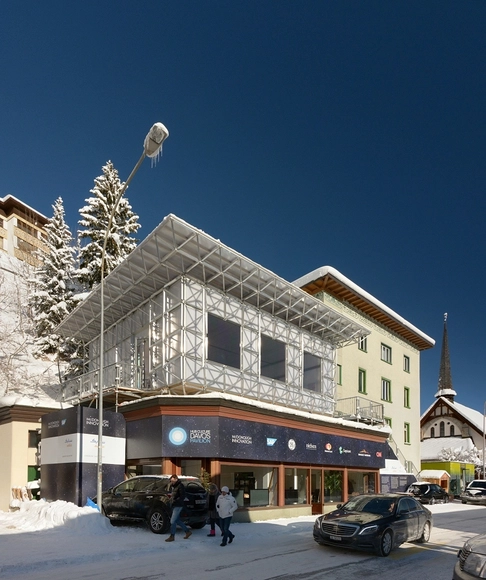
Designer William McDonough has unveiled the next step in cradle-to-cradle manufacturing: The Innovation for the Circular Economy house (ICEhouse) in Davos, Switzerland. The ICEhouse aims to show the “positive design framework described in the book Cradle to Cradle: Remaking the Way We Make Things, the sustainable development goals of the United Nations, and the reuse of resources implicit in the circular economy."

The house was used as a place of gathering and discussion for the World Economic Forum annual meeting. After being used for the week, the building will be disassembled and reconstructed elsewhere.

The Avant-Garde of Adaptive Reuse: How Design For Deconstruction is Reinventing Recycling

Subscriber Access | 

As an idea that was developed fairly early on in the movement for sustainability, and picked up significant traction a few years into the new millennium, "Design for Deconstruction" has been around for some years. Yet still, considered on the scale of building lifespans, the idea is still in its infancy, with few opportunities to test its principles. In this post originally published on Autodesk's Redshift publication as "Recycled Buildings or Bridges? Designing for Deconstruction Beyond Adaptive Reuse," Timothy A Schuler looks at the advances that have been made, and the challenges that still face, the design for deconstruction movement.

This summer, the Oakland Museum of California announced a new public arts grant program. Except instead of money, selected artists would receive steel. Tons of it.

The Bay Bridge Steel Program emerged out of a desire to salvage and repurpose the metal that once made up the eastern span of San Francisco’s Bay Bridge, originally constructed in 1933 (it was replaced in 2013). The steel in question, sourced from “spans referred to as ‘504s’ and ‘288s’ (in reference to their length in feet),” according to the application material, would be available for civic and public art projects within the state of California.

The program represents a unique opportunity to adaptively reuse infrastructure, upcycling what might have been waste. And yet any instance of adaptive reuse is inherently reactive because the design process is dictated by an existing condition.

The Avant-Garde of Adaptive Reuse: How Design For Deconstruction is Reinventing Recycling - More Images+ 4

William McDonough Designs Ultra "Clean" Manufacturing Facility for Method

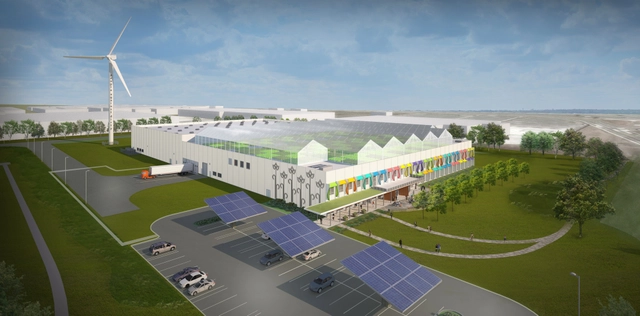
William McDonough + Partners has been selected to design Method’s first U.S. manufacturing facility on a brownfield site in Chicago’s historic Pullman community. The company, known for producing environmentally conscious cleaning products, commissioned McDonough to design an ultra clean, LEED Platinum facility constructed from Cradle to Cradle Certified materials and powered entirely by renewable energy.