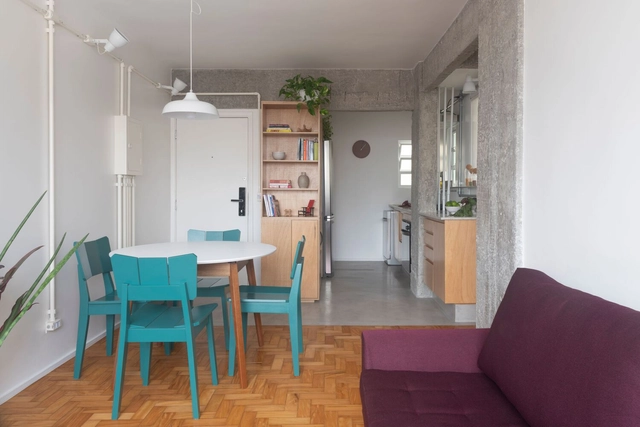
Apartamento Lanterna / COTA760




https://www.archdaily.com/976190/apartamento-lanterna-cota760Andreas Luco
Online Postgraduate Program in Sustainable Environmental Rehabilitation - Opening Webinar

With a 15-year history and over 550 trained professionals, the Reabilita postgraduate program is one of the longest-running distance learning specialization courses at the University of Brasília. The course is promoted by the Laboratory of Sustainability Applied to Architecture and Urbanism (LaSUS) at the Faculty of Architecture and Urbanism (FAU) of the University of Brasília (UnB). It is coordinated by Full Professor Marta Romero, a leading authority in bioclimatism who has published numerous books and scientific articles on the subject of Applied Sustainability.
https://www.archdaily.com/1051780/online-postgraduate-program-in-sustainable-environmental-rehabilitation-opening-webinarRene Submissions
Cancha House / Estúdio HAA!


-
Architects: Estúdio HAA!
- Area: 1130 ft²
- Year: 2019
-
Manufacturers: Azulejos Dani Melo, Compass Containers, MB Esquadrias de Aluminio, Rewood, Strufaldi
https://www.archdaily.com/976238/cancha-house-estudio-haaPilar Caballero
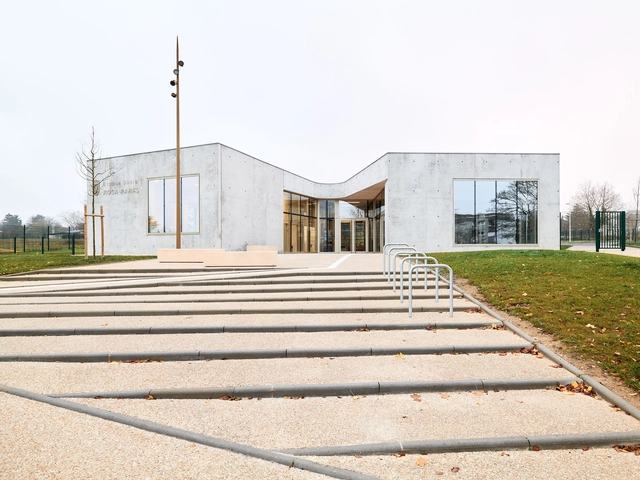
Rosa Parks Community Center / OVERCODE architecture urbanisme


-
Architects: OVERCODE architecture urbanisme
- Area: 648 m²
- Year: 2021
-
Professionals: INT3 TCE
https://www.archdaily.com/976250/rosa-parks-community-center-overcode-architecture-urbanismeValeria Silva
We Need to Talk About Homelessness

A person experiencing homelessness lacks shelter in its most basic form, but solving homelessness takes much more than buildings, and our contemporary moment reveals few problems that design, on its own, can resolve. According to the 2018 State of Homelessness in America report by the US Council of Economic Advisers, over half a million people in the US are homeless, with that number steadily increasing over the past three years—people living every day without this most basic form of protection that we as designers of our built environments provide.(1) In our own city of Austin, Texas, a 2021 report by the Ending Community Homelessness Coalition (ECHO) found that there are 3,160 Austinites experiencing homelessness, with more than 2,200 living without any shelter. (2)
https://www.archdaily.com/976277/we-need-to-talk-about-homelessnessRene Submissions
Principles of Sustainable Urbanism: Lecture Series

The Sustainable Urbanism course within the Graduate Program (PPG) at the Faculty of Architecture and Urbanism (FAU) of the University of Brasília (UnB) is pleased to invite you to discuss key premises of urban sustainability as applied to cities and communities.
https://www.archdaily.com/1050988/principles-of-sustainable-urbanism-lecture-seriesRene Submissions
Public Expose 8.32 Universitas Tarumanagara

The Architectural Undergraduate Study Program at Tarumanagara University presents an exhibition featuring 12 of the best works from the 32nd Final Project of Architectural Design Studio (STUPA). The implementation of STUPA 8 is based on a design studio and is carried out online for a full semester during the COVID-19 pandemic.
The main theme of TGA 8.32 this time is “Rethinking Typology”. Where Type is an abstract essence that can represent a group on the basis of the similarity of the original image. Because it is an essence, the application of type into a formal structure can also be shaped by local socio-cultural and economic factors, so that it appears as a model. Knowing the typologies of the building is very important because it will be a starting point for designing. 'type' as a continuous sequence of form and space, allows working quickly to define the parts of a unique design. Through the study of typologies, it will provide tactics and strategies in building continuity in the city. (Agustinus Sutanto)
Public Expose 8.32 is a Final Project exhibition for the Bachelor of Architecture Study Program, Department of Architecture and Planning, Faculty of Engineering, Tarumanagara University, Jakarta, Indonesia in Odd Semester 2021/2022. Each work in this exhibition tries to creatively find the type of design choice and apply it in the form of architectural designs. Each work tells how architecture plays a role in recognizing the role and development of type, so that it has the artistic ability to form a new typology.
Public Expose 8.32 virtual exhibition at Public Expose 8.32 website and open judging will be open to the public on February 11st, 2022 via Zoom
Juries:
- Prof. Yandi Andri Yatmo, S.T., M. Arch., Ph.D. (Professor of architecture at Universitas Indonesia)
- Vincent Heryanto, S.Ars., M.Sc. (Architectural Executive at DP Architects)
https://www.archdaily.com/976279/public-expose-2-universitas-tarumanagaraRene Submissions
Topless House / Avignon Architecte


https://www.archdaily.com/975995/topless-house-avignon-architecteValeria Silva
"It is Important to Give Authorship to the Public": An Interview With Urban Radicals
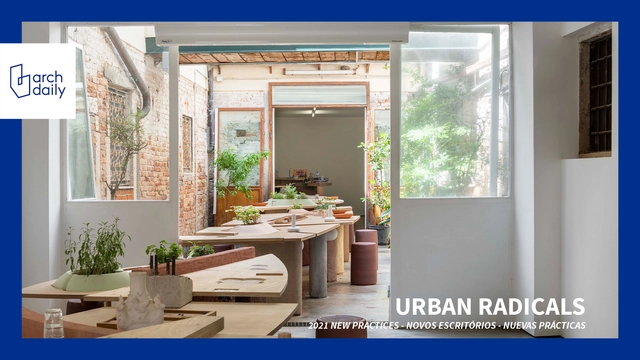
Urban Radicals is a design collective based in London, founded in 2019 by Era Savvides and Athanasios Varnavas. The practice operates at the intersection of multiple disciplines, exploring public space and the notion of collectivity across a variety of scales, contexts and design expressions. One of Archdaily's Best New Practices of 2021, Urban Radicals shrinks and grows organically through the projects, dissolving the boundaries between diverse fields of knowledge and circumventing traditional office structure to integrate a multiplicity of perspectives within architecture.


https://www.archdaily.com/976215/it-is-important-to-give-authorship-to-the-public-an-interview-with-urban-radicalsAndreea Cutieru
Hotel Terrestre / Taller de Arquitectura X / Alberto Kalach


-
Architects: Taller de Arquitectura X / Alberto Kalach
- Year: 2022
https://www.archdaily.com/976219/hotel-terrestre-taller-de-arquitectura-x-alberto-kalachAgustina Coulleri
Paul Clemence Captures Miami's Tallest Residential Building, the Elysee Edgewater by Arquitectonica
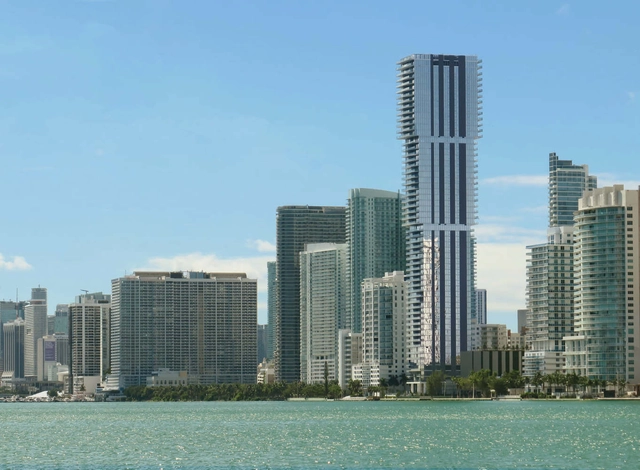
Miami’s long-awaited landmark, the Elysee Edgewater has finally reached construction completion. Designed by Arquitectonica, the 649-foot-tall glass tower features 57 storeys of luxury residences, as well as recreational and fitness amenities across its tiered floors. Architectural photographer Paul Clemence released images of the newly-completed tower, which now sits as the tallest residential building in the Edgewater district.


https://www.archdaily.com/976274/miamis-tallest-residential-building-captured-by-paul-clemenceDima Stouhi
House in Saint-Julien / ciguë


https://www.archdaily.com/976178/house-in-saint-julien-ciguePaula Pintos
Winy Maas and Theobert van Boven Lead the Transformation of Their Former High School

MVRDV founding partner Winy Maas and Theobert van Boven of Van Boven Architecten, two alumni of Gymnasium Beekvliet, are leading the transformation of their former highschool in the Dutch village of Sint-Michielsgestel. In addition to the renovation of the existing building, the design features a flowing, colourful extension accommodating a new auditorium, as well as art and culture facilities providing students with an engaging learning environment. The new structure features a printed façade showcasing artwork by Canadian visual artist Ian Kirkpatrick that provides a record of the school's 200 years of history while creating a new focal point for the school and region.
https://www.archdaily.com/976242/winy-maas-and-theobert-van-boven-lead-the-transformation-of-their-former-high-schoolAndreea Cutieru
450 Years of Houses in the United States
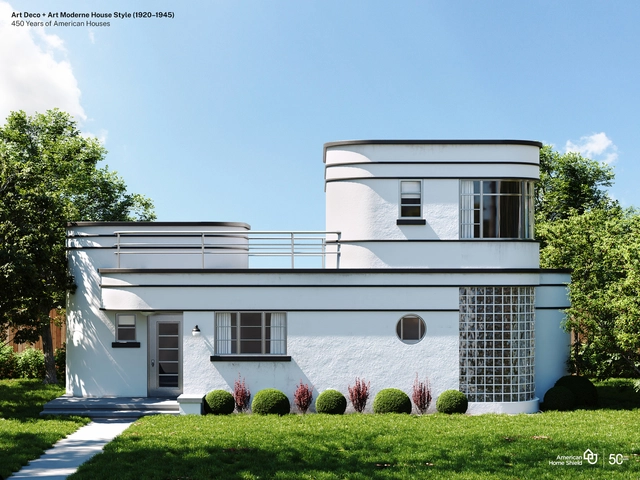
The history of architecture is made up of demographic, cultural, and social changes. In its relatively short history, American architecture has evolved with changes in the country, representing the catalog of various cultural influences that make up the United States as a whole. Many elements of American home design have remained intact over the past 450 years, reflecting longstanding American traditions and values that have stood the test of time.


https://www.archdaily.com/973982/450-years-of-homes-in-the-united-statesMónica Arellano
CAU seeks startup to develop database on architectural education and training
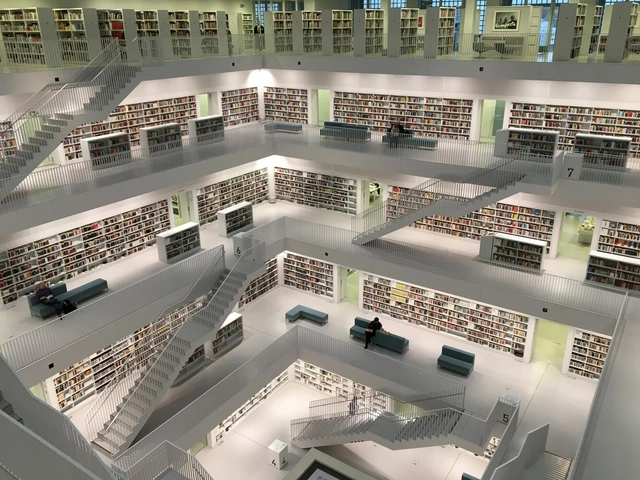
CAU Brasil is developing an Interactive Database for its Education and Training Commission. The project aims to collect, systematize, and qualitatively and quantitatively use data on education, training, research, and outreach activities in Architecture and Urbanism.
To develop this technology, CAU Brasil has launched a special bidding process to hire a software development startup. The estimated budget is R$ 100,000.
https://www.archdaily.com/1131818/cau-seeks-startup-to-develop-database-on-architectural-education-and-trainingRomullo Baratto
Beijing 2022 Winter Olympic Games: Discover the Full List of Projects
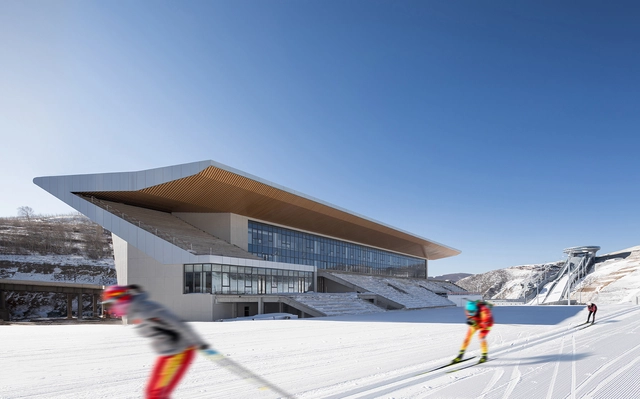
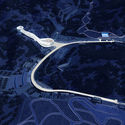
Beijing 2022 Winter Olympic Games and Paralympic Games have officially opened on February 4, 2022. The Winter Olympics made a brave move by adding two snow zones in Zhangjiakou and Yanqing to the ice zone in Beijing, creating an unprecedented three-zone system for the Winter Olympics.
Architectural Design & Research Institute of Tsinghua University (THAD), has led the planning and architectural design of the whole and all venues in Zhangjiakou Zone and Shougang Venue in Beijing Zone. Planning and Venue design for Yanqing Zone was elaborated by the China Architectural Design & Research Group. Chinese architects took the initiative to create while serving the principle of sustainable development and closely integrating architectural planning methodologies and architectural design during the approximately six-year construction cycle. They proposed the design framework of "full-scale spatial intervention" based on the "General Plan, Regulatory Plan, Urban Design, Architecture Design and Equipment System Design," completing the Chinese practice of sustainable Winter Olympics.




https://www.archdaily.com/976209/beijing-2022-winter-olympic-games-discover-the-full-list-of-projectsXiaohang Hou
Why the Drawings of Louis Kahn Still Matter
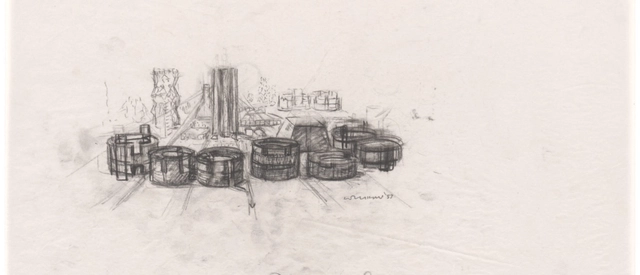
This article was originally published on Common Edge.
In an age of ebooks and web-first publishing, Louis Kahn: The Importance of a Drawing (Lars Müller Publishers) is a defiant throwback: a lavish, 500-plus-page book, very much an object befitting its subject, whose buildings had a weight, both literal and figurative, that was part of their power and appeal. Conceived and edited by Michael Merrill, the book is both a deep examination of Kahn’s creative process, as told through the medium of the hand drawing, as well as a revealing portrait of the man behind those buildings and illustrations. Merrill is an architect and educator and currently serves as director of research at the Institute for Building Typology at the Karlsruhe Institute of Technology in Germany. He’s also the author of two previous books on the master architect, Louis Kahn: Drawing to Find Out and Louis Kahn: On the Thoughtful Making of Spaces.


https://www.archdaily.com/976272/why-the-drawings-of-louis-kahn-still-matterMartin Pedersen
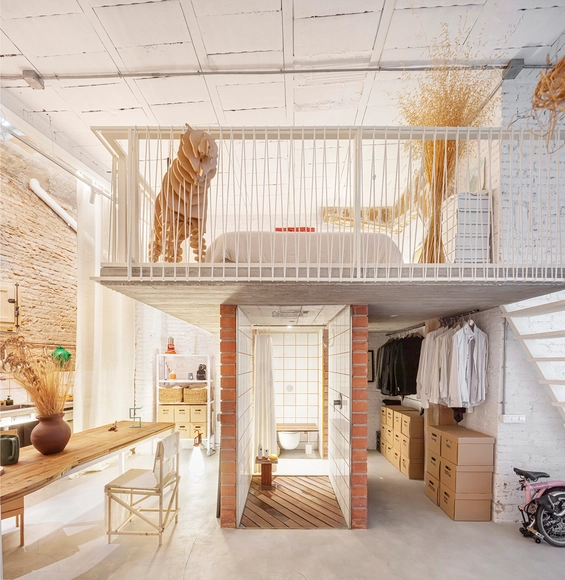
LoVt3 Apartment / NáBITO Architects


https://www.archdaily.com/976203/lovt3-apartment-nabito-architectsAndreas Luco