
Architects: Arquitectos Anónimos® and Paulo Teodósio
Location: Esposende, Portugal
Client: Maria Helena Ramos
Structural consultant: Ricardo Fonseca, Luís Fernandes and Luís Gonçalves
Floor area: 157 sqm
Site area: 8,900 sqm
Built-up area: 288 sqm
Start of planning: 2004
Start of construction: 2005
Completion: 2007
Photographs: Ivo Canelas
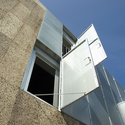
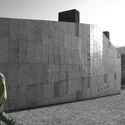
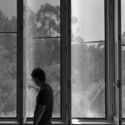
An unusual and inverted process. The client convinced us to accept the responsibility to build with such a low cost. The shaped carcass, stoutly wrapped with cork bricks, deals a few radical ruptures, claiming a friendly distance to the neighborhood. Inside, the expectable “ready to inhabit” combines a straight preview to the changeable future and conditions, as direct as possible-translated in interior design. Some found nicknames: “the pavillion”, “the hut”, “the cork”…

- first floor plan
- second floor plan
- section


I like this minimalistic house,
but a couple of inside pics would be nice!
simple is not bad. but somehow something is missing from this house. it’s decent, it’s correct, and yet … it tells me nothing.
Great work!!!
Shame the pictures are so few with no interiors
este trabalho é um exemplo vivo de estudo e identidade com relação ao trabalho de atelier
parabens!
materiality certainly gives this place a unique character.
any interior shots?
I think is simple, like the scale of the project, like the reference to old rustic architecture, like the double glazing facade, as an architect I’d love to inhabit this house! Not the right choice for some clients but to me is perfect!
Lets face it, this house is so bad it should never be published. The architect says it was “unusual”..”with such a low cost”. OK fine, make a minimal shelter but please don’t show it to us! Clearly, not all minimalism is good.
Let’s face it: your comment(!) is so lame that it should never be displayed to our attention…
If ignorance is so absurd in your case, that’s fine that everyone has an opinion, but say it should never have been published? can only be jealous!
The cork “bricks” look very much like OSB (oriented strand board) used in the US for sheathing under exterior siding. This visual association makes it hard for me to see this as anything else but incomplete. I would have described how this inexpensive cladding will keep the building from leaking.
I didn’t realize cork was an appropriate exterior cladding material – even in a Meditearranean climate…
we wouldn t debate corks effectiveness as an overcoat for its Quercus suber, which has been a sustainable and renewable resource in Portugal for an ancient amount of time, so why would it be different for a building s envelope?
They provided two exterior shots and a section. How are we supposed to form an opinion of this work?
I think cork is not main idea of this project, it may be concrete or plaster… The idea is volme, windows…