



Architects: Single Speed Design Location: North Cambridge, MA, USA Programme: Housing, Commercial Project year: 2008 Site Area: 2,335 sqm Constructed Area: 2,936 sqm Images: Single Speed Design
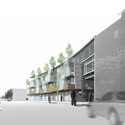
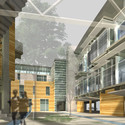
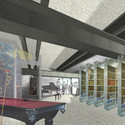
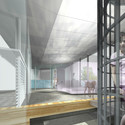
Most are familiar with Boston’s ongoing “Big Dig”- the Central Artery Tunnel Project that is one of the largest construction undertakings in American urban history. Few, however, give thought to the massive amount of waste that accompanies construction on this scale, namely the dismantling of the existing elevated highway and the miles of temporary structure used and discarded throughout the project.
So far, public and local governments have remained tacit about the future of millions of tons of materials that must be disposed of as this monumental endeavor moves forward. Like the urban renewal frenzy associated with the inception of the original elevated highway, is its demolition a convenient bookend to the social and environmental scars caused 50 years ago? Now as in then, the heroic effort of building an artery through downtown Boston involves the erasure of existing structures in the name of ‘progress.’ Where the failure of the original structure can now be clearly measured by the way it divided neighborhoods, the downside of the Big Dig’s ‘progress’ is more elusive yet just as severe: it has the potential to negatively impact the environment and economy as materials that contain a high degree of embodied energy are destroyed.

As a palpable alternative to this urban scale waste, the Big Dig Building proposes to relocate, then reuse these infrastructural materials as building components, adapting them to uses ranging from structural systems to cladding. Moreover, if time = money, proven highway fabrication technologies can be utilized to erect a Big Dig Building, drastically expediting the construction sequence. Finally, as this recycled infrastructure offers the compelling potential to create buildings that can withstand much higher loads than conventional structural systems, the social ramifi cations of “heavy” in relation to “dwelling” must be brought to light as a new source of innovation.


