Architects: Willy Müller Architects Location: Jeddah, Saudi Arabia Principal in Charge: Willy Müller Associate Architect: Frédéric Guillaud Project Team: Francisco Villeda, Isabella Pintani, Simona Assiero Brá, Mariano Arias-Diez Collaborators: Iris Cantante, Bruno Louzada, Edgardo Arroyo, Claudia Barata, Bart Hooijen, Katrine Kunstz Rendering: Lucas Capelli, Julia Morgado, Daniel Corsi Model: ARRK,s.l., Fabio Castelblanco, Fabian Asunción Structure Consultant: SBP, Schlaich Bergermann und partner Engineering Consultant: GEPRO engineering Model Photographs: Adria Goula Sarda
Buildings that represent social groups, religions or specific moments in human history should be from a typological point of view -and not only aesthetical- different from already defined typologies which are functionally concrete and abstract, like seen in banks and large corporation office towers that are populating the skyline of every important city today.

These buildings should be capable of becoming global and international icons, and at the same time objects of an extraordinary beauty that can last for several years. In this terms we think that the O.I.C Headquarters building, would, could and should be a singular project, not only for the place where its stands, but for the people that it represents around the world.
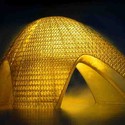
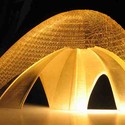
The Cupola then is taken as visible and powerful icon from the vast and rich culture and history of Islamic architecture, appearing since long ago and in very different points of the world but always under the same common identity. An architectural element that has always been reason of defiant construction solutions, technological and scientific breakthroughs, throughout human history.

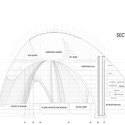
To construct a monumental Cupola, where the 5 “pillars” that support it transform into buildings themselves. It will be a new technical challenge, that not only summarizes a functional program with a formal reference, but will be a demonstration of vanguard with tradition, of risk and faith, and of singular ideas against a globalized understanding, simultaneously.
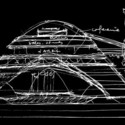
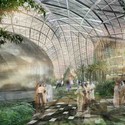
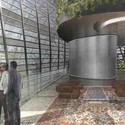
The shape of the building is a meditated typological decision. Each one of its “limbs”, represented in an orbital ring that like any alliance symbolizes the union of Muslim nations under one common cupola, define the functional and inside spaces. Even more important that the building itself is the monumental plaza, confining and opening like a gateway the sense and purpose of the project, and a great covered Garden, ancestral and renewed at the same time, a place of contemplation where we can see the city, the sea and the mountains.
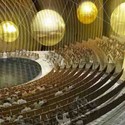
The presence of this building is reinforced by the abstract image of its structural skin made by steel, glass and concrete, in contrast with mirrors of water that multiply the visual, formal and aesthetical aspects, and by the subtleness of the interior garden that behind a structural mesh, embraces a delicate and peaceful space where the most important buildings of the program are located: The Plenary Hall and the Secretary General, in accordance with the character that these two entities should evoke: leadership and popular representation.

The final shape, slightly asymmetric or in movement, the oval plaza and the “towers” that conforms it, the general “Orbits” that this project proposes, suggests an actual vision of this ancient culture, proud and live, that demands its place and part in our modern globalized world.
Jeddah has successfully combined the dignity and traditions of the past with the dynamism of the contemporary world. It also is the most important port and the entrance door of the pilgrimage.
This building should also be a perdurable and timeless icon of that identity: “port and door”, a place to pass through learning the historical background and at the same time building the present.

A deep meaning equal to the activities of the OIC, which finds in Jeddah a city that renews its compromise with itself but at the same time offers its singularity to the world. We propose a building that interacts between two scales: the Islamic world and the city of Jeddah.
A part of the program can be used simultaneously by both entities, the program dedicated to the Congress areas and Plenary halls of the OIC has been designed with maximum controlled accessibility so that the city could use and get benefit from the building for special events if desired, optimizing to the maximum the investment in such item of infrastructure.
Circular shapes in answer to the main flows, organize the level of main accesses in order to have control over the user immediately upon entering, and from here, be able to orientate each one of them to its level of preference or work. The rest of this level will accommodate the equipments needed to satisfy the program and some city needs that require special autonomous functionality: the library, banks, shops, etc.

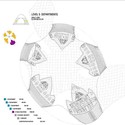
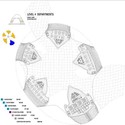
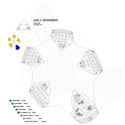
In the office levels, approximately 30% has been reserved for a future expansion of the OIC needs and programs, but also we present the option for them to be used as external offices to the complex, therefore, this offices are located in the lower levels of each tower, closest to the main control and accesses.
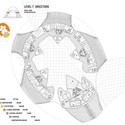
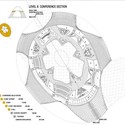
At level 7, the office program comes together to form a “horse shoe” platform from tower 2 to tower 5 that contains the whole area designated to Directors of the different departments, a hierarchical organization that serves a strategic purpose, to group all of them for communication and in to have a direct relation with the Secretary General. The entire tower 1, from the VIP reception hall to the Conference Garden, can be used as par of the public relations program related with the exterior. For the O.I.C in its plenary meetings and activities in general, as well as for the city of Jeddah in events like the Economical Forum for instance. This tower is related directly with tower 5, sharing accesses to VIP parking space, where the mobility would be restricted and exclusive for the Secretary General and its staff all the way up to its office space at the Conference Garden.

Finally in the Main access hall level we dedicate a part of this surface to add a new program, which for us, summarizes one of the basics intentions of this building: we create a museum of Islamic Architecture, an infrastructure good for the world and the O.I.C, as well as for the city of Jeddah, to honor and celebrate the architects of Islamic History.