Architects: José Luis Rodríguez Gil
Location: Granadilla, Canary Islands, Spain
Project Year: 2010
Photographs: Courtesy of Estudio José Luis Rodríguez
Project Area: 120 sqm
Collaborators: Rosenda V. Marrero Hernández, María Delgado
Budget: € 108,182.18
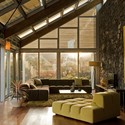
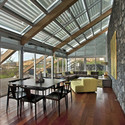
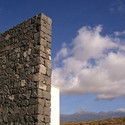
It is pretended to build a self-sufficient house integrated into the landscape of the island characterized by a continuous terracing of its abrupt topography. This is the germ of project: a basalt stone wall on which a light structure of plywood with galvanized steel walls and glass supports advancing southwards.

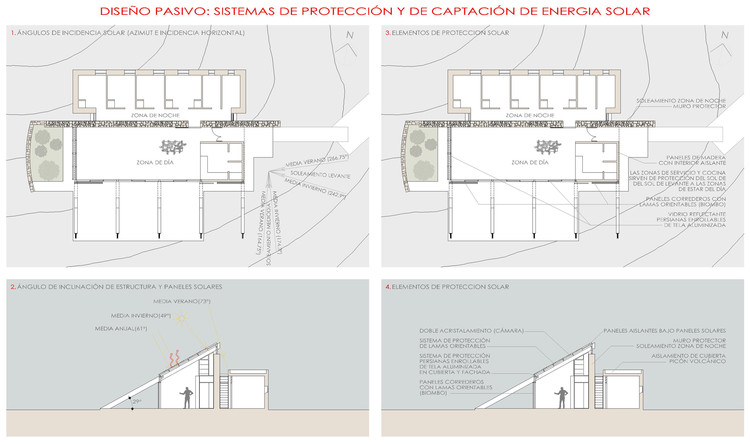
Is generated as well an area connected to the outside (the day area ) relationship space that dominates the landscape and is protected from sun and wind. After the wall is located the sleeping area to the north formed of small intimate venues to which is provided with high thermal inertia.

This duality is expressed in conceptual spatial material and construction: dematerialization and the absence of limits of the living area (space relationship between users and between them and the landscape) against the austere interior containment for shady sleeping area (areas of privacy).

The house designed in 1995 also aims to reduce its ecological footprint on the use of materials and construction systems so using local materials (basalt wall insulation covered with volcanic lapilli etc..) certified industrial materials environmentally (specifically the wood) and no harmful elements (PVC VOC compounds synthetic paints and varnishes etc).

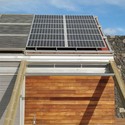
The inclination of the structure of the day area is determined by the solar radiation and it integrates the panels to produce electricity and hot water seeking a result of ZERO CO2 EMISSIONS .

- Courtesy of Estudio José Luis Rodríguez
- Plan 01
- Section 01
- Detail 01
- Detail 02
- Detail 03
- Detail 04


Beautiful, it looks so big for such a small foot print. I love this project, great job.
The house seems too small for about 5 people to live in comfortably. In addition, the idea of reducing carbon footprint is great, but the article didn’t present any measurements or proof that the house achieved its goal of zero CO2 emissions.
I liked the way they used the glazed façade in order to maximize the view and to create a relationship between the inside and the outside. It gives me sense of lightness.
well done!
I’m with you Amal, even it is a small house but the architect try to attract us by using tension structures which attached to the base, and different materials.
What i find interesting about this building, is the playful exterior which gives it a clustered-geometric-affect, yet it respects the privacy of each individual unit, where each on is oriented in different direction, the material which is used in the exterior gives the whole project an artistic elegance, tasteful design and harmonious ambiance that make it look uniquely different than the surrounding, the project remind me of the famous housing complex, habitat 67 – Canada, yet in a simpler approach that lessen the complexity without eliminating the unique touch of it.
I wished you explain how the water system and sanitation is also self-sufficient.