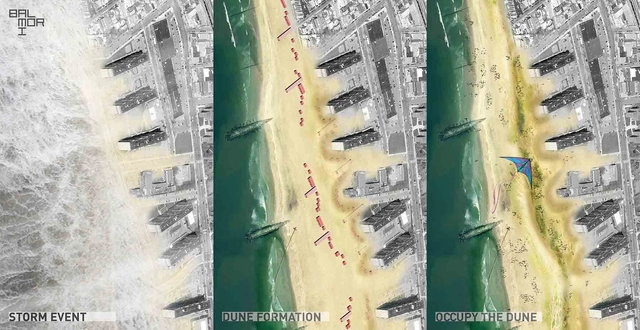
Recently chosen as one of the selected entries for the MOMA PS1 Rockaway Call for Ideas, the 'Occupy the Dune' proposal by Balmori Associates focuses on an infrastructure as the center for civic activity, protecting the community while connecting it socially and ecologically. Vegetation that colonizes the dunes surface is the most critical part of the ecosystem, adding strength and stability to blunt extreme winds and storm surge. More images and architects' description after the break.
Rocco Design Architects Ltd., in collaboration with Gravity Partnership Ltd. and Wang Weijen Architecture, recently won the international competition for the new campus for the Chinese University of Hong Kong in Shenzhen. Currently in construction, the planning concept for the new campus is “Academic Clusters, Campus Green and Natural Terrain”. Phase one of the campus is expected to be completed by the third quarter of 2015. More images and architects’ description after the break.
In response to MoMA PS1's call for new ideas for rebuilding in the Rockaways after Hurricane Sandy, the 71% proposal by Reddymade Design + Horns and Tails Productions was one of the selected entries which suggests ways in which uncontrollable natural phenomena might be absorbed by the environment to create a balanced system of landscape, infrastructure, and architecture. A multi-layered proposal, it suggests several lines of defense and integration. More images and architects' description after the break.
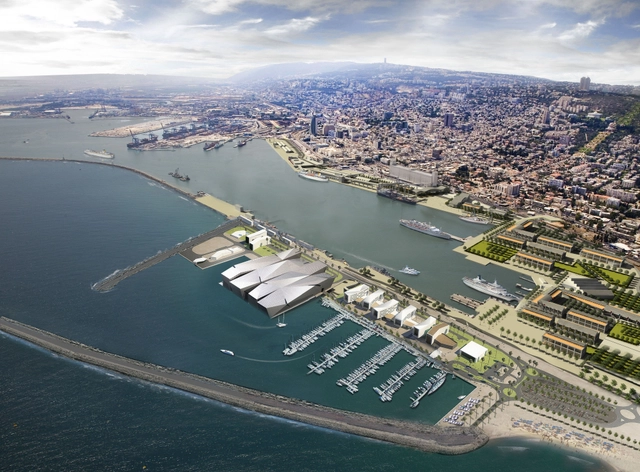
Aiming to connect Haifa with the sea, the proposal for the New Haifa Waterfront Plan by Amir Mann-Ami Shinar Architects and Planners focuses on the making of large open public space along the water. Some new "warehouse-like" linear structures will be built, only two-story high, and all buildings, old and new, will maintain industrial character. Also, with the old cranes, the overhead grain-conveyers and other working port facilities will keep the unique port atmosphere. More images and architects’ description after the break.
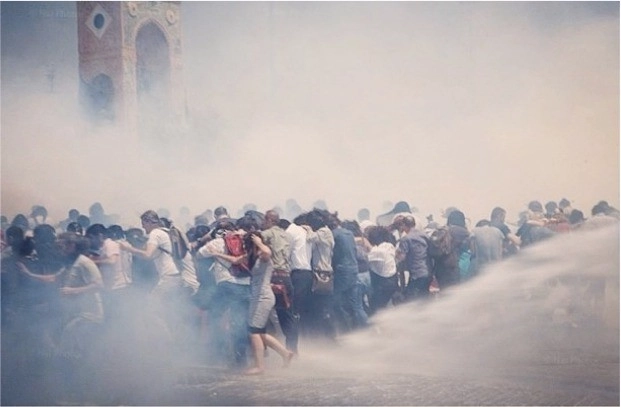
The efforts of thousands who occupied Gezi Park, and those who joined them in solidarity via social media from around the world, have paid off. According to Reuters, a Turkish court has ruled against the Prime Minister Tayyip Erdogan-backed development in which proposed to redesign Istanbul’s iconic Taksim Square and replace one of the populated city’s few public parks with a mall.
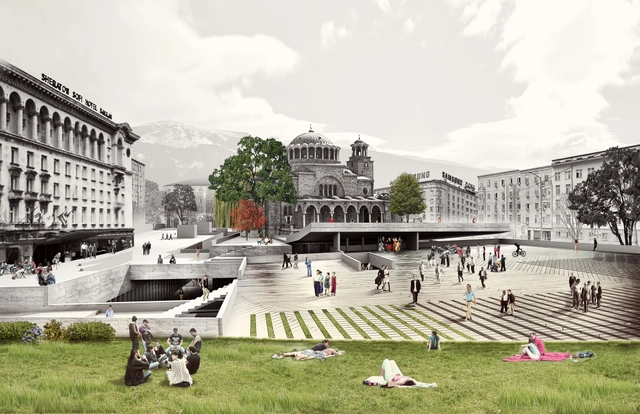
NC-Office shared with us their 'Floating Plaza' proposal for the competition that called for the urban concept and architectural design and development of Sveta Nedelya Square, in the city of Sofia. The main strategy for the project is to provide a clearly defined plaza for congregation in the heart of Sofia. To achieve this, the architects propose a plane which “peels” away from the north side of Sveta Nedelya Church and floats over Boulevard Vitosha. This ‘plane’ alludes to the historical use of that area of ancient Serdika. More images and architects' description after the break.
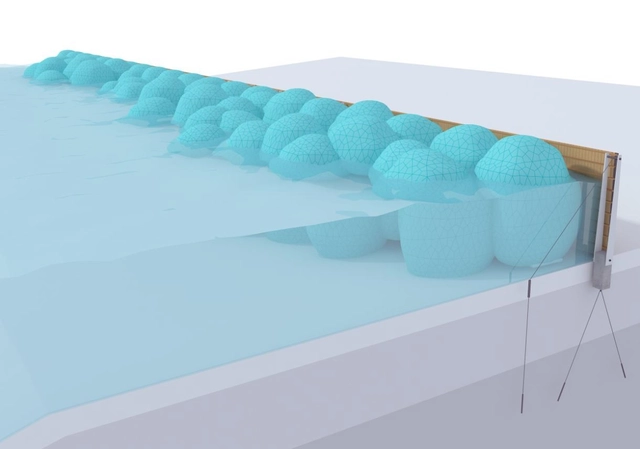
In response to the MOMA PS1 Rockaway Call for Ideas, ‘The Water Dyke’ proposal, which was one of the selected entries, focused not only on rebuilding the boardwalk, but on creating the boardwalk as a community gathering place and a functional infrastructure to protect the shoreline. Designed by Sorg Architects, their concept of the Water Dyke is to harness water itself to retain a storm surge and thereby the shoreline from damaging floods. More images and architects’ description after the break.
One of the selected entries in the MOMA PS1 Rockaway Call for Ideas, the 'Occupy Infrastructure' proposal by Barkow Leibinger Architects is three-fold. The main idea is to construct a network of retaining berms based on priority and need with local materials and by the communities that they protect. These berms are not continuous (like a wall) but overlap to allow beach access, gateways, and to maintain visual and spatial openness and continuity between beaches and neighborhoods. More images and architects' description after the break.
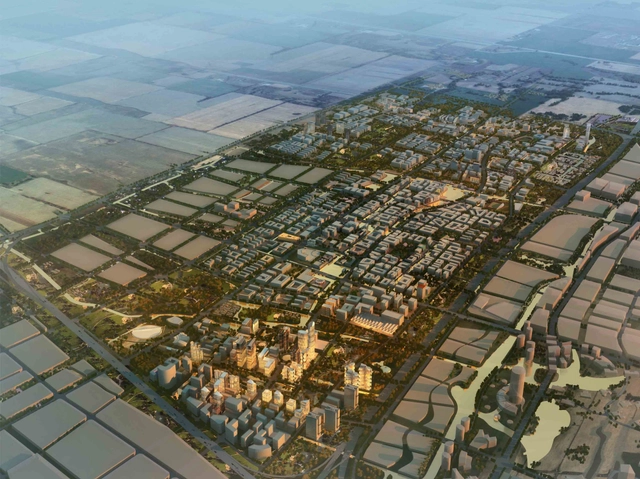
Designed by HYHW Architects and Planners, the local development strategy and strategic focus of the Madong Masterplan is aimed at building upon history, automotive culture, sports culture, encouraging advances in manufacturing and modern services, with cultural charmand continual innovation in a technologically advanced green city. Serviced by a highway to the North and with Jiading Forest to the South-West, it benefits from convenient transport connections and the close proximity to the ecological landscape. More images and architects’ description after the break.
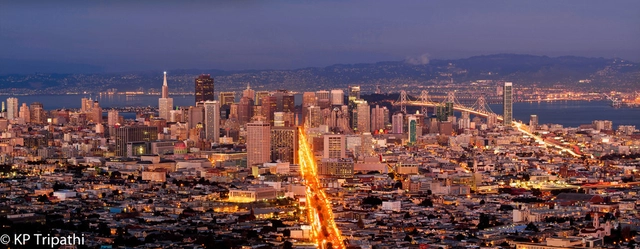
San Francisco; Photo Courtesy of Flickr User KP Tripathi. Used under Creative Commons
San Francisco's Planning Department is working with California's sustainability guidelines to structure growth within the city in accordance with the state's requirements and the city's goals through the department's Sustainability Development Program. The program aims to reduce water consumption, reduce waste and enhance community-scale energy resources. To aid in the fulfillment of these goals, the program is implementing a tool called Eco-Districts - a community of property owners, businesses and residents within a neighborhood that collaborate to develop and initiate sustainable development projects in their area. Using a set of performance metrics, neighborhoods can shape their projects with custom strategies for their community.
The Eco-District is fundamentally a community-driven development that has the potential to achieve the smart growth of sustainable ideas but also build local urban identity and enforce a sense of place among its residents. The Eco-District movement has already taken shape in Austin, TX; Boston, MA; Seattle, WA; Washington, DC; and Portland, OR is various degrees of development. San Francisco's adoption of this tool will help drive the successes of the Sustainability Development Program with a focus on holistic approaches of neighborhood development and support with environmentally conscious improvements.
Read on for more about the types of Eco-Districts that have been developed in San Francisco.
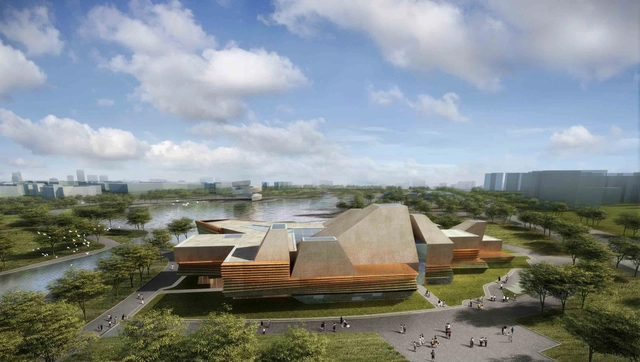
Situated in the middle of the iron-copper-gold polymetallic metallogenic belt of the middle-lower reaches of the Yangtze River, Waa's winning entry for the Tonglin City Planning Exhibition Center houses the future aspirations for future generations. Focusing on their design through 'Making', they found inspiration of architectural language in the process of fabrication in this regions mining industry. More images and architects' description after the break.
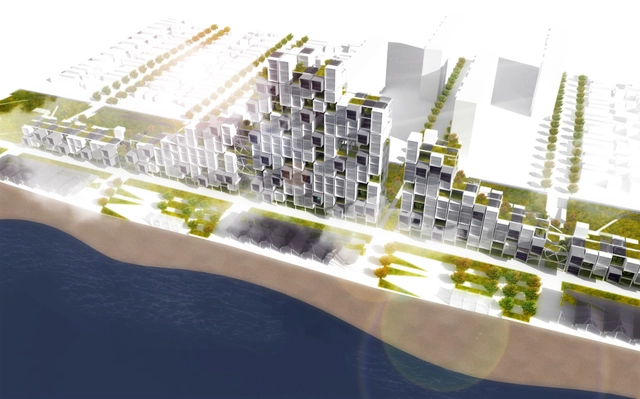
Taking its name from the elevation above which the city is safe from floods, The '28+' proposal by Michael Sorkin Studio for the MOMA PS1 Rockaway Call for Ideas is a habitable levee. Not simply does it allow the protection – and selective replacement – of buildings otherwise at risk, it actually increases the stock of waterfront residences and commercial spaces and improves public transit connections to the rest of the city. More images and architects' description after the break.
Inspired by Chris Marker's 'photo-roman' La Jetée, this selected entry for the MOMA PS1 Rockaway Call for Ideas by Matter Architecture Practice is is a fictional story of a real place. The Narrator speaks a remembrance presented as being that of her daughter (now growing up in New York) in the year 2096, when she will be 90 years old. The image of this daughter as an old woman is one taken by the Narrator of her grandmother - or the daughter's great-grandmother -on a boat, in New York, when she was 90 years old. More architects' description after the break.
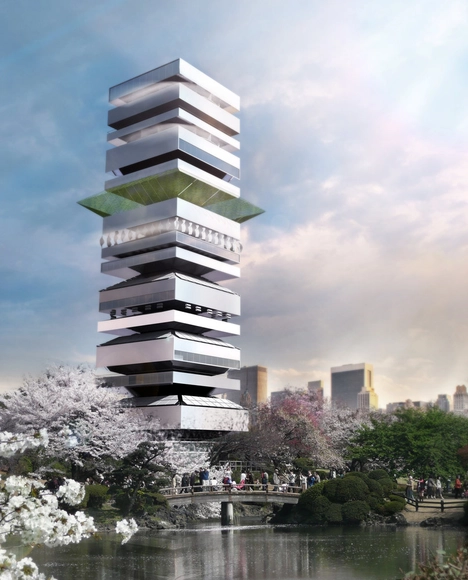
Designed by SZA (Studio za arhitekturu), their Taichung City Cultural Center proposal is a complex space structure. With its ground plan being 50 x 50 m, their concept creates an energetic, self-sufficiency throughout the project through a system of a vertical accordion and through an exchange of functional storeys and sustainable construction storeys. More images and architects’ description after the break.
Videos
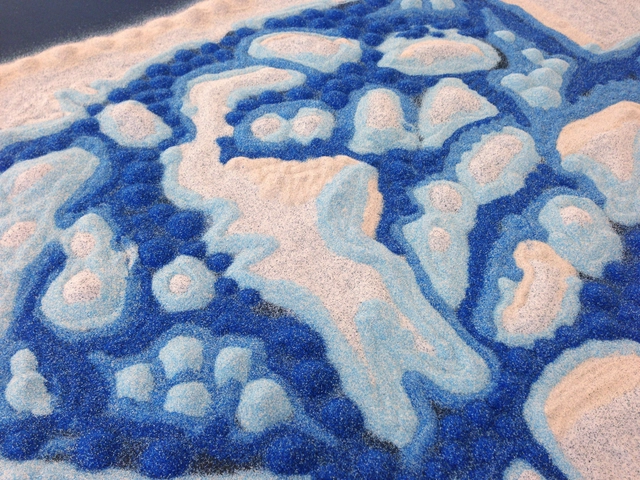
sand map detail / Courtesy of Gena Wirth + Alex Chohlas-Wood and Ben Mendelsohn
Designed by Gena Wirth, with Alex Chohlas-Wood and Ben Mendelsohn, their 'Protective Ecologies: Building Resilience in Jamaica Bay' proposal for the MOMA PS1 Rockaway Call for Ideas was recently announced as one of the selected entries. Their concept explores how constructed ecosystems could function as coastal infrastructure in the severely damaged neighborhoods of Jamaica Bay and the Rockaways. More images and architects' description after the break.
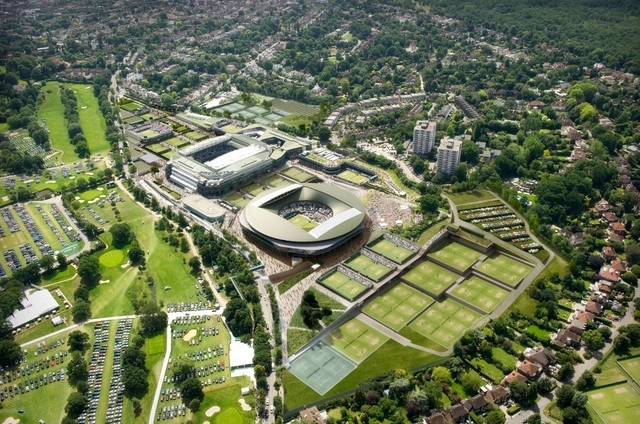
The All England Lawn Tennis Club has just unveiled this design proposal for the Wimbledon Master Plan developed by Grimshaw Architects, with top UK landscape architecture firm, Grant Associates. Marking the first step in a consultation process, the vision reflects and reinforces the long history of The Championships while further enhancing Wimbledon’s position as the premier Grand Slam tennis event. More images and architects' description after the break.
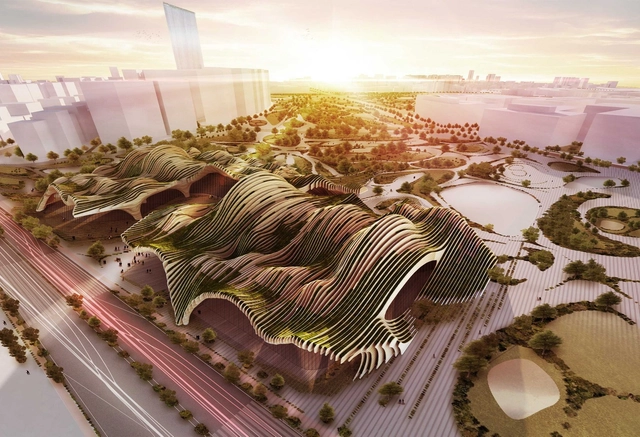
Designed by BAT, their proposal for the new City Cultural Center grows from the earth, with the strength of the sea and mountains, to show to the world how Taiwan is; how Taichung is. The design uses this strength to configure an astonishing landscape architecture able to project the cultural center internationally. More images and architects' description after the break.
With the main goal of facing the challenges of recovery in the coastal urban neighborhoods of the Rockaways, the 'Resilient Rockaways' proposal by Brennan Baxley takes precedents from dune formation and creation. In doing so, their concept provides a local opportunity to defend the coastline while aiding in the recreational and participatory design of dunes. Building with nature, small infrastructure, and community effort, the design encourages social resiliency as well as promote a healthy shoreline. More images and architects' description after the break.
.jpg?1372999886&format=webp&width=640&height=580)