BIG + Kollision + Schmidhuber & Partner team up to bring BIG’s vision of future urban mobility to life for AUDI at Design Miami/ 2011, running from November 30th through December 4th adjacent to Art Basel Miami Beach. BIG originally presented the concept as an entry for the 2010 AUDI Urban Future Award introducing a future city paved with a digital surface that liberates the streets from existing boundaries and allows for a new flexibility of public use. More images and project description after the break.
Urban Design: The Latest Architecture and News
“Urban Future” at Design Miami 2011 / BIG + Kollision + Schmidhuber & Partner
https://www.archdaily.com/189317/%25e2%2580%259curban-future%25e2%2580%259d-at-design-miami-2011-big-kollision-schmidhuber-partnerAlison Furuto
Quatrier M / Delugan Meissl Associated Architects

Two overarching factors feed into the overarching principle of urban design: the vicinity of the terrain to a traffic-intensive street axis and the western railway line and the requirement for a high density of the resulting building. In response, Delugan Meissl Associated Architects, which won the competition for this urban master plan, characterized the new interpretation of the historic district as a compact block structure, which will enter into a dialogue with their environment and be well-connected with the surrounding urban fabric and its functional characteristics. More images and architects’ description after the break.
https://www.archdaily.com/188666/quatrier-m-delugan-meissl-associated-architectsAlison Furuto
Final Design Proposals for the St. Petersburg Pier Design Competition

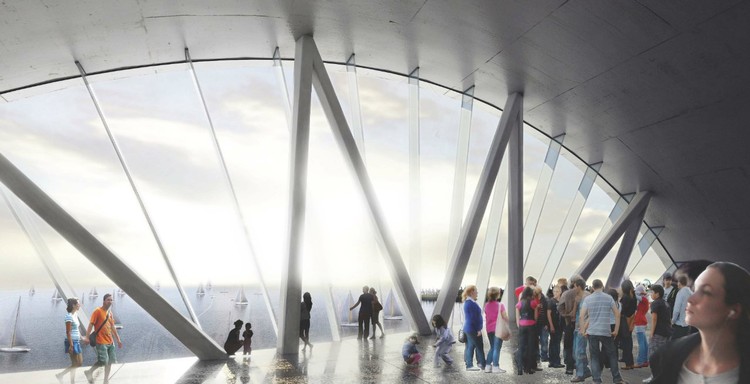
The final entries are in for the international redesign competition of the St. Petersburg Pier in Florida. The competition seeks to generate a new identity and iconic landmark that will honor the history and relevance of the Pier for the next generation. Michael Maltzan Architecture, BIG and West 8 Urbaban Design and Landscape Architecture are the three architectural firms selected from the list of nine semi finalists. Continue reading after the break to view the radically different design proposals.
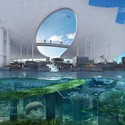
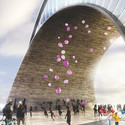
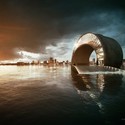
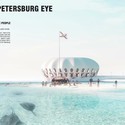
https://www.archdaily.com/188775/final-design-proposals-for-the-st-petersburg-pier-design-competitionKarissa Rosenfield
Redesign of the Old GSP Area / Dimos Moysiadis and Xaris Tsitsikas

Young Greek architects Dimos Moysiadis and Xaris Tsitsikas, have shared with us their latest project, an architecture competition entry for the redesign of the old GSP area in Nicosia, Cyprus. More images and brief project description after the break.
https://www.archdaily.com/188210/redesign-of-the-old-gsp-area-dimos-moysiadis-and-xaris-tsitsikasAlison Furuto
Ponte Parodi / UNStudio

This month, UNStudio’s Ponte Parodi, a waterfront design for Genoa, Italy, will be presented at the MAPIC in Cannes as one of the most iconic waterfront developments currently being realized. The harbor project is part of a larger vision to revitalize the entire waterfront area, and merge the local urban and economic fabric to create a point of interest for Genoa’s varied waterfront users. The juxtaposition of varied circulation typologies creates an innovative extension for the city center which not only organizes the position of the program, but also optimizes pedestrian flows within and atop the building.
More about the waterfront after the break.
https://www.archdaily.com/188744/ponte-parodi-unstudioKaren Cilento
Delancey Underground a.k.a "The Low Line"

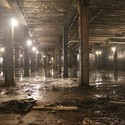
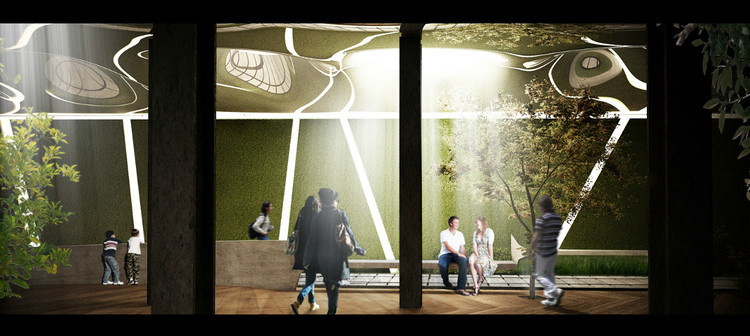
As the Highline has everyone looking up, James Ramsey and Dan Barasch are asking people to start looking down. James Ramsey’s vision to transform the abandoned Williamsburg Bridge Trolley Terminal into a subterranean park filled with sunlight and lush vegetation is gaining international attention and support. The satellite engineer turned architect has developed a skylight using fiber-optic technology that will naturally light and bring life to this forgotten, graffiti-covered cavity below the streets of New York City.
Continue reading for more information, video and exclusive statements from Ramsey and Barasch.


https://www.archdaily.com/188295/delancey-underground-a-k-a-the-low-lineKarissa Rosenfield
Djibloho - Equatorial Guinea’s Future Capital City / IDF - Ideias do Futuro

Located on the Wele-Nzas, the new capital city will be built in order to fulfill the President’s dream. The new capital city will be the attraction for an estimated 160.000 inhabitants and will extend for 8.150 Hectares. The concept is characterized by modernity and respect by the country’s cultural roots, optimizing its identity and the richness of the ecosystem where it belongs. Sustainability is also a privileged feature in every strand. The concept, by IDF-Ideias do Futuro, has its origin in the fusion between the river and the orthogonal matrix represented by the road net, in progress. More images and architects’ description after the break.
https://www.archdaily.com/187398/djibloho-equatorial-guinea%25e2%2580%2599s-future-capital-city-idf-ideias-do-futuroAlison Furuto
Park D. Pedro II Redevelopment / Una Architects, H+F Architects, Metrópole Architects and Lume

Located on the floodplain of Rio Tamanduateí, one of the most important rivers of the city of Sao Paulo, Brazil, Park D. Pedro II is a symbolic public space, with important historic buildings with its connection between the center of town (the historical hill) and the east zone. The transformation by Una Architects, H+F Architects, Metrópole Architects and Lume of the Park D. Pedro II, beyond its internal limits, has as premise of an urban redevelopment that could radiate qualities to the surrounding neighborhoods. Briefly, the plan provides three axes of intervention. More images and architects’ description after the break.
https://www.archdaily.com/187377/park-d-pedro-ii-redevelopment-una-architectsAlison Furuto
Christo and Jeanne-Claude "Over the River" Project - Approved to Stretch Across Arkansas River

Controversial artists Christo and Jeanne-Claude – known for making large-scale architectural interventions in urban and rural environments – have finally gotten approval from the Bureau of Land Management to construct their most recent project “Over the River”, which will stretch along 5.9 miles along the Arkansas River in Southern Colorado.
Read on for details of the project and more images!
https://www.archdaily.com/184112/christo-and-jeanne-claude-over-the-river-project-approved-to-stretch-across-arkansas-riverIrina Vinnitskaya
Global Village Construction Set / Open Source Ecology
https://www.archdaily.com/181978/global-village-construction-set-open-source-ecologyKarissa Rosenfield
Architecture of Invention: A Bertrand Goldberg Retrospective at the Art Institute of Chicago

The Art Institute of Chicago is hosting a retrospective for Bertrand Goldberg, famed architect of Marina City (1959–1967), two cylindrical corncob-shaped commercial/residential towers. The exhibition contains a range of Goldberg’s work; it begins with his work at the Bauhaus and the 1933 Century of Progress Exposition and follows his career into his visionary plans of a postwar America. The exhibition will feature architectural drawings, models, photographs, along with graphic and furniture design.
Follow us after the break for images of Goldberg’s work.
https://www.archdaily.com/182163/architecture-of-invention-a-bertrand-goldberg-retrospective-at-the-art-institute-of-chicagoIrina Vinnitskaya
Green River Brateevo / OKRA Landscape Architects

At the Second Exhibition Forum on Architecture, Landscape Architecture and Garden Art last week in Moscow, the project Green River Project Brateevo has been awarded with the Russian National Award on Landscape Architecture. The project, designed by OKRA landscape architects, is a joint cooperation between Russia and the Netherlands. Supported by the Dutch Government, the Department for Natural Resource Management and Environmental Protection of Moscow and the Dutch Government Service for Land and Water management (DLG), are working together with the Dutch consultancy OKRA landscape architects, the Russian consultancy Ampir landscape architects and the Research and Design Institute for the Master Plan of Moscow on the development and exchange of ideas for a sustainable cityscape. Objective is to develop a toolkit for sustainable green development as an integral part of urban redevelopment. More images and project description after the break.
https://www.archdaily.com/180699/green-river-brateevo-okra-landscape-architectsAlison Furuto
Townhouse Prototype / AllesWirdGut Architektur

The townhouse prototype design by AllesWirdGut Architektur demonstrates how the new office and shopping building fits in with the typology of detached townhouses in the neighborhood. Slight twists of the basic volume actively impact the surrounding urban fabric such as a bend in the longitudinal facade and the staggering of floors. More images and architects’ description after the break.
https://www.archdaily.com/180296/townhouse-prototype-alleswirdgut-architekturAlison Furuto
Urban Redevelopment of the Plaza del Milenio / EXP architects
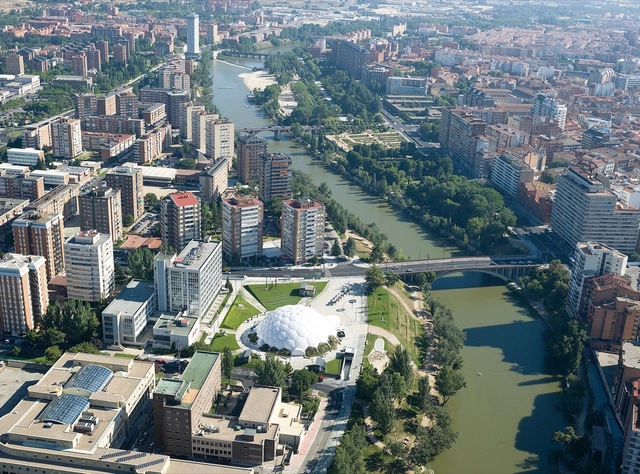


https://www.archdaily.com/177567/urban-redevelopment-of-the-plaza-del-milenio-exp-architectsChristopher Henry
Tourism Revitalization and Development / ZA Architects

The design proposal by ZA Architects is intended to become a framework for further development of human activity in the exclusion zone around Chernobyl nuclear power plant in Ukraine. The backbone of the project is a mono-rail road with 4 stations, each having its own unique function. This environmentally-friendly and profitable railroad will cater for the tourist and industrial needs and can be implemented in several stages. More images and architects’ description after the break.
https://www.archdaily.com/179220/tourism-revitalization-and-development-za-architectsAlison Furuto
SOM's Design Chosen for Nanjing Waterfront Sustainable Redevelopment

Modern urban living, commerce and tourism are a part of the new multi-district redevelopment plans for Nanjing’s Yangtze Redevelopment. Selected by Beijing based MCC Real Estate Company, SOM has imagined a scheme that will create a new area of neighborhoods, shopping districts and corporate skyscrapers embodying a new identity for Nanjing and a mixed-use cityscape for its people.
SOM Director Douglas Voigt said, “The core concept of the SOM plan for Nanjing Xiaguan is making connections. Connecting the city to the river. Connecting the best of urban living to nature. Connecting under–utilized land to value creation that will increase growth, tourism and prosperity. Connecting Nanjing’s rich heritage with China’s rising economy.”
https://www.archdaily.com/176583/soms-design-chosen-for-nanjing-waterfront-sustainable-redevelopmentKelly Minner
Citizens Redesign Their City in Dreamhamar / Ecosistema Urbano

Hamar’s Kommune decided to take a pioneer approach to the construction of the new Stortorget Square, now just a parking lot. In an effort to bring democracy back to public spaces, citizens are invited to join the free on-site workshops that will take place from September to November, to question themselves about their city and work together to improve it. The workshops follow a horizontal and participative methodology, led by Ecosistema Urbano that will determine Stortorget’s new configuration, which is known as Dreamhamar. More images and project description after the break.
https://www.archdaily.com/175516/citizens-redesign-their-city-in-dreamhamar-ecosistema-urbanoAlison Furuto
Beijing Core Area Plan / Brininstool, Kerwin, + Lynch

Designed by Brininstool, Kerwin, and Lynch, the Beijing Core Area Master Plan is a massive civic proposal of over 27 million square feet of building area and an additional 1.5 million square feet of public space design for the Central Business District of Beijing, China. More images and architect’s description after the break.
https://www.archdaily.com/157673/beijing-core-area-plan-brininstool-kerwin-lynchJohn Rizor