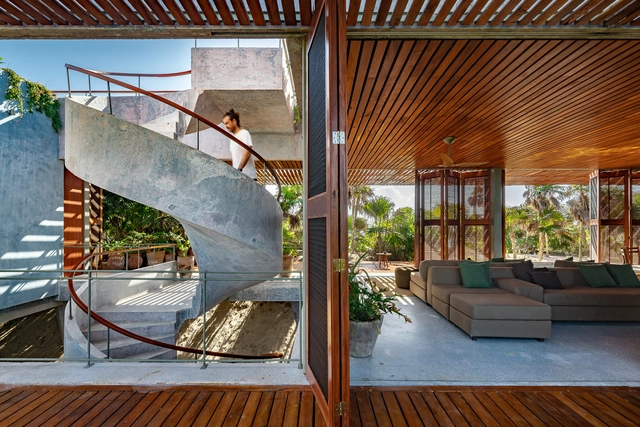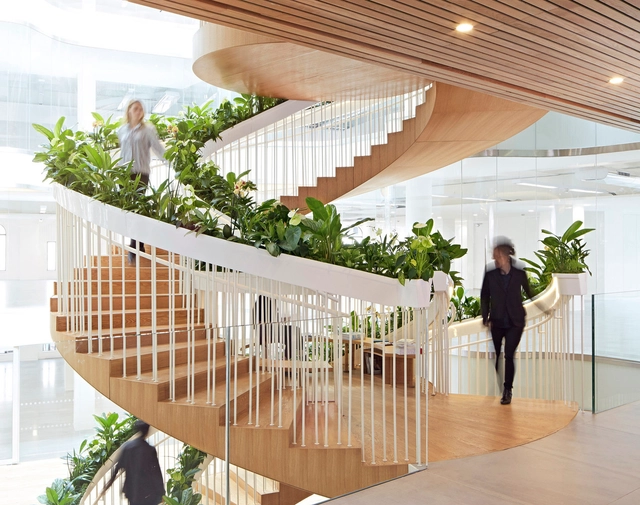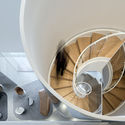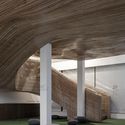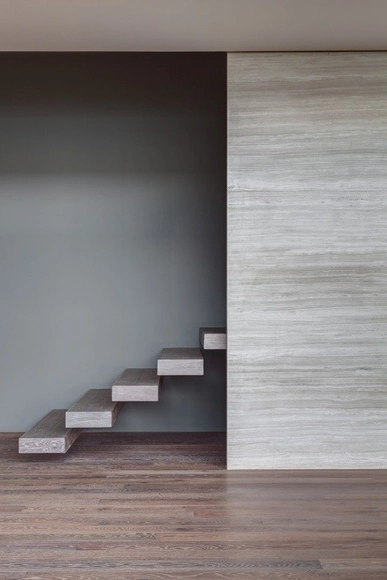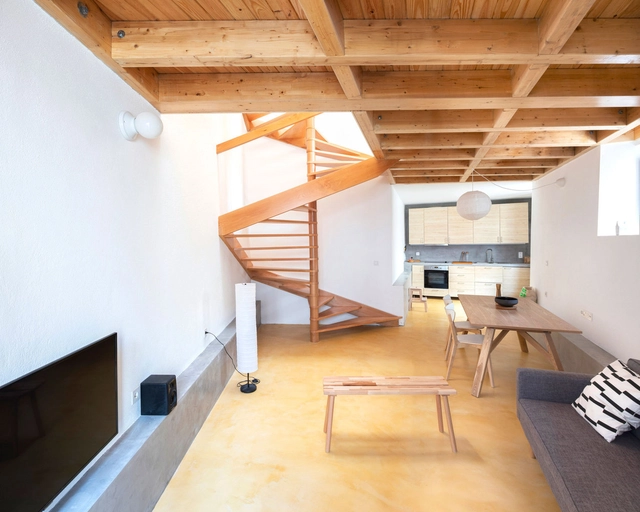
Stairways are central to access and mobility within a space, and yet, they often take a backseat to other elements of design within a work of architecture. However, Mexican firm PRODUCTORA has put them at the forefront of many of their projects, notably the Teopanzolco Cultural Center.
Guardrails and handrails are two elements that are often confused. While the first is used to close a space and prevent a person from falling, the second is a support bar for balance. Normally standard solutions are used for both elements, but with an attractive design, they can become standout details in a project.
For inspiration on materials, structures, and details of guardrails and handrails, here are 17 notable examples.
Staircases can trigger conversations, provide a sense of arrival, and dazzle with ingenuity. As an architectural element, they are not just about circulation – so why are they neglected in the design of so many new projects? In this short film from Monocle, the breadth of ingenuity possible with the stair—from those of the Danish National Bank in Copenhagen to London’s Leighton House Museum—explore how they can come to embody the very essence of a good architectural project.
https://www.archdaily.com/876733/if-staircases-are-crucial-to-a-good-project-why-are-they-so-often-neglectedAD Editorial Team
On this day of love, we bring you a compilation of eye candy capable of meeting or exceeding the specifications of any architect. These seductive staircases demand a double take. From curvaceous to straightforward or no-strings-attached (literally), we’ve got something for everyone.
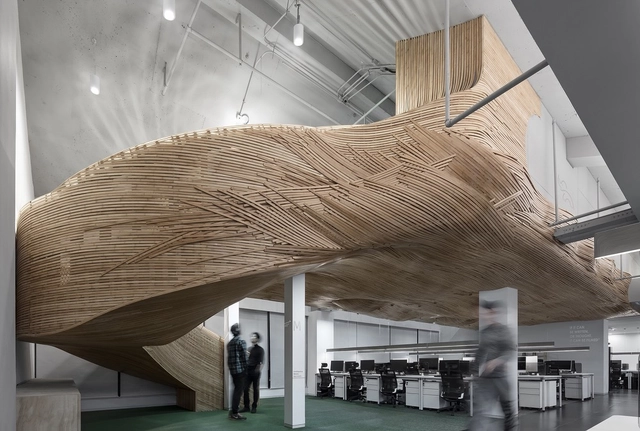
Inspired by the spine of a whale, the Vertebrae Staircase is not simply mimicry of organic form but an exploration in shaping structure. Much of the design work went into refining the single component, or vertebra, that mate with each other creating a unified spine running from floor plate to floor plate. These interlocking vertebrae create a rigid and self-supporting structure.
More on Andrew McConnell's 'Vertebrae Staircase' after the break.
Architects: gh3 Location: Toronto, Ontario, Canada Design Team: Pat Hanson, Anthony Provenzano Structural Engineer: Blackwell Bowick General Contractor: Jens Nielsen Project year: 2006-2007 Budget: US $500,000 Constructed Area: 185.8 sqm Photographs: Ben Rahn
The interior of the building was stripped back to a more modern tradition of interior. The house becomes a neutral shell punctuated by three sculptural elements – a block of stone that is associated with kitchen elements, a curved stair, and a 20′ stone bench/shelf and fireplace wall. Each of these elements is associated with windows, skylights, and double height spaces to enhance the spatial experience of the house. Kitchen working areas and storage for dishes, books and media are organized linearly along the exterior walls and are concealed behind full-height doors.