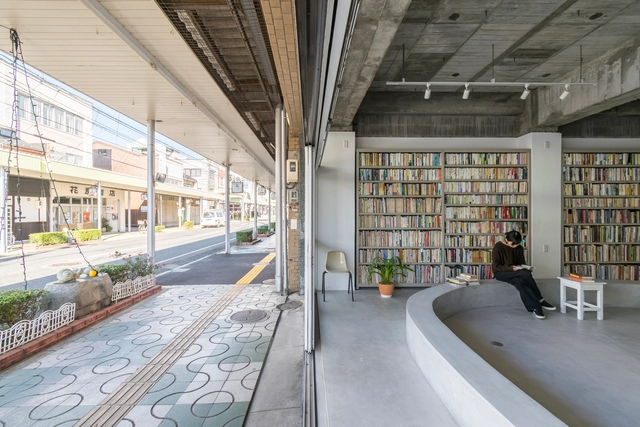
The small house was created for a client that has a significant library and desired a space to store them as well as to renovate a home. The architect had therefore suggested that the house not only become a place to store books, but also a private library that could be opened to the city whenever the owner felt like it.
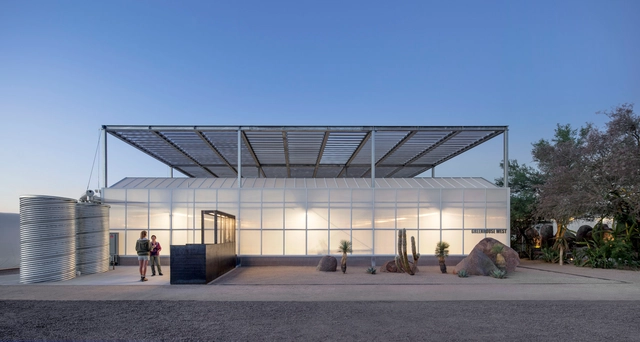
Walls and fences are typically used to keep people and areas separate, but at the Desert Botanical Garden an unusual series of structures actually brought people together. We combined wood, concrete, steel, stone and block to create a variety of richly textured and highly functional separators that both physically divided and visually connected open spaces. The Garden also needed a means to separate the “front of house” from “back of house” operations at the Horticultural Center, while allowing the public some degree of access and understanding of the building’s purpose and innovation. Many less interesting designs languished on the boards until Salenger conceived a Great Wall of boulders and gabions that were not only functional, but gave garden volunteers an opportunity to get involved as well.
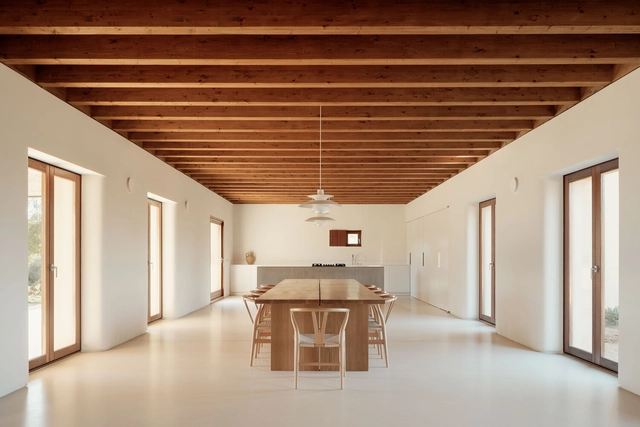
This project had a peculiar starting point: It began at the same time as its construction. Once the license was granted, the client decided to change architects and called us to rethink the project and provide a contemporary character that was lacking. The project had to work with a pre-imposed footprint of four interconnected volumes. The main house would evoke a Mallorcan vernacular house, while the adjacent volumes would be more abstract.
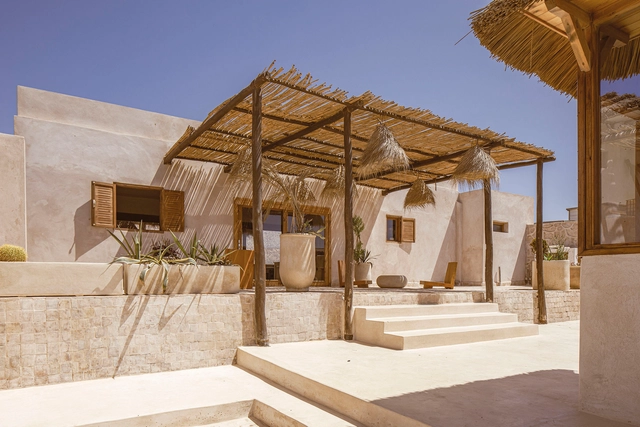
This project is on the same bay as the first project made by our studio. It takes place in the village of Imsouane. It is a small fishing village between Essaouira and Agadir in southern Morocco. This village is a well-known spot for surfers around the world. They call it the “magic bay”
Geometric and technical constraints were key to the design language which was chosen for this Duplex apartment in Central Tel Aviv. Instead of concealing the Mechanical and Electrical systems of the apartment, the decision was to expose them and make them an integral part of the design. A concrete envelope, which is rich in texture, was chosen for the ceiling and feature wall, and careful attention was given to the display of the client's eclectic collections, throughout the different spaces of the project.
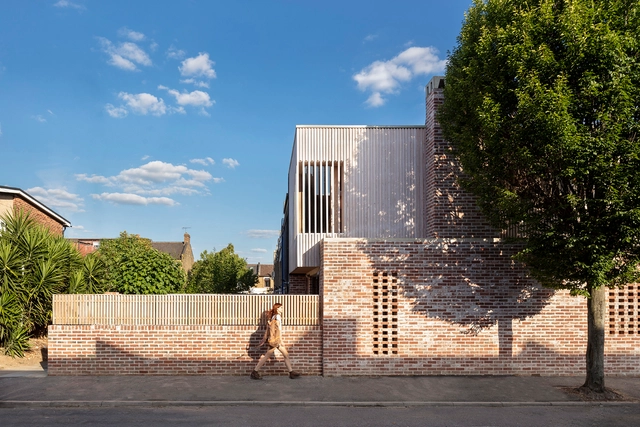
Leyton House forms a new home for a filmmaker and writer. The design reimagines a neglected, narrow plot that sits at the end of a 1960s terrace built on the site of a World War 2 bomb. The brief was to maximize the potential of the infill site creating a space to live and work that suits the client’s current requirements but also has the potential to adapt and grow as circumstances change.
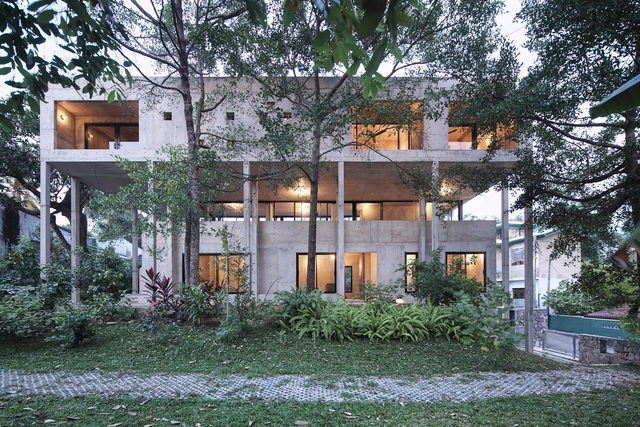
Brief. The brief was for a 4-bedroom house on 40 perch land, with all the service areas and related amenities. The question was how to organize the brief through connections, overlaps and separations of spaces to create the right matrix. We were taken on a tour to see the client’s existing house, and to see the little rituals that have been developed over the years that they would want to bring to the new house; it was a great insight and a briefing.
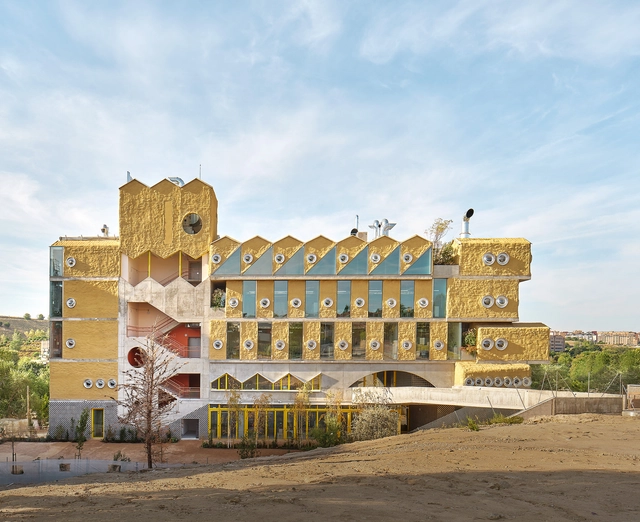
The design of Reggio School is based on the idea that architectural environments can arouse in children a desire for exploration and inquiry. In this way, the building is thought of as a complex ecosystem that makes it possible for students to direct their own education through a process of self-driven collective experimentation— following pedagogical ideas that Loris Malaguzzi and parents in the Italian city of Reggio nell’Emilia developed to empower children’s capacity to deal with unpredictable challenges and potentials.
Borgo Gallana is a collection of three white stone traditional houses located amongst olive trees in the countryside of Oria, Puglia. With already two existing structures on the land, Studio Andrew Trotter designed a courtyard between them, and two staircases on both sides. Also, the existing properties were extended in order to obtain three self-contained houses. Those houses are composed by:
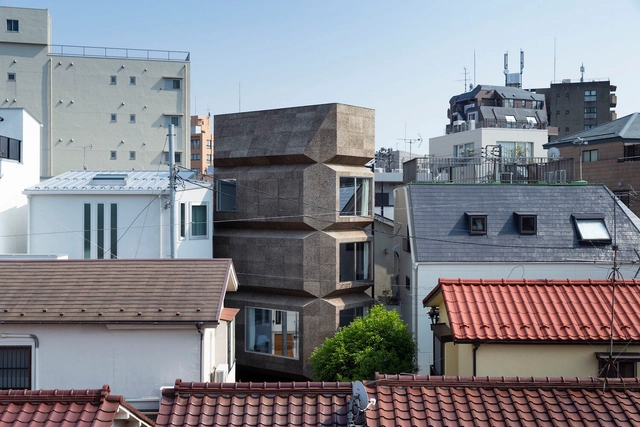
Built for a couple, their two children, and their two cats, this combined residence and office on a tiny urban lot features bay windows on all sides. Our research into bay windows from around the world revealed that they take many forms and play many appealing roles, from a device for bringing in light to a type of furniture for sitting on to a decorative interface with the city.
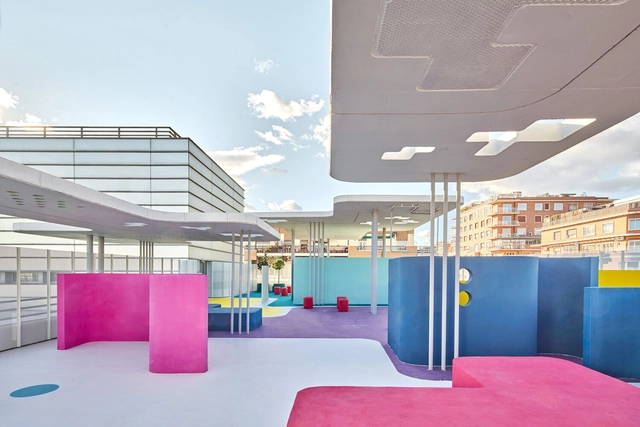
The singularity of this project begins with its location at the Public Maternity and Pediatric Hospital Gregorio Marañón in Madrid, carried out by the architect Rafael Moneo in collaboration with José Mª de la Mata in 2003. This project was a motivational initiative by the Juegaterapia Foundation which produced and submitted a successful proposal to occupy the roof of the O'Donnell Maternity Hospital and begin its transformation into a playground so that hospitalized children can play outdoors. This colorful and unexpected space aims to improve the day-to-day life of children and their families, with the intention of facilitating mutual encounters and accelerating their recovery.
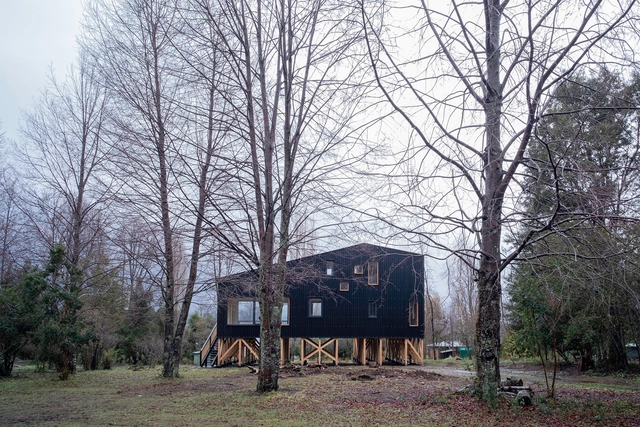
Tekila House is located in the south of Chile, in the Araucanía region, a few kilometers away from Lican Ray. The main requirement was to design an efficient, comfortable, well-lit house with a good view of the lake. The site is defined by Lake Calafquen to the south and the native forest to the north. The main decision was to raise the project from ground level with two objectives; the first is to face the north, the sun in the southern-hemisphere allowing the greatest entry of light and heat, and the second, is to obtain a better view of the lake. The terrace projects to the south to contemplate the lake and protect itself from the summer sun. The main space, composed of the dining room, living room, and kitchen, is positioned in an east-west direction, in this way it manages to have a view of the lake and the forest. A double height is projected with a connection to the second floor, facilitating the interaction between the inhabitants.
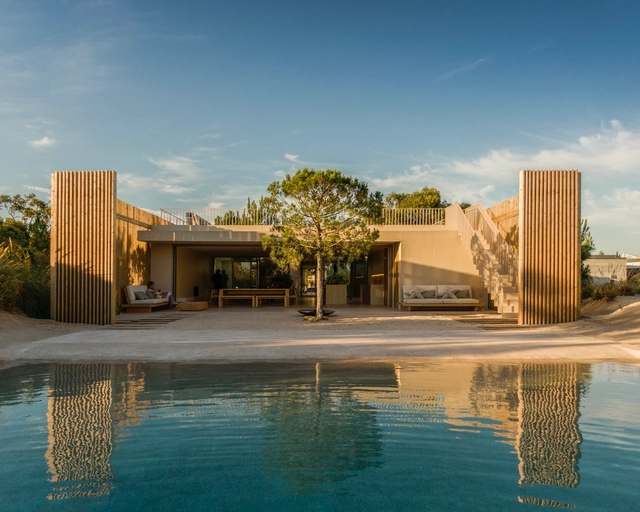
The house sits in a landscape of immense natural beauty, facing the sea and being aligned with many neighboring buildings. The two key principles that defined the project were the importance of preserving the environment, based on ecological support – and, more specifically, protecting the dunes and the local vegetal species – as well as the need to ensure the inhabitants' privacy. Drawing from these ideas, a large dune was carefully shaped and covered with native plant species, surrounding the house.
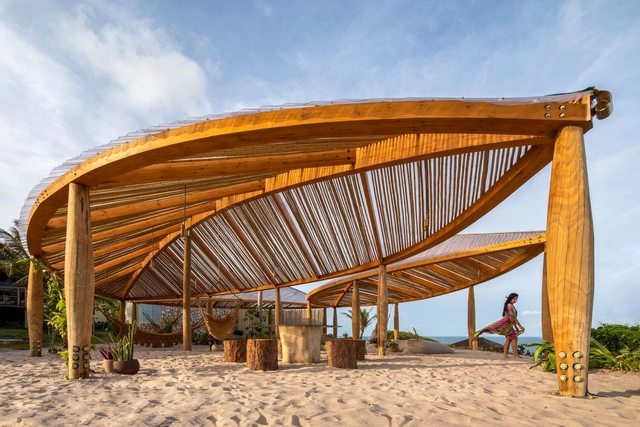
Folha’s sagradas it’s a pavilion inside a Hotel in the Northeast of Brazil, which it’s in front of a stunning beach populated by turtles and dolphins. The Hotel makes from the respect for its location and its coexistence with nature the reason, the origin and the flag of its touristic experience.
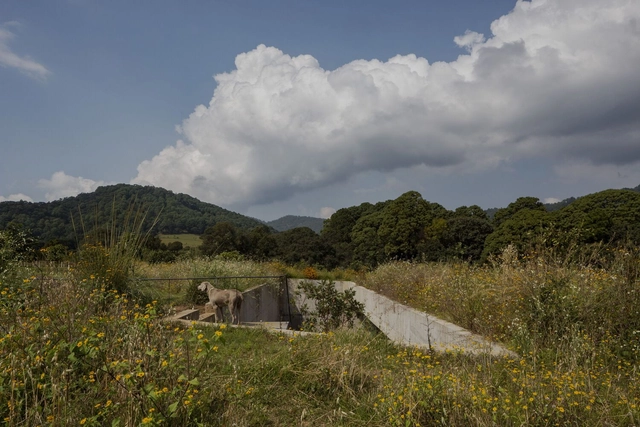
A couple of hours outside of Mexico City, the rural lake town of Valle de Bravo sits in a valley between mountains, offering perennially agreeable weather and panoramic nature views. Within it, the site for Casa Aguacates — a residential project meant to function as a weekend retreat, and designed by architect Francisco Pardo — is a peculiar one, in which an avocado field slopes down into a dense forest and glen.
This set of 8 houses around a shared space is located in an irregular plot previously occupied by a large house, within walking distance from Santiago's financial center. The common area is conceived as a pedestrian walkway with continuous edges, whereas the houses on their sides have a symmetrical "L" plan around a squared courtyard.
https://www.archdaily.com/968016/8-houses-in-alcantara-street-cristian-izquierdo-lehmannClara Ott
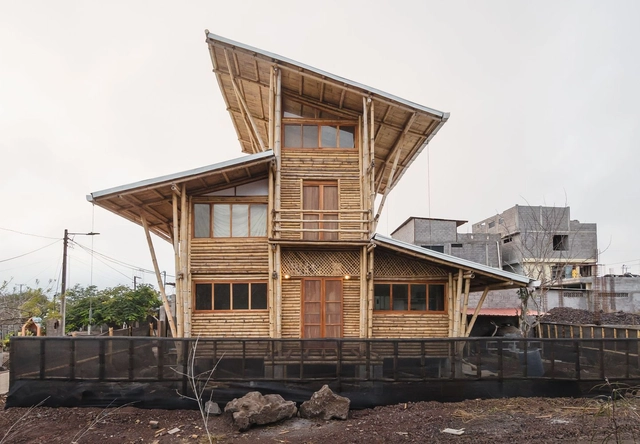
In 2015, Dany and Jenny founded the first artisanal brewery on San Cristóbal Island, in Galapagos: La Cervecería Endémica. The proposal sought to be sustainable, natural, and local; as much as possible, considering the limitations of an Island (resources and energy supply, transportation, etc.). After four years of work and with the arrival of their first child, the couple decides to build the first house of their own on a plot of land located on the urban edge of Puerto Baquerizo Moreno, one kilometer away from the coast. In the same way as in the brewery, they seek to build their home sustainable, local, and as sensitive as possible to the natural context of the Islands. The Endemic House, therefore, aims to be a simple, efficient house and prioritizes the use of the local workforce and materials. The limited budget represents an important challenge in terms of management and logistics.
In this episode of “Behind the Scenes”, where we showcase the work of visionary artists and ask about their experiences beyond what is seen by the public, we are presenting Nicolás Sánchez: a designer from Pehuajo, Buenos Aires (Argentina). Nicolás defines himself as an eccentric person with a strong obsession with symmetry and mathematics applied to the objects and spaces that surround him, which awakens in him the curiosity of wanting to understand everything and to find the reason for things. Through his illustrations and animations, he transmits and shares everything he perceives and feels with playful, surreal, and impossible spaces.