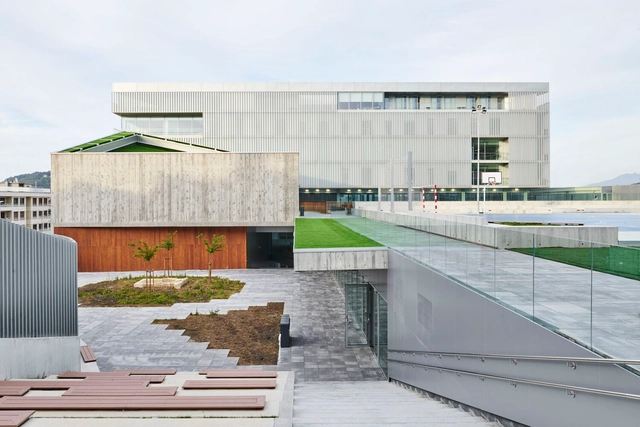
Wooden elements have the power to add warmth to a space or building. Through their shades, textures and rustic look, wooden surfaces tend to stand out, especially when used alongside more neutral and sober materials. In the Aldapeta María Ikastetxea School, a project developed by IDOM in the city of San Sebastian, Spain, the architects used the material in a particularly interesting way. Wood panels brought visual comfort and warmth to the building, whose material palette is limited, focusing especially on the use of glass, steel and exposed concrete.
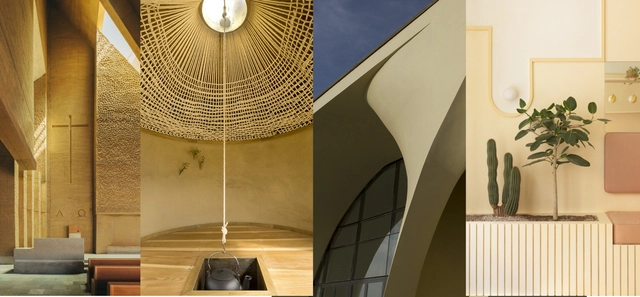
Inspired by the warm tones of harvested crops, Wild Wonder was selected as Color of the Year 2023 by AkzoNobel. Extensive research conducted by AkzoNobel, including color experts and international design professionals, identified the "Wonders of the Natural" swatch at the heart of global social and design. This trend is inspired by nature as people are re-evaluating their relationship with the environment as the source of everything in their lives. # d0c599, or pale yellow/ olive green, captures the moment's mood and conveys serenity and positivity after these recent years of uncertainty and despair.
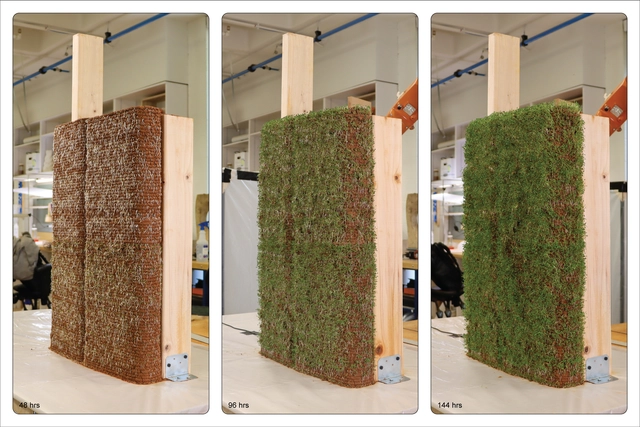
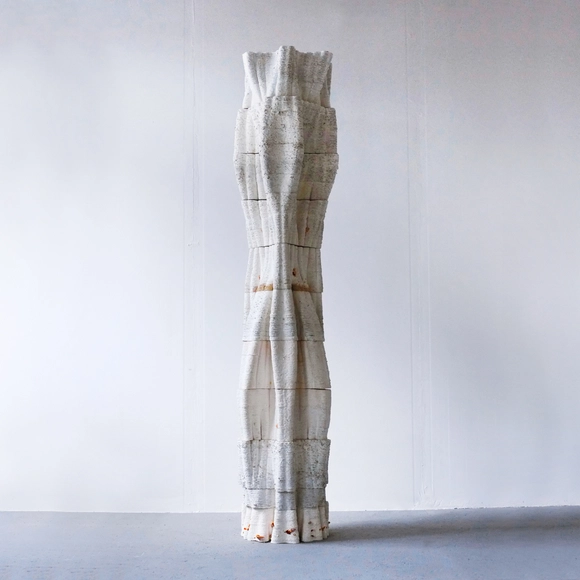
The relationship between architecture and nature is complex. If, on the one hand, we enjoy framing nature as art in our homes; on the other hand, we try at all costs to avoid the presence of obstructive "real" nature in our walls and structures, which can be damaged by roots and leaves. At the same time, we use green roofs, vertical gardens and flower boxes to bring cities closer to nature and improve people's wellbeing; but we also construct buildings with materials that are completely dissociated from fauna and flora. Although the advancement of biomaterials and new technologies is gradually changing this, we should nevertheless ask ourselves whether the structures and buildings we occupy need to be separated from the nature that surrounds them. This was the question that led researchers at the University of Virginia (UVA) to develop geometrically complex 3D-printed soil structures on which plants could grow freely.
Sanctuary House / Tai Ikegami. Image Cortesia de Western Window Systems
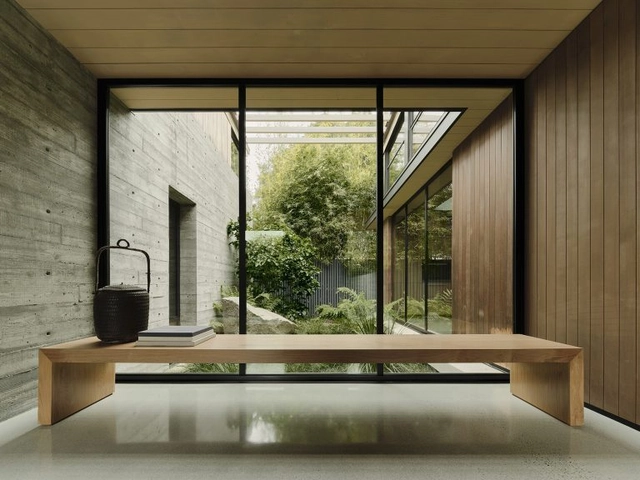
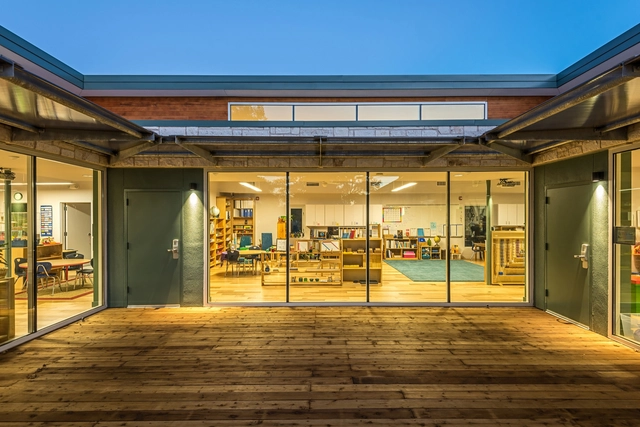
Interior courtyards can be found in various types of traditional architectures around the world, especially in warmer climates. They can be classified as introverted, safe, and even sacred spaces in some cultures. They can also be gathering places and, above all, provide greater contact with nature while providing light and ventilation to home interiors. To properly design these spaces and create a functional relationship between the inside of a house and its courtyard, it is important to use appropriate doors and openings. In this article we highlight 5 projects that use sliding glass doors for the seamless integration of both spaces.
Videos
The Arc at Green School / IBUKU. Image Courtesy of IBUKU
You may have heard about the use of bamboo in the temporary shelters created in humanitarian aid efforts after an earthquake, but bamboo can actually be very valuable in the construction of buildings that can withstand earthquakes. Why should we look towards bamboo as a temporary solution after a disaster when we could save lives by building with it in the first place? Bamboo is a great option for building homes and shelters in earthquake-prone regions, given that the structures are well designed, constructed, and maintained. From old traditional structures to modern builds, several examples from across the globe have proven themselves against the very forces of nature that have brought down concrete and brick buildings.
https://www.archdaily.com/988992/is-bamboo-a-safe-construction-material-in-natural-disasters-like-earthquakesLayane Al Madani
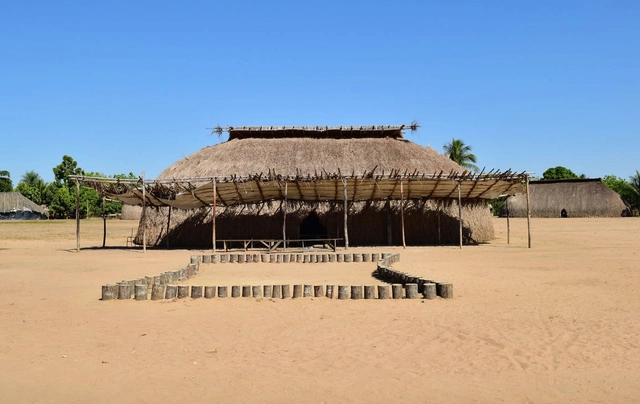
“We should admit nature as an immense multitude of forms, including each part of us, who are part of everything”, says Ailton Krenak, renowned indigenous leader, in his book Ideas to Postpone the End of the World. The culture of native peoples does not understand humanity and the environment as things that are separate or superior to each other, but rather as parts of a whole. Through this particular understanding of the universe, these peoples are led to a sensitive appropriation of the territory, with structuring beliefs that are also reflected in their architecture, raising the very concept of sustainability to another level, since nature is not seen as a resource to be used, it is thought of as part of the community.
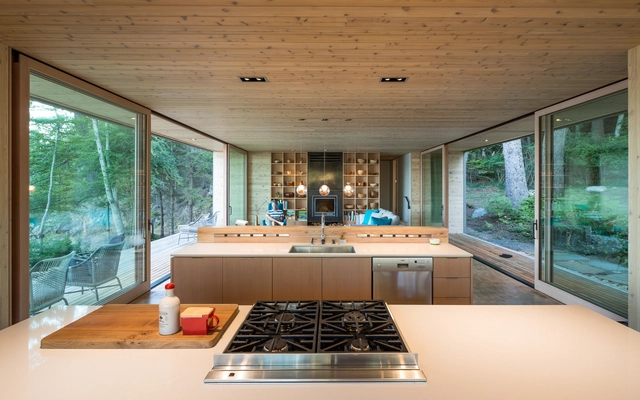
Flexibility within a space emerges as an architectural concept that follows society’s transformations. As the American architect Frank Lloyd Wright said, “Architecture is life, or at least as it was lived in the world yesterday, as it is lived today or ever will be lived.” In that sense, changing a kitchen’s layout goes further than its aesthetic adjustments; it reflects the way people are living. Opening the traditional closed kitchen creates a more flexible space in which different activities share a visual connection without structural barriers.
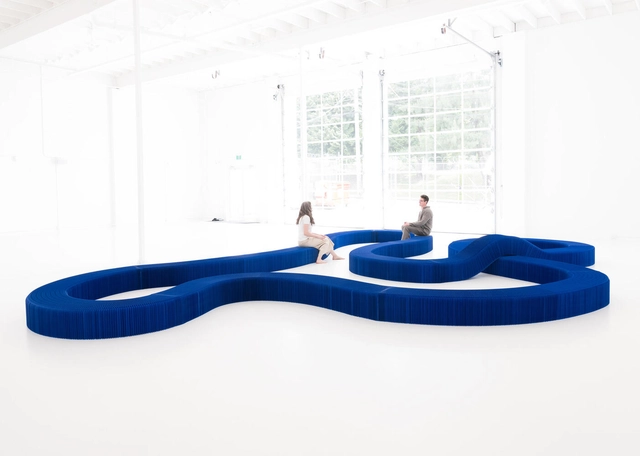
Next to a wall or in the corner of a room, most sofas seem relegated to lean against the only available wall in a space, preferably with a TV in front. As they are usually very large pieces of furniture, they can be complicated pieces to integrate into a room. In consequence, a sofa might end up "stiffening" a space, restricting movement and compromising flexibility – an increasingly important aspect for interiors – in a room. This is why the sofa can be considered an anchor piece in interior design; an element whose placement will probably not change throughout time, and that will certainly have an impact on the other elements within a space.
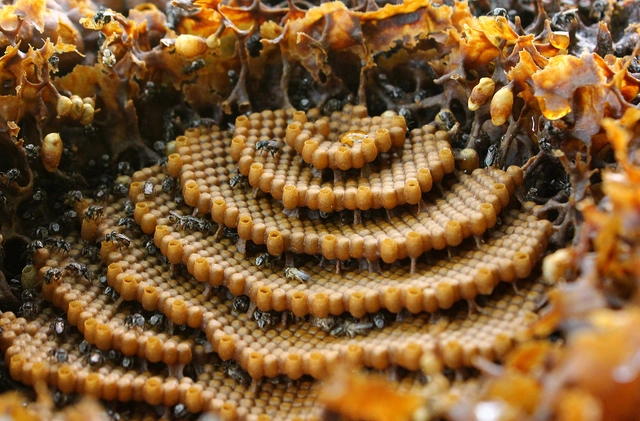
Bees are perhaps the insects that most arouse our fascination and curiosity. With the exception of Antarctica, they are found on all continents, in all habitats that contain insect-pollinated flowering plants. Representations of humans collecting honey from wild bees date back to 15,000 years ago, and pots of honey have even been found in the tombs of Egyptian pharaohs like Tutankhamen. Although we generally have a fixed idea about what cartoon bees look like, there are thousands of species around the world, with different sizes, colors and behaviors. There are even several examples of solitary bees, many without stingers, and even some species that survive by plundering other weaker colonies. But something that has consistently impressed researchers is the organization of their hives, which are truly highly populated cities with an efficiency to make any urban planner envious.
As a response to this rapidly changing world, flexibility has become a top priority in contemporary interior design. That explains, for example, the growing demand for spacious and multifunctional spaces over rigid, enclosed floor plans –as is the case of the open kitchen trend. This shift in spatial needs suggests that designing for the present and the future is about creating spaces that can easily adapt to many uses: one day, a room may be destined for a big event; another day, it may be needed for smaller, more private environments. Therefore, materials, products and other interior design elements must respond accordingly, integrating technology and innovation to create flexible, yet functional spaces.
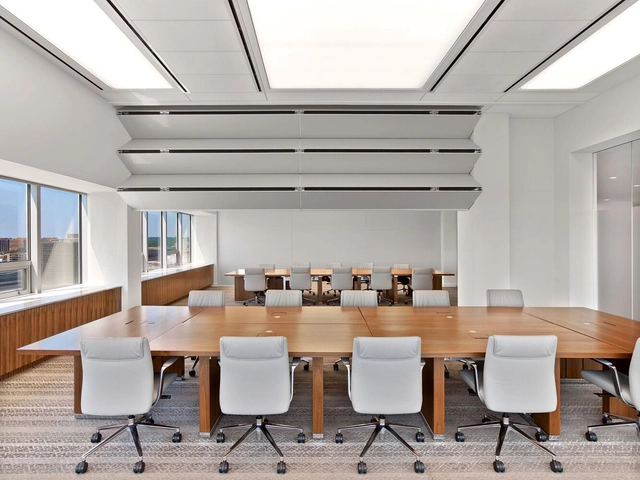
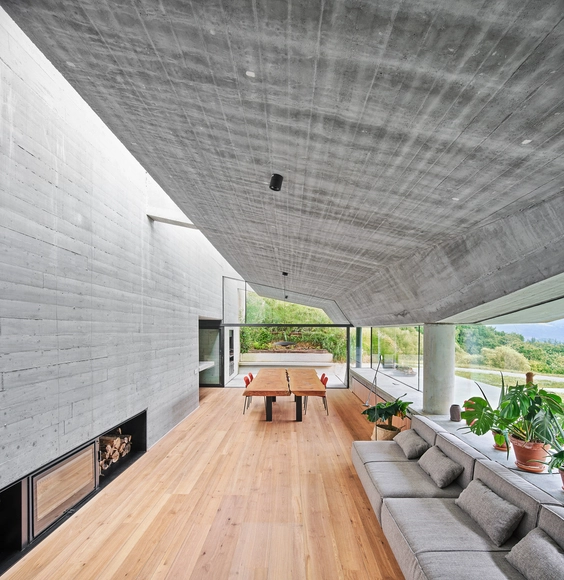
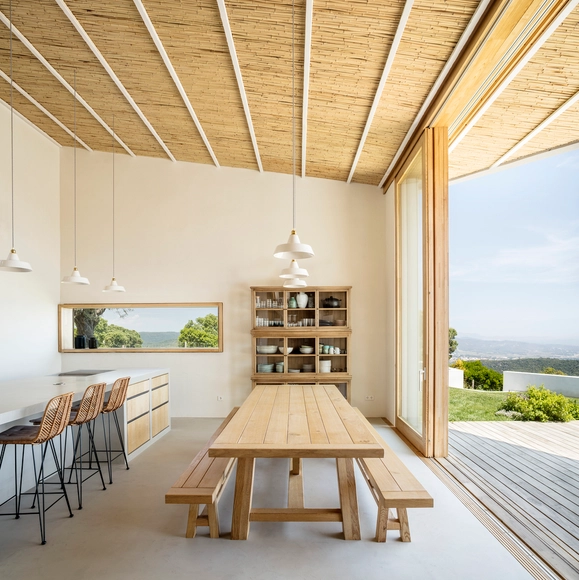
Architects are constantly diving into design strategies that aim to select the best products to create outstanding atmospheres inside their projects. The solutions adopted in projects, especially in interiors, are highly influenced by trends that mirror what society values most at the time. But how are interiors being designed nowadays? With a focus on natural interiors and the interaction with their context, architecture is prioritizing local materials and textures, natural light and the use of minimal furniture that allows continuity throughout space.
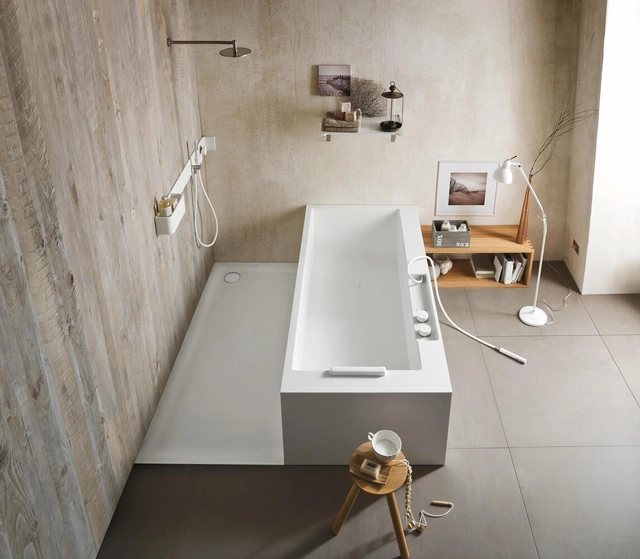
Achieving the perfect bathroom design and layout for each user comes with a lot of very detailed decision-making. One example is the shower versus bath debate, which includes valid arguments in favor of each option, and no objective right or wrong. When designing a bathroom, architects must use their experience and perception to make decisions that will best respond to the layout’s spatial needs. Shower or bathtub standard dimensions, placement of elements, and material selection are some of the factors that must be studied before adjusting to the user’s requirements.
As part of the effort to make the construction sector more sustainable in the face of the climate crisis, the bioeconomy has stood out. While the road to net-zero architecture is still very complex, the emerging shift in culture and general thinking is evident, and innovation seems to be driving this transformation.
As researcher, designer and MIT professor Caitlin Mueller once said, “The greatest value you can give to a material is to give it a load-bearing role in a structure.” Load-bearing components – foundations, beams, columns, walls, etc. – are designed to resist permanent or variable forces and movements. Similar to the bones of a human body, these support, protect and hold everything together. To fulfill that indispensable function, they must be made from materials with outstanding mechanical properties, which explains the prominence of cement and steel in structures. However, their high performance comes at a high cost: together, they account for 15% of global CO2 emissions. This makes us wonder, is it possible for structural materials to be truly sustainable? We know solutions like greener versions of concrete already exist, but there are many other alternatives to explore. And sometimes, the answer is closer than we expect; in the earth beneath us and the nature that surrounds us.
Brooke Street Pier / Cinca Morris Nunn. Image Courtesy of Danpal
In architecture, the concept of daylighting refers to when buildings allow natural light inside to provide a number of benefits, from enhanced visual comfort and productivity, to improved health and higher energy savings. However, to reach optimum levels of sunlight, reaching a balance is key; while too much can produce an uncomfortable glare and tremendous amounts of heat, too little can lead to health deficiencies and a greater dependency on artificial lighting. In that sense, the qualities of polycarbonate panels are unmatched, becoming an attractive choice for facades and roofs by achieving a soft, diffused light with varying levels of transparency, brightness and opacity.
“Counting sheep” is a well-known mental exercise that people use when trying to fall asleep. It is thought to have been popularized by Miguel de Cervantes in Don Quixote, who is said to have been inspired by a twelfth-century Spanish tale. Whatever its origin, it is curious to think that falling asleep has been a problem for so long, even long before the invention of electric light or social networks on smartphones. In the early 2000s, the University of Oxford developed a study to prove the effectiveness of this sheep-related method. The conclusion: this tactic does not work.
Videos
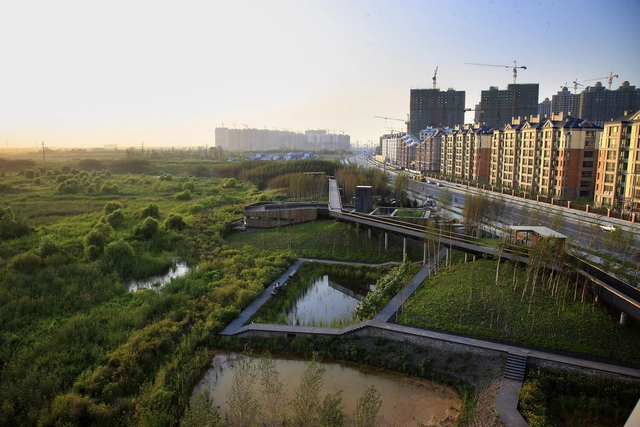
Qunli Stormwater Wetland Park / Turenscape. Image Cortesia de Turenscape
Eucalyptus forests in Australia are known to burn periodically. It is the trees' way of ensuring propagation, as its fruits – known as gumnuts – have an insulating layer breaks down with the heat of the fire. Once they open, the burnt soil is covered with seeds, initiating a process of forest renewal. Glenn Murcutt, an Australian architect, has created a body of work rooted in the country's landscape. His innovative houses embrace the possibility of frequent fires, including elements that allow for fire control with the least possible loss. In short, the houses are built with very non-flammable materials, always have huge water reservoirs, and a “flood system” that allows the building and its immediate surroundings to be spared in the case of a forest fire.