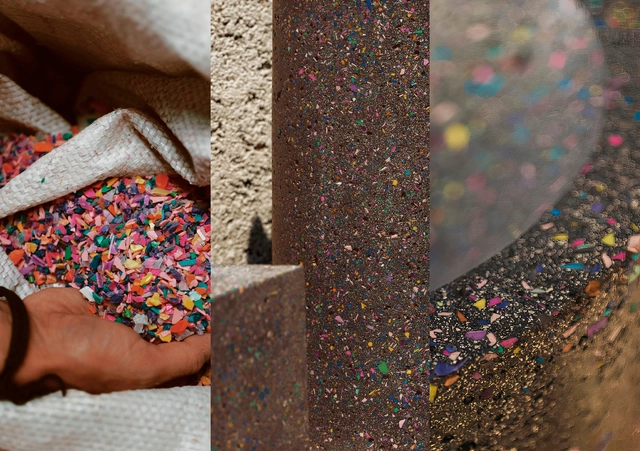
For decades, our society and the development of our built environment have been strongly associated with intensive extractive processes. While these methods were fundamental to the growth of urban areas, they also laid the groundwork for significant challenges that contemporary generations face today. Nowadays, construction debris accumulates on the peripheries of our cities, and plastic waste floats in the oceans.
https://www.archdaily.com/1013787/casting-furniture-with-upcycled-plastics-and-urban-debris-los-colados-projectEnrique Tovar
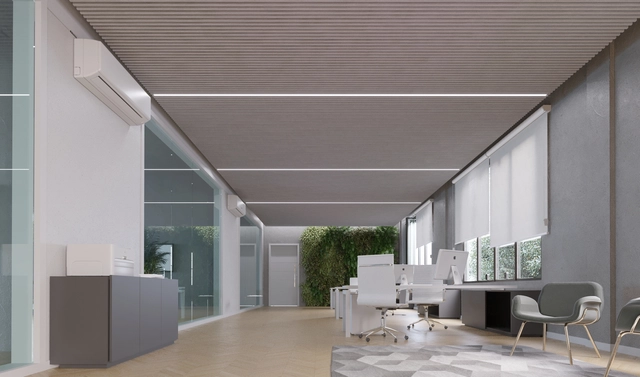
As we observe closely spaced parallel lines at a specific angle, we may be deceived by the illusion of a continuous or three-dimensional surface, although they are, in fact, individual lines. This phenomenon arises from the brain's natural tendency to simplify and seek visual patterns, interpreting the proximity of the lines as indicative of a unified ceiling. This illusion is often exploited in suspended ceiling architecture, where successive slats, when viewed at an angle, create the impression of a solid ceiling. This approach not only reduces the use of materials and keeps the infrastructure above the ceiling accessible, but also provides more surfaces for noise absorption, significantly improving the acoustic environment.
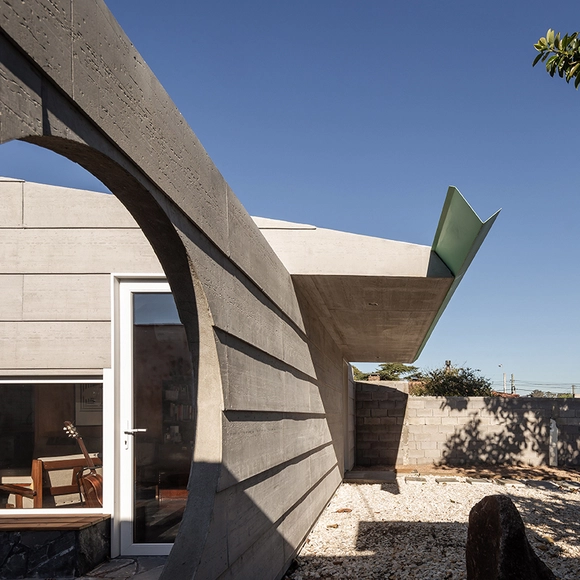
As commonly understood, gutters are elements installed along the edges of roofs and balconies to channel rainwater. Their primary function is to collect water flowing over the roof's surface and direct it to the appropriate downspouts. Proper sizing is crucial regardless of the material—whether aluminum, PVC, concrete, galvanized steel, or others. Depending on the climate in which the project is situated, the damages caused by incorrect application can be considerable.
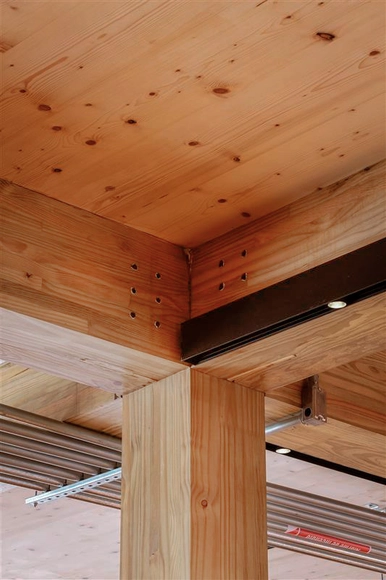
Mass timber is an innovative construction solution that is gaining prominence worldwide due to its sustainability and technological benefits. In 2020, the opening of the first Dengo concept store, located in São Paulo, marked the debut of the brand's first interactive factory and the pioneering use of CLT (Cross Laminated Timber) in a high-rise building in Brazil. Developed by architecture firm Matheus Farah and Manoel Maia, the project faced several challenges precisely because of its use of this new technology, which was just beginning to emerge in the construction sector.
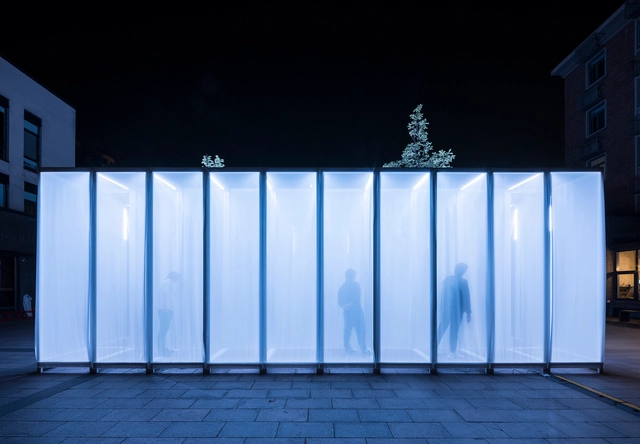
Translucency, at its essence, is an optical property that enables the total or partial passage of light through materials, without providing a clear view of the objects behind them. Despite its apparent simplicity, this property has fascinating applications in the architectural field, generating attractive and powerful proposals that play with light without obstructing views.
https://www.archdaily.com/1013517/seeing-through-layers-translucent-materials-in-architectureEnrique Tovar
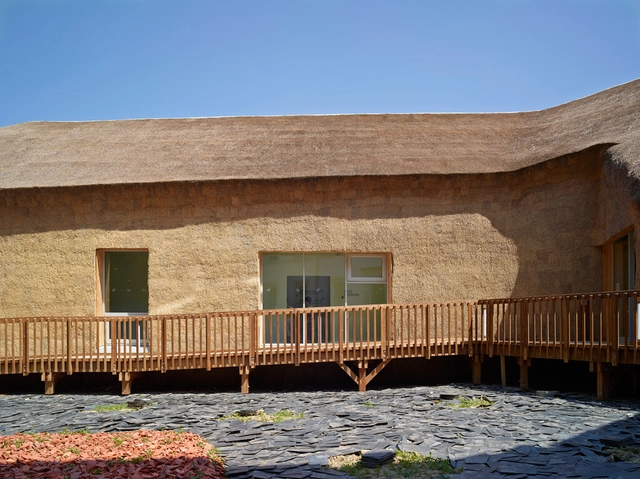
The use and demand for natural materials in architecture and interior design have facilitated the revival of updated traditional construction systems for the contemporary context. What was once considered rustic is now being explored in more modern settings; therefore, the application of the material is also subject to new forms of fixation, coloring, and orientation (horizontal or vertical). While wood is the dominant material in traditional systems and environmentally sustainable materials, another material that has been used for centuries, equally sustainable and biodegradable, and has received less attention is straw.
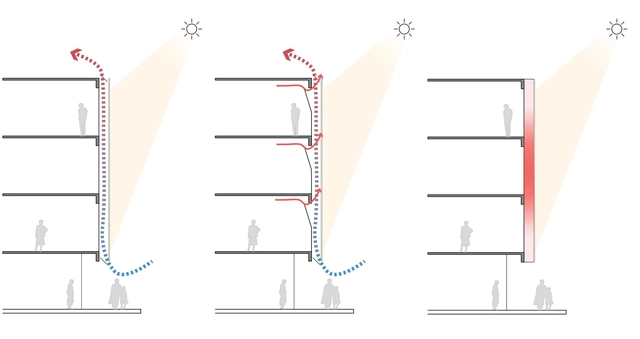
Double skin façades: Almost a self-explanatory name for façade systems consisting of two layers, usually glass, wherein air flows through the intermediate cavity. This space (which can vary from 20 cm to a few meters) acts as insulation against extreme temperatures, winds, and sound, improving the building's thermal efficiency for both high and low temperatures. Perhaps one of the most famous examples of double-skin facades is Foster+Partners' 30 St Mary Ax Building, "The Gherkin."
The airflow through the intermediate cavity can occur naturally or be mechanically driven, and the two glass layers may include sun protection devices.
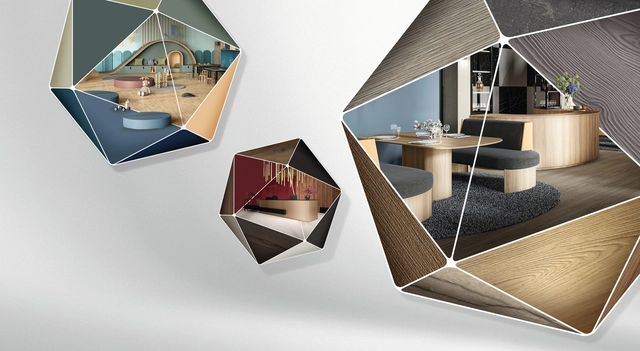
Nowadays, the cycles of change around society and architecture have generated new urban models, emerging technologies, and design trends that underline the need for constant adaptability in all areas. In this context, aspects such as flexibility, reliability, and simplicity emerge as distinctive elements, both in architecture and in the components that constitute it, including materials. This is why lines such as the EGGER Decorative Collection 24+, crafted from wood-derived materials, seek to redefine concepts through a rolling series, updated at most every two years. This dynamic enables a more agile response to new trends, influences, and product innovations that arise in the built environment.
https://www.archdaily.com/1012771/from-wood-stone-steel-and-uni-colors-a-decorative-collection-for-fast-moving-trendsEnrique Tovar
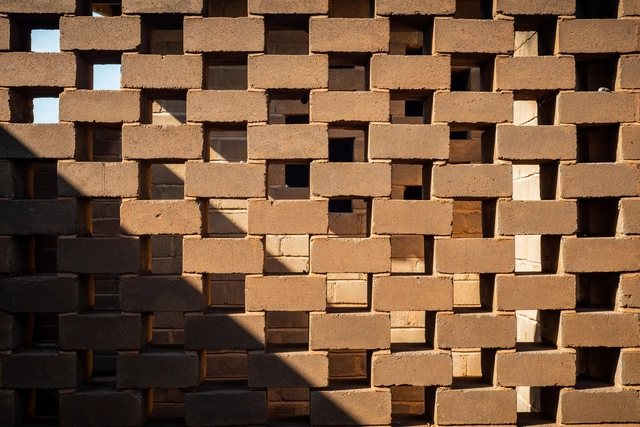
Bricks are part of the collective imagination when thinking about construction. These are elementary, ubiquitous, modular, light, and reliable materials for erecting buildings. However, traditional ceramic block manufacturing relies on burning clay in kilns at high temperatures, often powered by non-renewable fossil fuels such as coal or natural gas. Furthermore, the transportation process significantly increases its environmental footprint, as the materials are heavy and bulky. In light of this, there is a growing interest in alternative construction materials that offer a lower environmental impact and greater sustainability. Soil cement bricks –or Compressed Stabilized Earth Blocks– are a good example of an existing alternative, as they have a smaller environmental footprint due to their use of local raw materials and the elimination of the burning process, while maintaining many of the intrinsic qualities of traditional bricks.
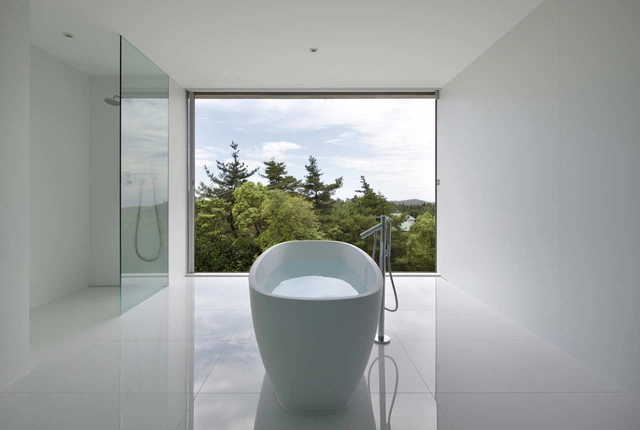
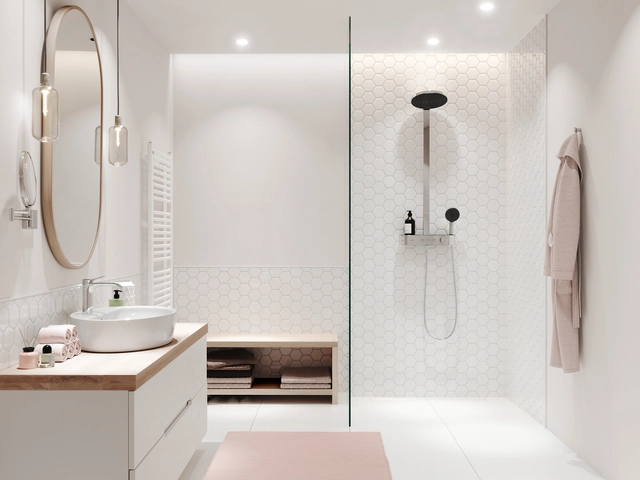
The private space is usually associated with hiding what goes on inside, allowing people to have certain moments of intimacy. Habitually, bathrooms have been designed for this purpose, reducing openings to a minimum or — sometimes — eliminating them completely.
However, being such an important space within a building, bathrooms have become an object of new exploration for architects. By blurring the limits of privacy — without losing it completely — these spaces are open to the outdoors, allowing the breeze to enter. How does this new experience feel? Check out 30 open bathrooms that play with the feeling of exhibitionism, without fully revealing what is happening inside.
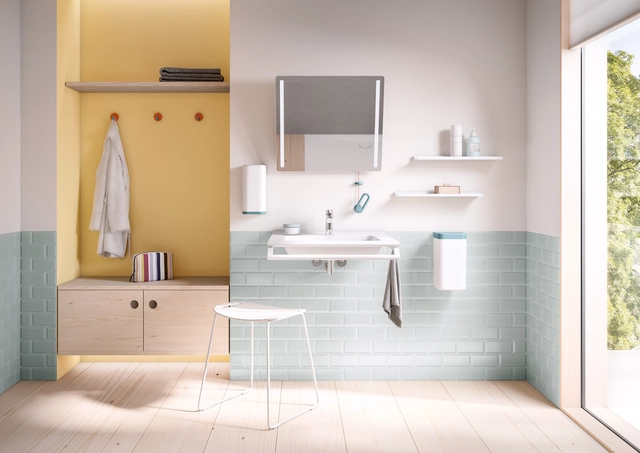
The influence of design on our physical and mental health has been largely explored in various contexts, ranging from spatial configuration to furniture. The topic has gained notoriety due to the growing awareness of human well-being, especially in recent times. An example of this bond between design and health is the emergence of concepts such as Neuroarchitecture, which seeks to understand the built environment’s potential in our brain. Another case that illustrates this approach, this time in furniture design, is the Paimio Sanatorium, where Alvar Aalto designed the tuberculosis sanatorium and all its furnishings. The chair created for the patient’s lounge —the Paimio Chair— facilitated their breathing due to its shape and the inclination of the backrest.
https://www.archdaily.com/1012377/healing-architecture-for-care-and-recovery-iconic-design-with-colorful-conceptsEnrique Tovar
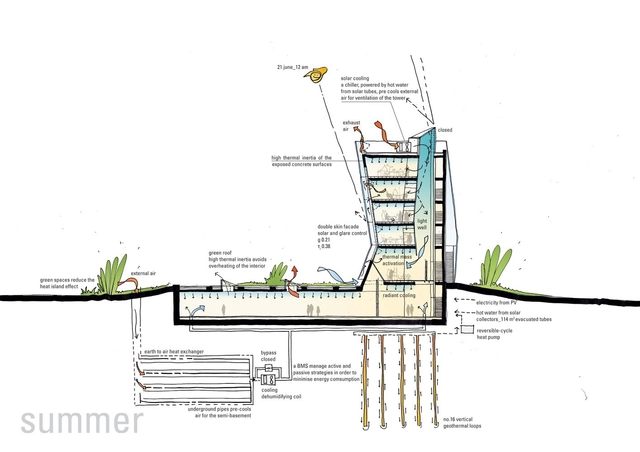
Unlike the air, the temperature in the subsoil varies very little during the year or according to geographical position. A few meters below the surface, the ground temperature is between about 10 to 21°C (50 to 70°F) depending on the region. Dig deeper, and the temperature increases between 20 to 40 degrees centigrade per km, reaching the Earth's core, which approaches 5000 °C. In fact, thinking about how we inhabit a sphere that is orbiting through space with a glowing center can be distressing for some. However, it may be helpful to learn that using Earth's forming energy to generate electricity is a sustainable and efficient way that is already common in some countries. At the same time, we can also take advantage of the mild temperature found a few meters under the ground to acclimatize buildings, whether in hot or cold climates.
Cortesia de SolarLab, Photo by doublespacephoto.com
Autonomy and freedom during the design process are invaluable resources for architects, especially when defining a volume and choosing materials, systems, and solutions for a building. The flexibility of these elements must not only promote their harmonious integration within a structure but, above all, allow architects to incorporate them without the need to change their initial concepts. This design freedom becomes even more crucial in the context of facades, specifically in building-integrated photovoltaic (BIPV) facades. This is due to the unique challenge of incorporating the energy capture function into the design of the building envelope, simultaneously demanding adaptation to the designer's aesthetic preferences and effective performance, as well as the entire infrastructure for capturing and transporting energy.
Videos
The Talavera Project. Image Courtesy of MANUFACTURA
Architecture, understood as a cultural product, is strongly influenced by diverse stimuli that include historical, geographical, and cultural aspects, among others. Together, these elements form a heritage that may (or may not) endure through time. Although architecture tends to adapt to each culture, modeling its traditional techniques according to its context and shaping the surrounding environment, there is no guarantee that the traditional elements in it will endure or remain unchanged over time. This is largely due to the constant evolution of society and technology, which sometimes tends towards universality and the adoption of a common language, rather than one of their own.
https://www.archdaily.com/1012790/at-the-intersection-of-innovation-and-tradition-the-talavera-projectEnrique Tovar
pixel application. Image Courtesy of Rieder Group / Florian Voggeneder
Nowadays, the concepts of reducing waste and upcycling have experienced a remarkable expansion in various fields of architecture, driven by the need to change the paradigm of consumption habits in both society and industry. This wave not only responds to sustainable approaches but has also demonstrated significant benefits in economic terms. Today, the transformation of various resources, from excavated earth to agro-waste and plastics, is being carried out to create new materials, thus consolidating the efficiency and feasibility of more environmentally friendly practices.
https://www.archdaily.com/1012597/transforming-waste-into-pixels-of-glassfiber-reinforced-concreteEnrique Tovar
"If the cement industry were a country, it would be the third-largest emitter of carbon dioxide in the world, with about 2.8 billion tons, surpassed only by China and the United States." This statement in Lucy Rodgers' BBC report on the ecological footprint of concrete stands out as quite shocking. With more than 4 billion tonnes produced each year, cement accounts for around 8 percent of global CO2 emissions and is a key element in the production of concrete, the most manufactured product in the world. To give you an idea, about half a ton of concrete is produced per person in the world every year, enough to build 11,000 Empire State buildings. With these huge numbers, is there any way to reduce this impact?
Cortesia de Programa Rolex de Mestres e Discípulos
Born in Brazil and educated in Paraguay, Gloria Cabral is an architect who early on learned that home can be many places—or none at all. Guided by a comprehensive understanding of the geography, culture, and social conditions of the places she designs, she has left her mark on buildings and artistic installations constructed in various locations, from Assumption to Venice.
Hotel renovations today transcend mere improvements in guest comfort or alignment with prevailing design trends. A major demand currently facing the industry is the need to respond to the growing wave of environmental awareness and embrace sustainable development objectives. The requirement to address sustainability is driven by a growing social awareness of environmental issues. Guests and stakeholders are increasingly advocating for sustainably certified structures, achieved through eco-friendly installations and innovative solutions, such as green roofs, eco-friendly materials, and innovative facades. This sustainability-driven shift benefits the environment and promises long-term savings in water and energy costs for hotels. Specifically in the case of hotels, improving the efficiency of hot water equipment can make a large difference in hotel management, as this generally represents a huge expense and waste of energy.