Tshepiso Seleke

BROWSE ALL FROM THIS PHOTOGRAPHER HERE
↓

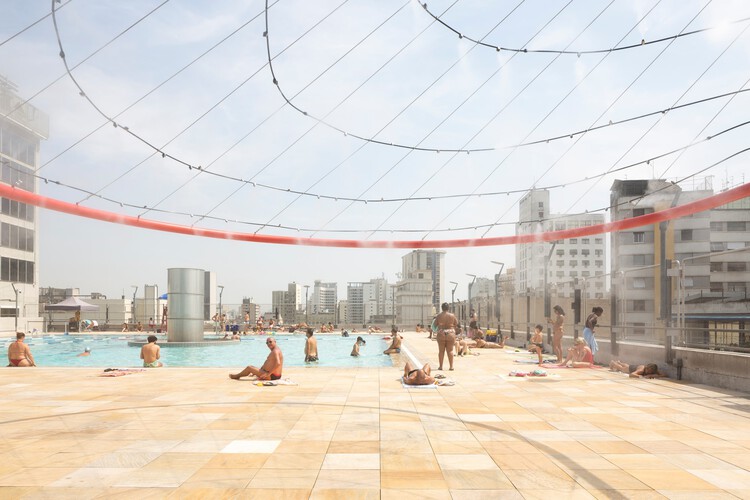
On the International Day of Democracy: Encounter, Equity and the Symbolic Power of Architecture

Audio available

On the International Day of Democracy, this year the United Nations revisits a traditional idea within the concept: broad citizen participation in government decision-making. On this occasion, the international body invites reflection on how participation and the inclusion of diverse voices in government decision-making can help build a more equitable society. From a spatial perspective, reflection on democracy can move beyond this vertical framing and instead understand it through encounter. What does it mean for a space to be democratic? How can architecture contribute to achieving the principles historically associated with democracy? In the current context of crisis in political organization systems worldwide, this day serves as a platform to question individualization and authoritarianism through the socio-spatial tools available to us.

On the International Day of Democracy: Encounter, Equity and the Symbolic Power of Architecture - More Images+ 10

Subscriber Access

The Role of Urban Design in Women's Safety: Lessons from Four Public Spaces

Audio available

Public space is often intended to be perceived as universal, but access is unevenly experienced. For many women, moving through the city involves a continuous assessment of exposure, visibility, proximity to others, lighting, transport access, escape routes and the likelihood of harassment. These calculations are shaped by spatial conditions as much as social ones. Safety is a question of urban form, maintenance, mobility, governance and the distribution of public investment. While the built environment may not cause gender-based violence, it can intensify vulnerability and normalize unequal access, especially to public spaces.

For architects and planners, there is a critical distinction between designing for security and designing for safety. Security strategies tend to focus on surveillance, control, policing and the management of movement, while safety depends on whether people can see and be seen, if routes are legible, whether public spaces support activities throughout the day, and how long-term maintenance is supported. The role of design is to alter the conditions under which public life takes place.

The Role of Urban Design in Women's Safety: Lessons from Four Public Spaces - More Images+ 30

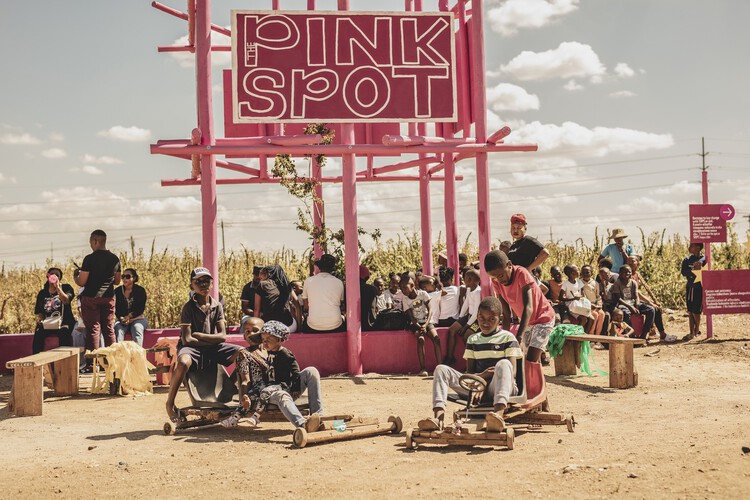
House of the Pink Spot / Frankie Pappas International

House of the Pink Spot / Frankie Pappas International - More Images+ 29

  • Architects: Frankie Pappas
  • Area Area of this architecture project Area:  9 m²
  • Year Completion year of this architecture project Year:  2023