-
Architects: Garton Group Architecture
- Area: 400 m²
- Year: 2026

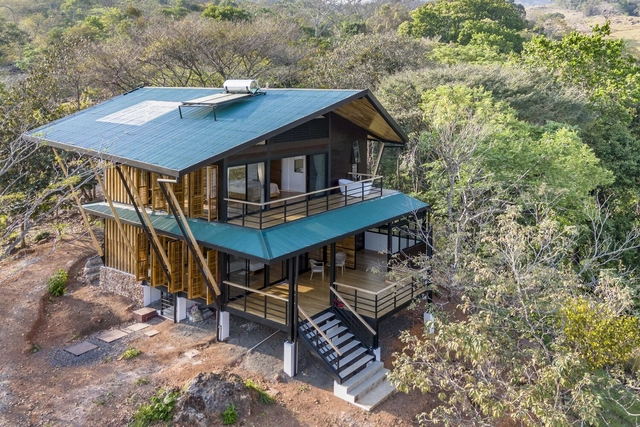
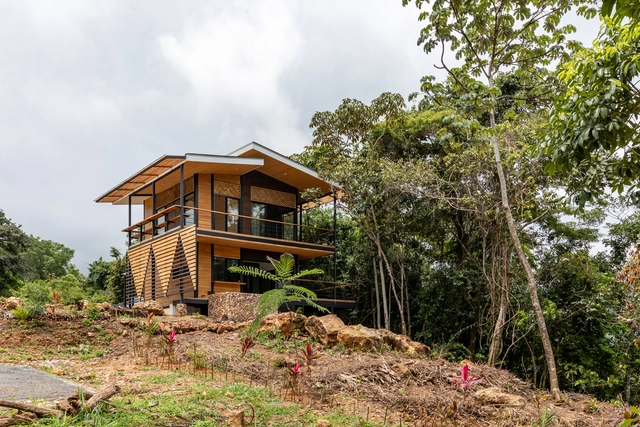
Costa Rica is a small country in Central America, internationally renowned for its tourism, biodiversity, and tropical climate. Given this context, tropical design strategies for hotel design are often more studied, but residential cabin projects can represent a more surgical approach to understanding the landscape. Often situated in remote forest or jungle locations, these cabins, apart from the common tropical design strategies, have to prioritize long-term durability and low-maintenance costs, particularly in regions where access for repairs is logistically difficult. This necessitates a design philosophy that favors both structural and climatic resilience.
Building in this context requires precise design responses to two primary environmental stressors: extreme precipitation and high humidity. Costa Rica's tropical climate, while varying by altitude, generally delivers an average monthly rainfall exceeding 150 mm in many regions. This constant water load can create a "wet-bulb" effect, where stagnant, saturated air accelerates interior material degradation and creates physiological discomfort for the inhabitants. To design effectively under these conditions, contemporary cabin architecture employs a three-fold strategy of minimal site invasion, the creation of thermal gradients, and passive climate mitigation.
.jpg?1642708223&format=webp&width=640&height=580)

For the third time since its founding in 2002, Colombia will host the Latin American Social Workshop for Architecture Students under the name 'Tejiendo Paisajes: TSL Manizales 2022'—the first edition of the event since the onset of the pandemic.
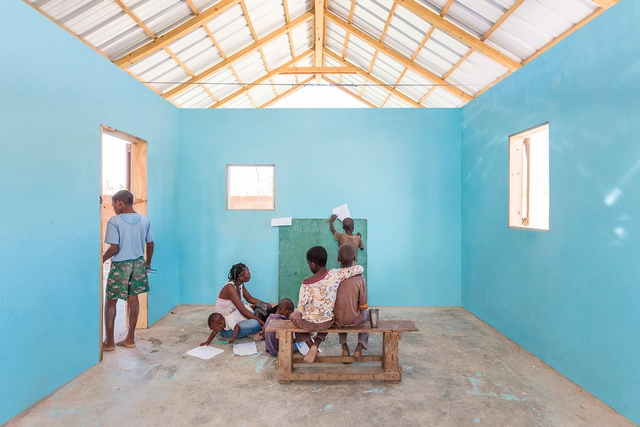
“These types of projects are of vital importance because they seek to reverse social, economic, urban, and political instability, providing organized attention to community needs and creating built platforms that serve as a bridge between the intrapersonal and intra-institutional scales.” Excerpt from the project description of the Community Development Center / OCA + BONINI
Since 2008, World Social Justice Day has been observed every February 20 to support and promote the international community's efforts to achieve sustainable development, poverty eradication, the promotion of full employment and decent work, universal social protection, gender equality, and access to social well-being and justice for all. According to the United Nations, “Social justice is an underlying principle for peaceful and prosperous coexistence within and among nations," representing the core of its mission to promote development and human dignity.
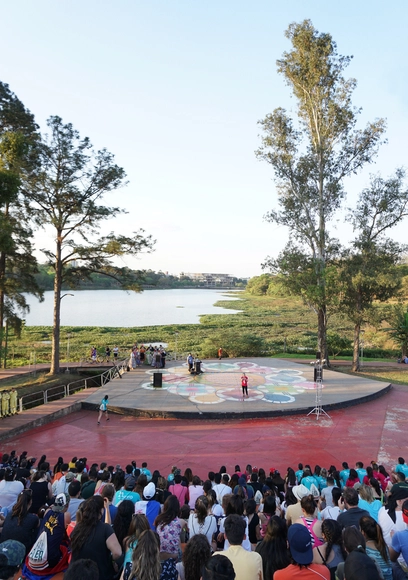

In Ciudad del Este, Paraguay, nearly 800 students from Latin America kicked off the 27th edition of the 2019 Latin American Encounter of Architecture Students. This event provides a platform for collective participation, integration, and learning, organized by the Latin American Coordinator of Architecture Students (Co.L.E.A - Cono Sur)—currently comprising Argentina, Chile, Uruguay, Peru, and Paraguay—with local support from the Paraguayan Union of Architecture Students (UPEA).
As is custom, connections were established with architects and workshop leaders to reflect under the theme "Designing a Sustainable Culture," focusing on three main axes: environmental and urban; sociocultural and political; and technological.
In this edition, official activities began on Saturday, October 28, with the Jaguata urban recognition walk, followed by the first lecture, 'Ecosystemic Urbanism,' by Salvador Rueda, Director of the Urban Ecology Agency of Barcelona. Rueda reflected on the importance of taking immediate action against the climate emergency, presenting examples of new urban models in cities.
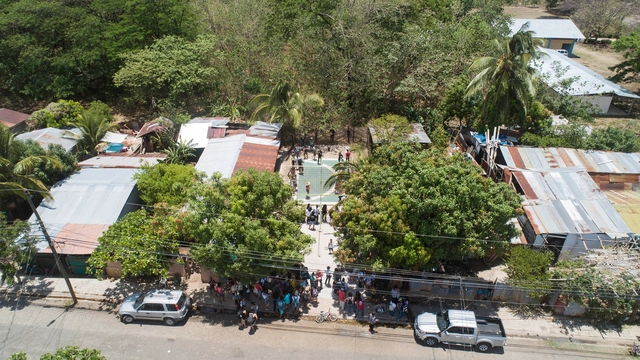

Following ten days of analysis, design, community engagement, and construction, more than 200 students and architects from across Latin America inaugurated three public amenities in late April, marking the 16th edition of the Latin American Social Workshop (TSL Costa Rica 2019) in the city of Santa Cruz.
.jpg?1527528570&format=webp&width=640&height=580)
Mike Smith, co-founder of the Costa Rican firm Entre Nos Atelier, has become the first Central American to receive the Loeb Fellowship from the Harvard Graduate School of Design (Harvard GSD).
Led by John Peterson, founder of the NGO Public Architecture, the program annually selects a cohort of architecture and urban planning professionals, aiming to "strengthen their ability to advance positive social outcomes and support a more equitable collective future." During their one-year residency, fellows receive financial support and unrestricted access to the digital educational resources of Harvard and MIT.