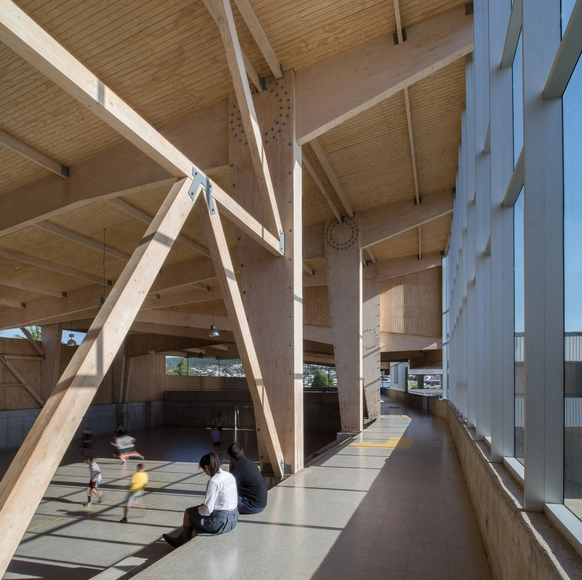
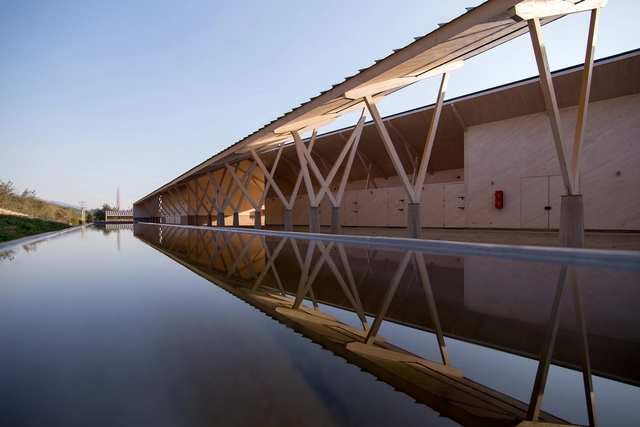
Responsibly sourced, wood is a renewable, low-emission resource that, in addition to storing carbon within its composition, features low thermal conductivity and high acoustic absorption, creating comfortable, well-insulated spaces year-round. A well-designed timber building will not only enhance these properties but will also be aesthetically pleasing for its occupants and highly energy-efficient.
Few commissions allow architects to focus on non-human users, and fewer still involve horses. While domestic pets like cats and dogs are common muses, the particular needs of horses present a unique challenge when designing stables. Since the horses, who are the stable's primary inhabitants, cannot articulate their needs, design relies on the rigorous requirements dictated by human caretakers, requiring a balance between streamlined human operations and maximized horse comfort and safety. Architects often seem to address this through three core principles: Equine Comfort & Well-being, Contextual Materiality, and Operational Efficiency. Thus, the resulting layouts are characterized by rigorous zoning that clearly separates the programs into residential (stalls), service (tack, storage, wash, feed), and training spaces (arenas, walkers). The designs also address visual well-being: Horses are social animals, so they strategically position stables to promote sightlines between animals and to the exterior, often employing louvered or open-frame systems. Furthermore, lighting is kept diffuse using materials such as translucent panels to prevent sharp, stress-inducing shadows in arenas. Similarly, circulation paths are designed for the safe, efficient movement of both people and animals.
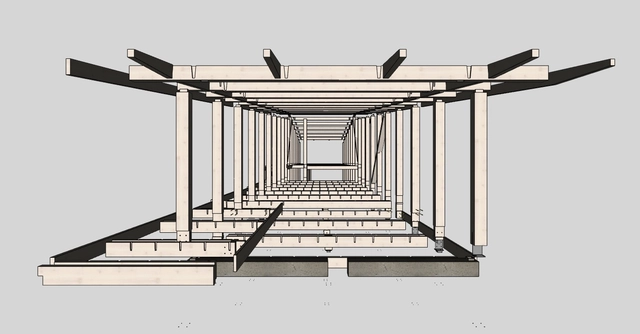
New technology in digital building, particularly Computer Numerical Control (CNC) systems, are changing the way that we design and build wooden structures. Their high level of precision allows us to design perfect assembles--without screws or visible metalwork--resulting in structures that are durable, easy-to-build, and extremely well-organized. We spoke with the experts at Timber to better understand the process of building a wooden structure and to compile a list of key tips in designing one.





.jpg?1554305368&format=webp&width=230&height=230&crop=true)


