FAT

BROWSE ALL FROM THIS PHOTOGRAPHER HERE
↓
Subscriber Access

Post Post-Modernism: 10 Projects that Reinterpret the Movement for the Digital Age

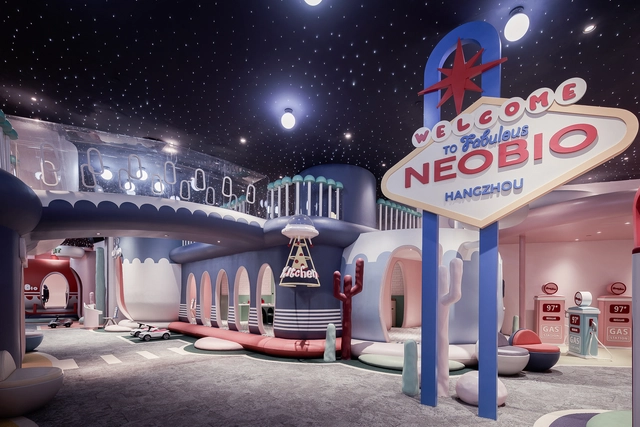
It's no secret that post-modernism has, in recent years, experienced something of a revival. The much-maligned movement's exhuberant and joyful take on architecture is perhaps a solace in difficult moments. Or, for the more jaded among us, perhaps it simply lends itself to Instagram. 

That said, it's not quite the postmodernism that took off in the 60s. Post postmodernism is also concerned with history and context, but with contemporary spins made possible by new technologies. Installations and other temporary typologies also bring with them a fresh perspective, preserved forever on the internet for our vicarious enjoyment. But perhaps most crucially, it is no longer so wholly a reaction against the hegemony of modernism; something that the original postmodernists were fixated with. Today's postmodernism can be at once joyful and reserved, vernacular and high-tech. 

Post Post-Modernism: 10 Projects that Reinterpret the Movement for the Digital Age - More Images+ 65

Subscriber Access

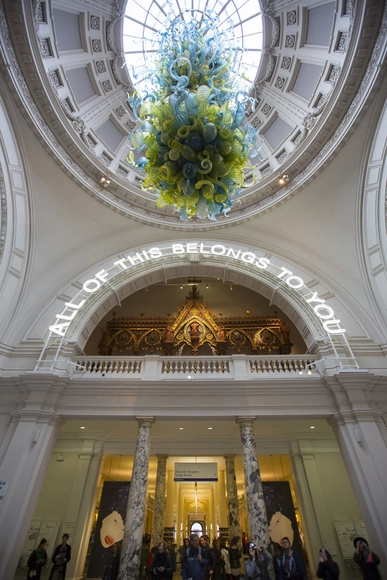
Review: 'All Of This Belongs To You' - Civic Urbanism At London's Victoria & Albert Museum

The Victoria and Albert Museum (V&A), named after the Queen and Her Consort, has its foundations in the Great Exhibition of 1851 amidst the wealth, innovation and squalor of the Industrial Revolution. Britain was flooded by prosperity which allowed for the development of major new institutions to collect and exhibit objects of cultural significance or artistic value. The institute’s first director, Henry Cole, declared that it should be “a schoolroom for everyone,” and a democratic approach to its relationship with public life has remained the cornerstone of the V&A. Not only has it always been free of charge but it was also the first to open late hours (made possible by gas lighting), allowing a more comprehensive demographic of visitor.

Their latest exhibition, which opens today, seeks to realign the museum’s vast collection and palatial exhibition spaces in South Kensington with these founding concepts. The interventions of All of This Belongs to You attempt to push the V&A’s position as an extension of London’s civic and cultural built environment to the fore, testing the museum’s ability to act as a 21st century public institution. To do this in London, a city where the notion of public and private is increasingly blurred, has resulted in a sequence of compelling installations which are tied together through their relevance either in subject matter, technique, or topicality.

Review: 'All Of This Belongs To You' - Civic Urbanism At London's Victoria & Albert Museum - Image 1 of 4Review: 'All Of This Belongs To You' - Civic Urbanism At London's Victoria & Albert Museum - Image 2 of 4Review: 'All Of This Belongs To You' - Civic Urbanism At London's Victoria & Albert Museum - Image 3 of 4Review: 'All Of This Belongs To You' - Civic Urbanism At London's Victoria & Albert Museum - Image 4 of 4Review: 'All Of This Belongs To You' - Civic Urbanism At London's Victoria & Albert Museum - More Images+ 4

Galvanizing a Legacy: FAT's Final Built Work is Unveiled

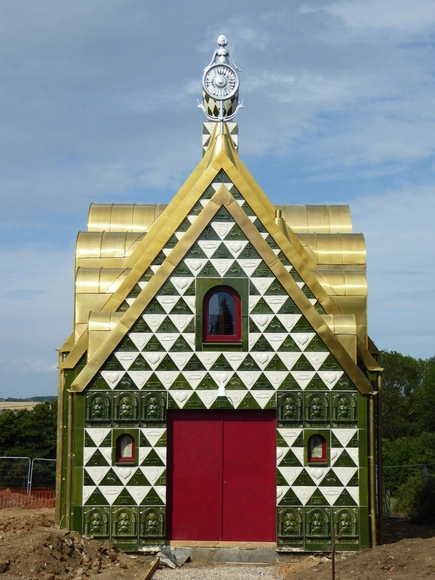
The scaffolding has come down, revealing the first glimpse of FAT's extraordinary A House For Essex. Designed in collaboration with British ceramic artist Grayson Perry and commissioned by Alain de Botton’s alternative holiday rental project Living Architecture, the house will be the final built work that FAT complete. The bejewelled two bedroom dwelling, topped with a shimmering golden copper alloy roof and clad in glinting green and white tiles, sits in the rolling landscape of Essex - Charles Holland (FAT) and Perry’s home county. Adorned with sculptures integrated into a wider narrative that spatially recounts the life of a fictional character called Julie, the barn-like shape, bold colours and decoration has not simply garnered widespread attention but has also captured people’s curiosity.

Find out more about the project in an interview with the architect after the break.

Galvanizing a Legacy: FAT's Final Built Work is Unveiled - More Images+ 10

20 Architects Design a Dolls' House for KIDS

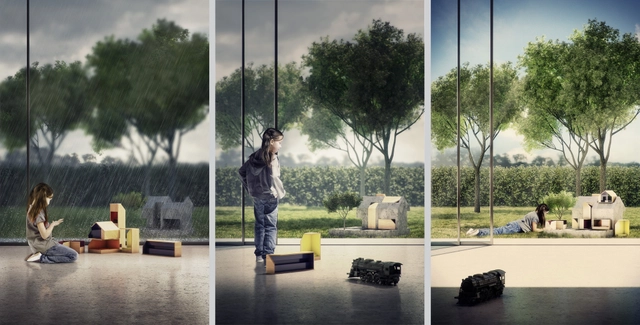
Inspired by the dolls' house that Edwin Lutyens designed for The British Empire Exhibition in 1922, twenty British practices are each designing a contemporary dolls' house in aid of the disabled childrens' charity KIDS. Each version will sit on a 750mm square plinth to be exhibited during this year's London Design Festival (14th - 21st September, 2013) before being auctioned. Each design must contain "a unique feature to make life easier for a child who is disabled."

DON´T PUBLISH!!! An Installation Celebrates The Creative Act Of Copying

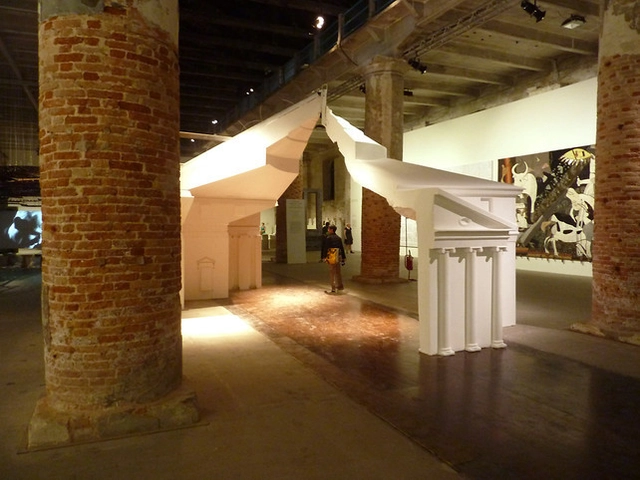
Modern architecture has a complicated relationship with originality. For centuries, emulating your elders was not only a compliment but a fundamental part of your education. But with the cult of personality surrounding early greats like Loos and Corbusier, everything changed, and emphasis was placed on the “lone genius” who could push the profession forward with a stroke of his (let’s be real, before the ’70s it was usually a “his”) pen. “Due to myths of authorship, and the media’s desire to simplify and personalize the design process, buildings are often attributed to a single person,” writes Sam Jacobs, the founder of UK design office FAT (Fashion Architecture Taste). In reality, great architecture is almost always the product of a team, usually building on the success of their past work.