Erik Eugenio Martínez Parachini

BROWSE ALL FROM THIS PHOTOGRAPHER HERE

Mexico City Architecture City Guide: 38 Projects From Tenochtitlan to the 21st Century

Subscriber Access | 

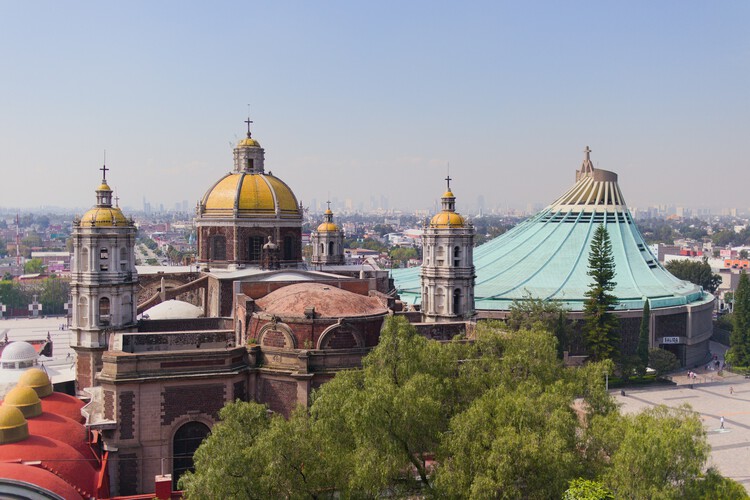
Mexico City is a sprawling metropolis of layered temporalities, where architecture operates as a continuous negotiation between deep-seated history and intense urban mutation. Built over the aquatic traces of Tenochtitlan, the city's fabric is an ongoing dialogue between eras: the monumental scale of the Pre-Hispanic Templo Mayor and the Viceroyalty architecture of the Catedral Metropolitana coexist with the modern and contemporary impulses that define its skyline. This dense juxtaposition creates a unique urban canvas where sacred geography, colonial imposition, and 20th-century ambition intersect.

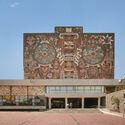
The mid-century marked a definitive era of experimentation, forging a Mexican Modernism that masterfully synthesized international structural rationalism with local identity and materiality. This synthesis is epitomized by the sweeping, plastic integration of art and architecture at the Ciudad Universitaria, the structural poetry of Félix Candela's hyper-parabolic shells, and the raw, monumental brutalism of Teodoro González de León and Abraham Zabludovsky. Parallel to this, the intimate, introspective mastery of Luis Barragán and Juan O'Gorman redefined domestic space, experimenting with light, vernacular color, and tectonic honesty to create spaces of profound spatial stillness.
Mexico City Architecture City Guide: 38 Projects From Tenochtitlan to the 21st Century - Image 1 of 4Mexico City Architecture City Guide: 38 Projects From Tenochtitlan to the 21st Century - Image 2 of 4Mexico City Architecture City Guide: 38 Projects From Tenochtitlan to the 21st Century - Image 3 of 4Mexico City Architecture City Guide: 38 Projects From Tenochtitlan to the 21st Century - Image 4 of 4Mexico City Architecture City Guide: 38 Projects From Tenochtitlan to the 21st Century - More Images+ 53

AD Classics: Los Manantiales / Felix Candela

AD Classics: Los Manantiales / Felix Candela - More Images+ 20

This article was originally published on April 14, 2014. To read the stories behind other celebrated architecture projects, visit our AD Classics section.

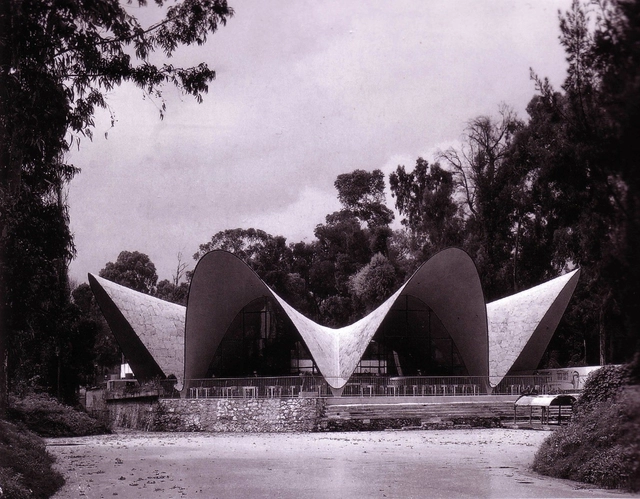
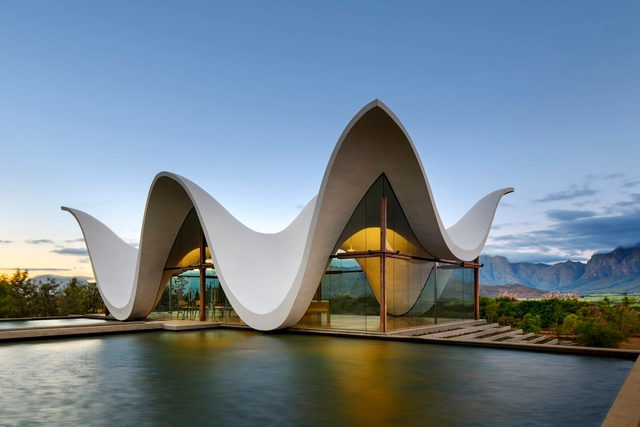
With the design for Los Manantiales, Felix Candela’s experimental form finding gave rise to an efficient, elegant, and enduring work of structural art. Comprised of four intersecting hypars, a strikingly thin roof surface creates a dramatic dining space. Built as Candela was establishing an international reputation as the foremost shell building, he demonstrated to the world his masterful combination of artistry and technical virtuoso.

Concrete Shells: Design Principles and Examples

Subscriber Access | 

Let's think of a paper sheet. If we tried to stiffen it from its primary state, it couldn't support its own weight. However, if we bend it, the sheet achieves a new structural quality. The shells act in the same way. "You can't imagine a form that doesn't need a structure or a structure that doesn't have a form. Every form has a structure, and every structure has a form. Thus, you can't conceive a form without automatically conceiving a structure and vice versa". [1] The importance of the structural thought that culminates in the constructed object is then, taken by the relationship between form and structure. The shells arise from the association between concrete and steel and are structures whose continuous curved surfaces have a minimal thickness; thus they are widely used in roofs of large spans without intermediate supports.

In structural terms, they are efficient because they resist compression efforts and absorb at specific points on their surface, especially near the supports — small moments of flexion.

7 Abandoned and Deteriorating Latin American Architectural Classics

Subscriber Access | 

How many lives does a great work of architecture have? The first begins when it is built and inhabited, judged based on the quality of life it provides for its residents. The second comes generations later when it becomes historically significant and perhaps its original function no longer suits the demands of society. The value of such buildings is that they inform us about the past and for that reason their conservation is necessary.

However, in Latin America, there are countless cases of buildings of great architectural value that are in tragic states of neglect and deterioration. Seven such examples are: