Collage of digitally manipulate images. Full credits available at UIA2026BCN website.
The UIA World Congress of Architects 2026 Barcelona (UIA2026BCN) launches the UIA International Emerging Workshop, the Congress's special format designed for students and young practitioners to engage in a real-time laboratory led by twelve recognised emerging architectural practices.
The Municipality of Burgas and the "Burgas 2032" Foundation are excited to announces the launch of the international architecture competition "A Space for Contemporary Art and Culture – Park Zone 3!"
Tiny House 2025 Architecture Competition invites you to reimagine the conventions to develop innovative solutions to the modern needs of shelter. Come be a part of this movement; join a new wave of habitat designers!
Volume Zero invites each one of you to participate in the 28th edition of our architectural competitions and the 6th edition of Tiny House Architecture Competition. This year's Tiny House aims to celebrate individuality, reimagine sustainability and to exalt simple, innovative yet resourceful living. The Tiny House Movement is also a platform that not only explores the avenues of 'mobile' or 'Off the Grid' Living spaces but also the freedom and independence they would offer. Come be a part of this movement; join a new wave of habitat designers! - https://bit.ly/4nQ8Kag
NOT A HOTEL DESIGN COMPETITION 2026, the latest installment of its annual design competition for architects and creators under 40. The winning entry will receive a prize of ¥10 million JPY, and its design will be built by NOT A HOTEL (which entails an additional design fee.)
Mark Jarzombek is Professor of the History and Theory of Architecture at MIT's School of Architecture + Planning. Jarzombek works on a wide range of topics – both historical and theoretical. He is one of the country’s leading advocates for global history and has published several books and articles on that topic, including the ground-breaking textbook entitled A Global History of Architecture (Wiley Press, 2006) with co-author Vikramāditya Prakash and with the noted illustrator Francis D.K. Ching. He is the sole author of Architecture of First Societies: A Global Perspective (Wiley Press, 2013), which is a sensitive synthesis of first society architecture through time and includes custom-made drawings, maps and photographs. The book builds on the latest research in archeological and anthropological knowledge while at the same time challenging some of their received perspectives. Jarzombek also published a book that interrogates the digital/global imaginaries that shape our lives: Digital Stockholm Syndrome in the Post-Ontological Age (University of Minnesota Press, 2016).
Life adapted to our material environment. Until the moment we discovered tools, technology and architecture. Then we acquired the power to adapt our material environment to life. You can look at the evolution of human history as a tale shaped by the materials we have known how to harvest and process. As evidenced in how we name the epochs of human history – the Stone Age, the Bronze Age, the Iron Age – our capacity to manipulate matter is perhaps the greatest force driving the development of our culture. By reclaiming the term materialism from the realm of empty consumerism, we aim to bring it back to the practice of formulating our future through form and matter. We will go on an odyssey through the material world through the works of BIG starting with solid rock and ending with the flow of electrons.
Launched in 2022, the annual student design competition is Resin’s tool to engage with students in the industry and capture forward thinking ideas from emerging professionals. Participants are encouraged to explore creative solutions through 3D visualization and present a concept that would bring a real-world benefit to the community surrounding the project location. The competition is open to current architecture, urban planning, and interior design students and recent graduates that currently live in the United States
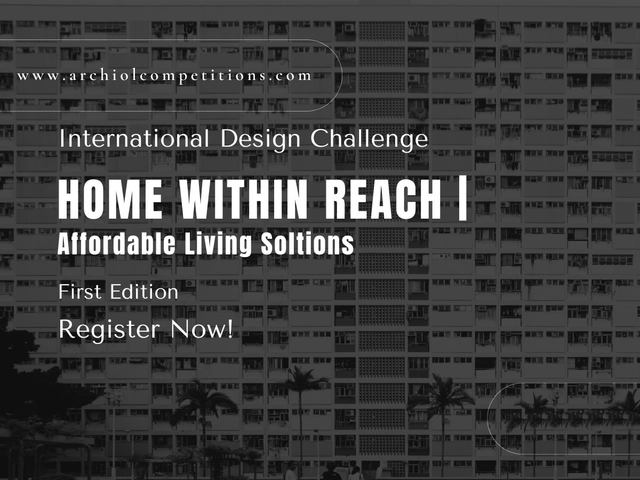
In recent years, rapid urbanization has transformed cities across the globe, bringing both opportunities and challenges. Among the most pressing issues is the need for affordable housing—a crucial component for ensuring equitable urban growth and stability. As populations continue to surge, traditional housing models often fail to meet the demand for cost-effective, high-quality living spaces.
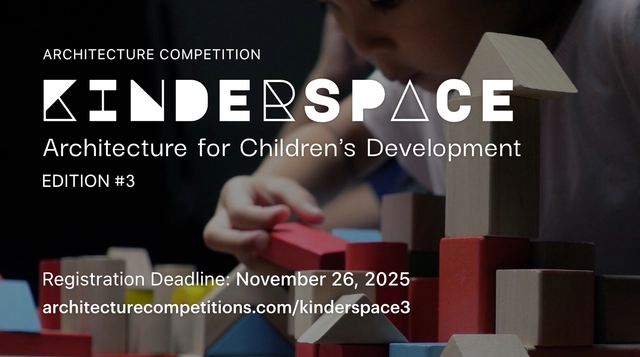
Enter the Kinderspace: Architecture for Children's Development #3 Architecture Competition now! 10,000 € in prize money! Closing date for registration: November 26, 2025
Introducing the Kinderspace: Architecture for Children's Development competition / Edition #3, an architectural challenge dedicated to crafting innovative educational spaces that enhance early childhood learning. As young children navigate their formative years, the environment in which they learn plays a pivotal role in their cognitive, emotional, and social development. Traditional educational settings often do not fully cater to the dynamism of early childhood, potentially stifling creativity and exploration.
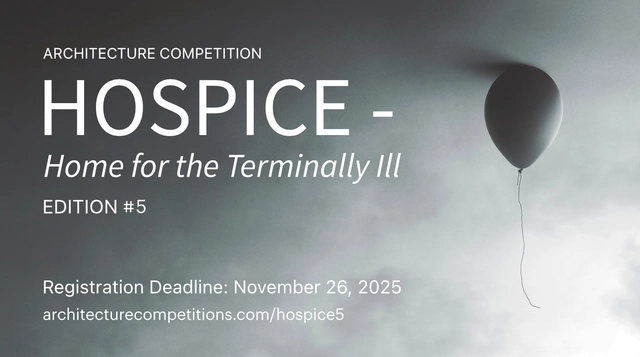
Enter the Hospice - Home for Terminally Ill #5 Architecture Competition now! 10,000 € in prize money! Closing date for registration: November 26, 2025
Introducing the fifth edition of the Hospice – Home for the Terminally Ill Competition, an evolving architectural ideas contest dedicated to crafting sanctuaries for those grappling with terminal illnesses.
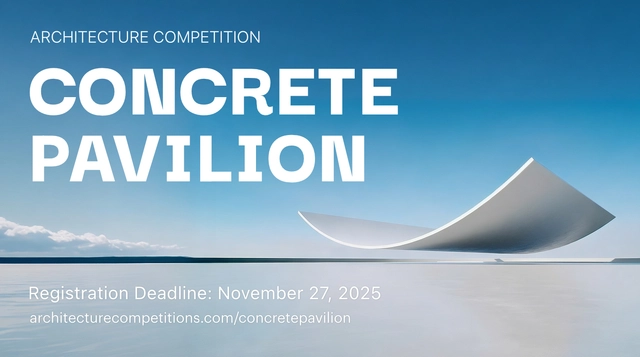
Enter the Concrete Pavilion Architecture Competition now! 10,000 € in prize money! Closing date for registration: November 27, 2025
Concrete is one of the most ubiquitous materials in the built environment. Its legacy spans centuries, from the enduring marvels of ancient Rome to the modern monoliths of contemporary architecture. But beyond its familiar gray tones and formidable strength lies a world of design potential, yet to be fully unlocked. With this competition, Buildner invites architects and designers to rediscover concrete—not just as a structural solution, but as a medium for innovation, expression, and experimentation.
The Rice School of Architecture invites you to attend its spring 2025 public programs, a dynamic series of lectures, exhibitions, and symposia that reflect our commitment to advancing architectural discourse and engaging with the pressing questions of our time. From thought-provoking talks by renowned practitioners to groundbreaking exhibitions and interdisciplinary collaborations, this semester’s lineup promises to inspire and challenge. Join us to build community through architecture.
From 22 to 25 January, students from the School of Architecture at the Royal College of Art (RCA) will present a selection of works in progresses at the College's Kensington campus for this year's MA Architecture Work-in-Progress Show.
Explore Nanna Ditzel's groundbreaking designs centered on freedom and movement. The exhibition presents some of Ditzel's most iconic designs. Designs that challenge our ideas of traditional furniture and let us discover new ways of experiencing the body and spending time together. Nanna Ditzel (1923-2005) was a pioneer of Danish design, known for her innovative approach by which she created furniture to liberate the body. Visit the exhibition and experience some of her most famous pieces, from the Hanging Egg Chair to the multifunctional Toadstool and other furniture landscapes.
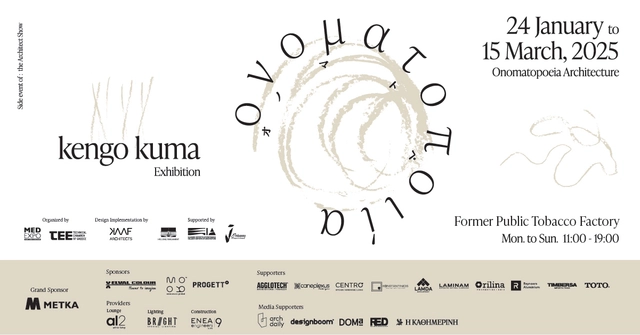
Following its successful presentation in Venice & Bonn, Onomatopoeia Architecture arrives in Athens-Greece for the first time, offering a unique exploration of the work of internationally acclaimed architect Kengo Kuma. This exhibition highlights Kuma's innovative use of materials and his ability to create a multisensory architectural experience inspired by the concept of onomatopoeia—the connection between sound and material expression.