1. ArchDaily
  2. Bali

Bali: The Latest Architecture and News

Subscriber Access

Concretizing the Global Village: How Roam Coliving Hopes to Change the Way We Live

Growing out of the success of coworking, the latest big phenomenon in the world of property is coliving. Like its predecessor, coliving is predicated upon the idea that sharing space can bring benefits to users in terms of cost and community. And, like its predecessor, there are already many variations on the idea with numerous different ventures appearing in the past year, each tweaking the basic concept to find a niche.

There are a lot of existing accommodation types that are “a bit like” coliving—depending on who you ask, coliving might be described as either a halfway point between apartments and hotels, “dorms for adults” or “glorified hostels.” And yet, despite these similarities to recognizable paradigms, countless recent articles have proclaimed that coliving could “change our thinking on property and ownership,” “change the way we work and travel,” or perhaps even “solve the housing crisis.” How can coliving be so familiar and yet so groundbreaking at the same time? To find out, I spent a week at a soon-to-open property in Miami run by Roam, a company which has taken a uniquely international approach to the coliving formula.
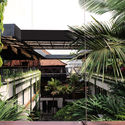
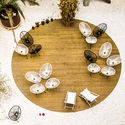
Concretizing the Global Village: How Roam Coliving Hopes to Change the Way We Live - Image 1 of 4Concretizing the Global Village: How Roam Coliving Hopes to Change the Way We Live - Image 2 of 4Concretizing the Global Village: How Roam Coliving Hopes to Change the Way We Live - Image 3 of 4Concretizing the Global Village: How Roam Coliving Hopes to Change the Way We Live - Image 4 of 4Concretizing the Global Village: How Roam Coliving Hopes to Change the Way We Live - More Images+ 7

Subscriber Access

Marine Research Center Bali / AVP_arhitekti

Marine Research Center Bali / AVP_arhitekti - Image 5 of 4
Courtesy AVP_arhitekti

Croatian design team, AVP_arhitekti, has submitted to ArchDaily their latest project, Marine Research Center Bali. Their proposal seeks to align the center with the elemental characteristics of Bali itself. Follow after the jump for additional images and a thorough description from the architects.

Subscriber Access

Marine Research Center in Bali / Solus 4

Marine Research Center in Bali / Solus 4 - Featured Image
© Tangram 3DS LLC

Solus 4, an architectural studio headquartered in Kittery, Maine, shared with us their proposal for the International Design Competition for a Marine Research Center in Bali, Indonesia. More images and architect’s description after the break.

Subscriber Access

Alila Villas Uluwatu / WOHA

Alila Villas Uluwatu / WOHA - Image 13 of 4
© Tim Griffith

Architects: WOHA Location: Uluwatu, Bali, Indonesia Project Team: Richard Hassell, Wong Mun Summ, Chan Ee Mun, Ranjit Wagh, Mappaudang Ridwan Saleh, Alan Lau, Lai Soong Hai, Miikka Leppanen, Muhammad Sagitha Mechanical & Electrical Engr: PT. Makesthi Enggal Engineering Civil & Structural Engr: Worley Parsons Pte Ltd / PT. Atelier Enam Struktur Ecologically Sustainable Design Consultant: Sustainable Built Environments Lighting Consultants: Lighting Planners Associates Quantity Surveyors: PT Kosprima Sarana Kuantitama Landscape Consultant: Cicada Pte Ltd Main Contractor: PT. Hutama Karya Site Area: 44,642 sqm Built up Area: 58,635 sqm Project Year: 2009 Photographs: Tim Griffith & Patrick Bingham-Hall

Alila Villas Uluwatu / WOHA - Image 12 of 4
© Patrick Bingham-Hall