
To mark the tenth anniversary of the death of Luis Peña Ganchegui, the second edition of the biennial award bearing his name has been announced.
To mark the tenth anniversary of the death of Luis Peña Ganchegui, the second edition of the biennial award bearing his name has been announced.

The Instituto Tomie Ohtake Leroy Merlin Design Award is not restricted to specific categories; rather, it aims to explore the relationship between design and other fields, such as architecture, biology, engineering, and social sciences. Aimed at university students from all disciplines, each edition will propose a challenging theme to inspire innovative solutions that address contemporary issues, exploring our social, political, urban, and housing landscapes, as well as technological demands, new equipment, publications, and digital media.
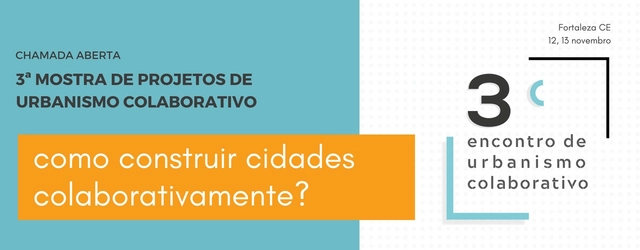
Open Call: 3rd Exhibition of Collaborative Urbanism Projects

REDBAAL, meeting the expectations of Latin American architects and following five successful editions, is now accepting entries for the Sixth Edition of the Oscar Niemeyer Award for Latin American Architecture—the ON Grand Prize—which will be presented on October 2 of this year at the Buenos Aires International Architecture Biennial.
The best of architectural production, already recognized at prestigious Latin American Biennials, will take center stage in this international competition, which serves as the "Biennial of Biennials" for Latin American architecture.
We continue to bring together our professionals and their outstanding work, which reflects diverse realities while serving as the result of highly valuable collective social efforts.

This call seeks to recognize built architectural works, regardless of scale, that address contemporary societal issues. Special consideration will be given to projects that demonstrate a positive impact on urban and rural spaces through improvements and innovations in housing, infrastructure, public space, social integration, and environmental sustainability, in alignment with the core concepts of the XIV BIAU.

Publications that disseminate new knowledge related to the themes addressed in the 14th BIAU in the fields of architecture, urbanism, and territory will be awarded. The prize recognizes two types of media:
• Books (both printed and digital)
• Periodicals: Magazines, newspapers, or fanzines (both printed and digital). In this case, the periodical should be registered only once, specifying the issues published during the 2024–2025 period.

An honorary award recognizing the professional trajectory of Ibero-American individuals or collectives who have made significant contributions to the field of Ibero-American architecture and urbanism.
The 2023 Di Tella Architecture Prize - Emerging Practices aims to celebrate the work of young professionals in Argentina and neighboring countries (Bolivia, Brazil, Chile, Paraguay, and Uruguay). The prize seeks to recognize the cultural value of architecture and its impact on the built environment.
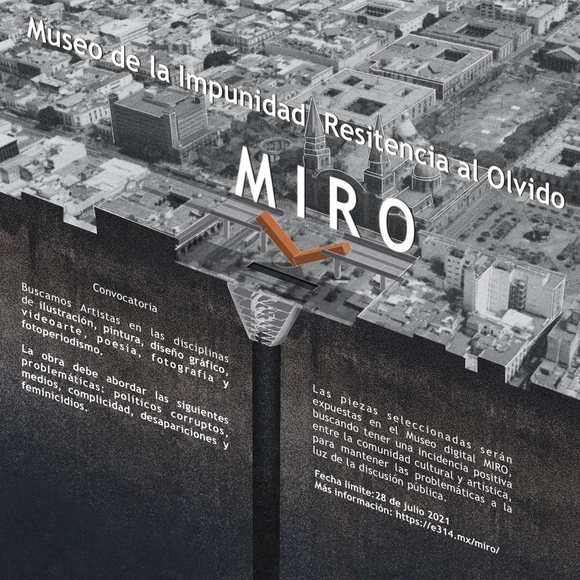
MIRO (Museum of Impunity: Resistance to Oblivion) is a digital museum exhibition project by the Estudio 3.14 Fellowship Program that seeks to showcase a diverse range of visual works with protest-oriented and subversive content. These works address various social issues stemming from the prevalence of impunity in Mexico and globally, through the power of imagery. Artists and designers are invited to submit existing works to be exhibited across the museum’s six constituent levels, each addressing the following issues: corrupt politicians, media, complicity, disappearances, and femicides.
.jpg?1521632880&format=webp&width=640&height=580)
Organized by the Regional 5 College of Architects in the city of Villa María, this design competition seeks ideas and proposals for the new headquarters of the Regional 5 Southeast branch of the College of Architects of the Province of Córdoba.
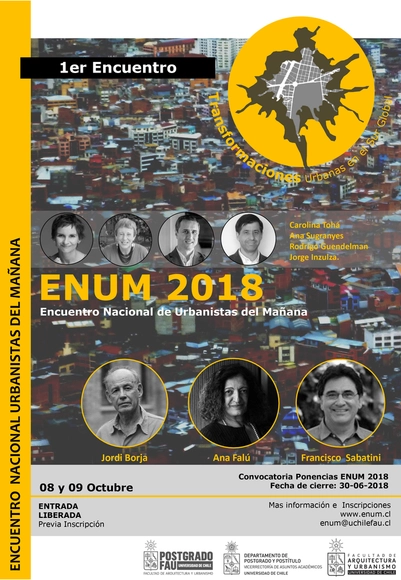
We are pleased to invite you to participate in the first National Meeting of Urbanists of Tomorrow (ENUM), to be held on October 8th and 9th at the Faculty of Architecture and Urbanism of the University of Chile. This meeting is organized by graduates of the Master’s in Urbanism program and sponsored by the Department of Postgraduate Studies and the Postgraduate School of the Faculty of Architecture and Urbanism at the same institution.

DETAILS:
Title: London Creates 2026
Organiser: Archisource
Dates: 17th - 26th July 2026
Entry: Free
Venue: The Truman Brewery, Elys Yard, London E1 6QR

Each month, Friends of Residential Treasures Los Angeles (FORT: LA) curates a new self-guided trail, inviting Angelenos to explore the city's rich architectural heritage. These immersive experiences highlight significant homes, hidden gems, and the designers who have shaped Los Angeles' built environment.

Continuing the international dialogue and cooperation initiated in 2015, we are pleased to announce that the 11th FIPA – International Forum on Architectural Heritage Brazil-Portugal will be held in 2026 in Florianópolis, Santa Catarina. The capital of Santa Catarina won the bid to host the event, which will take place in partnership with IPHAN, CAU/BR, and UA/PT.
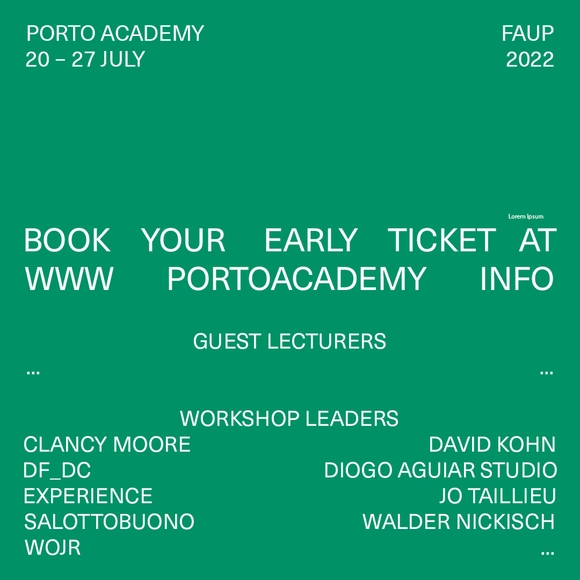
Porto Academy is the result of a profound passion for architecture as a discipline. It was established in 2013 as a manifesto of pluralism and opportunity, rooted in close engagement with a wide range of architects, artists, and curators.

An exhibition at Disponible and a public conversation at Lerma, curated by Cooperativa Espacial.

Architect and collage artist Camila Mancilla presents her book Las casas de los espejos rotos: El collage como método de investigación creativa (The Houses of Broken Mirrors: Collage as a Creative Research Method). In it, she invites readers to explore this simple yet noble technique, highlighting its value not only as a finished work, but above all as a creative process.
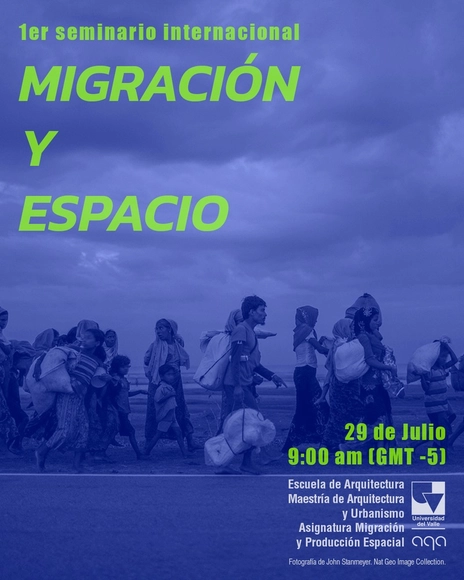
The 21st-century agenda requires addressing a set of structural changes resulting from the development model that, at least since the beginning of the last century, we have maintained as a society and region. This is evident in our cities and rural areas, where conditions associated with poverty, inequality, violence, displacement, and climate change—to name a few—generate intense pressures, imbalances, and maldevelopment in the dynamics of social occupation and vacancy across much of our territory. We are interested in focusing on a spatial process framed within these dynamics: migration.