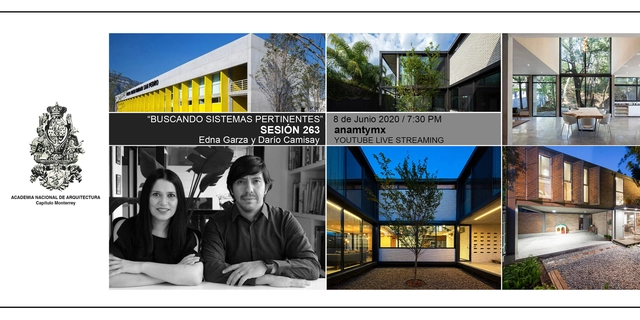
In the lecture "Seeking Pertinent Systems," Edna Garza and Darío Camisay, directors of the Monterrey, Mexico-based architecture and design firm Garza Camisay Arquitectos, will share the unique story behind each of their projects. This narrative will focus on uncovering the architectural system selected for each work. The "search for pertinence" is a constant in every project—a filter that allows these systems to be understood as a consequence rather than an objective.
"Martes de Ruido" is a brief, informal conversation series lasting approximately 30 minutes. Featuring up to four sessions per day, the series invites national and international guests to address a specific topic, fostering discussion and reflection.
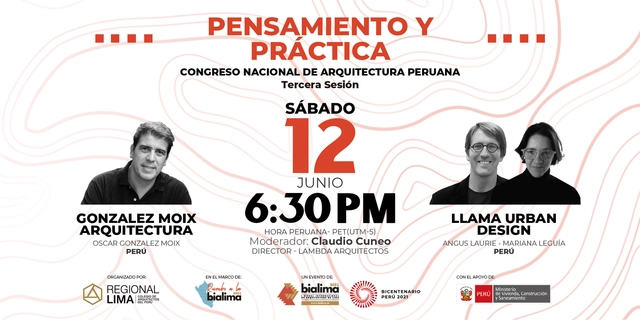
THOUGHT AND PRACTICE: The National Congress of Peruvian Architecture takes place within the framework of "Rumbo a la BIALIMA," the pre-biennial event for the Lima International Architecture Biennial (BIALIMA 2021), organized by the CAP Regional Lima.
THOUGHT AND PRACTICE: The National Congress of Peruvian Architecture is held as part of the "Road to BIALIMA," the pre-biennial event for the Lima International Architecture Biennial (BIALIMA 2021), organized by the CAP Regional Lima.
THOUGHT AND PRACTICE: The Peruvian National Architecture Congress takes place within the framework of the Road to BIALIMA, the pre-biennial event for the Lima International Architecture Biennial (BIALIMA 2021), organized by the CAP Regional Lima.
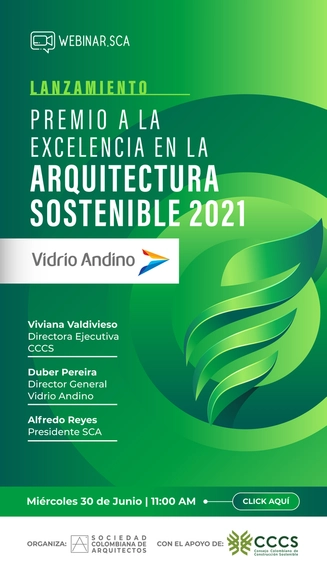
The Colombian Society of Architects, with the goal of strengthening the promotion of sustainable architecture in Colombia and the mission of consolidating this effort through concrete incentives, has issued a call for projects for the "Award for Excellence in Sustainable Architecture – Vidrio Andino."
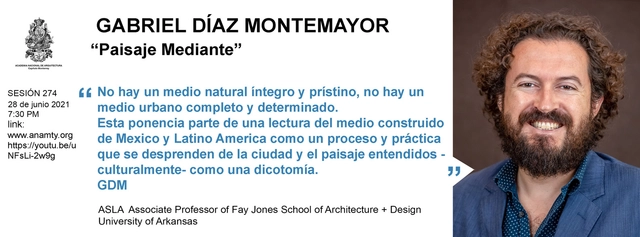
Session 274. "Landscape Through" Gabriel Díaz Montemayor This presentation begins with an interpretation of the built environment in Mexico and Latin America as a process and practice that emerges from the city and the landscape, which are culturally understood as a dichotomy. The "Landscape Through" approach invites us to consider the built environment as a network of embedded scales and systems, creating a diversity of thresholds, interstices, and ecotones that impact, support, and evolve alongside one another, suggesting their dissolution. There is no such thing as an intact, pristine natural environment, nor is there a complete, determined urban environment. This argument is presented as a reflection aimed at fostering a more socially and environmentally just habitat, one that is implementable for the transformation and regeneration of our cities. The presentation is structured around a theoretical framework and a variety of projects developed through applied academic research, design workshops as service initiatives, and professional projects.
The architectural works presented in this exhibition bring together 30 projects executed over 30 years by Mexican architect Francisco González Pulido. The buildings span a variety of scales, geographic locations, site conditions, ecologies, levels of complexity, and client types. As such, they represent the diversity of Francisco’s practice and his commitment to excellence in design, science, and technology.
"Una Práctica" aims to share the architectural experience of Magui Peredo, an architect, Master of Theory and History of Architecture, professor, and researcher.
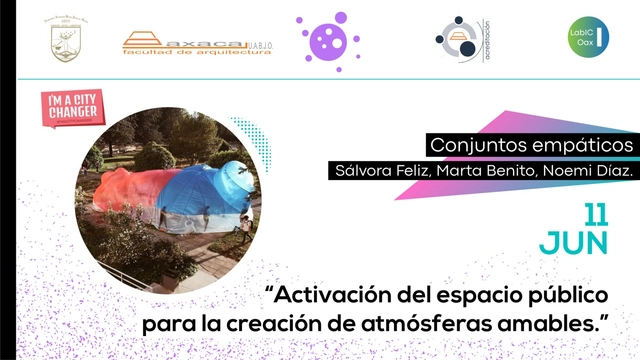
Conjuntos Empáticos is a non-profit association founded in 2012 with various objectives, including: disseminating work developed in the fields of architecture, art, and pedagogy; stimulating the development of these areas of knowledge; encouraging citizen participation in architecture across all scales, from the domestic to the infrastructural; executing installations, site-conditioning projects, renovation processes, and educational initiatives; promoting the revitalization of contested spaces; incentivizing research; sharing knowledge in architecture, art, education, and new technologies; and promoting best practices in these fields.
THOUGHT AND PRACTICE: The National Congress of Peruvian Architecture takes place within the framework of "Road to BIALIMA," the pre-biennial event for the Lima International Architecture Biennial (BIALIMA 2021), organized by the CAP Regional Lima.
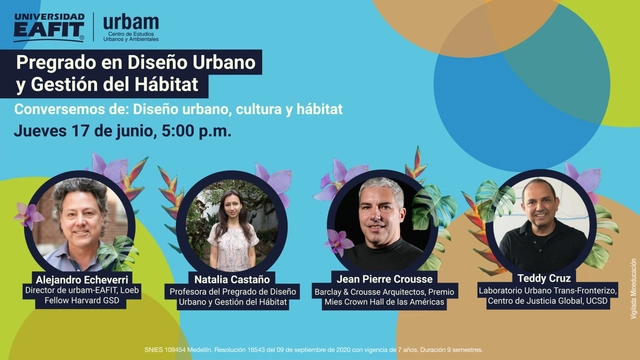
On June 17 at 5:00 p.m., join us for a discussion on Urban Design, Culture, and Habitat—core topics of the Undergraduate Program in Urban Design and Habitat Management. The event will feature distinguished guests: Alejandro Echeverri, Natalia Castaño, Jean Pierre Crousse, and Teddy Cruz.
The School of Architecture, Art and Design at Tecnológico de Monterrey will host the presentation of the Cities Observatory, a platform providing current and useful information for the analysis, measurement, and evaluation of Mexican cities. This initiative aims to influence planning and decision-making processes to improve urban quality of life.
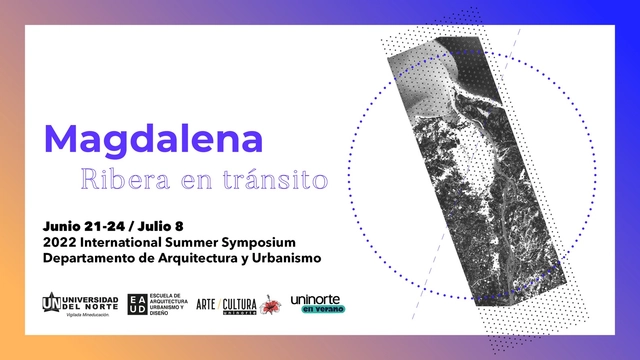
How do we reinterpret cultural relationships with water and the city? What is the importance of biodiversity and birdlife during moments of habitat change? How do we connect history—past, present, and future visions—to rethink our interactions with the Magdalena River basin? How are culture, art, and identity key to understanding our amphibious relationship? These are some of the questions that will be addressed at the first international symposium, Magdalena - Ribera en tránsito (Magdalena - Riverbank in Transit), which will take place from June 21 to 24 and on July 8 at the Universidad del Norte in Barranquilla, Colombia.
This book analyzes the origin, development, and dismantling of the Lima Planning Institute (IPL) at the National University of Engineering (UNI), which served as the headquarters for Project 205 of the Inter-American Program for Urban and Regional Planning (PIAPUR).
The book highlights the Institute's significance within both the national and Latin American contexts regarding professional training in urban and regional planning, while considering the influence of the various schools of thought and the political and social movements of the era. It was the first postgraduate program of its kind in the country and the first in its specialty in Latin America.




.jpg?1623775629&format=webp&width=640&height=580)




.jpg?1653659897&format=webp&width=640&height=580)