Romullo Baratto is an architect with a PhD from FAUUSP and Managing Editor of ArchDaily. He previously coordinated the editorial team of the 11th São Paulo Architecture Biennial and served as Managing Editor of ArchDaily Brasil, where he led the platform to win the FNA Award—the first time the honor was granted to a media outlet. He collaborated on the editing of the book "Concrete Jungle", published by gestalten, and has curated architecture exhibitions in Brazil, Chile, Denmark, and Italy, as well as delivered lectures and moderated debates in Spain, the United States, and Portugal. His doctoral thesis investigates the urban landscapes of São Paulo through cinema. His work spans academic research and editorial practice, communicating architecture through texts, interviews, lectures, curatorship, and photography. Follow him on Instagram @romullobf.
The project, titled Empatias Mapeadas, consists of an interactive parametric sculpture featuring pulsing lights and speakers that mix and broadcast the heartbeats of the participants who touch the piece.
Heritage-listed at both the state and federal levels, Teatro Oficina, designed by Lina Bo Bardi and Edson Elito, is at risk of having its surroundings profoundly altered by the construction of two 100-meter-tall residential towers. The project, led by the Silvio Santos Group, was approved by the National Historical and Artistic Heritage Institute (Iphan) during a meeting on May 29.
The crowdfunding campaign to produce the 2019 Athos Bulcão Illustrated Calendar is now live. Through November 28, the public can contribute to the production and distribution of 6,000 copies of the calendar. In return, supporters will receive copies of the publication alongside rewards featuring the artist's work, such as bookmarks, postcards, books, tote bags, magnet sets, mouse pads, silver jewelry, and even framed tiles, as well as having their names printed in the acknowledgements section. Supporters can view the rewards and make their contributions on Catarse.
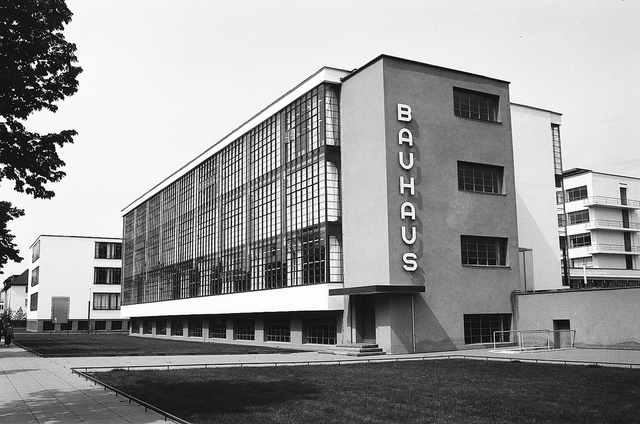
The concept of Gesamtkunstwerk (total work of art) shaped 19th-century art movements and influenced several design schools of the era—including the Bauhaus, which brought the term into the modern age. The school's unstructured architectural designs and avant-garde furniture paved the way for fields such as fashion, graphic design, and painting. At the Bauhaus, disciplines drew inspiration from one another, blurring the boundaries between art and industry. When the school closed in 1933, however, many design projects were left unfinished.
To revive some of these interrupted Bauhaus design projects, Adobe has launched the "Hidden Treasures" initiative to recreate five typefaces originally designed by five of the school's masters: Joost Schmidt, Xanti Schawinsky, Reinhold Rossig, Carl Marx, and Alfred Arndt.
The Museu de Arte de São Paulo has put up for sale a limited edition of one hundred crystal easels designed by Lina Bo Bardi. Originally introduced in 1968 and removed from the museum in 1996, the iconic easels were redesigned by the firm Metro Arquitetos and brought back to the MASP gallery in 2015. Each unit costs R$ 10,000, and the proceeds will support the museum's activities.
Dresden-based architecture collective ruestungsschmie.de has shared another large-scale video mapping project, this time on the facade of the Church of St. Ludmila in Prague. Titled NUCLEUS³, the project uses audiovisual media to raise the question: what do we expect for the future?
Videos
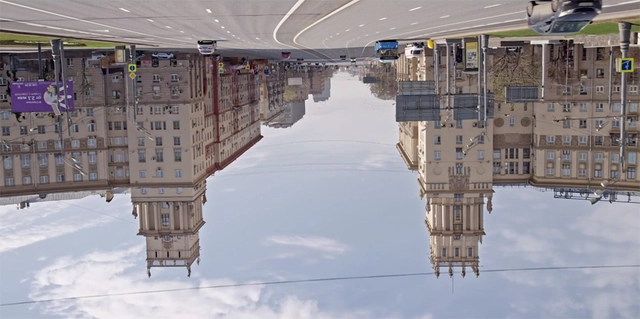
Captura de tela do filme "The Hyms of Muscovy", de Dimitri Venkov. Image Cortesia de Arquiteturas Film Festival
The Arquiteturas Film Festival, one of the most prominent film festivals dedicated to cinema addressing architecture and cities, has announced the list of award-winning films for its 2018 edition. In its 6th edition, the festival, which is an independent project promoted by DYMA – Do You Mean Architecture, focused on "exploring what we learn from the futuristic, utopian, or hyper-realistic stories that have been shaping our visual culture through cinema."
Believing that “there is no cinema without architecture,” the objective of Arquiteturas is to discover and present films that foster meaningful contemporary debates and broaden the viewer's critical thinking.
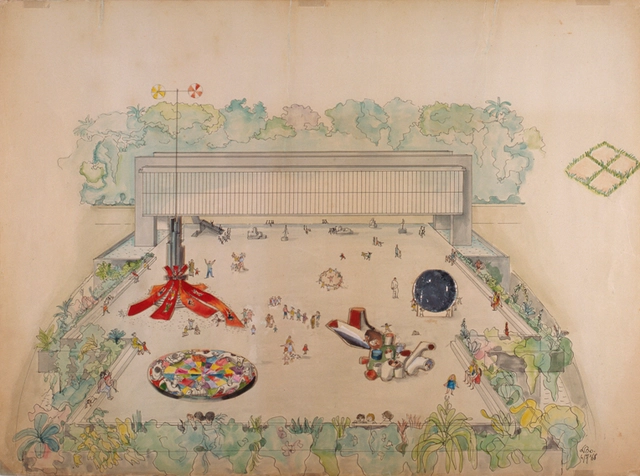
Lina Bo Bardi. Preliminary study – interactive sculptures for the Trianon Art Museum belvedere, 1968. India ink and watercolor on paper, 56.3 x 76.5 cm. MASP Collection, donation from the Instituto Lina Bo e P. M. Bardi
The theme “Women’s Histories, Feminist Histories” will guide the 2019 exhibition program at the Museu de Arte de São Paulo Assis Chateaubriand (MASP). Six solo exhibitions by female artists—Djanira da Motta e Silva, Tarsila do Amaral, Lina Bo Bardi, Anna Bella Geiger, Leonor Antunes, and Gego—have already been confirmed, alongside a major group exhibition sharing the program's title.
The documentary FILME PAISAGEM, um olhar sobre Roberto Burle Marx (Landscape Film: A Look at Roberto Burle Marx) opens in theaters on November 15, showcasing the Brazilian landscape architect's profound contribution to the country's native flora. Written and directed by João Vargas Penna, the film is a journey through the art and personality of Roberto Burle Marx, who was also a painter, cook, and singer—lesser-known facets of his life to the general public.
Alongside Tiê, an adventurous capybara, Lina sets off on a journey through ten public spaces around the world – such as the High Line in New York or Paulista Avenue in São Paulo – to discover the secrets of how cities are built. The two are the main characters of the book Casacadabra – Cidades para Brincar (Cities to Play), a new release from Pistache Editorial, which launches its crowdfunding campaign on April 16 on Catarse. The book features text by Bianca Antunes and Simone Sayegh, with illustrations by Luísa Amoroso. This is the second title in the Casacadabra series – the first, titled Invenções para morar (Inventions for Living), presented the architecture of ten houses around the world.
The São Paulo City Government has resumed discussions regarding property tax (IPTU) exemptions and discounts for landmarked buildings. Previously debated during the administrations of Gilberto Kassab and Fernando Haddad, the issue is currently the focus of a newly drafted bill.
The proposal limits the IPTU exemption to landmarked properties located in downtown São Paulo, within a perimeter that is still being defined. It will not apply to properties subject to general zoning restrictions, such as those in historically preserved neighborhoods like Jardins and Pacaembu.
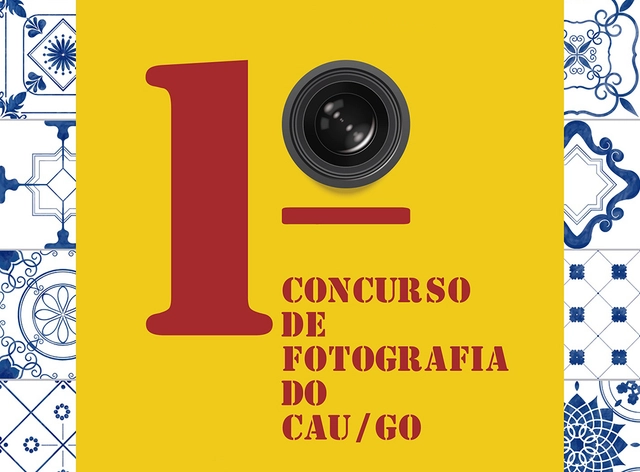
Registration is now open for the 1st National Public Photography Contest organized by the Council of Architecture and Urbanism of Goiás (CAU/GO), under the theme “Historic Heritage in Architecture and Urbanism.” Submissions will be accepted until 4:00 PM on September 24 at the CAU/GO headquarters.
An inseparable figure from Brasília, Athos Bulcão is responsible for works that bring color and geometric patterns to the purity of the federal capital's architecture. To promote the artist's work, the National Institute of Historic and Artistic Heritage (Iphan) launched the book Athos, Colorindo Brasília, the first volume of the Patrimônio para Jovens collection, an initiative by Iphan's Federal District office and the Federal District Department of Education (SEDF).
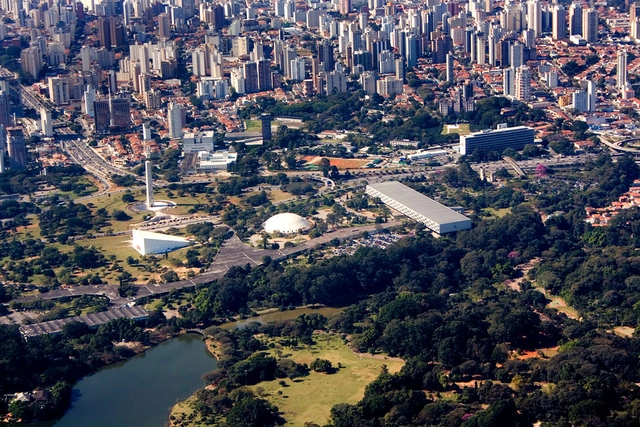
Ibirapuera Park. Photo: Fernando Stankuns on Visual Hunt / CC BY-NC-SA
Paulo Mendes da Rocha is currently the most admired and respected figure in Brazilian architecture. However, his extensive list of works narrowly missed including an intervention project for the work of another master, Oscar Niemeyer. Commissioned in 2015 by São Paulo's previous municipal administration to develop a redesign project for Ibirapuera Park, the proposal by the 2006 Pritzker Prize laureate was shelved in December of last year.
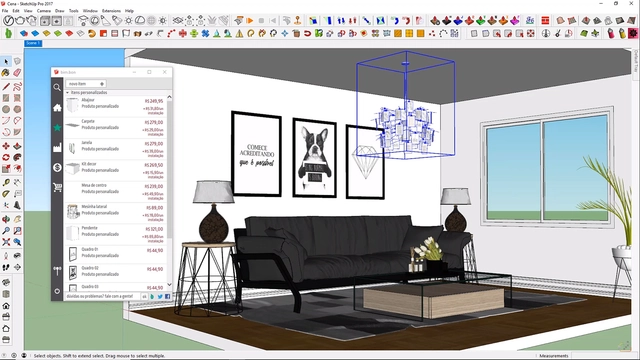
SketchUp is one of the most widely used digital modeling software programs in both professional practice and academia—and undoubtedly the most intuitive. However, the ease of creating orthogonal geometries can quickly turn into a nightmare when the goal is to design curved and organic shapes and objects.
With this in mind, Gabriel Chahoud of Chahoud Cursos released 30 video tutorials for what he called "SketchUp Month," sharing tips on how to model objects that, at first glance, seem complex to create in this software.
The Council of Architecture and Urbanism (CAU) has re-released the free guidebook on Technical Assistance for Social Interest Housing (ATHIS), originally published by CAU/SC. The 60-page document contextualizes this assistance work in relation to public authorities, the general public, and professionals, presenting different service delivery scenarios.
Brazil's greatest living architect, Paulo Mendes da Rocha does not appreciate architecture alone. Music is also part of his daily life, and this playlist—shared with us by his daughter, Joana Mendes da Rocha—features some of the musical preferences of our Golden Lion.
The graduate program Architecture, Education, and Society hosted philosophy professor Lorenzo Mammì to discuss the development of interpretations of works of art and architecture.
Lorenzo Mammì approaches the interpretation of architectural works from a perspective related to philosophy, music, and the visual arts, which are key areas of interest. The discussion addresses the varying readings of works, as well as the relationship between these analyses and the production process.