Romullo Baratto is an architect with a PhD from FAUUSP and Managing Editor of ArchDaily. He previously coordinated the editorial team of the 11th São Paulo Architecture Biennial and served as Managing Editor of ArchDaily Brasil, where he led the platform to win the FNA Award—the first time the honor was granted to a media outlet. He collaborated on the editing of the book "Concrete Jungle", published by gestalten, and has curated architecture exhibitions in Brazil, Chile, Denmark, and Italy, as well as delivered lectures and moderated debates in Spain, the United States, and Portugal. His doctoral thesis investigates the urban landscapes of São Paulo through cinema. His work spans academic research and editorial practice, communicating architecture through texts, interviews, lectures, curatorship, and photography. Follow him on Instagram @romullobf.
Designed by the firm of Ramos de Azevedo and built in the famous Praça Clovis in downtown São Paulo between the 1920s and 1940s, the Palácio da Justiça de São Paulo occupies an area of 25,000 square meters. The building features a symmetrical layout with four corner towers whose wings house the interior spaces.
Between 2004 and 2009, the building's facades and the copper roof of the Jury Hall were restored by the firm APBA – Arquiteto Paulo Bastos e Associados. Later, between 2014 and 2016, another section of the building was restored by Kruchin Arquitetura.
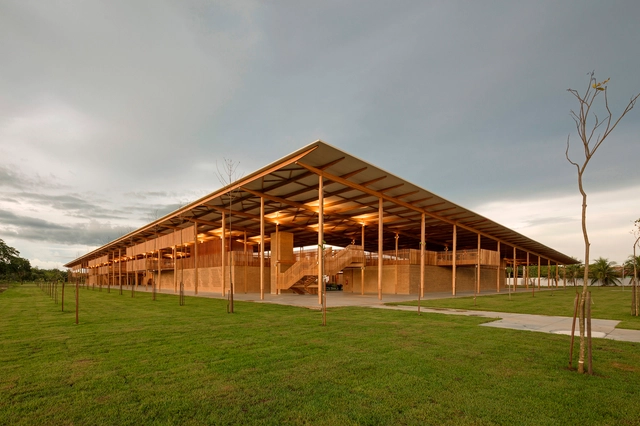
The Illinois Institute of Technology College of Architecture has announced the four finalists for the MCHAP.emerge, the emerging practice award of the Mies Crown Hall Americas Prize - MCHAP, which recognizes the most outstanding architectural works in North and South America. Every two years, the prize is awarded at an event held at IIT's S. R. Crown Hall, Mies van der Rohe's masterpiece in Chicago.
Photo: Timothy Neesam (GumshoePhotos) on Visualhunt / CC BY-NC-ND
The online portal of Exame magazine published a list of professions and roles that "are on the decline in Brazil," based on hiring numbers for the first quarter of 2018. The article points to cost reductions and the introduction of new technologies as the main factors driving the decline in demand for certain professionals.
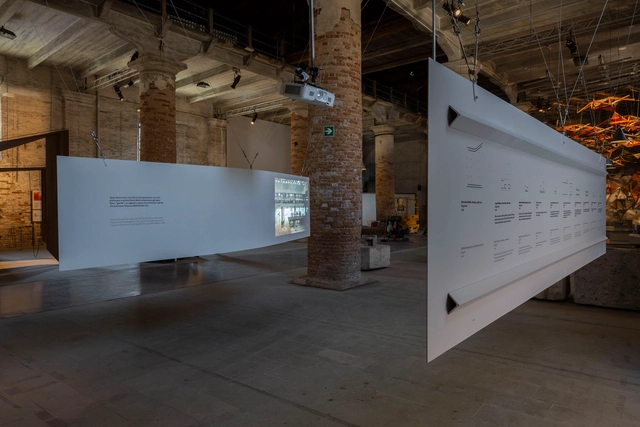
As part of our coverage of the 2018 Venice Biennale, we present the participation of the São Paulo-based firm GrupoSP: an installation titled "unnamed spaces" that is part of the FREESPACE exhibition. Below, the architects describe their contribution in their own words.
"Unnamed spaces" [espaços sem nome] was a term that professor and artist Flávio Motta [1] used to describe the free, generous, and open spaces of radical architecture that accommodated the unpredictability of life. They can also refer to the open spaces or clearings within our city.
Physical distance is no longer an obstacle for the world's major museums. Once limited by their geographic locations and accessible only to those who could visit them in person, many museums have now digitized their collections, while others are in the process of doing so—a strategy that broadens reach and, to some extent, democratizes access to culture.
Portugal will be home to another project designed by Álvaro Siza. The renowned Portuguese architect was invited by the authorities of Oleiros to design the revitalization of the Miradouro do Zebro, a prominent tourist attraction located in the country's central region.
Budgeted at two million euros, the revitalization project will also feature the construction of a suspension bridge connecting Oleiros, Pampilhosa da Serra, and Fundão.
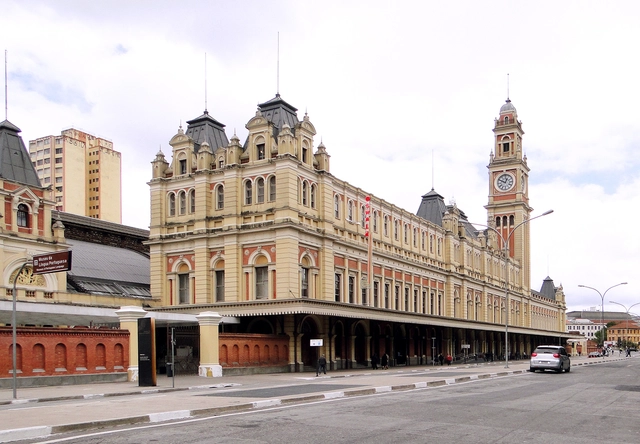
The site of a fire that left part of Luz Station in ruins in 2015, the Museum of the Portuguese Language, located inside the iconic station, had its new roof completed this week. Built with nearly ninety tons of certified timber from the Amazon, the new roof structure is another completed element of this project, which will ultimately cost around R$ 60 million.
Image from the São Paulo Fire Department - PMESP, via Twitter
A massive fire caused the collapse of a 22-story skyscraper in downtown São Paulo overnight. Located at the intersection of Avenida Rio Branco and Largo Paissandu, near Vale do Anhangabaú, the building previously served as the headquarters of the Federal Police and was occupied by about 90 families from a housing movement.
According to residents, the fire started around 1:30 a.m. following an explosion on the fifth floor and quickly spread throughout the structure, also affecting neighboring buildings, such as the Martin Luther Church located on the square and another high-rise facing the collapsed structure.
Videos
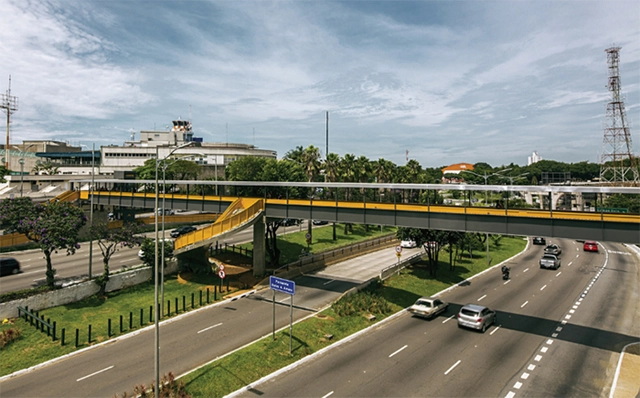
Congonhas Airport Footbridge. Courtesy of Arquitetura Paulistana
The open course Arquitetura Paulistana, organized by Marco Artigas, took students to visit the Congonhas Airport Pedestrian Bridge project, designed by Estúdio Artigas in partnership with the firm H2C Arquitetura. Begun in 2014, the project took four years to complete and featured the participation of Nitsche Arquitetos, who were responsible for the project's visual communication.
As the end of the year approaches, we would like to thank our readers and contributors once again for making 2018 such a rich year for architecture. With your continued support, we are reaching more architects, students, and those outside the architectural community worldwide, inspiring them to build a better environment for everyone.
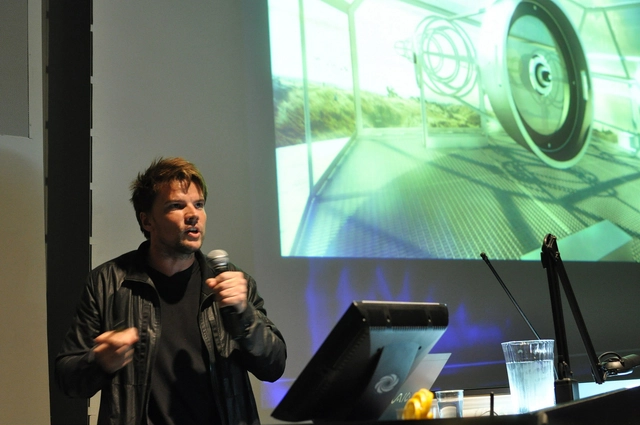
In an interview with El País, Bjarke Ingels discusses with architecture journalist Anatxu Zabalbeascoa the motivations behind his work and the factors that have made him one of the most prominent figures in global architecture.
Moving between the formal concepts that give his buildings their names—such as "snowflake" or "labyrinth"—and the competitive nature of the architecture world (his proposal replaced Norman Foster's for Two World Trade Center in New York), Zabalbeascoa questions Ingels more sharply than might be expected, at one point asking if "architecture can turn into a joke."
Works designed by renowned architects have always drawn attention, especially from tourists who, passing through new cities, seek to catch a quick glimpse of the best those places have to offer. While this phenomenon is not new, services like Airbnb, which allow short stays in rented homes, have given it a new dimension.
This is currently the case in the Bouça Neighborhood in Porto, designed by Álvaro Siza Vieira. Conceived in the 1970s as a social housing project promoted by the Local Support Ambulatory Service (SAAL), the complex—originally built as permanent housing for workers—has always attracted architecture enthusiasts and fans of Siza's work. In recent years, however, it has also begun attracting temporary residents to units listed for rent.
The History Channel has released its first entirely Brazilian production. Titled Mil Dias - A Saga da Construção de Brasília, the series tells the story of the construction of the new capital from the perspective of four characters who built the city in the cerrado: a surveyor, an engineer, an architect, and a construction worker.
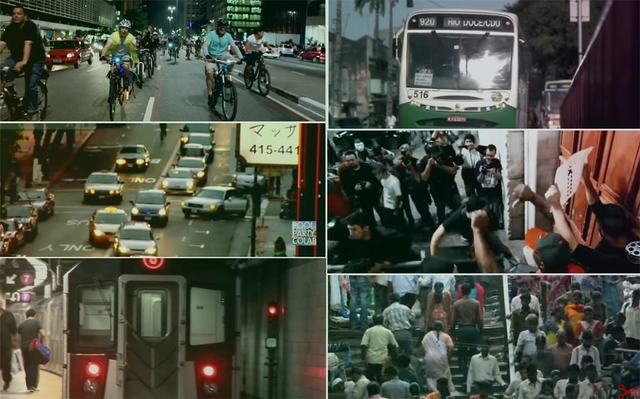
The website Mobilize, Brazil's first platform dedicated exclusively to sustainable urban mobility, has published a list of 30 must-see documentaries on the subject. Divided into feature and medium-length films, the selected titles address urban mobility from various perspectives, ranging from mass transit and non-motorized personal transport to urban culture and the June 2013 protests in Brazil.
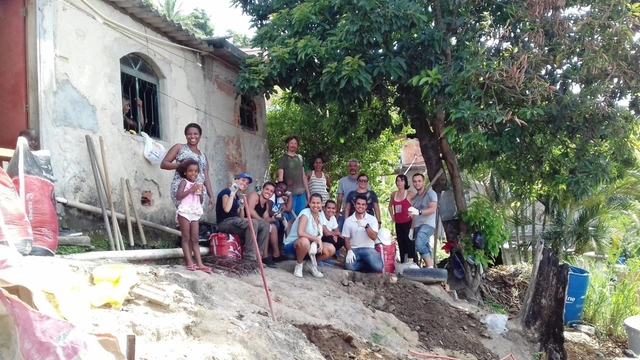
Jayana da Cruz's house (left) has already undergone some renovations with the help of the Arquiteto de Família project. Photo: ONG Soluções Urbanas
The NGO Soluções Urbanas launched a crowdfunding platform earlier this month to enable technical assistance, the purchase of materials, and renovation work in precarious housing. Named Arquiteto de Família, the tool was developed with sponsorship from CAU/RJ.
The platform's goal is to facilitate access to better housing conditions, and the funds raised through the tool can be combined with resources from other sources, such as microcredit and barter fairs.
The *Geography, City, and Architecture* graduate program at Escola da Cidade invited architect Mario Figueroa to deliver a lecture on Chilean architecture, where he discusses the so-called “Generation of the '90s” and the Museum of Memory and Human Rights.
The deck is finished, the beams and columns have already been painted, and construction is moving forward at a good pace at the Guarda Housing Complex in Perafita, Matosinhos, Portugal, which will very soon see the completion of Uma Casa de Brincar e Não Só… / Not Only a Playhouse, built as part of the second edition of “O Lugar de Partilha.” At the end of the first week on-site, there is still much work to be done for this Self-Construction Laboratory organized by Casa da Arquitectura (CA) – Portuguese Center for Architecture and curated by Roberto Cremascoli, but spirits are high, and by August 10th, everything will be ready for the local community to enjoy.
Flooding in St. Mark's Basilica. Image: Procuradoria da Basílica de São Marcos, via El País
As Europe's second most visited built heritage site, behind only the Colosseum in Rome, St. Mark's Basilica in Venice receives over 5 million visitors annually. Yet, under the strain of this massive influx, the 11th-century Byzantine mosaic floors seem to be succumbing to the effects of the floating city's tides.
The undulations in the basilica's floor are visible to the naked eye—feet have not touched them for a decade, as visitors are only allowed to walk on synthetic carpet runners—and they have even cracked at the most critical points, especially in the center of the building. Currently, only 20% of the geometric marble and stone patterns are original; the rest has been restored over the last ten centuries by the artisans of the St. Mark's Workshop.








.jpg?1533646991&format=webp&width=640&height=580)
