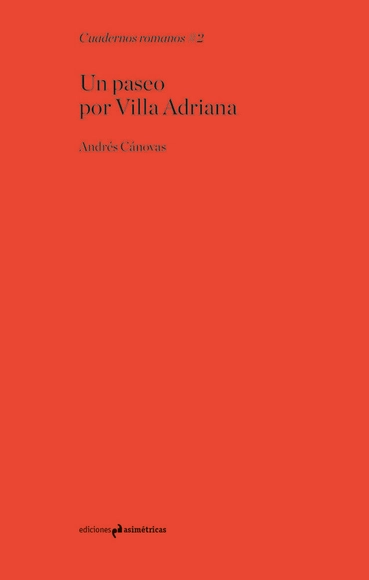
This book is the second volume in the "Cuadernos romanos" collection, which analyzes a group of fundamental buildings in architectural history. In this installment, Hadrian's Villa is studied in detail and placed within its deep historical context. By comparing the transformations its surroundings have undergone over time and assessing the consequences of these changes on the redefinition of three-dimensional scale, these masterpieces are brought into the present in a revealing cross-cultural exercise.
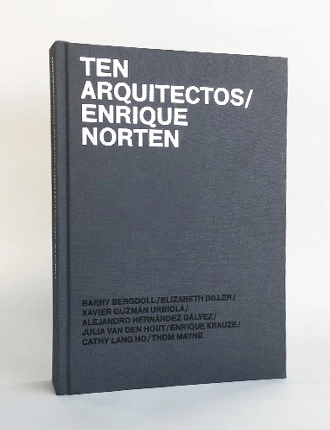
Enrique Norten has been recognized as one of the most important architects in North America. With offices in Mexico City and New York, TEN Arquitectos has successfully shaped these cities—from migration and exchange to information circuits—creating forms that define the skyline and activate streets from Mexico City to Brooklyn. Celebrating thirty years of practice, this bilingual publication presents eighteen recent projects, including the BAM in the Downtown Brooklyn Cultural District, the Rutgers University master plan in New Jersey, the Museo Amparo in Puebla, and the CENTRO and Universidad Panamericana campuses in Mexico City. This volume explores the evolution of the firm as an international practice and showcases the three “lines of research” that drive its work: architecture as public space, as infrastructure, and as territory. The book includes essays by Barry Bergdoll and Alejandro Hernández Gálvez, as well as conversations with prominent international cultural figures such as Elizabeth Diller, Thom Mayne, and Enrique Krauze.
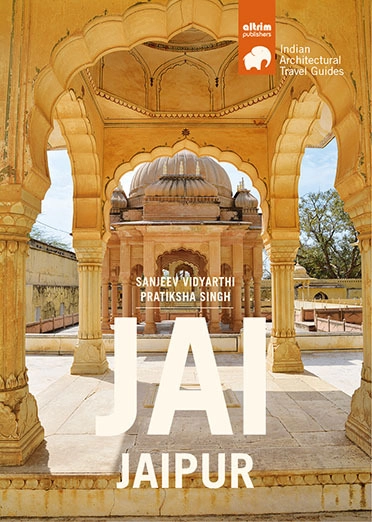
Discover the city of Jaipur, the capital of Rajasthan, through this architectural travel guide. Founded in the 18th century by Maharaja Sawai Jai Singh, the city was planned according to the Hindu Vastu Shastra method, utilizing a grid system and imbuing its buildings with a signature pink hue. Jaipur is a cradle of Rajput, Mughal, and various other cultures, and it also houses a wealth of vernacular tradition. Beyond the Pink City’s preserved unique atmosphere and old-world charm, visitors can immerse themselves in the cultural heritage of the past within the city’s vibrant environment.
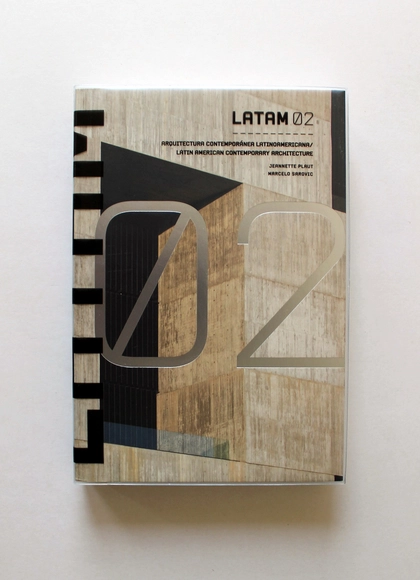
LATAM 02: Contemporary Latin American Architecture is the second book in a series that brings together outstanding architectural projects from the last five years in which Hunter Douglas has participated. Authored by Jeannette Plaut and Marcelo Sarovic (Constructo), the publication features 44 works from six countries: Argentina, Brazil, Chile, Colombia, Mexico, and Panama.
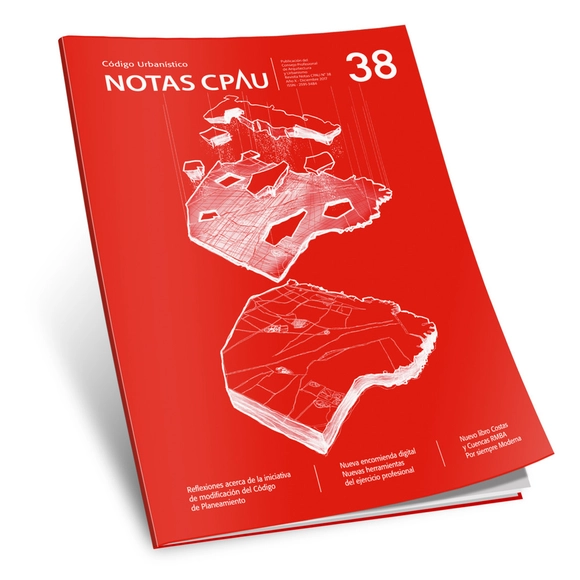
Are you aware of the revision and replacement of the Buenos Aires Urban Planning Code? Have you been searching for reflections on its modification recently?
Fittingly, the new edition #38 of the Professional Council of Architecture and Urbanism’s Online Magazine, Notas CPAU, presents the theme 'Urban Code'.
In this issue, the publication comprehensively addresses the issues raised in the Urban Code proposed by the Government of the City of Buenos Aires, as well as the Professional Council’s response to it.
Below are a few words from the magazine’s director, Bárbara Berson, followed by the table of contents.
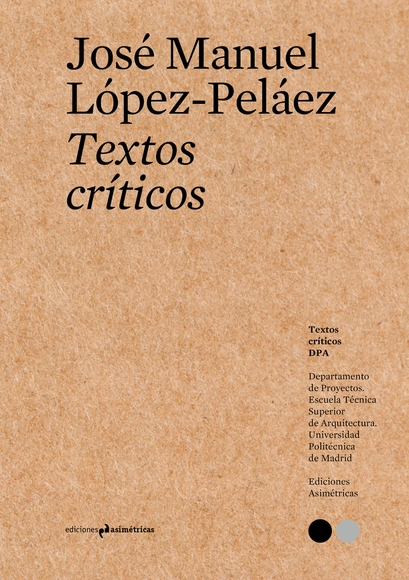
This book, an anthology of José Manuel López-Peláez's finest writings, compiled with the perspective gained from a long career in teaching and criticism, focuses on the primary themes to which the author has dedicated his attention—particularly the Spanish masters of the second half of the 20th century with whom he was closely associated, such as Sota, Oíza, Fisac, or Coderch, as well as, of course, Erik Gunnar Asplund and Nordic architecture.
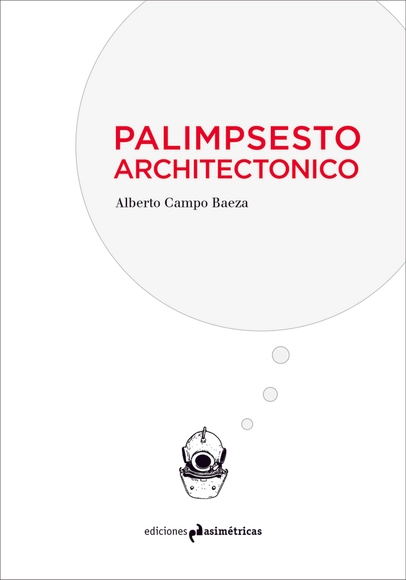
A manuscript that is erased to be written over, yet retains the traces of what was previously written: that is a palimpsest. This is how Alberto Campo Baeza presents in this book “layers of ideas, images, and feelings”—as De Quincey wrote—in which his reflections, his architectural passions, his sources of inspiration, and his favorite poets, architects, philosophers, and writers are superimposed. He revisits, once again, not what is fashionable or ephemeral in architecture, but what is constant, eternal, and universal: light, time, gravity, space, beauty…
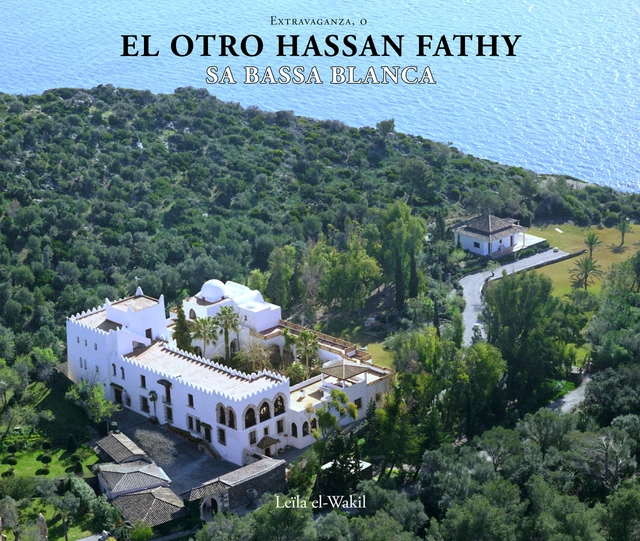
This book is the first monograph dedicated to one of Hassan Fathy's houses. Sa Bassa Blanca also holds the added interest of being virtually the only work built by the Egyptian architect in Europe. Leïla El-Wakil, an art historian and architect specializing in traditional architecture and historical heritage, rigorously documents the entire design and construction process of the house, framing it within Fathy’s body of work while simultaneously highlighting its uniqueness.
'Las propiedades de la luz' de Luis Barragán y Fred Sandback
Author
Federica Zanco; Daniel Usabiaga
Publisher
Hatje Cantz
Publication year
2018
Binding
Tapa dura
Language
English
Proyectos Monclova is pleased to announce the solo exhibition Fred Sandback: The Properties of Light (Inside and Outside), running from May 26 to August 18, 2018, in conjunction with the launch of the new publication The Properties of Light: Luis Barragán and Fred Sandback, which will be presented alongside a panel discussion.
Reyes Ríos + Larraín is an architecture firm founded by Salvador Reyes Ríos and Josefina Larraín in Mérida, Yucatán. The firm is noted for the remodeling and restoration of historic mansions and haciendas in the state of Yucatán and across other parts of Mexico, which have been converted into hotels or private residences. This compilation showcases the firm's exploration of various construction systems, materials, and finishes used in the adaptive reuse of these projects. It also features projects built from the ground up on vacant lots, where the firm has implemented traditional construction techniques and, in some cases, designed custom furniture. The book details the firm's design process and working methodology through essays, sketches, site photographs, and models.
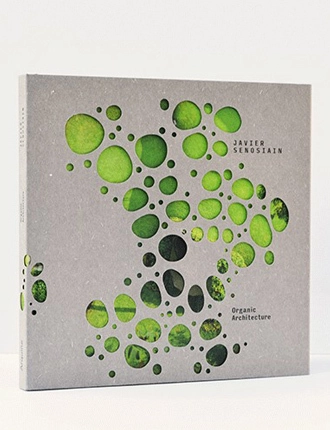
The role of the organic in the history of modern architecture has been primarily attributed to figures such as Frank Lloyd Wright and Bruno Zevi, who, for much of the 20th century, challenged radical mechanistic, functionalist, and rationalist proposals with a vision that sought to recover the organic relationship between humans and their environment. The broad definition of the organic allowed the scope of modern architecture to expand, encompassing subsequent generations such as Alvar Aalto, and even Eero Saarinen or Jørn Utzon.
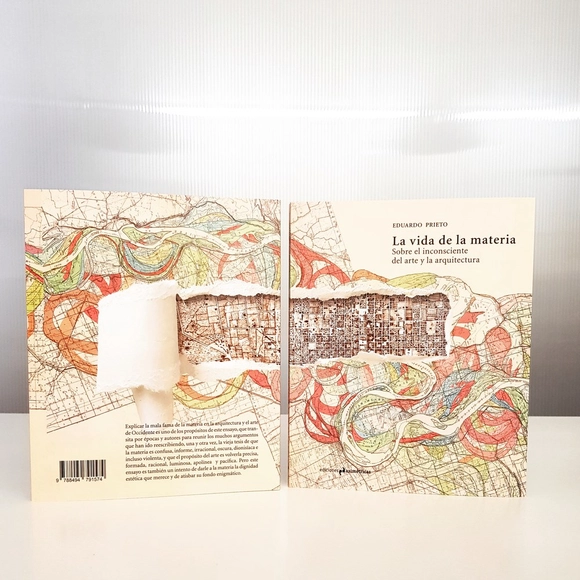
One of the aims of this essay is to explain the poor reputation of matter in Western architecture and art, traversing various eras and authors to assemble the many arguments that have repeatedly rewritten the long-standing thesis that matter is confused, formless, irrational, dark, Dionysian, and even violent, while the purpose of art is to render it precise, formed, rational, luminous, Apollonian, and peaceful. Yet this essay also seeks to grant matter the aesthetic dignity it deserves and to glimpse its enigmatic depths.
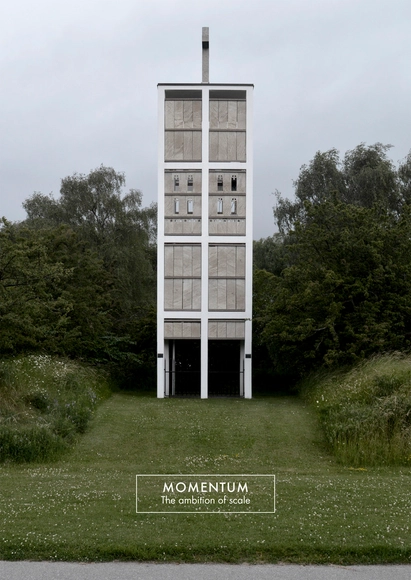
Malmö Eastern Cemetery, photograph by Alejandro Carrasco Hidalgo.
We live in a globalized world where, due to hyperconnectivity, information is stored and accumulated online without filters. But can there be something more behind an image than mere visual information? What distinguishes an image from a memory or a postcard? What can we convey through a graphic document?
MOMENTUM emerges as a response to an atmosphere in which the image is reduced to a swift, ethereal tool that transmits superficial information. Conceived as a reaction to the incredible amount of unfiltered inputs and images we access on the internet with a single click, it proposes opening a new dialogue and returning, for a moment, to carefully chosen personal references that allow for the illustration of an opinion on a given subject, uncovering new conversations, viewpoints, or ways of thinking.
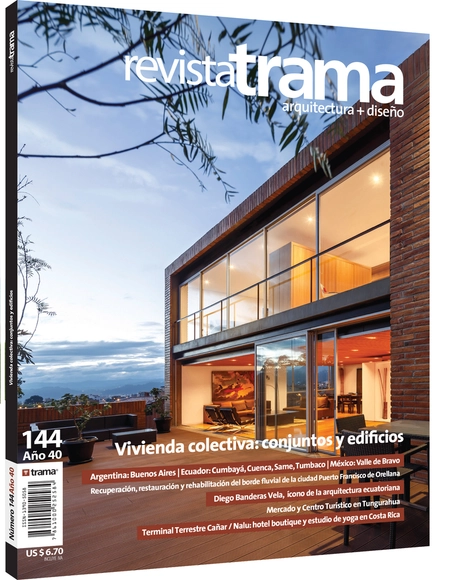
Revista TRAMA 144. Image Cortesía de Revista TRAMA
In this edition of Revista Trama, small and large-scale urban developments, as well as multifamily buildings and complexes, address the need for economic sustainability and compliance with current regulations. Within this framework, architects explore both existing and new spatial organizations that link the part—the housing unit—with the whole—the overall concept. Each project prioritizes the optimization and integration of energy resources.
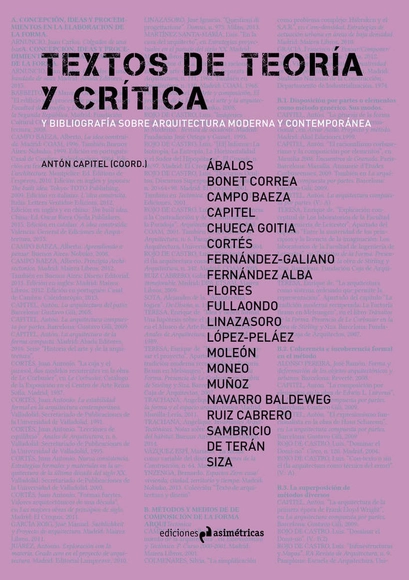
"Texts of Theory and Criticism and Bibliography on Modern and Contemporary Architecture" is a book composed of two complementary parts. The first presents a precise anthology of 20 texts written by some of the most influential voices in the critical and theoretical landscape of the ETSAM. The second part provides an exhaustive bibliography of the work produced by all the school's faculty since 1940.
The foundations of architecture, which until a few years ago were avant-garde and dogmatic, are undergoing a profound revision. This is evident in diverse aspects such as a renewed concern for the user, the growing appreciation for inherited architectural heritage, the return of ornamentation, the search for warmth in spaces, the personalization of environments, and the use of natural materials.
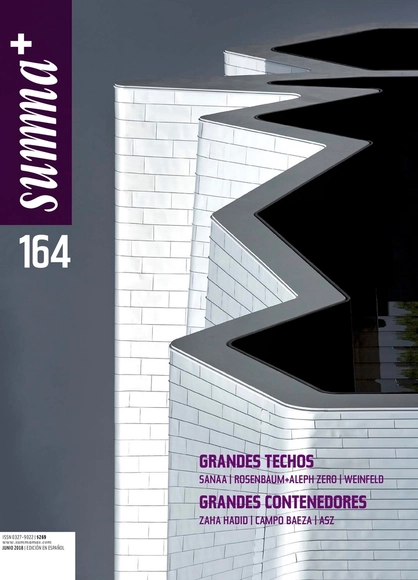
Summa+ 164 Cover, June 2018 Edition, Large Roofs and Large Containers
The new edition of the architecture magazine SUMMA+ 164 is a special issue addressing "Large Roofs and Large Containers," featuring works by studios such as SANAA, Rosenbaum + Aleph Zero, Weinfeld, Zaha Hadid, Campo Baeza, and ASZ, among others.