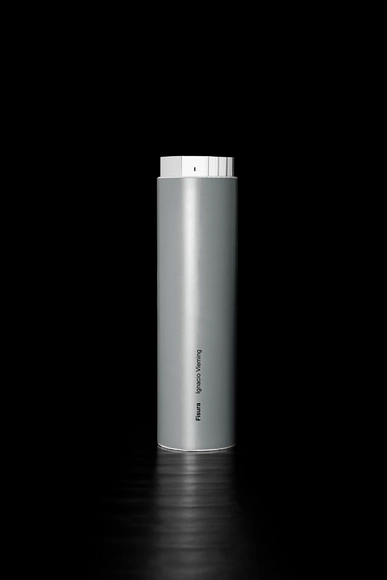
Fisura is a book of architectural adventures featuring Fernando Abellanas and an essay on the possibilities of residual urban space. Throughout its pages, Joris imagines various alternatives for imbuing anonymous places with use and meaning.
Fisura is a book of architectural adventures featuring Fernando Abellanas and an essay on the possibilities of residual urban space. Throughout its pages, Joris imagines various alternatives for imbuing anonymous places with use and meaning.
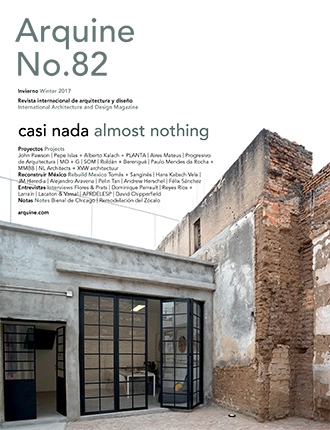
Following the devastating earthquakes last September, which affected more than 150,000 homes and buildings across various states and cities in Mexico, rescue and reconstruction have become fundamental tasks. Recycling and rebuilding imply a profound social repair and a valuation of what already exists, avoiding indiscriminate demolitions, the consequences of which are irreparable in economic, ecological, and heritage terms.

The Instagram photography competition for the XIV Spanish Biennial of Architecture and Urbanism (XIV BEAU) is now open. The event is curated by José Morales and Sara de Giles, with Jesús Marina and Elena Morón serving as directors of photography activities.

In the context of architecture and urbanism, design competitions are academic and/or professional contests that involve developing an architectural proposal based on specific requirements defined by organizers in a brief, which is carefully planned and prepared for each theme.
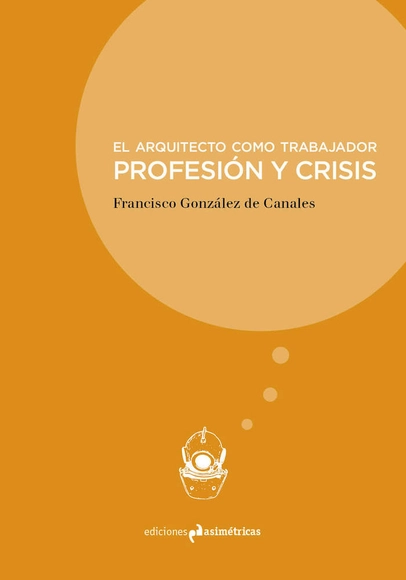
Much has been debated over the last half-century regarding the work of the architect—profession or trade?, creation or collaboration?, autonomous discipline or a cog in a socio-political system?—yet almost nothing has been written about the architect as a worker. One of the initial problems is that architects have always struggled to recognize themselves as just another type of worker. Architects have preferred to view architecture as a vocation—something done for pleasure, like a hobby or a passion—surrounding this attitude with various myths. In recent attempts to describe the state of the profession, the word "crisis" seems to permeate everything, rarely accompanied by broader reflections.
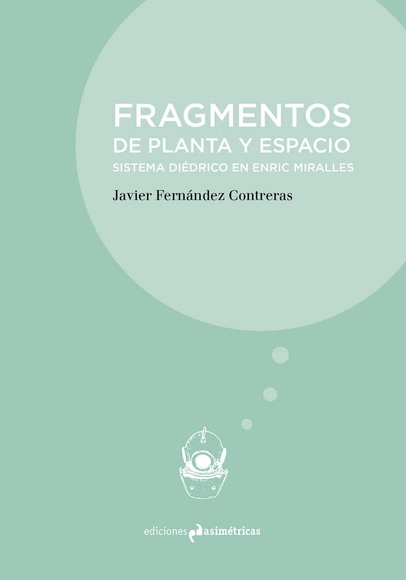
The impact of using representation systems in general, and the dihedral system in particular, on architectural thought has historically remained an underexplored topic in architectural theory. It is only in recent decades that the voices of prominent critics like Stan Allen, and above all the seminal research of Robin Evans, have focused attention on how designing from flat orthogonal projections—plan, elevation, and section—conditions, rigidifies, and "cubifies" architectural thought.
This book is a journey of journeys. It is a chronicle of the paths, pilgrimages, and relocations undertaken by two creators: Ray Eames and Lina Bo Bardi. These journeys merge with their lives and creative experiences, forming a succession of activities and experiments that constitute the "vital laboratory" of these architects.
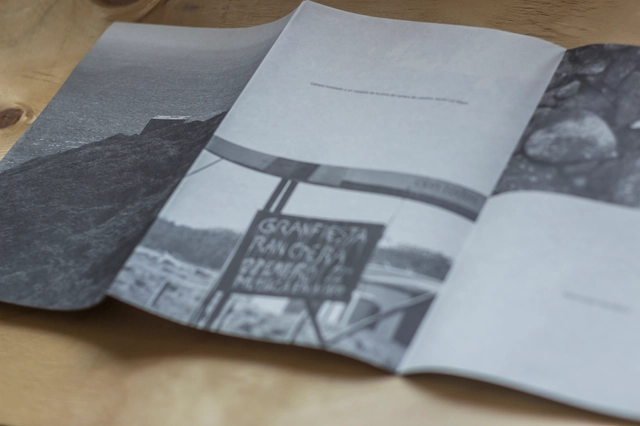
Since its construction in 2005, Casapoli has become a reference point for contemporary visual arts in Chile, serving as a venue for diverse activities linked to artistic production and fostering national and international connections.
The texts that make up this selection—light yet lucid, and often considered minor (lecture introductions, forewords, journalistic articles, and short essays)—allow Iñaki Ábalos (Professor of Architectural Projects at ETSAM, Chair of the Department of Architecture at the Harvard GSD from 2012 to 2016, distinguished architect, and prolific author) to explore what 21st-century architecture might look like and what the role of the "architects of modern life" will be. In these writings, he discusses peers of his generation who are establishing innovative theoretical and practical positions (Johnston&Marklee, Sergison&Bates, Lacaton&Vassal, Amid.cero9, Lateral, Christ&Gantenbein, Liu Yichun, David Adjaye, Ciro Najle, Beigel, Christou, Moe...), critically revisits his mentors—at times heterodox, at others unjustly forgotten (Taut, Hilberseimer, Mies, Fuller, Goldsmith, Le Ricolais, Price, Branzi, Cook, Higueras, Peña Ganchegui...)—and elegantly ignores the star system.
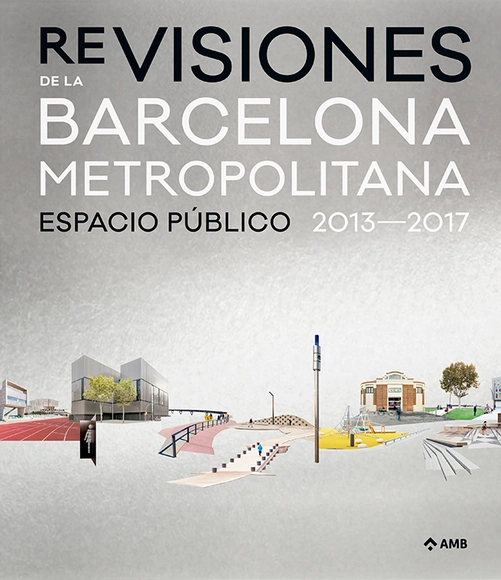
The AMB's Urban Design and Projects Section, in collaboration with POCH Comunicación, has published the 5th volume of the "Metropolitan Spaces" collection, which compiles and showcases projects executed by the institution between 2013 and 2017.
This book aims to mark a turning point by broadening the perspective and moving away from the traditional catalog format. Beyond incorporating a historical reflection on the fundamental role the AMB has played in design, the construction of public space, and the transformation and structuring of the metropolitan territory, its goal is to outline new paths for the future.
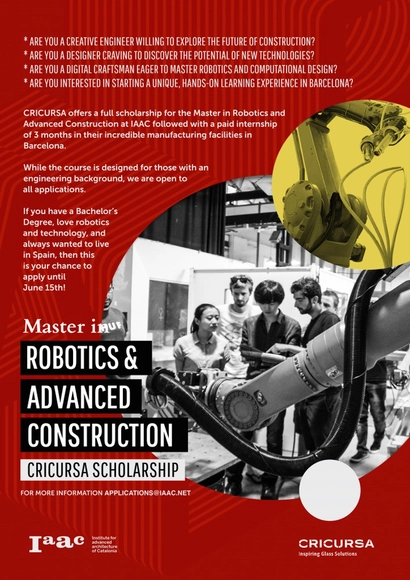
Are you a creative engineer ready to explore the future of construction? Are you a designer looking to discover the potential of new technologies? Are you a digital artisan eager to master robotics and computational design? Are you interested in starting a unique hands-on learning experience in Barcelona?

While there are publications addressing architectural design theory, few essays introduce theories from the philosophy of technology or ontology that could shed light on the debate surrounding architectural design. The author argues that studying theories that account for technicality—understood as an essential mode of human existence—will provide new insights into the theory of architectural and design projects.
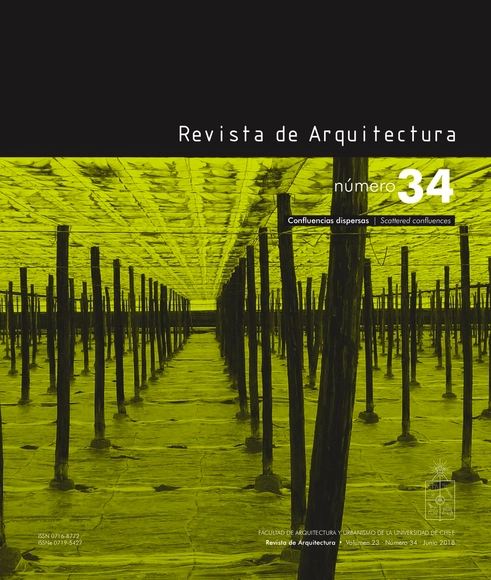
The 34th edition of the Revista de Arquitectura from the Faculty of Architecture and Urbanism (FAU) at the University of Chile, covering the first semester of 2018, explores the relativity, acceleration, and dilation of time inherent in contemporary urban life.
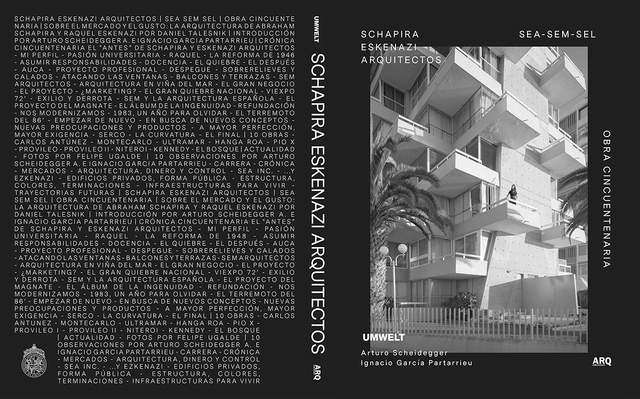
Between 1950 and 2000, SEA, SEM, or SEL focused primarily on the design, real estate management, and construction of apartment buildings. At its core, the firm was composed of the husband-and-wife team of Abraham Schapira and Raquel Eskenazi, alongside a succession of partners: León Messina (1966–1978), Mario Lifschitz (1978–1981 and 1984–2000), and Pedro Iribarne (1980–1983). SEA defined its work as "purely commercial, yet always dignified and of high quality in terms of design and finishes"—a hallmark that became its brand in the real estate market.

In 1967, the University Reform process began in the country, and the Pontificia Universidad Católica de Chile, which would play a crucial role, elected Fernando Castillo Velasco, a professor from the Faculty of Architecture, as its rector. With conviction and leadership, the rector steered this process, which was vital to initiating a true transformation of the university and, combined with the work of the following decades, paved the way for the institution we know today.

99 Ideias para um Cinema de Rua presents ninety-nine speculative responses to the same question: what forms of occupation could a large building in the heart of the city accommodate, having been conceived as a street cinema at a time when film screenings were still an event capable of drawing crowds to the city center?
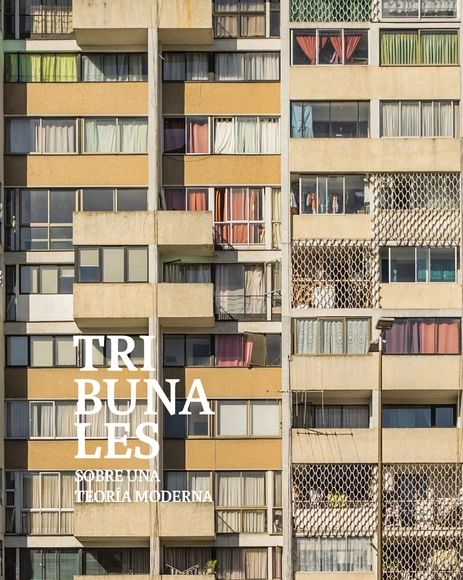
Tribunales: sobre una teoría moderna is based on the curatorial work of Leslie Fernández and Óscar Concha, developed within the framework of the Móvil project (2015–2016 cycle), which involved sound, fine, and visual artists, alongside photographers and architects. The book consists of conversations with the cycle's participants regarding their approach to modern theory, as well as theoretical essays that structure the text around three thematic areas: urbanism, architectural design, and restoration.
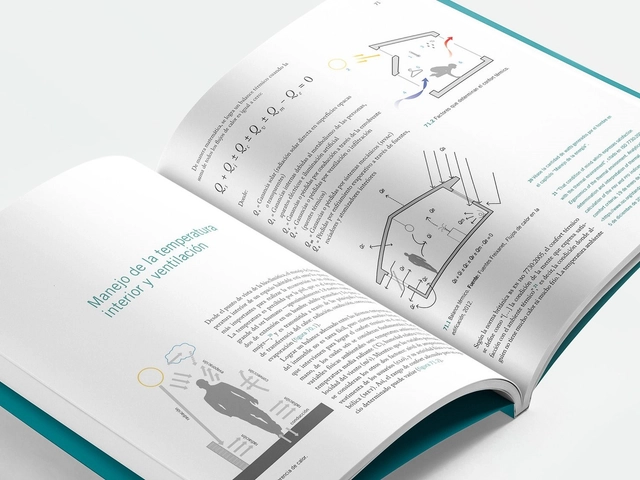
This book charts a path for change, for the transformation of the city through its architecture. The author argues that it is possible to transform our cities by retrofitting existing buildings to harmonize with the climate, thereby reducing electricity, water, and gas consumption. The work carried out on the M16 building—which underwent a bioclimatic intervention and earned LEED Platinum certification—serves as a case study demonstrating that such a transformation is achievable.