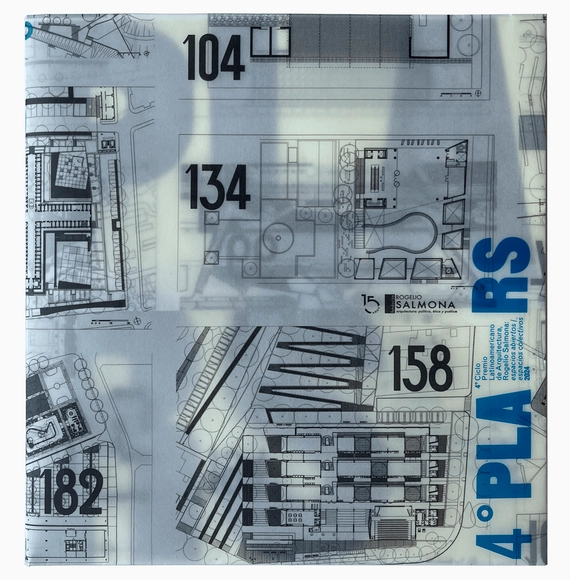
In October 2024, the winning projects of the fourth edition of the Rogelio Salmona Latin American Architecture Award were announced—a distinction that highlights projects that have clearly generated significant, open, and collective civic spaces in the region.
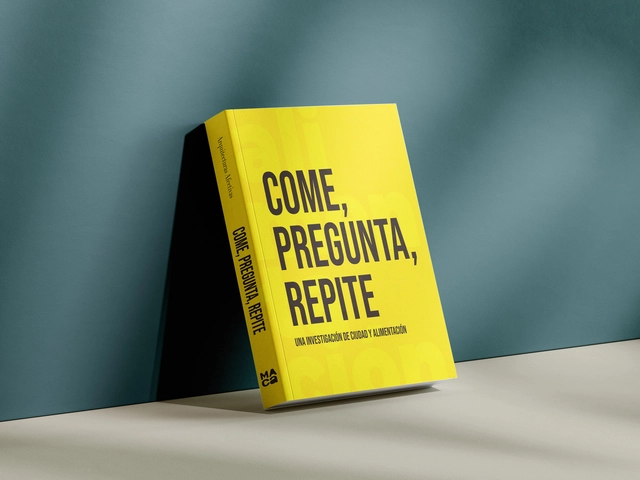
Eat, Ask, Repeat: An Investigation into Food and the City. The city and food are more closely related than you might think. Our bodies act as the mediators in this relationship. This book of questions materializes research conducted within the Master in Architectural Communication (MAca9) program at ETSAM. This publication offers a critical look at the dynamics of production, consumption, and the right to the city. What drives us to overeat? Or to eat too little? Is food an elemental resource for survival, or has it become a different kind of entity today? We invite you to reflect on aspects that go unnoticed in our daily lives within this great kitchen we call the city.
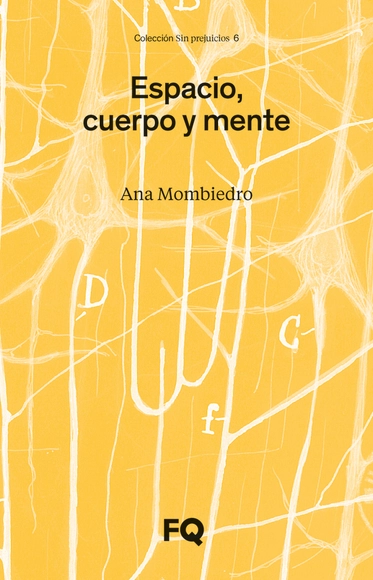
Cajal Institute. CSIC. Edition by Arquia Foundation
In Espacio, cuerpo y mente, Ana Mombiedro explores the intersection of architecture, neuroscience, and psychology to reveal how built spaces influence physiological, cognitive, and socio-emotional health. The book offers a profound and captivating perspective on the value of neuroarchitecture, demonstrating that the design of a place can enhance one's sense of well-being.
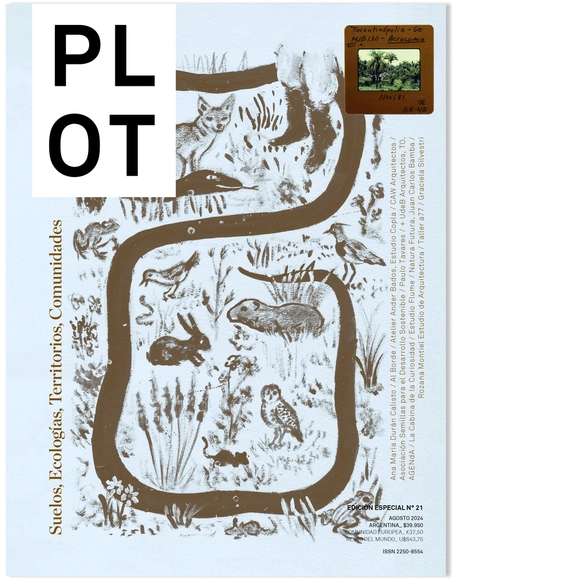
PLOT Special Issue 21, "Soils, Ecologies, Territories, Communities," proposes four themes that transcend the field of architecture, approaching conceptions of landscape and the inexhaustible debate between culture and nature from various perspectives. It brings together a selection of projects located in Latin America and research addressing the ecological and climate crises, as well as economic and social inequalities. These initiatives, notable for their connection to the soil, communities, and their territories, highlight the importance of construction processes and their relationship with available materials. They challenge traditional models and demand greater action and reflection from a collective dimension.
Kazuyo Sejima, a guest of Congreso Futuro, will join Alejandro Aravena in Santiago to discuss the significance of receiving the Pritzker Prize, reflecting on the challenges facing 21st-century cities and the impact of the spaces we inhabit.
The Millennium Nucleus for Mobilities and Territories (MOVYT) invites all interested parties to attend its keynote lectures, which are open to the public. These lectures will be delivered by international guests as part of an international course held at the Faculty of Architecture and Urbanism of the University of Chile, from September 2 to 5, at 6:00 PM.
The competition seeks to conceptualize a coliving housing project as a replicable design tool for Mexico City, serving as a model for other cities facing challenges related to overpopulation and the high demand for quality housing.
The forms of industrial construction (across all sectors, from dams, warehouses, and silos to workshops and mills), in their pursuit of economic and spatial efficiency, served as compelling formal references for architects at the dawn of the modern movement, as noted by Banham; they often inspired the design of ordinary urban buildings.
SkyCity invites you to design the future of housing. There is $17,000 USD in prizes and the opportunity to join us for a one-month residency in Changsha, China.
Following the success of our inaugural challenge last year, SkyCity is pleased to invite architects, designers, artists, engineers, scientists, restorers, digital nomads, craftspeople, and anyone with big ideas from around the world to participate in the SkyCity Challenge 2019: The Future of Housing. Current construction methods are impacting our environment by depleting limited resources and relying on outdated techniques. We believe that, with today’s technology, we can create far more sophisticated housing solutions that will revolutionize the future.
Our second open call borrows its title from Stevphen Shukaitis’s book, Imaginal Machines, to address productive structures that operate through radical and collective imagination. This mechanism is activated by social self-determination and joint action—the result of the exchange of experiences, knowledge, and techniques that have shaped us as a society.
The competition calls for the conceptualization of a coliving housing project as a replicable design tool for Mexico City, serving as a framework for other cities facing challenges related to overpopulation and the high demand for quality housing.
CAU/RJ has extended the registration deadline for the CAU+Mulheres Awards. Female architects and urban planners now have until November 26 to submit their projects.
Now in its second edition, the CAU+Mulheres Award is one of the Council's initiatives to promote dialogue and increase the visibility of female architects and urban planners across their various fields of work. The award features five categories: Architectural Design; Interior Design; Urban Design; Architectural Design for Emergency Situations; and Theoretical Studies (theses, dissertations, books, and publications).
Giorgio De Vecchi / Giulia Di Lenarda - gerdastudio
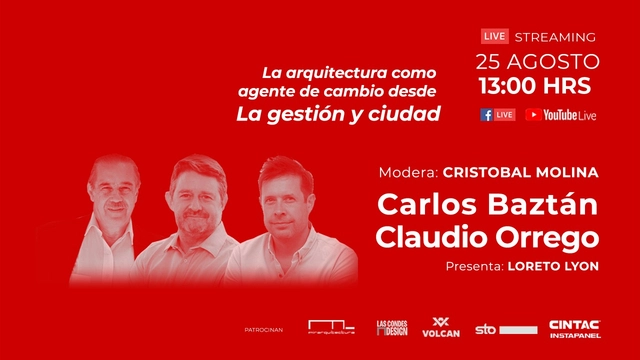
Live online conference featuring the curators of the Chilean Pavilion at this year's Venice Architecture Biennale, discussing the process and experience of their participation. Organized by the Universidad Mayor School of Architecture, the session will be presented by Emilio Marín and Rodrigo Sepúlveda, and moderated by Marco Beovic.
The Colegio de Arquitectos de Chile is celebrating another anniversary with a series of free, fully online activities. This milestone began on Wednesday, August 4—the 79th anniversary of the enactment of Law 7.211, which established the Colegio de Arquitectos in 1942—marking the start of the Month of Architecture.
3D rendering of the artwork “O Sonho é Eterno” (The Dream is Eternal) by Verena Smit at Vale do Anhangabaú
The "Cidade do Futuro" (City of the Future) exhibition presents three poetic light-art installations from December 10 to 19. Created by artists Felipe Morozini, Verena Smit, and Marco Loschiavo, the works will occupy the Vale do Anhangabaú in São Paulo and are free to the public.
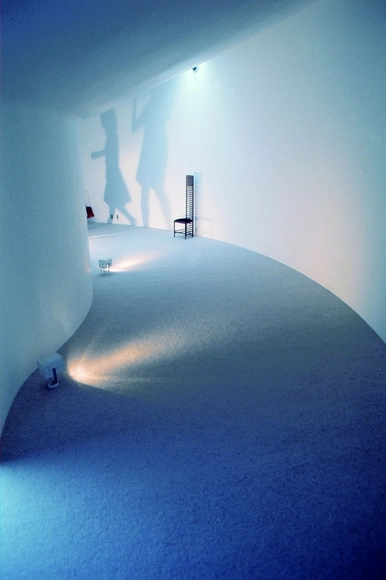
Form and void are inseparable concepts in Japanese culture. This course proposes an analysis of selected architectural works, supported by the aesthetic notion of Ma, to explore different conceptions of space-time in Japan. The course aims to present the conceptual, spatial, and material aspects of these projects to foster an understanding of the potential relationships between form and void, as well as to approach the void as a form of potential rather than an absence. The course is intended for anyone interested in architecture and Japan in general.
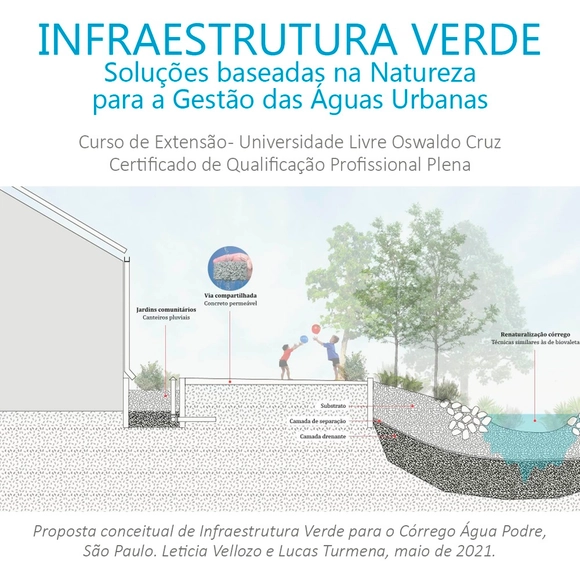
Green Infrastructure is a landscape planning and design method based on creating a network of blue-green landscapes (vegetation and water systems) that perform infrastructural functions while providing ecosystem services to cities. In green infrastructure, design is conceived based on the biogeophysical potential and limitations of the landscape, and water management is carried out through Nature-Based Solutions (NbS) such as rain gardens, bioswales, vegetated infiltration basins, and wetlands, which adapt existing infrastructure to the hydrological cycle and other ecological processes.