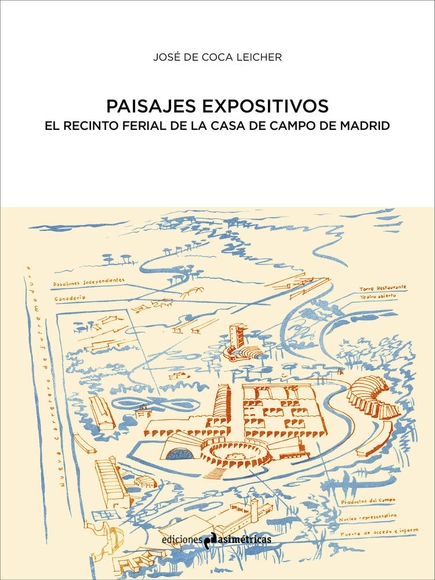
This book presents a meticulous investigation into the architecture of the Ferias del Campo (Country Fairs), which developed between the 1950s and 1970s, creating what can now be understood as a true exhibition landscape. The complex holds immense value, both for its careful landscape design—perfectly integrated into the Casa de Campo—and for its unique buildings, which served as a true experimental laboratory for modern architecture. Architects such as Cabrero and Ruiz, along with Sota, Fisac, Aburto, Romaní, and many others, brilliantly managed to combine the bold stylistic and constructive renewal that the country required at the time with a desire to maintain a degree of continuity with vernacular architecture.
Pablo Allard S., Dean of the Faculty of Architecture and Art at the Universidad del Desarrollo, and Flavio Sciaraffia M., Director of GeoAdaptive Chile and professor in the Master of City and Landscape program at UDD, are pleased to invite you to the launch of the book "From the South: Global Perspectives on Landscape and Territory."
Contemporary Architecture Foundation and RubiñoGarcíaMárquezArquitectos
Part of the CAL (Culture. Architecture. Place) project, promoted by the Contemporary Architecture Foundation with the aim of bringing contemporary architecture to rural areas by highlighting its connection to cultural landscapes, the exhibition Blanco sobre blanco (White on White) has emerged. Composed of eleven pairs of photographs by Fernando Alda—contemporary and traditional, white, and set in Andalusia—the exhibition seeks to establish a dialogue between the images, at times clear and at others hidden, inviting the observer’s complicity.
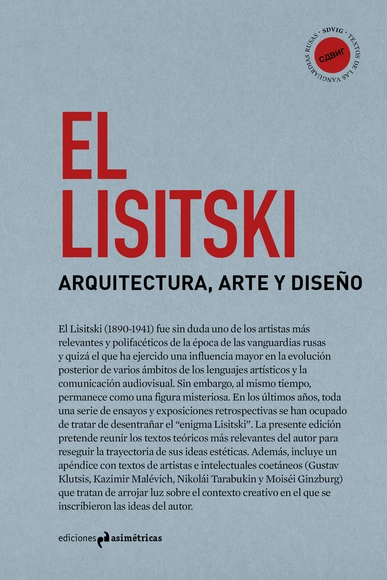
El Lissitzky (1890–1941) was undoubtedly one of the most significant and multifaceted artists of the Russian avant-garde era, and perhaps the one who exerted the greatest influence on the subsequent evolution of various fields of artistic language and audiovisual communication. At the same time, however, he remains a relatively unknown and mysterious figure.
The ‘argument’ series compiles the results of the annual lecture program from the Department of Architectural Design at ETSAM. Each academic year proposes a research theme around which all public events in the cycle are developed.
IED is hosting another edition of Design Degustação on March 16, 2019, from 2:00 PM to 4:00 PM, featuring workshops in Branding, Entertainment Design, Spatial Design, Product Design, Graphic Design, and Fashion Design. Starting at 4:30 PM, there will be a happy hour on the terrace, offering a spectacular view of Guanabara Bay. The participation fee is R$30 per workshop, which includes access to the discussions and the happy hour, as well as a discount on new enrollments made on the day of the event. For more information, visit the link https://iedr.io/degustacao20191
The IED (Istituto Europeo di Design) will host an IED Day on March 23, from 12:00 PM to 9:00 PM, featuring a series of activities open to the public. The event’s attractions include a tour of the secrets of Higienópolis and the IED building; workshops on theremin, dance, floral arrangement, silver jewelry, and mobile photography; a chat with digital influencers in travel and style; music by Jazz na Kombi; an exhibition; and a market featuring objects, books, and clothing. Due to limited capacity, advance registration for the workshops is required at ied.edu.br/iedday
Participate in the 1st Regional Pre-Forum on ATHIS and University Extension!
The “Regional Forum on ATHIS and University Extension: Integrated Action in Urban Space” aims to connect students and professionals in the São Paulo Metropolitan Area who work to defend the right to the city, dignified housing, and adequate living spaces alongside low-income communities and social movements.
Moradas da Saúde residential complex, located near the port area, with views of Guanabara Bay (RJ). Photo: ArcoWeb
João Pessoa will host council members of the Institute of Architects of Brazil for its 156th national meeting. Architects and urban planners from across the country will gather from April 24 to 27 to address matters concerning the organization.
International Conference and Summer School 2019: Technopolitics in Urban Regeneration: Co-creating Public Spaces. Image by Carolina Cardoso.
The International Conference and Summer School 2019: Technopolitics in Urban Regeneration: Co-creating Public Spaces will explore different forms of co-creation, based on the premise that cities are a blend of new forms of sociability and collective action rooted in the association between humans and digital technologies. Consequently, it will discuss ways to develop urban solutions based on co-creation processes, giving a voice to the various stakeholders who can play a significant role in rebuilding public space at the local level. For co-creation to be successful, it must identify networks and engage diverse participants who can benefit from effective collaboration. This event provides opportunities to share international best practices and research, identify areas for action, and highlight their importance in city-building. The event will be held at the ISCTE-University Institute of Lisbon, in Lisbon, Portugal, and consists of two days of conferences, four days of workshops, and a one-week design laboratory focused on real-world scenarios in the city of Cascais, Portugal. The conference aims to contribute to the debate surrounding the use of digital technologies in bottom-up strategies for urban public space design. The conference is structured into four thematic sessions: (1) Collaboration in a Digital Condition; (2) Civic Laboratories; (3) Community Participation and Toolkits; and (4) Digital Collective Mapping. Each session will feature a keynote followed by presentations of papers selected through the open call (the deadline for paper submissions is 04/01/19; more information is available at: https://turcocreating.weebly.com/call.html). The workshops are designed to engage all participants in an integrated collaborative learning approach to develop urban design solutions during the design laboratory, which will focus on self-built neighborhoods in the city of Cascais. The goal is to integrate technological knowledge with design concerns, establishing inclusive strategies that connect students, researchers, citizens, and municipalities with diverse expertise, thereby enhancing their ability to navigate urban regeneration project methods and the co-creation of public spaces.
Videos
Call for entries: The 4th International Architecture Graduation Projects Award
Tamayouz Excellence Award invites students of architecture, urban design, urban planning, architecture technology and landscape design worldwide to register and submit their graduation projects. Winners will be selected by an independent, international jury that will review all entries.
Participation in the Creative Urban Agriculture Workshop is free. The Creative Urban Agriculture Workshop is part of the Creative Food Cycles (CFC) project, co-funded by the European Union's Creative Europe program.
The Creative Urban Agriculture Workshop will investigate how design, driven by creativity and new technologies, can help boost participatory food production in urban environments in a proactive and productive manner across various scales. Our goal is to develop innovative prototypes for urban food production systems, sharing knowledge with citizens, architects, designers, and artists on how to build creative cultivation systems.
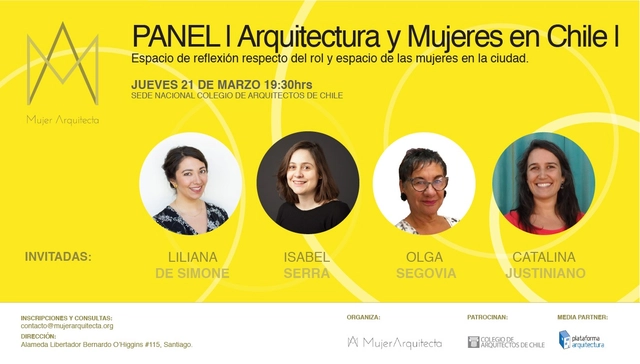
This Thursday, a new edition of the "Architecture and Women in Chile" panel will take place. This session will be held at the National Headquarters of the Colegio de Arquitectos de Chile. We will host four prominent architects who will share their work, career paths, and experience regarding city and gender issues. Don't miss it!
New competition on Desall.com: Perletti and Desall invite you to design a new umbrella that stands out from the competition through its design and style, making it an easily recognizable product.
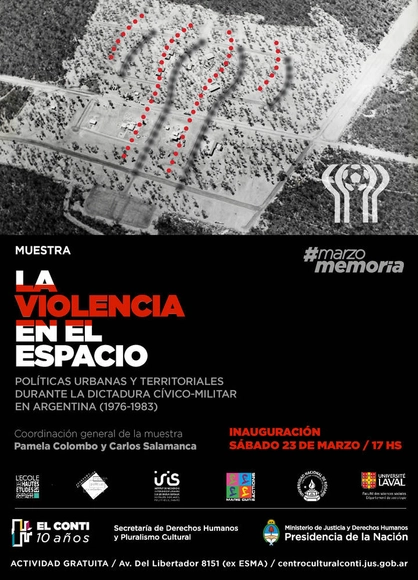
Fuerte Esperanza (Chaco Impenetrable). The floor plan was inspired by the 1978 World Cup logo. Source: Monseñor José Alumni Historical Archive, Resistencia. Researcher: Pamela Colombo.
Slum eradication programs, highway construction, the creation of strategic towns, the redesign of public spaces, the building of stadiums, and the repurposing of cities for the "World Cup celebration": these are some of the territorial and urban projects carried out during the last military dictatorship in Argentina (1976-1983) that this exhibition examines. It is a spatial reorganization carried out at all scales and across all regions of the country, which directly impacted broad sectors of the population and permanently transformed Argentine society.
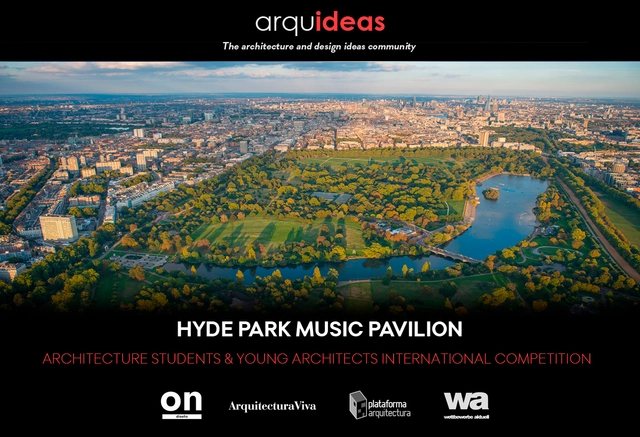
Arquideas is pleased to announce the launch of our new international architecture competition, the Hyde Park Music Pavilion (HPMP) London. The competition challenges participants to propose a cultural space dedicated to music, serving as an information hub for past and future concerts within Hyde Park. This cultural space should allow nature and the musical world to play a leading role.
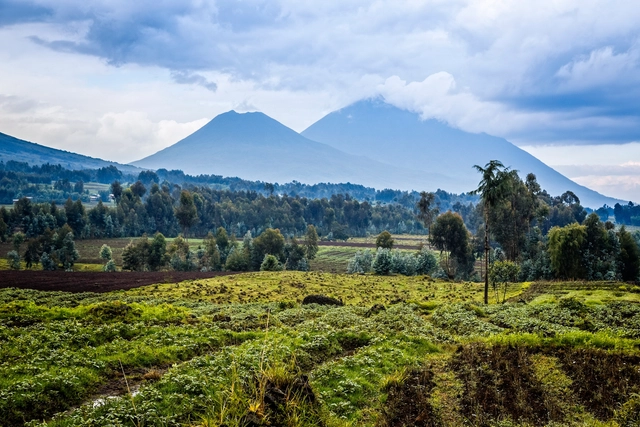
YAC - Young Architects Competitions launches “Rwanda Chapel”, a competition of ideas aiming to design a church for a small religious community in Rukomo as a place of peace and conciliation where to celebrate or meditate regardless of disagreements and differences. A cash prize of € 15,000 will be awarded to winners selected by a well-renowned jury made of, among the others, Eduardo Souto de Moura, Peter Eisenman, Simon Frommenwiler (HHF), Tatiana Bilbao, Sol Madridejos (Sancho-Madridejos Architects), Sean Godsell, Jean Paul Uzabakiriho (MASS DESIGN Group), Andrea Boeri (Università di Bologna), Walter Mariotti (Editoriale Domus)