“The day you die is the day you come back home, The day you walk across the threshold That is the judgement day.”
The idea proposes an imaginative typology of a terminal space that permits the transfer of souls to either heaven or hell. The design concept explores various different theories of philosophy and expresses it through proposing a creation of an imaginative typology for all belief systems that serves as an arrival space for all souls before they embark on their journey of afterlife.
A beautiful idea or evocative image may stir our imagination more than an object, a building, or even an entire city. Yet, it is the materiality that constitutes the great power of architecture, its ability to turn a physical building into a truly transcendental experience. Let’s think of how to improve buildings that we already have rather than, as often happens, raze them to start new ones from scratch. And when it comes to dealing with recent buildings, yet unprotected by landmark status, there is a lot of freedom as far as how they could be transformed.
Our cities today are an amalgamation of various choices and experiences of the past, made by our users, designers as well leaders. A by-product of cultures that abide in it, today's urban environment faces fastidiously changing technology and transforming lifestyle choices. ‘Communication’ has had a large impact on ‘commute’ and the meaning of ‘meeting’ is no more limited to physical. There has been a paradigm shift in the cultural perception of the built and personal boundaries and territorialities have strengthened tremendously. The quality of indoor and outdoor in an urban space determines the quality of interpersonal relationships as well and health and well-being of its users. It is hence important to plan and design spaces that are capable of accommodating transformation. In today’s scenario ‘Resilience’ is the only constant that helps keep the cities stable. The quality and strength of this resilience determines the quality of Urban life.
2020 has been a hard year; everyone needs a little break to take a step back and rediscover the things, places, and people they love. With this context in mind, we are proud to open the Architecture Illustration Competition.
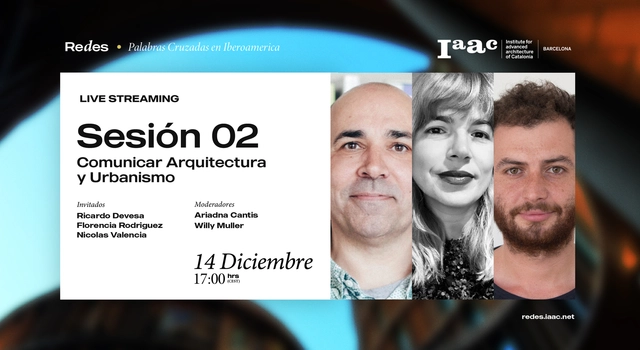
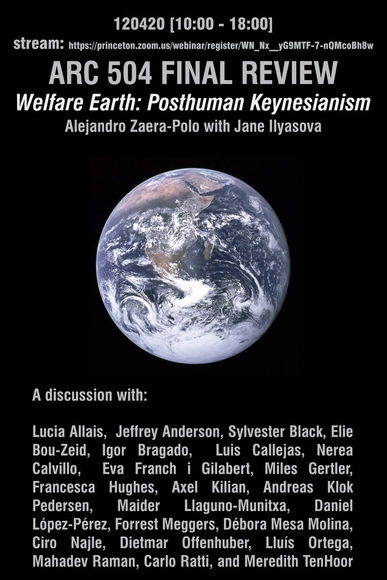
"Why do we communicate architecture and urbanism in Ibero-America?" is one of the questions that guests will explore during the second Redes IAAC session, an open, online event broadcast via streaming.
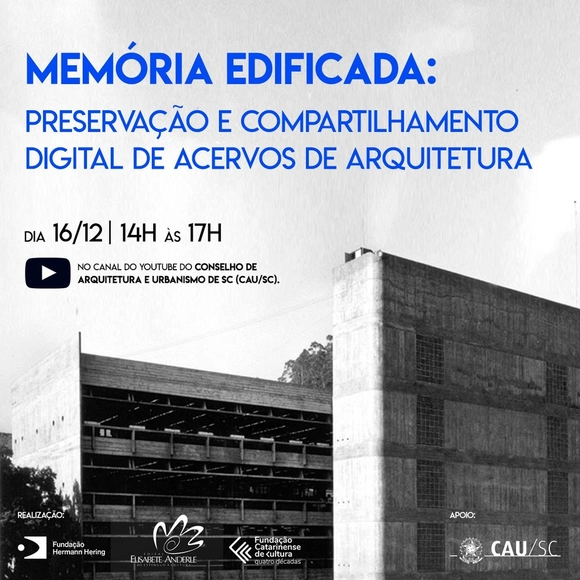
We are in the final stage of the project "Built Memory: cataloging and digitization of collections at the Ingo Hering Memory Center"—a project sponsored by the Santa Catarina Foundation of Culture through the 2019 Elisabete Anderle Call for Cultural Stimulation, which enabled the processing, storage, and digital sharing of part of architect Hans Broos's collection.
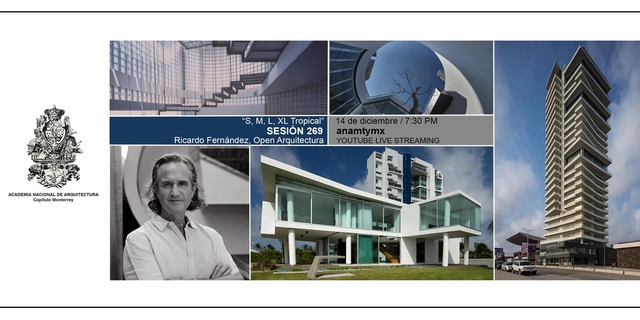
Ricardo is a prominent Mexican architect who has served as a professor, speaker, and international juror. Originally from Veracruz, he holds a Bachelor of Architecture from the University of Miami and a Master of Architectural Design from SCI-Arc in Los Angeles, California. He also participated in academic programs at L'École d'Architecture de Nancy in France and The Glasgow School of Art in the United Kingdom.
What is the significance of certain monuments to our cities? Can we measure our memories or qualify their meanings in how we view the world? I believe every city or place holds something that leaves a mark on us, representing our identity or our journey. When we are far away, visualizing these places makes us feel comforted, welcomed, and, in a sense, at home.
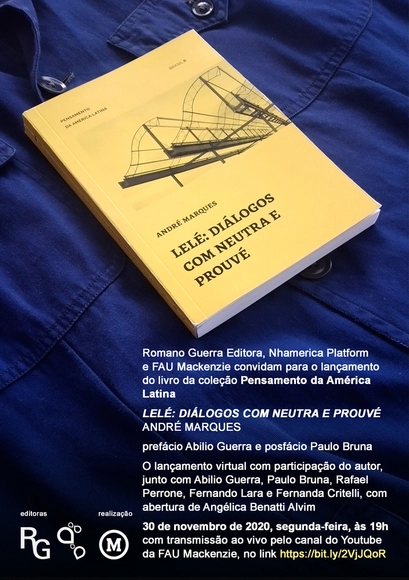
Book launch: "Lelé: Dialogues with Neutra and Prouvé"
Romano Guerra Editora (São Paulo, Brazil) and Nhamerica Platform (Austin, USA) present the Pensamento da América Latina (Latin American Thought) collection, coordinated by Abilio Guerra, Fernando Luiz Lara, and Silvana Romano Santos, with Fernanda Critelli serving as editorial coordinator. The collection provides texts on Latin American architectural culture in both print and ebook formats, available in Portuguese, English, and Spanish—the most widely used languages in the Americas.
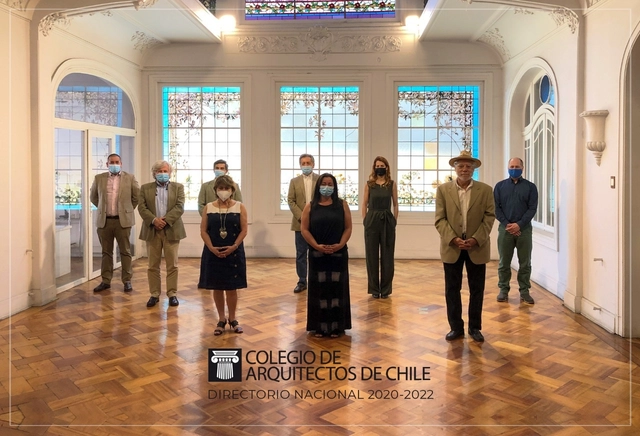
On Tuesday, December 1, 2020, during the inaugural session of the new National Board elected by members in the 2020 CA Elections, the new Executive Committee and officers of the College of Architects of Chile were selected for the 2020–2022 term.
We want students to explore what architecture truly means and what it can achieve without any constraints. This competition encourages students to create unconventional and exceptional designs. The aim is to let your imagination run wild and design a breathtaking Visitors Center.
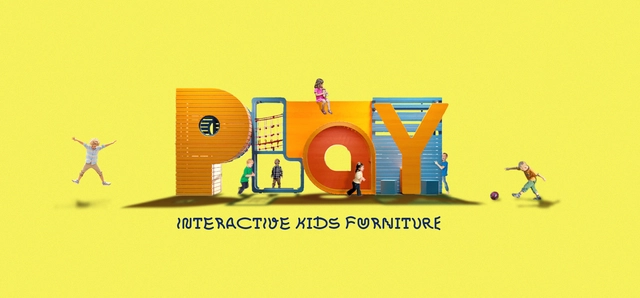
PLAY is a design competition with the aim of generating interactive, modular and dynamic furniture prototypes for children up to the age of 10. Furniture for children should be a reflection of their personality and must be more than just a functional entity for them. The furniture should have an innate sculptural quality that could stimulate a child’s creativity and imagination.
Organized by the partnership of The Circle and Binat Communication & Consultancy and under the main sponsorship of VitrA, the Istanbul Architecture Festival will address the theme of "Paradigm Shift" with events to take place between 5-11 December 2020.
A3: Archives of African Architectures is set to bring forward the 20-year old archive of an important movement that birthed Freedom Park, Lagos at the turn of the millennium.
ASAP Academic Foundation is a group of enthusiastic and passionate architects and concieved this maiden debut of a festival to celebrate architecture We have a greatvpanel of experts to share their learnings from profession. Competitions also become integral part of the fest All this happens in virtual format in a specially cretaed virtual conference venue that cannbe accessed from anywhere on the globe!
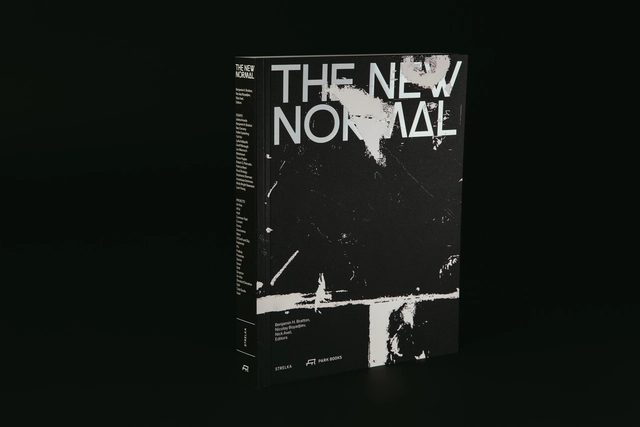
The New Normal book / Strelka Institute / Ruslan Shavaleev
The New Normal is the first expanded publication in English developed by Strelka Institute. The 548-page book encompasses the breadth and diversity of the work and features twenty-two interlinked research projects showing how speculative urban design can move upstream in decision-making processes.