
UniCarioca to host debate on the landscape of Rio de Janeiro
UniCarioca to host debate on the landscape of Rio de Janeiro

The construction industry is one of the largest sectors in Brazil, with high rates of non-professional labor covering a large percentage of urban construction, conceived without the supervision of a technical professional, such as an architect or engineer. The high costs associated with construction lead a large segment of society to seek alternatives for building their homes. Throughout this process, these individuals acquire informal technical knowledge in the construction field; however, the lack of specific design and planning leads to problems such as poorly utilized, dimly lit, and poorly ventilated spaces, a lack of alternatives for material use, unnecessary demolitions, and extended construction timelines that generate expenses and unforeseen issues.
The team at Hamaca Arquitectura invites architecture students to the second season of their studio mentorship sessions. To participate, students must register for this initiative, which aims to improve undergraduate studio projects.

On March 16 at 10:00 AM, Belas Artes will host the inaugural lecture for its Professional Master’s Program in Architecture, Urbanism, and Design. In addition to welcoming new students, the event will initiate discussions relevant to the program's research lines and its concentration area in Architecture, Urbanism, and Design.
Centered on the theme "From Taller Total to Participatory Design," the lecture will feature contributions from Professor Sylvia Adriana Dobry Pronsato, PhD, of FIAMFAAM, and Professor Wilson Caracol Ribeiro dos Santos Jr., PhD, of PUC-Campinas.
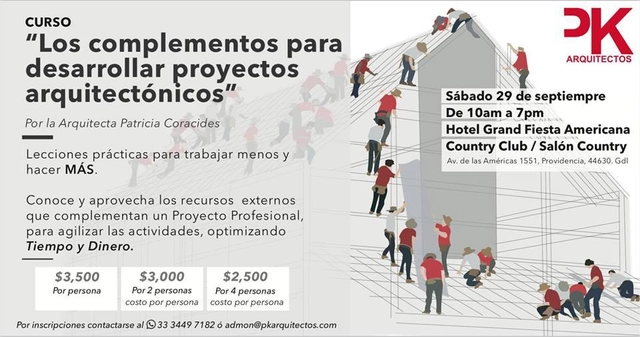
PK arquitectos invites the professional and student community of the Guadalajara architectural scene to the course "Complements for Developing Architectural Projects | Practical Lessons for Working Less and Achieving More," taught by architect Patricia Coracides.
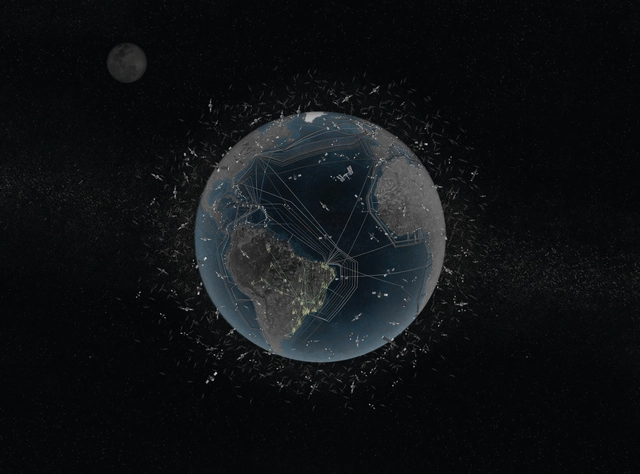
This course offers a historical overview of the development of digital communication technologies and their relationship with urban space. We will also explore why a movement known as "smart cities" exists today, as well as the implications and limitations of distributing this "intelligence" throughout cities.
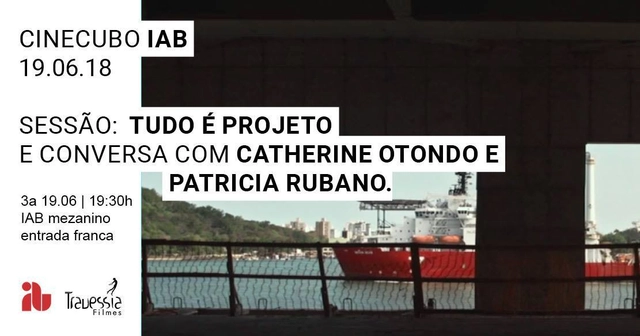
CineCubo is a film club hosted by the Institute of Architects of Brazil (IAB) designed to foster dialogue between audiovisual and architectural languages and to debate perspectives on the city. On the third Tuesday of every month at 7:30 PM, CineCubo screens films followed by a discussion at the IAB-SP headquarters. Curated and moderated by Nana Maiolini, Travessia Filmes, and guests, the sessions are free and open to the general public.
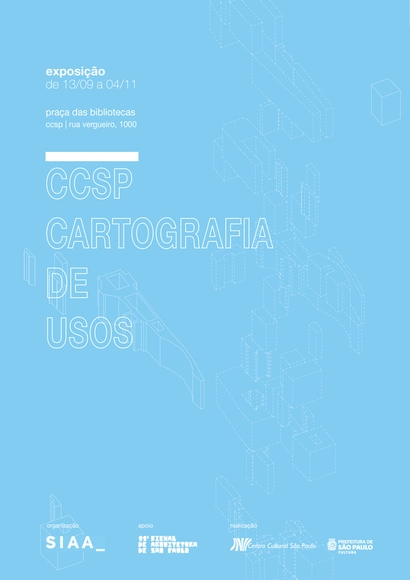
Drawing on the theme "In Project" from the 11th Architecture Biennial, the firm SIAA Arquitetos Associados reflects on the possibility of alternative relationships between architectural design, built space, and public occupation over time, whether anticipated or not. To this end, the firm uses the Centro Cultural São Paulo building—designed by architects Eurico Prado Lopes and Luiz Telles—as the foundation for its reflection, and not by chance. Following a period of immersion in the diverse uses that this space anticipates and enables, this exhibition presents a graphic record developed by the architects at SIAA. The work seeks not only to highlight what is already present in the daily life of the CCSP but also to make explicit the potential of its spaces and uses—whether programmed or appropriated—positioning the building as a powerhouse of cultural management and an architectural and urban object.
We are living in an era of global-scale innovation.
Architecture and engineering are also being transformed by these innovations, with a new design concept called BIM at the forefront.
According to Bilal Succar, BIM (Building Information Modeling) is a set of interrelated policies, processes, and technologies designed to manage building construction through a database, from the design phase through the end of the building's lifecycle.

As part of the first radio broadcast of the 2018 season—now in its third year on the air—Etéreo (arquitectura que se escucha) captures highlights from the sessions held during the course on urban resilience and climate change in Latin American cities, organized by CELFI (Latin American Center for Interdisciplinary Training).

In this seminar, Sinaenco proposes an analysis of the challenges involved in implementing the BIM Agenda in Brazil, considering the expectation that the methodology will be widespread in public works within 10 years. Starting in 2021, certain federal government agencies are expected to require BIM for the development of architectural and engineering models.

Founded in 2016 by three architecture and urbanism students—Matheus Pereira, Ellen Corrêa, and Yasmim Amorim—driven by a desire to analyze urban space and engage in a deeper discussion about São Paulo's architecture and its layers, the project was born from a desire to inspire architecture and urbanism students, as well as those interested in the field, to develop a new perception of space through the observation of the city and the places we inhabit daily, which often go unnoticed despite their significance.
The graduate program at Escola da Cidade, which celebrates its 10th anniversary in 2018, currently offers four regular courses: ‘Housing and City,’ ‘Geography, City and Architecture,’ ‘Architecture, Education and Society,’ and ‘Mobility – Its Logics and Scales.’ In 2019, the program will expand to include the course ‘Conceiving and Constructing: Lightweight Structures and Prefabrication.’
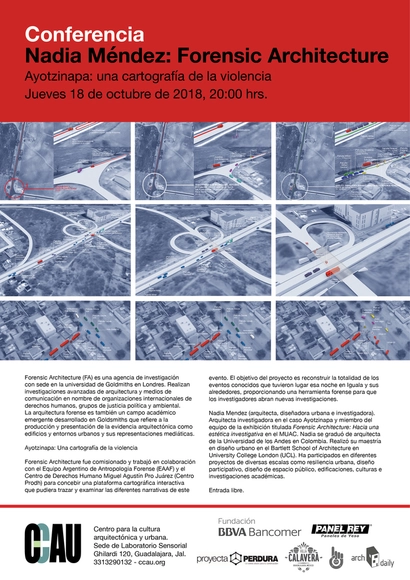
Forensic Architecture (FA) is a research agency based at Goldsmiths, University of London. They conduct advanced architectural and media investigations on behalf of international human rights organizations, as well as political and environmental justice groups.
Forensic architecture is also an emerging academic field developed at Goldsmiths that concerns the production and presentation of architectural evidence, such as buildings, urban environments, and their media representations.

The project consists of a scientific event and a symposium involving Japanese and Chilean participants on a topic of mutual interest. Both Japan and Chile face significant natural disasters—such as climate change, earthquakes, and tsunamis—that profoundly impact their built environments, cities, urban planning, collective memory, and society. The project focuses on a specific case study: the 2010 earthquake and subsequent tsunami in the Greater Concepción area.

To celebrate its 7th anniversary, the publisher and magazine AMAG is organizing and producing the AAICO | International Congress of Architecture and Art, which will take place in the Greater Porto area during the first week of September, from the 3rd to the 8th.

In their first solo photography exhibition, the artist presents 10 works that showcase, through their own perception, the visual re-signification of building facades in Rio de Janeiro, São Paulo, and Belo Horizonte. Contrasts of light and shadow create lines, shapes, and angles that appear as figures distinct from the photographed reality. The abstract result of this work establishes a connection with Brazilian modernism, particularly with the centenary of Athos Bulcão and their panels.

The IAB RS Vale do Sinos chapter invites you to the premiere of the first documentary in the series "Memória da Arquitetura Moderna no Vale do Sinos," taking place this Wednesday, July 4, 2018, at 7:00 PM at the Fundação Scheffel in Novo Hamburgo.