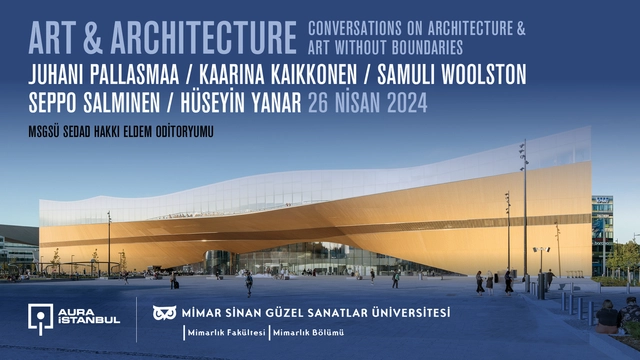
The "Conversations on Architecture and Art Without Boundaries" panel will be held on Friday, April 26, in partnership with The Istanbul Architecture and Urbanism Research Academy - AURA Istanbul and Mimar Sinan Fine Arts University, Department of Architecture.
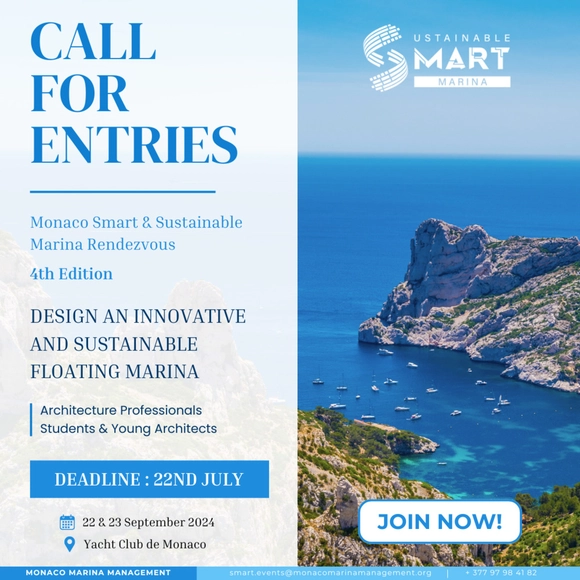
In order to regulate anchoring for small and large pleasure boats in environmentally sensitive areas along the French Mediterranean coast, we are launching a call for ideas for the creation of a floating marina for the 4th edition of the Monaco Smart & Sustainable Marina and Architecture Award.
Camp Taliesin West - Frank Lloyd Wright Foundation
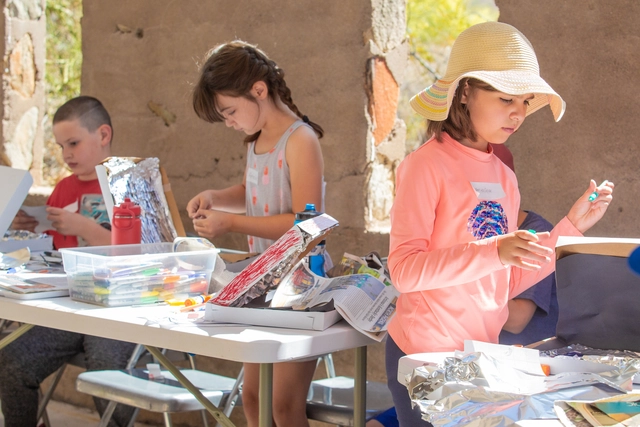
The Frank Lloyd Wright Foundation today announced the return of its popular Camp Taliesin West with a lineup of full- and half-day sessions for K-12 students on topics surrounding architecture, science, art and photography, both available in-person at Taliesin West, Wright’s winter home and studio in Scottsdale, and virtually through Zoom.
From 27 April to 5 May 2024, the Peter-Behrens-Bau in Oberschöneweide will be the heart of BERLIN DESIGN WEEK 2024. Visitors can look forward to a comprehensive programme including everything from exhibitions to talks all the way to interactive workshops, all offering in-depth insights into innovative design concepts.
Milan Design Week rarely fails to deliver on compelling showcases of design and innovation.
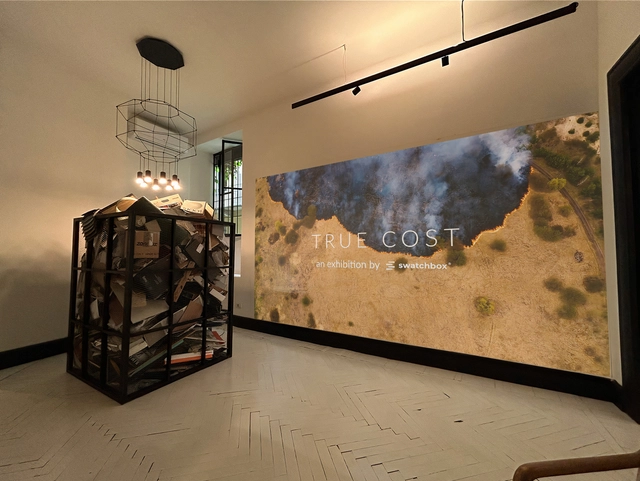
One of the exhibitions this year, created by Swatchbox, conveys the “true cost” of traditional approaches to construction. The sample platform founded by architects to provide sustainable sampling methods to the design community launched its thought-provoking showcase at the heart of the Brera Design District in Milan.
The exhibit boldly confronts the issue of wastefulness inherent in traditional construction practices. Installed inside an office in Brera that is ordinarily occupied by a Milan architecture firm, the exhibit displays a large pile of construction materials typically destined for landfill. The materials are meticulously arranged to showcase the sheer volume of waste generated by the design community.
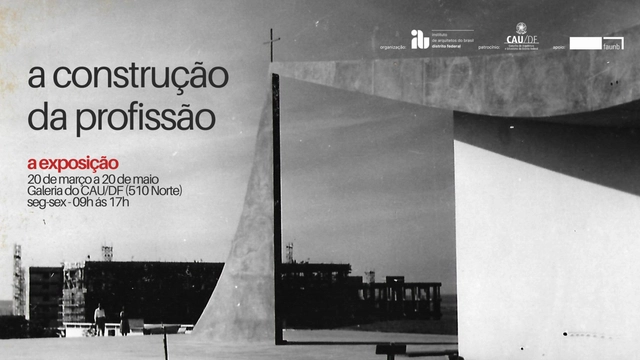
The "A Construção da Profissão" (The Construction of the Profession) project was coordinated and executed by the Institute of Architects of Brazil, Federal District Department (IAB.DF), with sponsorship from the Council of Architecture and Urbanism of the Federal District (CAU/DF) and support from the Faculty of Architecture and Urbanism at the University of Brasília (FAU/UnB).
In celebration of Book Month, the Instituto Cervantes in São Paulo will open the exhibition "Anaqronías" by award-winning photographer Juan Cerón on April 25. Following an extensive conceptualization process and various projects that allowed for artistic growth, "Anaqronías" is the photographer's second personal project, a journey that has led to exhibitions in several countries across three continents—including Spain, Italy, the United Kingdom, Germany, China, Mexico, and the Dominican Republic—before finally arriving in Brazil.
The book presents the remarkable history of the emergence in the past two decades of a dramatically new design of multi-tower and multi-functional tall building clusters. Based upon a decade of architectural research, the book provides a definition of the new typology, here termed The Tower Cluster, and its major concepts, design characteristics, and the typological knowledge required to design creative sub-variants. It provides the detailed analysis of a large series of outstanding recent case studies of the typology.
FABRICATE 2024: Creating Resourceful Futures now available as free Open Acces, edited by Mette Ramsgaard Thomsen, Phil Ayres, Bob Sheil and Marilena Skavara
Fabricate 2024: Creating Resourceful Futures sets focus on the pressing need to develop new models for architectural production that rethink how resource is deployed, its intensity, its socio-ecological origins and sensitivity to environment.
Like many small residential practices Cohen & Hacker Architects have made a career of doing house additions. In a practice spanning almost forty years they have evolved strategies for making additions that represent both a theoretical and philosophical position about altering older buildings. They believe that recycling existing houses, retrofitting them to meet new energy standards, preserving their embodied energy as well as their cultural significance is the most sustainable way to practice architecture.
Porta by Maxim Velcovsky. Image Courtesy of Lasvit
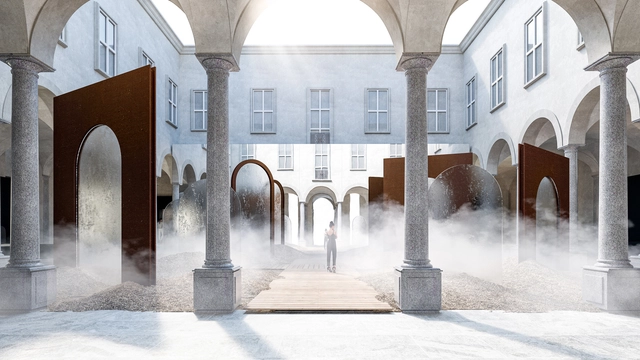
Through “Re/Creation,” Lasvit —a leader in hand-made glassmaking—sets up a sanctuary for creative escapism amid the hustle and bustle of Milan’s Salone Week. In the serene embrace of Palazzo Isimbardi, “Re/Creation” offers a space where minds are free to wander, inspired by the fluid grace of molten glass. The title refers to the innovative technique of fused glass, where the essence of fused glass lies in letting go. Extremely hot melted glass is allowed to relax, spread and take shape of a form designed for the glass to lie on. Its own weight and gravity take care of the rest. Similarly, a creative mind is most prolific and innovative when relaxed, free of everyday pressures and demands. This is why, at the beautiful location of Palazzo Isimbardi, Lasvit creates a haven for creatives to escape, recharge and relax.
The Bom Fim Ecological Market (FEBF) and the Ecological Farmers' Market (FAE) will host a citizen science initiative this coming Saturday, April 20. The project focuses on collaboratively mapping the space and its unique characteristics, gathering data from farming families and agro-industries alongside information regarding the habits of market-goers.
Exhibition brings together visual artists inside a construction site in São Paulo
2024 Edition of Real Estate of the Art to Feature Artwork in a Building Under Construction The platform by developer Helbor, this time in partnership with MPD Engenharia, brings an exhibition to a construction site in Itaim Bibi, São Paulo.
In the context of the designation of Tripoli as Arab Capital of Culture in 2024, and the enlisting of the Tripoli Fair as World Heritage in Danger by UNESCO in 2023, the Embassy of Brazil in Lebanon, Instituto Guimarães Rosa Beirut and Marsah invite you to the opening of the exhibition "Tripoli Fair: The Way I See It" Art Prize - Selected Works.
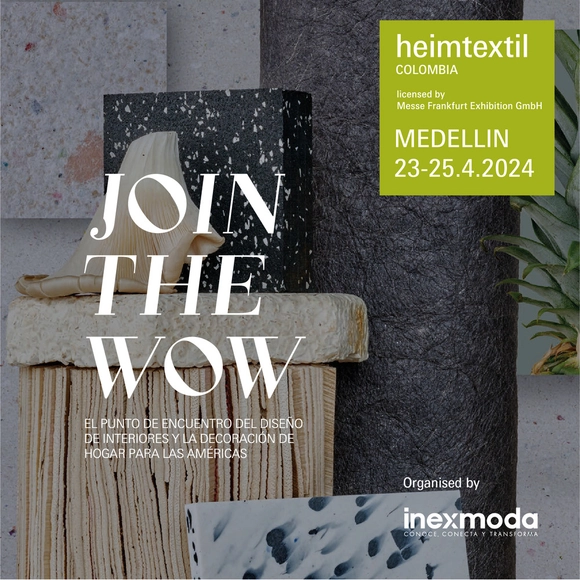
With 66% of its exhibitors coming from abroad, Heimtextil Colombia—an international trade fair for home textiles and decoration—demonstrates its capabilities and opportunities within the interior design and hospitality sectors.
The Tallinn Architecture Biennale 2024, TAB 2024 (tab.ee), which will take place from 9 October to 1 December, 2024 (Opening Week: October 9th – 16th, 2024), has presented its Installation Programme Competition: "For-This-Situation".