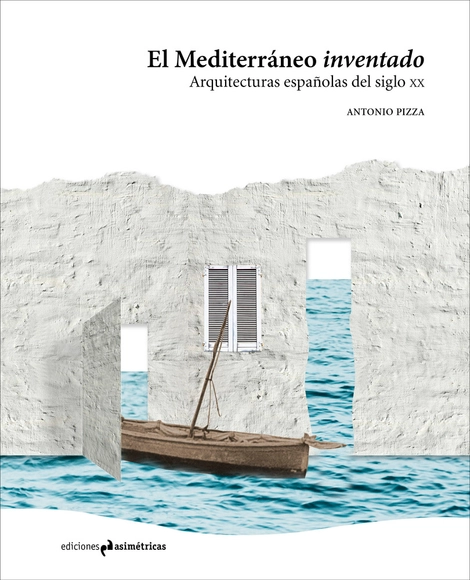
The collection of texts gathered in this book spans from 1997 to the present, aiming to challenge the canonical narratives developed around significant events in the history of modern Spanish architecture.
The collection of texts gathered in this book spans from 1997 to the present, aiming to challenge the canonical narratives developed around significant events in the history of modern Spanish architecture.
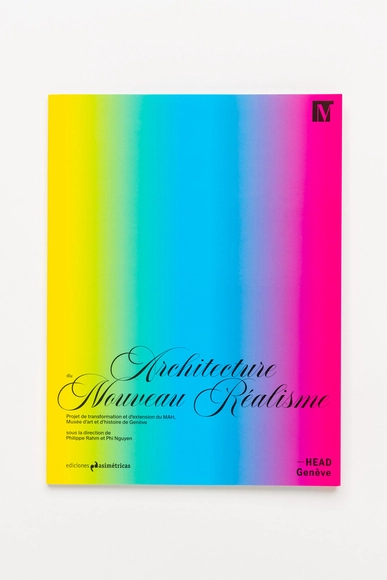
This book is the result of a workshop, a collaboration between the Interior Architecture department at HEAD and the Geneva Museum of Art and History. It invites students to explore the architectural vision for the Museum’s transformation and expansion, which will be the subject of an architectural competition next year. The work will help define the competition program and provide a space to reflect on the invention of a new museum model for the 21st century.

This book continues the line of research into our country's vernacular architecture conducted by the authors in various remote locations across the nation, focusing this time on the isolated settlements of the archipelagos along the Aysén region's coastline (1). Through this book, the urban ingenuity employed to inhabit this extreme landscape is identified and highlighted, the sense of rootedness achieved within the archipelagic territory is explored, and the qualities behind the places created by the men and women of the fishing tradition who live here are recognized.

This book is a unique and iconic project that captures—in a format that enhances both written and graphic information—the essence of contemporary Chilean architecture. It serves as a comprehensive and detailed record that, beyond acting as a form of creative memoir of our heritage, allows us to understand the past, present, and future of architecture, our cities, and our country.
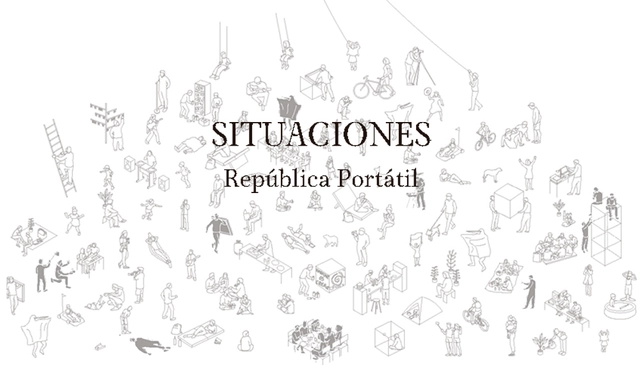
Situaciones summarizes part of the work developed by the architecture and design office República Portátil between 2003 and 2018. The seven projects featured in this book are defined as "weak," temporary bodies—installations of varying scales positioned in the public realm to interact with and intervene in daily urban life.

A decade before Le Corbusier and Louis Kahn appeared on the Indian architectural scene, Golconde—the first example of pre-independence modern architecture—was being developed in an enclave of French India, Pondicherry, in 1938. Thirty years later, The Mother envisioned a new city, Auroville, named after Sri Aurobindo and dedicated to achieving human unity and understanding, serving as an example to the international community.
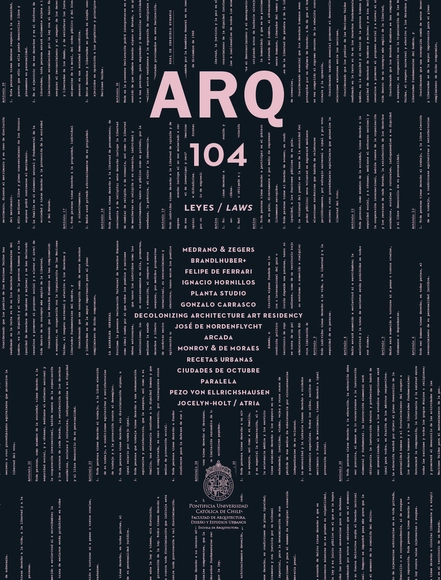
Modern civilization, argues Franco "Bifo" Berardi, can be understood as a colonization of reality through laws. This included not only law in the strict sense—whose statutes sought to define a norm to regulate and 'normalize' social activity—but also the scientific laws that, for this Italian philosopher, aimed to "reduce the becoming of physical matter to the repetition of a model" (Berardi, 2018:40), thereby overcoming natural chaos through reason and measure (which share the Latin root ratio).

The journal rita_ has just published its latest issue, number 14. Titled Construcción común, it recovers those nameless, surname-less structures born from tradition and popular culture through the lenses of a series of photographers based across Ibero-America. Chilean architect Germán del Sol, recipient of the National Architecture Prize, opens this sequence of images as a guest master, given his close relationship with what is often mislabeled as "spontaneous" architecture.

This is an original, miscellaneous, rich, and distinct book that offers the reader an uncommon journey through an unconventional home, designed and built by Javier Carvajal—one of the great architects of the second half of the 20th century—in the mid-1960s in Somosaguas. The measure of the Casa Carvajal's uniqueness is evidenced by the fact that Carlos Saura used it as the setting for his film La madriguera—a telling title regarding the role assigned to the architecture—in which the house plays a part, silent yet omnipresent, with the force of another character in the drama.

This study presents a rich field of intersections between the modern radical avant-garde—before and after the Situationist International—and social architecture projects centered on the lifestyles of Roma, southern migrants, and the urban lumpenproletariat. These are the very sites where various flamenco heterodoxies emerge, fostering new forms of habitability, symbolic production, and the reinvention of audiences, spaces, and places.

When attempting to define the scope of this profession—far beyond the obvious roles of designer and site supervisor—I have always maintained that an architect is an expert in the transformation of real estate, regardless of the condition or perspective. They are not only transformers of urban land into functional buildings, but also of rural land into developable plots, or the latter into urban fabric; they act as parcelers and re-parcelers, rehabilitators and conservators, renovators of use, authors of boundary surveys and expert reports, appraisers, scenographers, landscape architects, and urban planners—capable of performing any operation on a real estate asset.

In her new work, Pandemic and Confinement Through the Eyes of an Architect, Marta Miret Rodríguez explores architecture by offering a perspective on how the profession viewed the situation experienced in 2020: a global pandemic.
Mark Wigley is a professor at GSAPP, Columbia University (New York), where he served as dean from 2004 to 2014. He has written extensively on the theory and practice of architecture. His books include: Passing Through Architecture: The 10 years of Gordon Matta-Clark; Cutting Matta-Clark: The Anarchitecture Investigation (2018); Buckminster Fuller INC: Architecture in the Age of Radio (2015); Casa da Musica / Porto (2008), Constant’s New Babylon: The Hyper Architecture of Desire (1998), White Walls, Designer Dresses: The Fashioning of Modern Architecture (1995); and The Architecture of Deconstruction: Derrida’s Haunt (1995).
Francesca Hughes is an architectural theorist, educator, and specialist in the relationship between architecture and technology. She is the director of the School of Architecture at the University of Technology Sydney, Australia. She has taught workshops and courses in history and theory at the Architectural Association and the Bartlett School of Architecture, UCL in London, where she is from. She has also taught at The Berlage, TU Delft, and served as a visiting professor at KU Leuven in Belgium.
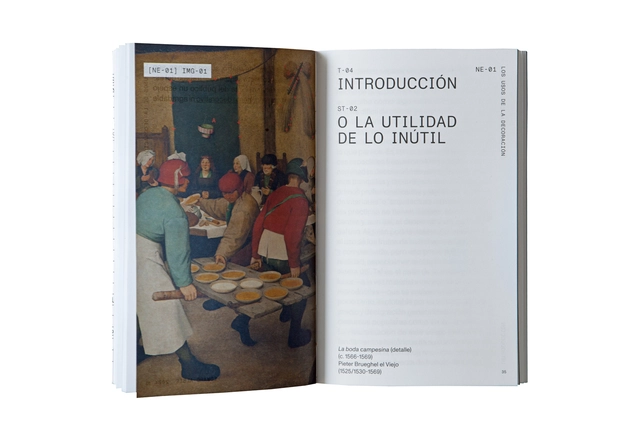
The Uses of Decoration comprises four essays that investigate a set of normative representations of non-professional home decoration and its instrumentalization within various economies.
Arquitectura Maulina was born out of the absence of a platform focused on the Maule Region, Chile. The magazine proposes an architectural survey featuring online articles from professionals, students, photographers, and more, operating on the understanding that architecture is about more than just construction—it is also about establishing dialogues, posing questions, and maintaining records. This initiative is shaped by how we observe the region and what we should do to support it.

Published in Buenos Aires in September 2020, this 240-page volume reflects a meticulous investigation and cataloging of Latin American architecture magazines published in print between 1874 and 2015.
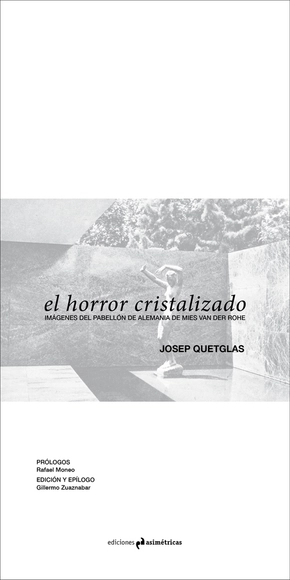
"I return to read, with interest and pleasure, the text by Josep Quetglas on the German Pavilion at the 1929 Barcelona International Exposition, a work that established the stature of architect Ludwig Mies van der Rohe [...] The flashes of lucidity that illuminate the complex scene in a text like this do not aim to convince the reader of a specific thesis; on the contrary, they engage the reader with the text and compel them to read at a measured pace, discovering moments of clarity throughout that bring them closer to the drama of Mies. A drama that may not have been resolved even after crossing the Atlantic. Reading Quetglas’s text, and mindful of the aforementioned flashes, one appreciates this way of viewing the new role of the critic,” writes Rafael Moneo in the new prologue to El horror cristalizado by Josep Quetglas, written specifically for this fourth, revised, and expanded edition, which was overseen by the eminent professor, curator, and researcher Guillermo Zuaznabar.