Over the past few decades, the Architecture, Engineering, Construction, and Operations (AECO) industry has been undergoing an unprecedented digital transformation. Since the days when designs were drawn exclusively on paper—a reality that lasted until the early 1980s—the field has passed significant milestones, first with the adoption of CAD (Computer-Aided Design) and, more recently, BIM (Building Information Modeling). Now, a new transition is underway, promising to be even more profound. Artificial Intelligence (AI), which until recently seemed confined to laboratories or futuristic concepts, is beginning to play a practical and strategic role in how we design, build, and manage our buildings and cities.
Today, designers, researchers, and scholars must responsibly engage the entangled networks and delineated systems far beyond boundaries of typical design practice to engage in thoughtful critique of the past and consider counter-imaginations of the future. Our discussion of the unseen begins first with an understanding of the power of sight. A look back at the technologies of control implicated in documenting the world reveals the closely intertwined evolution of imperial occupation and technological progress. Constructing Invisibility continues the exchanges initiated during the first symposium and builds upon the diversity of knowledge shared. The late French philosopher Bruno Latour reminds us that “politics has always been oriented toward objects, stakes, situations, material entities, bodies, landscapes, places. This is in effect the decisive discovery of political ecology: it is an object-oriented politics. Change the territories and you will also change the attitudes.” This issue uses these economies, landscapes, and places, including the boundless corporations and destructive climate realities, to better see the world. Further, the collection of essays seeks to understand how the construction of such sight impacts civilian occupation in the remaining world. Illuminating stories and places has become the aim of this volume, and shedding light on distant territories has become confounded by extremity, complexity, disparity, and secrecy.
Designing for Dignity: Elements of Practice reflects the current and best thoughts on Dignified Design. The book offers tangible guidance for how the built environment can promote health and wellbeing and how design professionals can create atmospheres of dignity and hope. Transdisciplinary evidence, including interviews with over 3,000 people over the last decade, informs the premise of the book—acknowledging that nothing we design is neutral, the places we inhabit shape our ideas about who we are and what we deserve, and the built environment has the potential to promote safety, comfort, community, and control for all end users. The 22 elements of Dignified Design illustrate a range of potential spatial responses with infinite applications, all of which underscore that Dignified Design requires intention, iteration, and evaluation to achieve meaningful impact. Designing for Dignity: Elements of Practice centers health, wholeness, and flourishing—stipulating a standard of DIGNITY in housing, shelters, and all environments.
Between Shadow and Light probes Maryann Thompson’s commitment to an architecture that is sustainable and regionally driven and her penchant for heightening the experiential qualities of each project through a holistic, consensus-building approach to design.
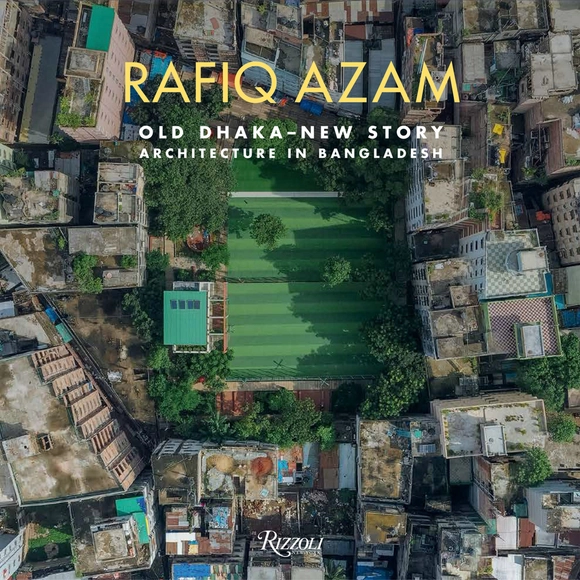
Rafiq Azam: Old Dhaka-New Story: Architecture in Bangladesh
A mid-career monograph for Bangladeshi master architect Rafiq Azam focusing on the urban transformation of Dhaka, with an introduction by renowned architect Kenneth B. Frampton.
Creative Dialogues. We’re back and Beirut is calling.
Building on the success of its 2023 debut, Creative Dialogues returns to Beirut on September 12–14, 2025, bringing a fresh format, new perspectives, and an expanded program of talks, workshops, and creative experiences.
Presque Demain – an exhibition by the Intersect collective at Paris Design Week, September 25–30. An invitation to explore our near future through gestures, materials, and shared narratives.
Intersect is a collective of artist-designers from the design academy Eindhoven, united by the belief that visual arts should be accessible, inclusive and transdisciplinary. We advocate for a form of creation that is grounded in materials and gestures, that acknowledges the value of craft, and create space for plural narratives. Presque Demain was born from a desire to explore our near future through the materiality of the present. By playing with the ambiguity suggested by "almost", the exhibition embraces uncertainty as fertile ground for new imaginaries. Rather than grouping works by discipline or typology, it favor their overlap and challenges established formats. Thought its composition, the exhibition creates spaces where the various elements come together to speak and weave share narratives. Between dreamscape and fragments of reality, these dialogues open the door to new forms of collective practices.
Beauty is Resistance: art as antidote at browngrotta arts (October 11 - 19) explores how aesthetic creation—especially within textile, fiber, and material-based practices—serves as a form of radical defiance, cultural preservation, and political voice. In an age of political polarization, ecological crisis, and commodification, beauty might seem like a luxury—or a distraction. But for the artists in this exhibition, beauty is not a retreat from reality. It is a strategy of survival, remembrance, and resistance. Beauty is Resistance will feature more than two dozen international artists who harness the power of beauty not as escape but as agency: to mourn, to protest, to remember, to heal, and to imagine.
Design Democracy 2025, India's leading stage for design, craft, and future thinking, will take place from 5–7 September at the HITEX Exhibition Centre, Hyderabad, bringing together over 120 leading brands, 80+ influential speakers, and an estimated 15,000+ visitors across three days of exhibitions, talks, installations, and curated experiences.
In this issue of Dearq "Latin American Housing: New Models of Governance and Management in Housing Production" invites contributions that, from different research perspectives, examine contemporary or historical governance and management models capable of producing housing relevant to diverse population groups in Latin America or in contexts with transferable experiences.
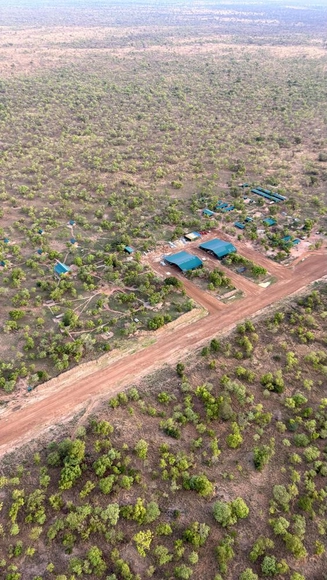
This areal footage shows the existing infrastructure on camp
African Parks, in partnership with the Government of South Sudan; Ministry of Wildilfe Conservation & Tourism (MWCT), manages Badingilo National Park as part of its mission to restore and protect Africa's natural heritage. Covering over 10,000 km², Badingilo hosts the largest land mammal wildlife migration on the planet and will act as the operational hub for several national parks in the region. Headquarters location (coordinates): 5° 6' 26.9094" N, 31° 54' 11.6676" E, within Badingilo National Park .
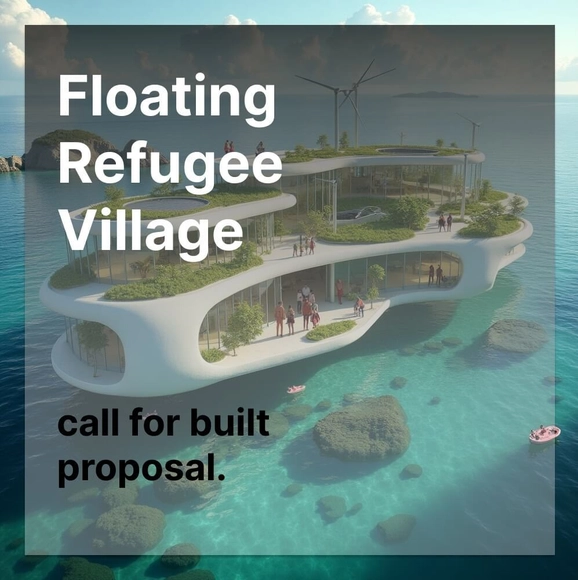
Premise With rising sea levels and intensifying climate events, coastal populations worldwide face unprecedented displacement, creating a new generation of climate migrants. Traditional land-based refugee solutions are often temporary, resource-intensive, and fail to provide long-term dignity or stability. This competition challenges architects and designers to radically rethink humanitarian architecture by proposing a new paradigm: a buoyant, self-reliant community. The Floating Refugee Village is envisioned not as a temporary camp, but as a permanent, adaptable, and thriving habitat that harmonizes with its aquatic environment, offering a resilient future for those displaced by our changing planet.
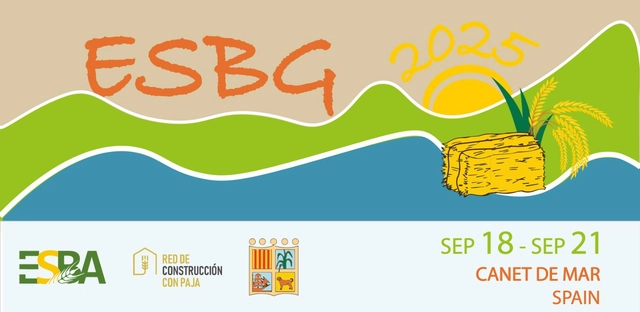
The European Straw Building Gathering (ESBG 2025) will take place from September 18 to 21, 2025, in Canet de Mar (Barcelona). This international event will bring together professionals, collectives, and those interested in bio-construction and sustainability.