Mariana Etulain

BROWSE ALL FROM THIS AUTHOR HERE

Houses on Sand in Argentina

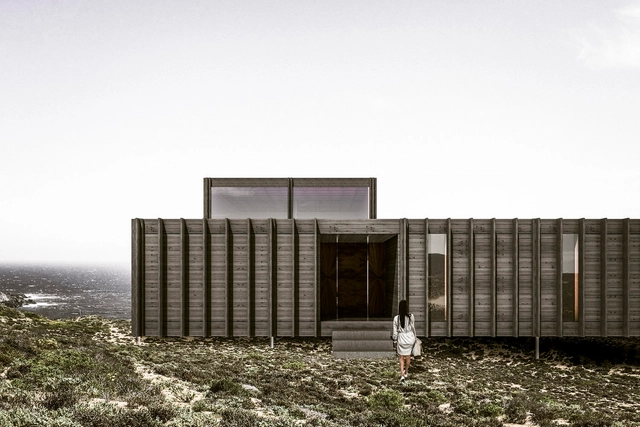
Building sandcastles on the beach is an ancient practice that allows us to dive deep into our imagination, ideas, and dreams. For many, it was likely our first approach to construction. Water and sand merge, transforming into space—something greater than the sum of its parts. While fortresses, bridges, and moats are a thing of the past for some, another typology has emerged to take their place: the house.

Below, we present a selection of Argentine houses built on sand dunes, designed by architects who turned castles into houses, sand into concrete, and dreams into reality.

How Did They Do It? The First Steps of Great Argentine Architects

“You don't have to arrive first, but you have to know how to get there,” goes the song. In architecture, this path is often envisioned as a perfectly straight line, but in reality, it is more of a zigzag with the precision of an electrocardiogram.

Starting a degree, then dropping out, later returning to it; graduating only to travel and see the world; entering competitions relentlessly; crossing the ocean in search of a mentor or a job; following your heart even when the world tells you otherwise. All of these decisions served as the compass for several Argentine architects. Let's look at their first steps below.

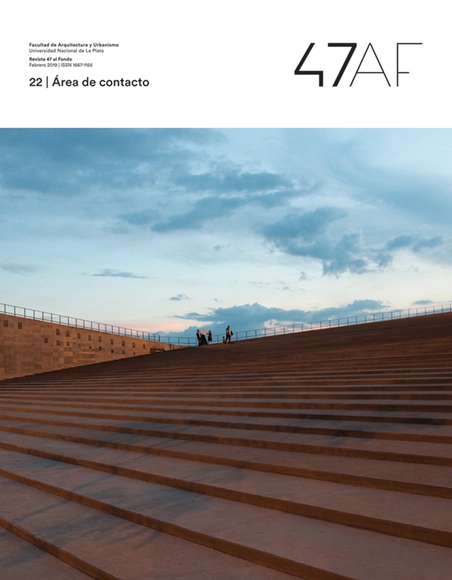
Revista 47AF 22, reflections on the contact area

Subscriber Access | 

How does Amancio Williams relate to Álvaro Siza? Lina Bo Bardi to Andrea Palladio? SANAA to Paul Virilio?

How can architecture be taught and learned? What is the architect's role when designing? How do new generations interact with public space?

Are we witnessing the end of the user era and the beginning of the era of social actors?

Approaches to these questions are revealed within the pages of the new 22nd issue of 47 AF, a magazine published by the Faculty of Architecture and Urbanism at the National University of La Plata, Argentina. This new issue invites reflection on the "Area of Contact"—that delicate bond between a structure and its site, ranging from the point supports of the Modern Movement to the heavy mass anchored to the earth.

National Ideas Competition for the Centenary Pavilion and its surroundings, Buenos Aires

The State Property Administration Agency, in collaboration with the Government of the City of Buenos Aires, has launched a new competition aimed at optimizing urban space and enhancing heritage value.

The competition, titled "National Ideas Competition for the Centenary Pavilion and its Surroundings," is organized by the Central Society of Architects.

Andrés and Jorge Kálnay: The Golden Years of Art Deco in Buenos Aires

Jorge and Andrés Kálnay began a journey back in 1920. By that time, Argentina had already built most of its public buildings, Alejandro Bustillo was traveling through Europe, Mario Palanti was erecting his colossal Barolo Palace, and Le Corbusier would have to wait nine years before setting foot in Buenos Aires.

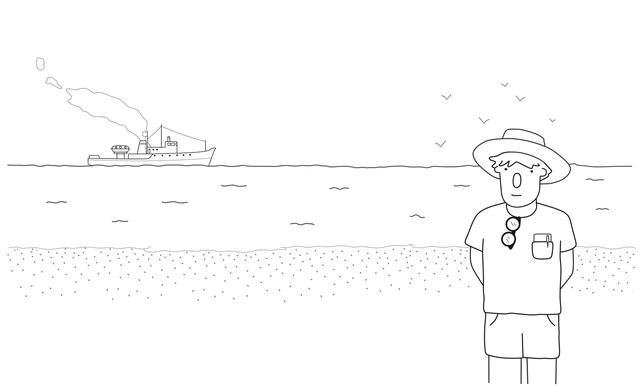
Little did the architect brothers imagine, when they boarded a ship bound for the United States, that they would end up in the waters of the Río de la Plata, shaping part of Buenos Aires's current architectural memory. 

Models at Everyone's Service

Models at Everyone's Service - Featured Image
© Carolina Castagna and Daniela Bernini

“Close your eyes and walk through the School of Architecture. Explore it, listen to the sounds, feel the textures, and try to mentally reconstruct the space.” I walked several yards blindfolded, and I still remember how my hearing sharpened, picking up the murmur of the people around me.

Although I knew the building's layout like my own home, I must confess those were perhaps the longest and most unsettling steps I have ever taken.

Reflections on the eternity of architectural works in Argentina

Subscriber Access | 

When Clorindo Testa was asked how he felt upon learning that one of his works, the Casa Di Tella, was going to be demolished, he replied: “I believe that buildings are not made to last. One can say that the Roman Colosseum will endure. They are not going to tear down Notre-Dame Cathedral, nor the Duomo in Milan. But when you design a project, you don't go around thinking it will be memorable and last forever. Works of this nature have owners, and owners change their minds. People and society also change: what was valid twenty years ago is no longer valid today. It is inevitable. Personally, it doesn't bother me in the least if they demolish a work of mine; I don't design things to last forever. You make things to function when they are commissioned, and they last as long as they need to. The Casa Di Tella was built for Di Tella, and Di Tella died. In a sense, it is no longer his house... It became part of an institute that bought it. Therefore, the functions it needs are different.” [1]

Testa's words reveal a remarkable humility that seems rare in the DNA of architects who yearn for the eternity of their work. Indeed, this desire for permanence was imposed on us almost as a mandate, a necessity. Palladio knew this well when referencing Vitruvius: “utility, perpetuity, and beauty.”

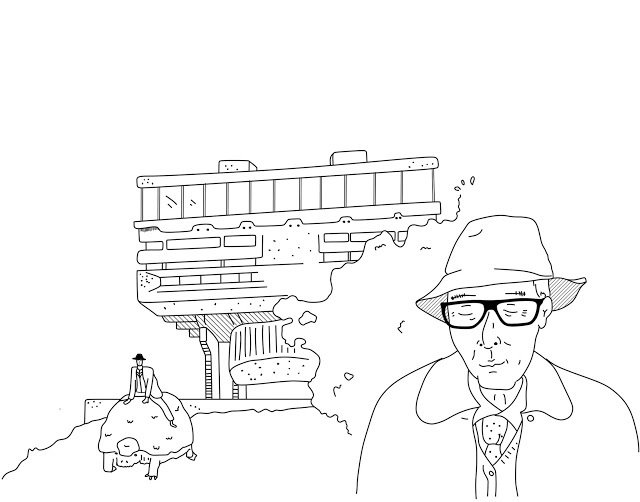
Anecdotes of Clorindo Testa: "If the Idea Doesn't Die, the Project Is Not Born"

I recently learned that the word "testa" means "head" in Italian. It made me think of Clorindo Testa and how fitting his last name was.

Yesterday marked the 95th anniversary of his birth. Possessing infinite creativity and charisma, he was one of those personalities that appear once every century. In him, the intelligence of the architect coexisted with the sensitivity of the artist, the precision of the professional with the joy of a child, and greatness with humility. His hand did not tremble when curving a line or adding color to a plan.

To mark this anniversary, we look back at some of his quotes and anecdotes.
Meet a winner of the 2018 Clarín-SCA National Award for Architecture Students

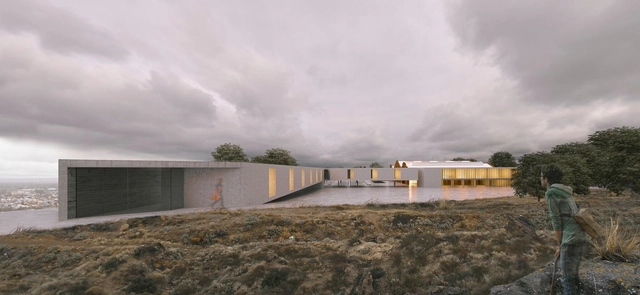
The restoration of a disused heritage asset, its repurposing, and sensitivity to the surroundings were the key concepts valued by the jury in selecting this winner of the 18th edition of the Clarin-SCA National Award for Architecture Students.

Agustín Ichuribehere, a student at the Faculty of Architecture and Urbanism of the Universidad Nacional de La Plata, guided by professor Martín Villanueva, designed the winning project. The proposal features a building for the Department of Music and Lutherie of the Universidad Nacional del Comahue, integrating an intervention on a heritage site: the former warehouses of "La Reginense" cider factory in Villa Regina, Rio Negro, Argentina.

Learn more about the proposal in the author's own words below.

The Role of Women in Construction: Times of Change?

One of the first courses I took in the introductory cycle at the School of Architecture was Design Studio. Around 100 young students gathered in the studio, where an architect warmly welcomed us and spoke about the course syllabus. She happily explained that she had recently become the course chair. At the time, I was not aware of academic hierarchies, but I understood it was significant. Over the years, I noticed that most courses were led by men. Therefore, what that architect had achieved was uncommon: she had shattered the glass ceiling by reaching a position of leadership and authority.

This situation is particularly striking because this disparity is not reflected in the classrooms of FADU (University of Buenos Aires). In the architecture program, over 60% of students are women, according to architect Carolina Quiroga. Although women hold 45% of teaching positions, according to a report by the FADU Teaching Administration Department, none of the 'Design' studios—the core subject of the curriculum—are led by female tenured professors.

Unfortunately, the academic world is not the only place where this inequality exists.

Retrofuturism in Buenos Aires

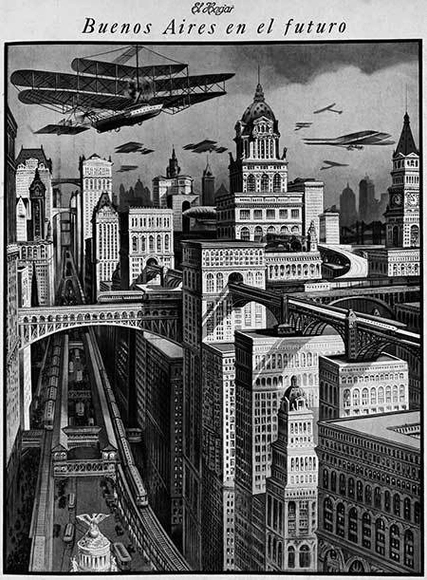
Buenos Aires, 2018. Population? Almost 3 million. High-speed maglev trains? Zero. Skyscrapers interconnected by railways? Zero. DeLoreans flying through the air? Unfortunately, zero. Transportation innovations? The Metrobus and bike lanes. In urban terms, the city seems not to have progressed at the pace once imagined.

There was blind faith in the future—a future where anything was possible, the sky was not the limit, and people could move freely above the clouds along a network of pathways connecting towering high-rises. What happened? To find out, we must travel back in time. To the past, to be precise.

Konstruktion Argentina: A Documentary on German Influence in Argentine Construction

James Wright retraces the steps of Walter Gropius in the new documentary Konstruktion Argentina. The film explores various Argentine architectural works, revealing their German influence.

Mar del Plata, Buenos Aires, and Berlin are some of the settings where the journey takes place.