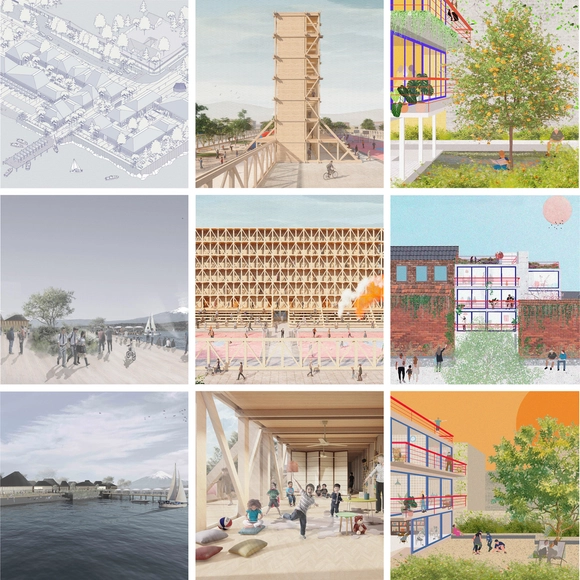
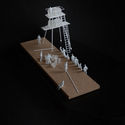
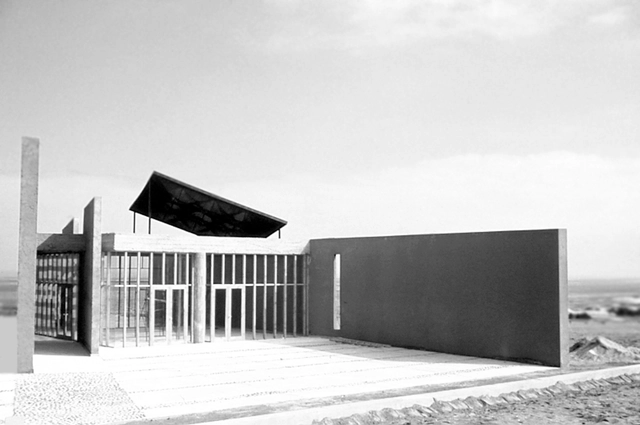
As part of the 2021 CNPP National Undergraduate Project Competition organized by Grupo Arquitectura Caliente and Graphisoft Archicad, a total of 127 proposals were submitted from 20 architecture schools across Chile. The jury highlighted three projects that, through their formal and conceptual diversity, achieved the highest recognition within their respective categories. Explore the winning proposals of this latest edition of the competition below.
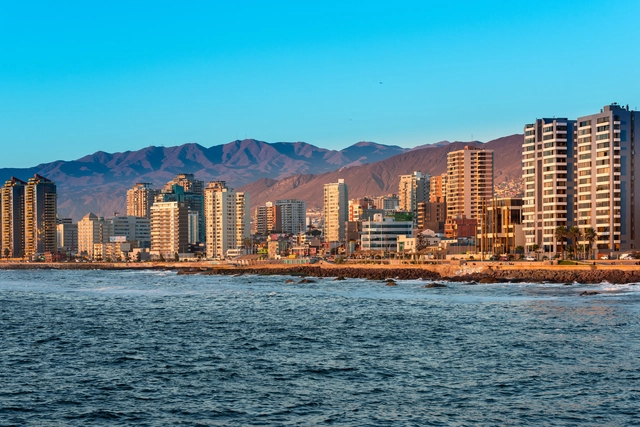
The Antofagasta Public Space Design Guides, developed by Allard&Partners for CREO Antofagasta, aim to improve the quality of life for the city's inhabitants, “by gradually complementing and consolidating a coherent identity for the city that strengthens the character of each area and its communities.” The four volumes, corresponding to their respective neighborhood typologies—Commercial (Downtown District), Under Transformation (Station District), Mixed Residential (Brasil District), and Coastal Edge—are available on the CREO Antofagasta website for direct download and free use.
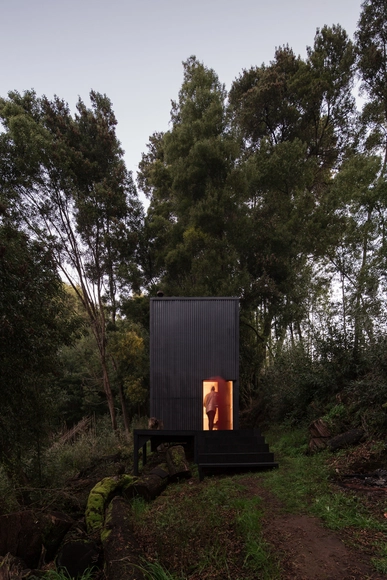
Paradoxically, the confinement we have experienced during the current health crisis has also sparked a series of encounters that ignore border limitations. For Estudio Diagonal, an emerging practice that has achieved international recognition for projects like Refugio 3x3, remote work has allowed them to open up to the world and the multiple opportunities it offers without leaving their place of origin. Based in the city of Osorno in southern Chile, the interdisciplinary team led by architect Sebastián Armijo designs and builds a series of works that draw both from the local landscape and its resources and from the architectural influences shaping current global trends.
A critical perspective on the regionalism that dominates local academic discourse, the importance of physical materialization in conceptualizing their work, and the drive to achieve high design standards with minimal resources are some of the recurring themes in their thinking and practice. In the following interview, Sebastián Armijo elaborates on the interests and influences that drive him to develop a variety of projects rooted in the concept of "pragmatic irreducibility."
Videos
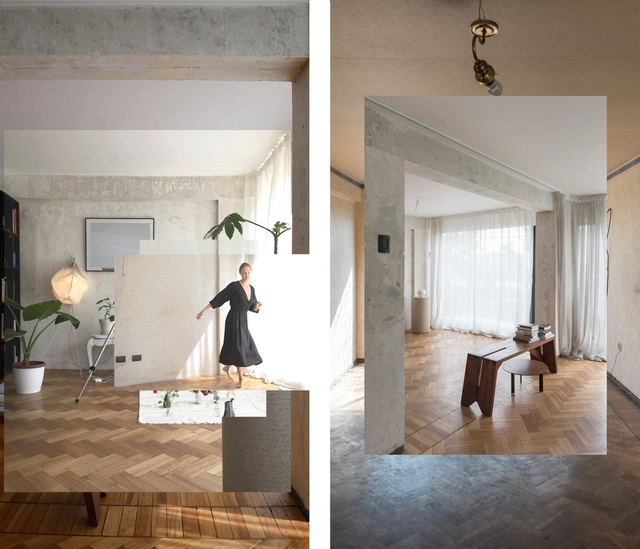
collage based on frames from the DA House audiovisual project. Image
Questioning both the methodologies involved in the production of architecture and its consumption in traditional representation allows us to engage in a series of interdisciplinary dialogues that, rather than limiting the possibilities of the discipline itself, can expand it in response to the complex contexts that define today's landscape. Rodrigo Valenzuela Jerez, architect and founder of EstudioRO - (E)Studio Futur@ and current director of the School of Architecture at the Universidad de las Américas (UDLA), Chile, shares in the following interview some of the design concepts that guide his “expanded” practice, in which form is a secondary outcome of the strategies and operations that enable users to appropriate their own spaces.
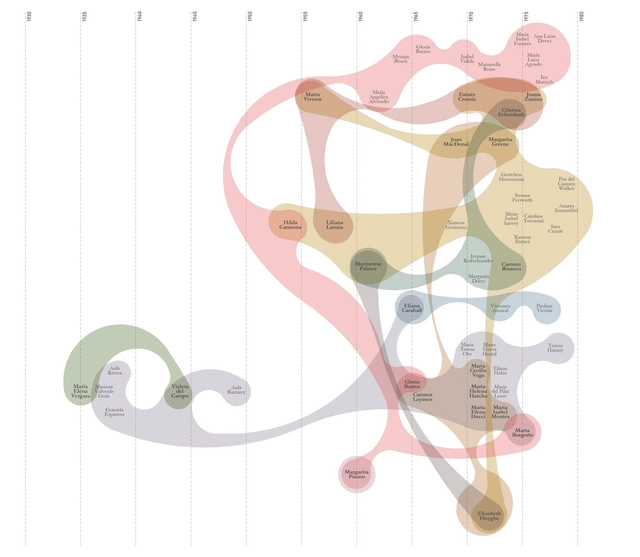
Mapa de relaciones. Pieza gráfica preliminar. Elaborada por el equipo de "Entre líneas". Image Cortesía de Entre Líneas
Refocusing attention on the work of women architects in shaping Chile's modern legacy is the primary objective of the open-access research project titled Entre Líneas. Structured as a visual narrative built around five pillars, the project can be explored directly on its digital platform. Through archival research, document collection, and the creation of analytical graphics, the initiative aims to rewrite the history of 20th-century Chilean architecture from a gender perspective.
Delving into the foundations and methodologies through which emerging architecture practices approach the craft allows us not only to map the trends shaping today's landscape, but also to understand the new perspectives they offer to the development of the discipline. Over their four-year career, Chilean architects Matías Alarcón, Cristian Fuhrhop, and Cristóbal Montalbetti have developed a diverse body of work united by a shared focus on meticulous detailing, material exploration, and a sensitive dialogue with the landscape. In the following interview, the co-founders of this architecture and design studio discuss the importance of collective practice and material experimentation in the design and execution of their work.
Chapel at the Alonso Ovalle Foundation Retreat House, Antofagasta, 1991. GKL Archive.
A new digital platform aims to reappraise and promote the legacy of the renowned Chilean architect and academic Glenda Kapstein. This website compiles a series of projects and publications chronologically, shaping a linear narrative around her career-long focus on the relationship between architecture and the environment.
Cortesía de Ministerio de las Culturas, las Artes y el Patrimonio
The project for the reconversion of the ruins of the former warehouses at the Chillán Railway Station, led by architects Cristóbal Tirado and Alberto Moletto, was selected by the jury as the winning proposal in the preliminary architectural design competition. Organized by the Directorate of Architecture of the Ministry of Public Works on behalf of the Ministry of Cultures, Arts, and Heritage, the competition aimed to rehabilitate this infrastructure and transform it into a cultural space, ultimately defining the program and general layout of the future Ñuble Regional Museum. In addition to strengthening regional heritage identity, the project aims to contribute to the urban regeneration of Chillán, specifically the surrounding area and the future Ultraestación Intercommunal Park, whose industrial structures are part of the city's modern architectural legacy. The Ministry highlighted the winning proposal's ability to "breathe life into this iconic city space and, in doing so, establish a new urban landmark for Chillán."
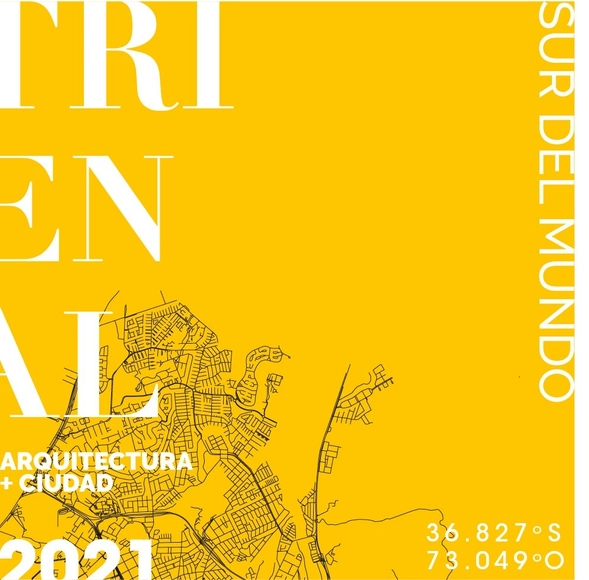
Creating a space for debate regarding the challenges of intermediate cities, their sustainable development, and the improvement of their inhabitants' living conditions is the primary goal of the Trienal Sur del Mundo, which will take place from November 26 to December 4 in the city of Concepción, Chile.
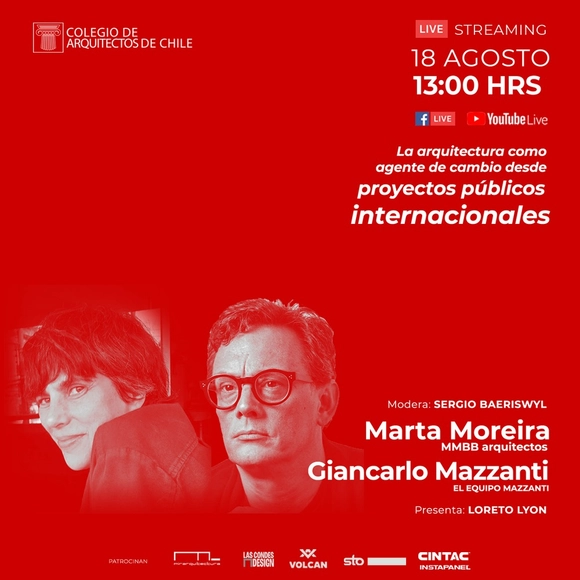
As part of the 79th-anniversary commemoration of the Colegio de Arquitectos de Chile, the "Architecture as an Agent of Change" series will be held. This series consists of free virtual events focused on examining case studies that illustrate the public or political role of the discipline. On Wednesday, August 18, at 1:00 PM, an international conversation will take place featuring Colombian architect Giancarlo Mazzanti (El Equipo Mazzanti) and Brazilian architect Marta Moreira (MMBB Arquitetos + Paulo Mendes da Rocha), who will present the SESC 24 MAIO project.
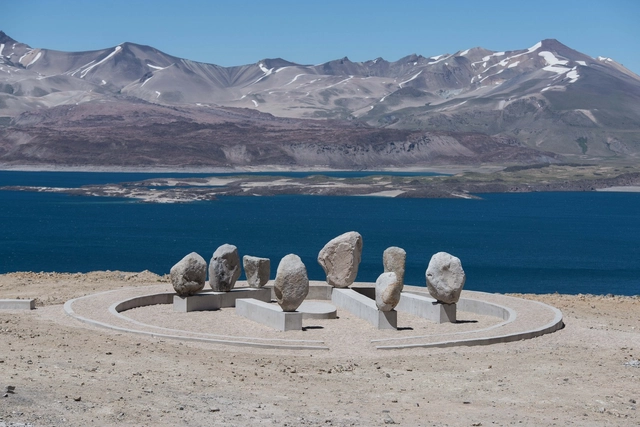
A project for the Commemorative Landmark Pehuenche Commission carried out by the recently graduated Chilean architect Antonia Ossa, is part of the series of small-scale interventions built in the Andean sector of the Maule Region, Chile, as part of the certification process of the School of Architecture of the University of Talca.
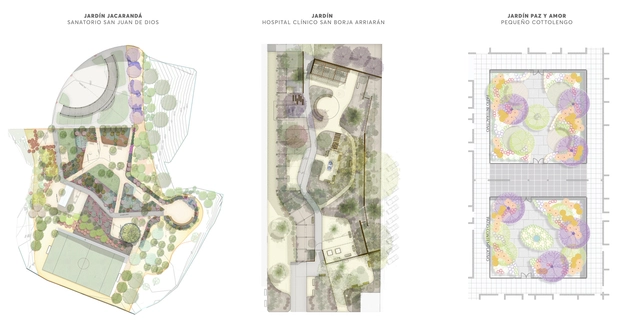
For the Cosmos Foundation, environmental conscience, ecological conservation, and community focus form the foundations of land planning and landscape design within public infrastructure projects. We sat down with the foundation's project director, Felipe Correa, as well as foundation architects Valentina Schmidt and Consuelo Roldán, as they went in depth on the benefits, objectives, and motivations behind the Healing Gardens initiative.
Within the Andes Mountains, the San Pedro Hot Springs is a place to press pause and contemplate, which interrupts a transnational highway between Chile and Argentina. Although these natural pools became a public landmark within the route, they eventually fell over time into a state of abandonment and deterioration as a result of the constant seismic movements in the region.
In response to this situation, Chilean architect Pia Montero sought to highlight the baths for her built-project thesis at the University of Talca in order to consolidate it as a landmark of tourist potential and symbol of the territorial identity of the Maule Region. Moreover, the project is a wake-up call to rediscover and rescue the value of the natural and cultural heritage of the area from the gradual abandonment into which it fell over the years.
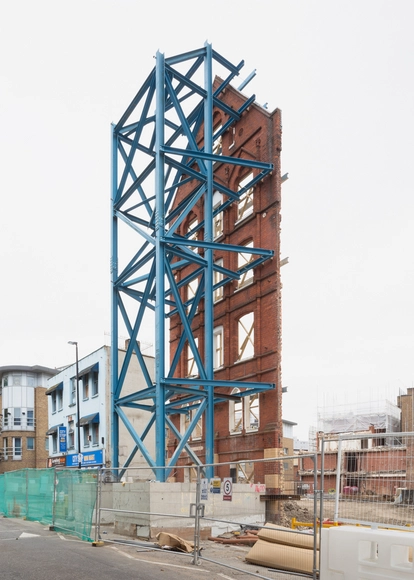
In honor of World Photography Day (August 19 ), Chilean architect Francisco Ibáñez Hantke offers a a perspective of urban transformation and the resulting instability caused by the regenerative processes and the constant real estate speculation that drive it. The photographs center on London, and reveal an exhausting array of construction and demolition and highlight the often blurry line between architecture and urban decay.









.jpg?1634086433&format=webp&width=640&height=580)
.jpg?1634086531 "© Edgard Torres")
.jpg?1634086419 "© Edgard Torres")
.jpg?1634086290 "© Gustavo Burgos")
.jpg?1634086433)