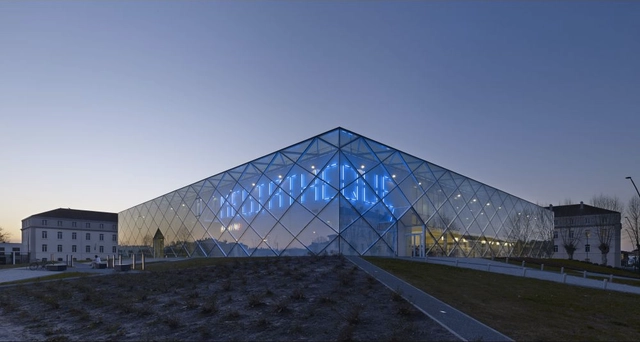
The Marsan Mediatheque, overall winner of the 2013 LEAF Awards. Image Courtesy of archi5
Now in its tenth year, the Emirates Glass LEAF Awards honor the architects designing the buildings and solutions that are setting the benchmark for the international architectural community. Founded in 2001, the competition is organized by the Leading European Architects Forum (LEAF) and recognizes innovative architectural design. 17 different awards were given to various projects and architects, with one overall winner. Check out the winners after the break…
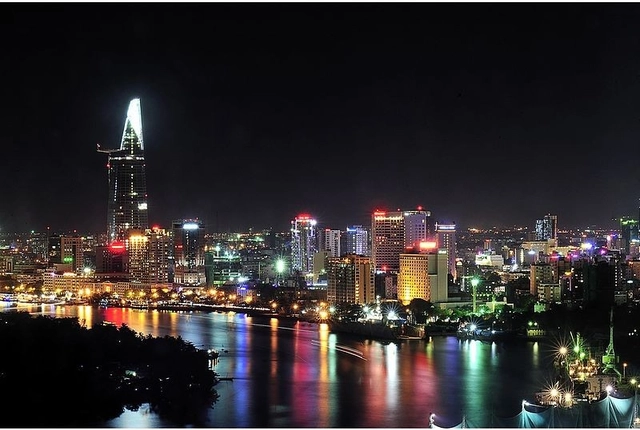
In this article, originally published in Metropolis Magazine as "A Time-Out," Carl Robinson reminisces about the architecture of the Ho Chi Minh City he remembers from the 1960s and discusses how the urban landscape has changed in subsequent years. As Vietnam grapples with economic downturn, he asks, how might the city to develop?
Over the past 15 years, as Vietnam finally left its long years of war behind, the former capital of South Vietnam—Saigon—became the country’s economic powerhouse. Until fairly recently, Ho Chi Minh City (HCMC) was a boomtown. Even before touching down at its busy international airport, I see new buildings rising up through the sprawling and tightly packed suburbs, splayed across the city’s surrounding delta landscape and muddy meandering rivers.
Off in the distance along the wide Saigon River, where the spires of the city’s French Colonial Roman Catholic cathedral once dominated downtown, an impressive silhouette of high-rises reach to the tropical sky. The city’s twenty-first-century feel continues through its sweeping new terminal (designed by GWA) and then down a wide boulevard past contemporary office buildings and shops. Eventually I reach the intimate tree-lined streets of old Saigon, the residential quarter created by the French more than 150 years ago.
https://www.archdaily.com/429027/could-ho-chi-minh-city-s-architecture-be-saved-by-its-economic-rutKatherine Allen
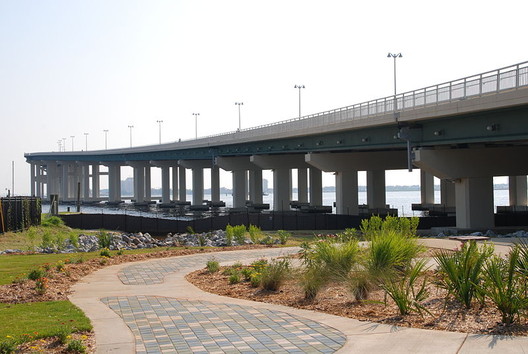
In the wake of Hurricane Katrina, design charettes involving the Gulf coast community led to many proposals, ranging from the large-scale (establishing Gulfport as a major harbor city) to the more personal (bike paths). Eight years after the fact, many of these projects are still in progress, or have yet to begin - but the outlook remains bright. The Sun-Herald's Michael Newsom explores the background behind these efforts, and explains the hurdles they’ve faced along the way. Read the full piece here.
https://www.archdaily.com/428866/eight-years-later-a-post-katrina-report-cardKatherine Allen
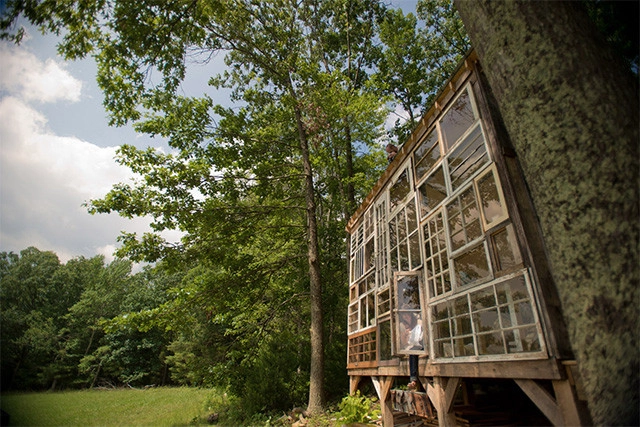
A year ago, Nick Olson and Lilah Horwitz quit their jobs to build a cabin in the West Virginia mountains. Today, that gamble seems to have paid off: their cabin sits in the exact spot where they first discussed building it. However, while the interior of the cabin is like almost any other, a mix of old wooden furniture and more modern decorations, the front facade - is anything but.
The west-facing facade is made entirely of window pieces, stitched together; Olson and Horwitz wanted to be able to capture every inch of the sunset, without having to limit their view to the confines of a single window.
See more images and a video of this house made of windows, after the break...
https://www.archdaily.com/429014/a-house-made-of-windowsKatherine Allen