.jpg?1521632880&format=webp&width=640&height=580)
Organized by the Regional 5 College of Architects in the city of Villa María, this design competition seeks ideas and proposals for the new headquarters of the Regional 5 Southeast branch of the College of Architects of the Province of Córdoba.
Architect and Project - Team Lead at ArchDaily Instagram: @ fabe.de
Organized by the Regional 5 College of Architects in the city of Villa María, this design competition seeks ideas and proposals for the new headquarters of the Regional 5 Southeast branch of the College of Architects of the Province of Córdoba.
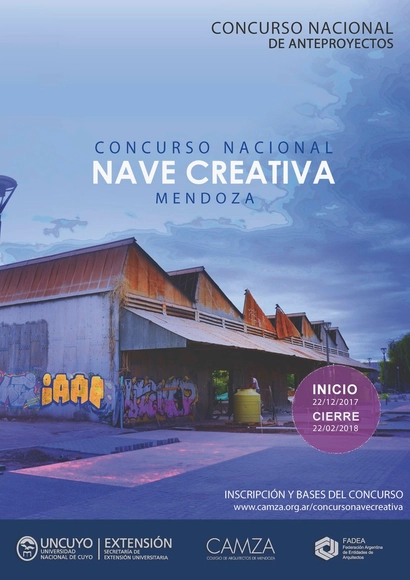
Organized by the Mendoza Architects' Association (CAMZA), this competition seeks proposals for the repurposing, restoration, and enhancement of the Northeast Warehouse located on the grounds of the former General San Martín Railway (FCGSM), which once comprised the Mendoza Central Station.
The goal is to transform the site into a "Nave Creativa" (Creative Hub)—an artist incubator and public space designed to democratize tools and physical space for the development and promotion of growing local creative industries. This initiative aims to facilitate access through a multi-purpose innovation and experimentation space that brings together and promotes sector activities, empowering entrepreneurs in the fields of design, music, and visual and audiovisual arts.

Organized by the Colegio de Arquitectos Provincia de Buenos Aires (CAPBA D5), this national competition seeks proposals for the "Plaza de las Carretas" in Campana, Buenos Aires.
The initiative aims for the Plaza de las Carretas to function as a unifying space that provides connections to the surrounding axes, while also establishing itself as a true "public activity center" for continuous use in its own right.
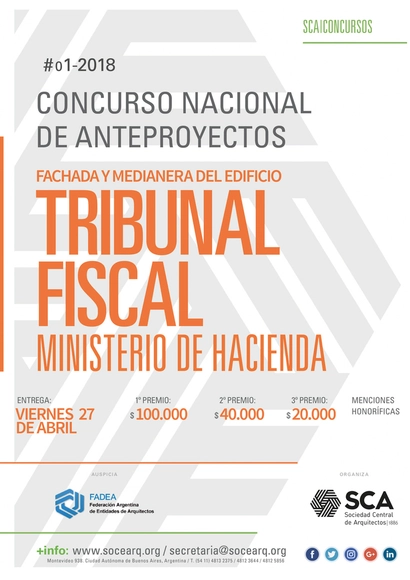
Organized by the Sociedad Central de Arquitectos, this national competition calls for the preliminary design of the facade and the treatment of the right party wall for the new building that will house the relocated offices and archives of the National Tax Court.
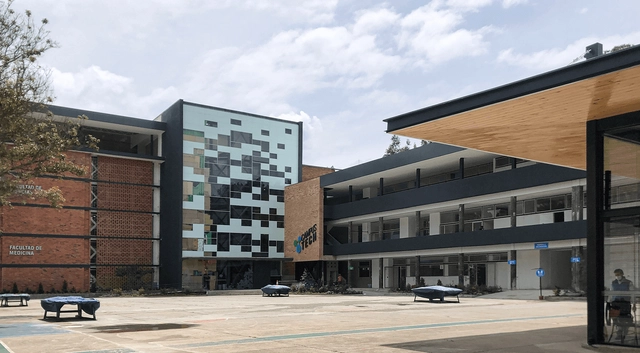
The global commitment to net-zero emissions and climate change mitigation presents a monumental challenge for the construction sector—an industry that currently accounts for nearly 40% of global CO₂ emissions, a figure projected to continue rising. Adopting sustainable practices is crucial to improving environmental conditions, with primary objectives including optimizing thermal comfort and reducing energy consumption in buildings. How can we achieve this if not through collective learning and knowledge sharing among different professionals and workers in the sector?

IAAC and Redes are pleased to announce the inaugural lecture for the second edition of the Online Master in Cities: The Near Urbanism (MOeC), IAAC's first master's program in Spanish, designed for Ibero-American professionals.
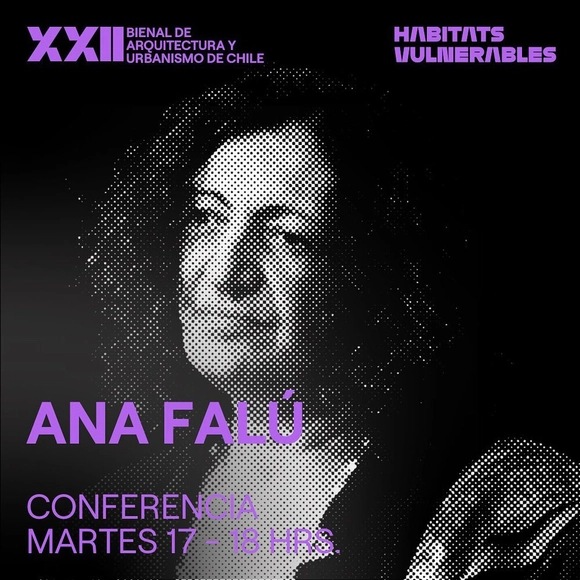
Ana Falú will give a lecture this Tuesday, January 17, at 6:00 PM as part of the XXII Biennial of Architecture and Urbanism of Chile: 'Vulnerable Habitats.' The event will take place in the temporary inflatable structure designed by Smiljan Radic at Plaza Bulnes, Santiago.
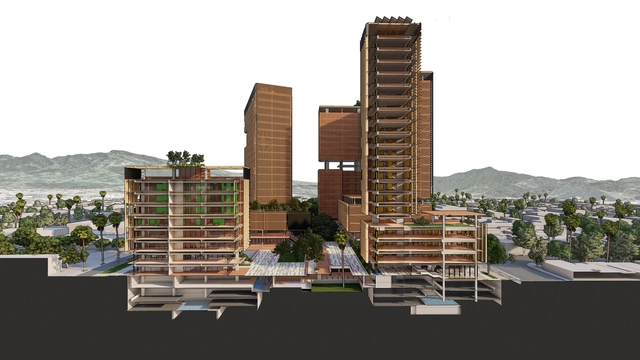
In December 2022, the Government of the Republic of Costa Rica launched an architectural and urban ideas competition for the area where the first phase of Ciudad Gobierno will be developed—an urban renewal project in downtown San José that aims to transform nearly four city blocks of the capital with office, retail, and public spaces.
At the end of February 2023, the winning proposal was announced from among 28 submitted designs to serve as a model for the building complex that will house 18 public institutions west of Plaza González Víquez. Designed by Venezuela-based Micucci Arquitectos Asociados, the winning project is titled "Metropolitan Civic Park."

Today is the day to meet the finalists of ODA2023, the award celebrating the best architecture in the Spanish-speaking world. Our expert jury—you, the readers—has selected 15 of your favorite projects from nearly 1,000 architectural works built across Latin America and Spain.
Now in its fifteenth year, this award has become a true tradition. It is an open invitation to all our readers to recognize the projects published in 2022 that inspired them and that represent the identity of their local contexts in a globalized planet—shaping how architecture is made in Latin America and Spain within an increasingly heterogeneous and multicultural world.

A week ago, we announced the 15 finalist projects for the 2023 Building of the Year Award—a recognition of the best architecture in Spanish. Our expert jury—that is, you, our readers—selected an initial shortlist of 15 projects from nearly 1,000 works of architecture built across Latin America and Spain, before proceeding to a final vote that resulted in 3 projects representing the very best of the architecture that inspires us, defines us, and leaves its mark.
Today, the winners of the 2023 ODA are finally revealed!
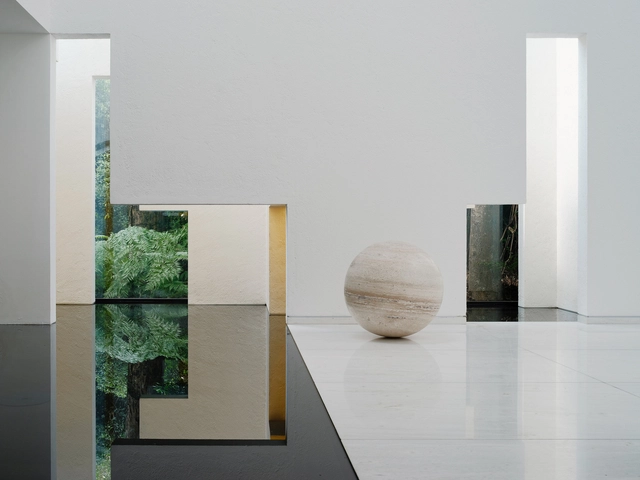
From fire in caves to street lighting in cities, lighting has evolved steadily alongside technological advancements—and in recent years, it has begun to change even more significantly due to a growing awareness of its impact on the environment and human health. Today, automated LEDs are commonplace in workspaces and homes, improving both energy efficiency and well-being and comfort. Meanwhile, public squares and streets are increasingly integrating sensors and software configurations to enhance safety and mobility. With the global urban population projected to reach 68% by 2050, urban lighting will undoubtedly become an even more critical factor to consider.
However, to make the most of these opportunities, we must view lighting as part of a holistic vision and work together to create better solutions. What does the future of lighting look like? We posed this question to our readers. After reviewing a vast number of comments and opinions from construction professionals, students, and architecture enthusiasts alike, it was surprising to find so much common ground and shared visions. There is a clear consensus on the importance of going a step beyond the status quo without increasing light pollution—while being more mindful of all living things. Discover the main perspectives below.
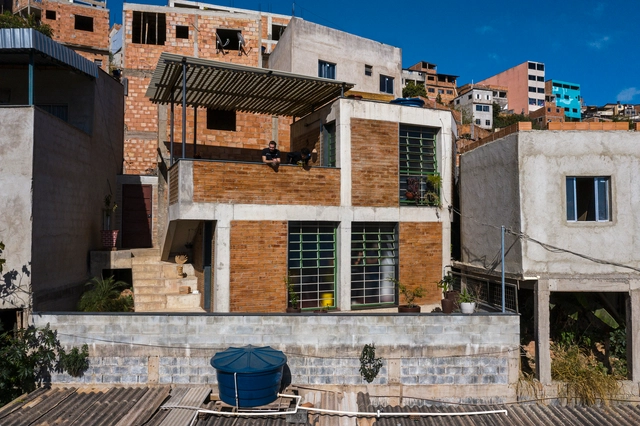
Reflecting on contemporary housing is perhaps one of the most compelling and relevant undertakings of our time. In a rapidly changing world—where technology advances at a breakneck pace, populations grow, and resources become increasingly scarce—it is vital to reconsider how we live and how we can do so better.
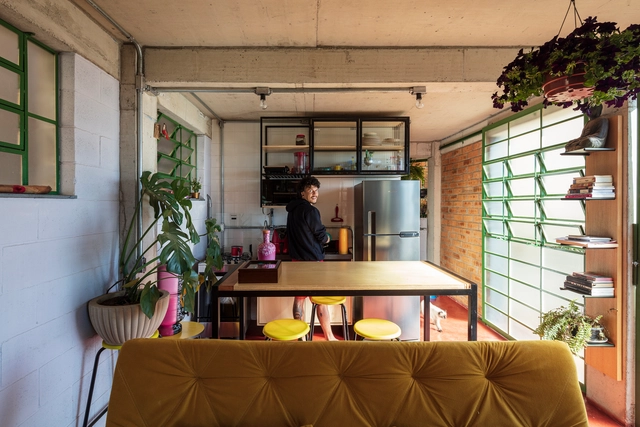
Housing is not just the place where we live. It is a reflection of our society, our culture, and our aspirations. It is a space that influences our quality of life, our health, and our well-being. And in a world changing at an unprecedented pace—where technology advances by leaps and bounds, population grows, and resources become scarce—it is crucial to reflect on how we inhabit our homes and how we can make them better.
Throughout the month of April, ArchDaily opened up the debate on the topic of contemporary housing. We extended an invitation to our readers to join the discussion on its current state and future. After reviewing an immense number of comments and opinions from construction professionals, students, and architecture enthusiasts alike, we were surprised to find a strong consensus: above all, contemporary housing speaks as much to adaptability, innovation, and diversity as it does to real estate speculation, a lack of adequate public policies, and economic inequality. Read the main viewpoints in detail below.
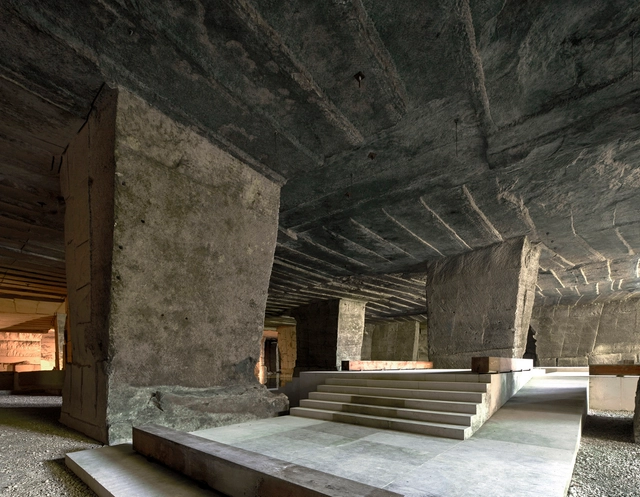
We present a challenge: building with less water. The construction process consumes a massive amount of water resources, and it is time to rethink how we can reduce this environmental impact.
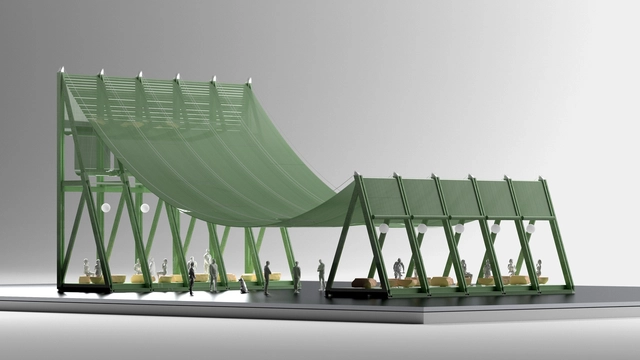
The upcoming TAC! Urban Architecture Festival announced that the two winning projects of its ideas competition are "Mediterráneo" by Manuel Bouzas and "Lost Forest" by Julia Ruiz-Cabello Subiela and Santiago Del Águila.

Although the architecture and construction industry has been making strides in new fields like artificial intelligence (AI), parametric modeling, virtual reality (VR), and other cutting-edge tools for years, their implementation and integration into daily design workflows remain slow. In an increasingly connected and constantly evolving world, digital tools and emerging technologies are revolutionizing how architects design and build—changing the rules of the game and expanding creative horizons. Consequently, there is an ongoing need to discuss how these technologies are being incorporated and how their use within the discipline can be further enhanced.
ArchDaily featured the topic of Design Process in July, and we didn't want to miss the opportunity to open the discussion with an invitation. We believe in the power of dialogue and the exchange of ideas. We want to hear about your experiences, learn from your successes, challenges, and mistakes—and explore together how these new tools are transforming the way you practice architecture.
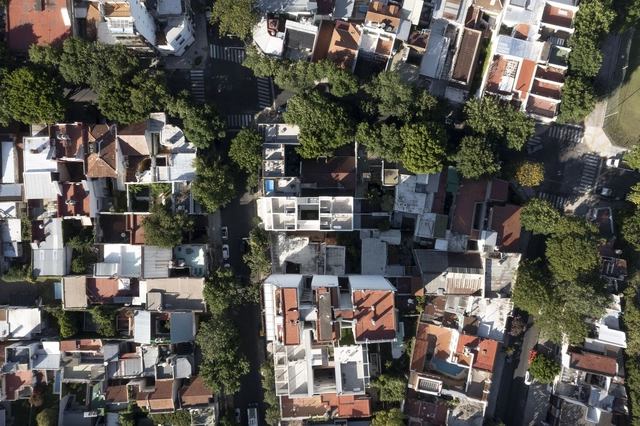
The Economist Intelligence Unit (EIU) released a new edition of its Global Liveability Index, announcing the world's most liveable cities in 2023. Vienna has topped the ranking in four of the last five years, thanks to its stability, cultural richness, entertainment options, and reliable infrastructure. Copenhagen, Denmark, held onto second place, while Melbourne and Sydney took third and fourth, respectively. These cities were regular fixtures at the top of the list prior to the pandemic.
What is the situation in Latin America? Buenos Aires once again emerged as the top Latin American city to live in. Santiago, Chile, reclaimed the second-place spot it held before the social unrest, while Montevideo, Uruguay, ranked third. San Juan, Puerto Rico, followed closely with a very strong score. Conversely, Caracas in Venezuela, Aguascalientes in Mexico, and Guatemala City were among the lowest-rated in the region.
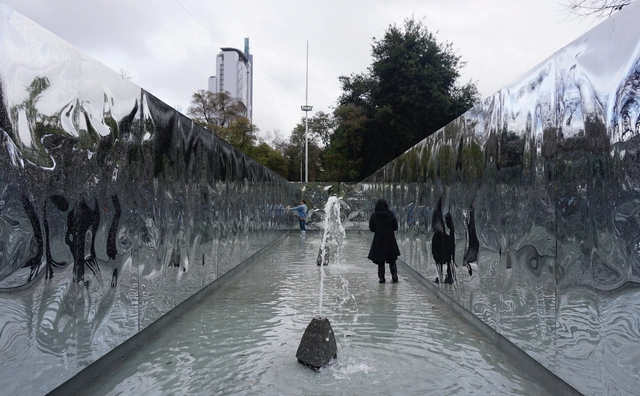
From July 11 to 16, the La Fuente Pavilion is open to the public in Balmaceda Park in Santiago, Chile. This new public space installation, designed by architect Camilo Palma (Abarca+Palma), invites visitors to engage in "contemplation and tranquility around the stimuli and sensations of water." The structure, composed of mass-produced, prefabricated building elements, sits atop the original 1931 fountain designed by Oscar Prager, Sergio Larraín, and Jorge Arteaga.
To experience the public space firsthand, ArchDaily visited the installation on a rainy day.