On Thursday, August 8, at 7:00 PM, Pierre Alain Trévelo, founder of the firm TVK, will deliver a lecture organized by the Center for Studies of Contemporary Architecture (CEAC) at Universidad Torcuato Di Tella, with the support of the French Institute and the Embassy of France in Argentina, and featuring an introduction by Darío Graschinsky.
Ensayos Urbanos en el Campo Expandido is a course within the Gropius Chair that brings together students from various disciplines at the Faculty of Architecture, Design and Urbanism of the University of Buenos Aires to collectively build 1:1 scale interventions.
For this edition, the group held a summer workshop in the city of San Carlos de Bariloche, Argentina, where they explored landscape intervention using local materials—stones, willow branches, and water. The project is located at Playa Centenario on Lake Nahuel Huapi, at the mouth of the Ñireco—one of the area's most polluted urban streams—to create a gathering space and highlight the sector's urban conflicts.
On May 11, the Disseny Hub Barcelona will bring together various figures rooted in the world of architecture to discuss the multiple roles of cities in the 21st century, the state of architecture and urbanism in contemporary society, and to present the Barcelona Protocol—a document developed throughout the day via the contributions of twenty-six international voices.
The global commitment to net-zero emissions and climate change mitigation presents a monumental challenge for the construction sector—an industry that currently accounts for nearly 40% of global CO₂ emissions, a figure projected to continue rising. Adopting sustainable practices is crucial to improving environmental conditions, with primary objectives including optimizing thermal comfort and reducing energy consumption in buildings. How can we achieve this if not through collective learning and knowledge sharing among different professionals and workers in the sector?
"I’m an architect... now what do I do?" is likely one of the most common questions asked by any recent architecture graduate. Over the years, many will find jobs in different industries that do not necessarily involve working in an office designing and constructing buildings.
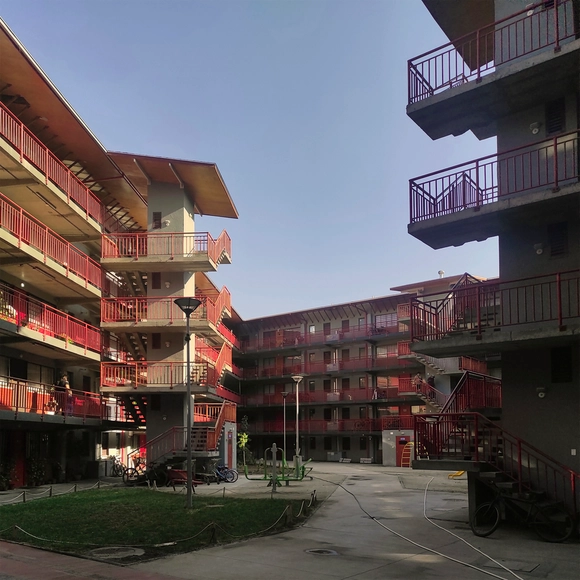
"The city is conflict, just as society is conflict, but the types of conflict that take shape and express themselves in each city reveal what each is like," says urban anthropology specialist María Cristina Cravino regarding the right to the city in Latin America. In a growing context of cities undergoing gentrification, where high land and housing prices displace working-class residents, the new Barrio Maestranza Ukamau offers a compelling example that has much to say about potential pathways to public-interest housing in Santiago, Chile.
Located on the grounds of the former San Eugenio railway workshops in central Santiago, between Santiago Watt and Exposición streets in the Estación Central district, the project was not only designed by architect Fernando Castillo Velasco in his final years and continued by his son Cristián Castillo alongside Elías Becerra and Pamela González, but also by the community of families organized through the assemblies of the Ukamau Social and Popular Movement, where they deliberated and discussed their future homes step by step. The project spans nearly 3 hectares and comprises 424 apartments.
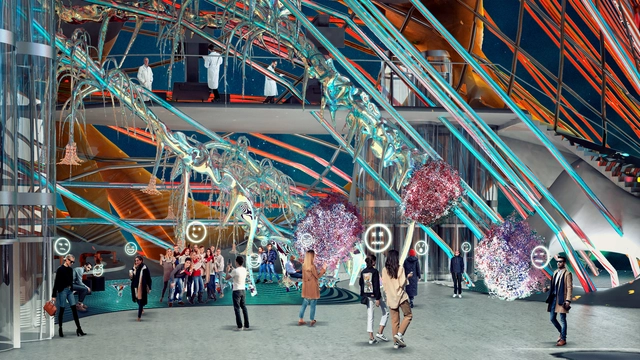
El poder de la Data - Render interior conceptual. . Image Cortesia de Online Lab of Architecture (OLA)
From NFTs to the metaverse and the benefits of real-time rendering, this is an opportune moment to discuss the latest trends in architectural visualization.
With this in mind, we want to open the debate and hear your thoughts on the subject. What can we learn from other related industries, such as cinema, video games, and industrial design? How can architecture contribute to and advance the world of visualization?
From May 5 to 15, the first edition of Model. Barcelona Architectural Festival will take place. Co-organized by the Barcelona City Council and the Architects' Association of Catalonia (COAC), the event will serve as an open, plural, and multidisciplinary space for reflection, addressing key debates in architecture and urbanism to confront the social, political, and climate challenges of the 21st century.
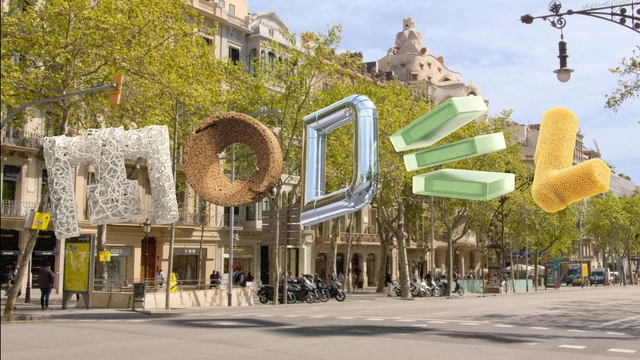
On May 5, the first edition of the Model. Barcelona Architectures Festival officially opened. Jointly organized by the Barcelona City Council and the Association of Architects of Catalonia (COAC), the event is led by artistic directors Eva Franch i Gilabert and Beth Galí, along with cultural researcher José Luis de Vicente. It brings us closer to experimental architecture, helping us rethink how we want to live together through new urban models and new imaginaries.
Through five temporary architecture installations located along a circuit in Ciutat Vella—starting at Plaza de Catalunya, the Sant Antoni slab, Plaza de Idrissa Diallo, Paseo de Lluís Companys, and Plaza Reial—the festival explores its five major themes under the central concept of "Regrow": Between-Classes, Between-Cultures, Between-Species, Between-Generations, and Between-Materials.
In this context, we present the installation "Reversing the Pyramid" by OJO estudio.
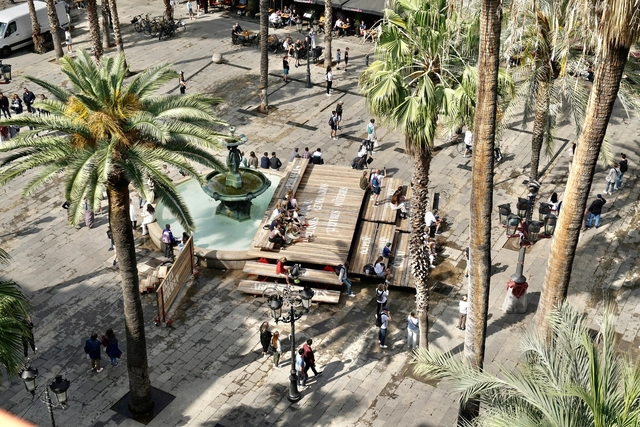
From May 5 to 15, Barcelona's Plaza Real was transformed into one of the hubs for debates on architecture and the city during the MODEL Festival. The ephemeral installation "Occupy the Center with the Word"—led by the ELISAVA Barcelona School of Design and Engineering under the direction of Roger Paez, in collaboration with Manuela Valtchanova, Albert Fuster, and Toni Montes—sought to "create optimal conditions for both encounters and disagreements to take place, always through the spoken word."
Architects and designers, as well as psychologists and sociologists, recognize that aesthetics and its underlying philosophy have the power to change how we perceive the world around us. Consequently, a deeper understanding of what is beautiful has the power to reshape how people respond to their environment.
Exploring the different meanings of aesthetics in architecture—from "form follows function" to the aesthetics of the metaverse—can help us understand the potential of our physical and virtual environments on the path toward a better world.
Much has already been written on the subject, but we now want to open the debate to you, our readers. Share your thoughts on what makes a building or a city beautiful.
Leave your comments in the form below. These will be selected and published in an upcoming article.
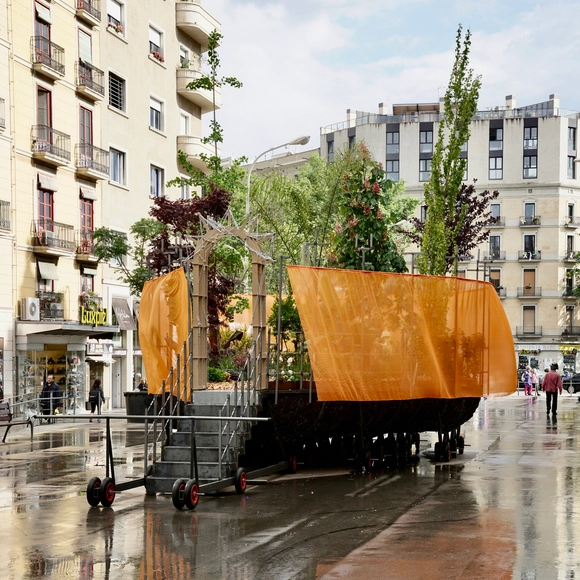
Arca de Convivencia / LEA Atelier + TAKK . Image Cortesía de Festival Model
"Arca de Convivencia" is a temporary installation designed by LEA Atelier and TAKK Architecture for the Model Festival—an event that, for ten days in May, turned the city of Barcelona into a testing ground for experimentation and debate. Located on Ronda de Sant Antoni, this mobile artifact houses a multitude of trees, plants, shrubs, and insects, reminding us of the urgent need to create public spaces that reverse the effects of global warming and foster biodiversity.
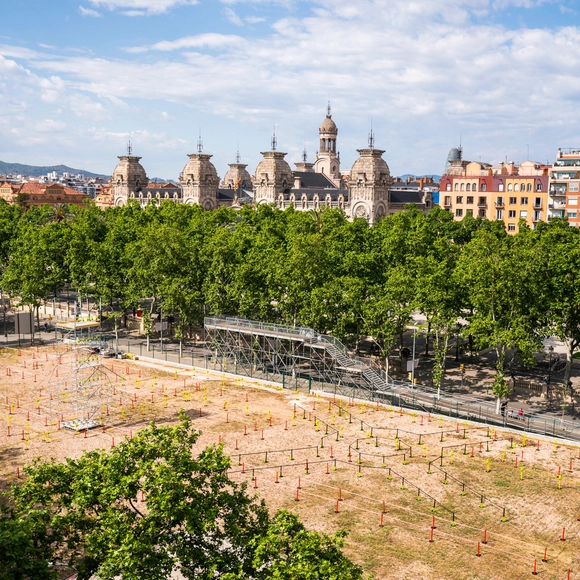
Memoria Cronotópica / FLEXOARQUITECTURA. Image Cortesía de Festival Model
"Memoria Cronotópica" is a temporary installation by the studio FLEXOARQUITECTURA that took place on the site of Barcelona's former municipal courts during the Model Festival — an event that for ten days in May turned the city into a site for experimentation and debate.
The project sought to reflect on the logic of circularity and reuse through the documentation and juxtaposition of the site's lost architectures between the 7th and 21st centuries—from the medieval necropolis to the courthouse building, including the Fusina gardens and the Palau de Belles Arts.
Laura Foraster i Lloret is the Secretary General of DIPLOCAT, a public-private consortium aimed at connecting Catalonia with the rest of the world and promoting initiatives that project its image abroad. Its 38 members include key public institutions as well as leading organizations from the business, social, labor, academic, and sports sectors—ranging from Futbol Club Barcelona to the University of Barcelona.
During the Model Barcelona Architectures Festival, which took over the city in May—an event already paving the way for the city's designation as the 2026 World Capital of Architecture—she joined us to discuss how architecture serves as a fundamental tool for presenting and projecting the region abroad. Read Laura Foraster i Lloret's key reflections below.
Is there a future for our cities if we do not transition to a sustainable way of life? For some time, urban sustainability has adopted a perspective focused more on climate change than on a holistic vision that incorporates society and the way we live in community.
What new ways of living are we experiencing amidst social, economic, and ecological shifts? Ultimately, we must bring to the table examples from different parts of the world to understand the latest trends in how we live in our cities.
We want to hear from you—not only about examples of co-living, cooperatives, and any new type of social housing you consider a benchmark, but also your thoughts on the matter. Selected comments from the form below will be published in an upcoming article.
99+Imaginaris invited renowned architects from around the world to speculate on the future of Barcelona. Within the context of the Model Festival, curators Eva Franch i Gilabert and Josep Maria Montaner, alongside the design, coordination, and exhibition design by the Enric Miralles Foundation, brought together a wide-ranging series of sketches, ideas, visions, and models—from an edible Barcelona by Areti Markopoulou to a Barcelona of inflection points by Zaida Muxí.
The resulting exhibition catalog is a diverse archive of drawn manifestos—a document that allows us to review and debate future ways of living in the city. The curatorial text for 99+Imaginaris, along with the individual visions of its contributors, is presented below.
IAAC and Redes are pleased to announce the inaugural lecture for the second edition of the Online Master in Cities: The Near Urbanism (MOeC), IAAC's first master's program in Spanish, designed for Ibero-American professionals.
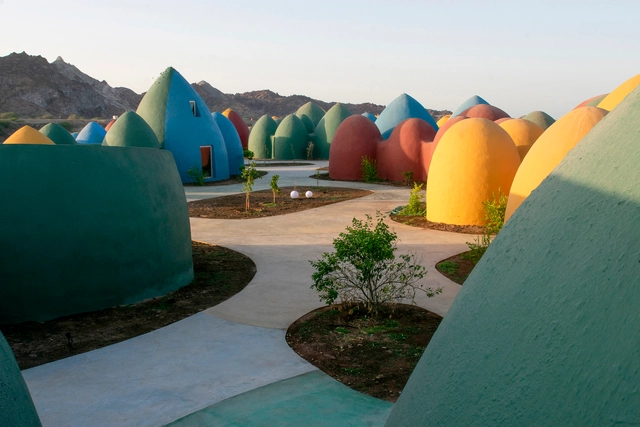
Proyecto: The Superadobe Domes of Hormuz, Zav Architects, Hormuz, Irán. Image Cortesía de ZAV Architects / Tahmineh Monzavi, The ArchDaily Guide To Good Architecture, gestalten 2022
Together with publisher gestalten, we recently published our first book: The ArchDaily Guide to Good Architecture. It represents a pause to reflect on the more than 40,000 projects curated over the past 15 years, drawing from their contributions to answer the ambitious question of what constitutes good architecture.
Now, it is your turn—our readers—to tackle this question.


.jpg?1652094893&format=webp&width=640&height=580)