While the construction industry has been advancing into new fields like nanotechnology and 3D printing for years, it is still one of the most technologically lagging sectors. Many innovations remain purely experimental, and despite constant efforts to reverse this trend, we face a troubling reality: construction is one of the world's most polluting and waste-generating industries.
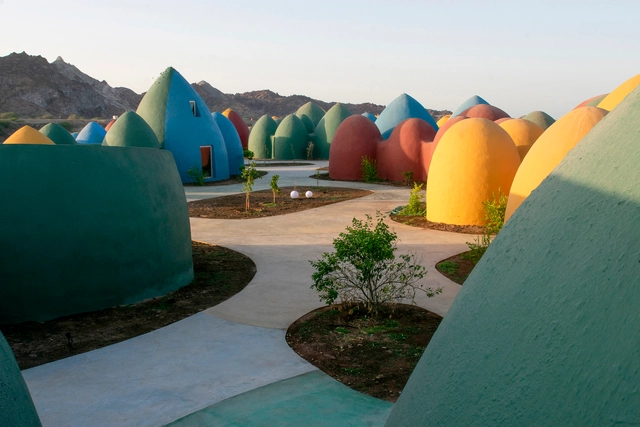
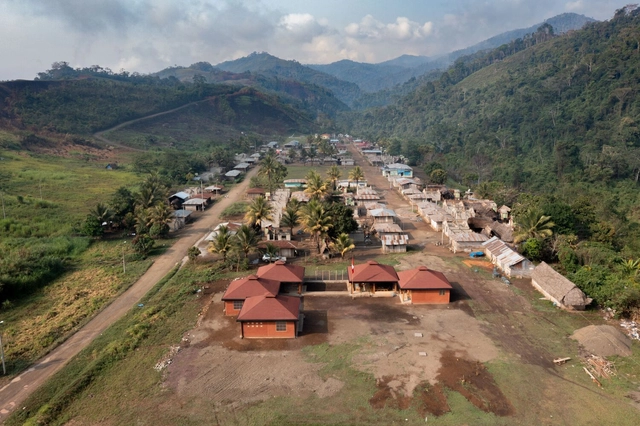
Proyecto: The Superadobe Domes of Hormuz, Zav Architects, Hormuz, Irán. Image Cortesía de ZAV Architects / Tahmineh Monzavi, The ArchDaily Guide To Good Architecture, gestalten 2022
Together with publisher gestalten, we recently published our first book: The ArchDaily Guide to Good Architecture. It represents a pause to reflect on the more than 40,000 projects curated over the past 15 years, drawing from their contributions to answer the ambitious question of what constitutes good architecture.
Now, it is your turn—our readers—to tackle this question.
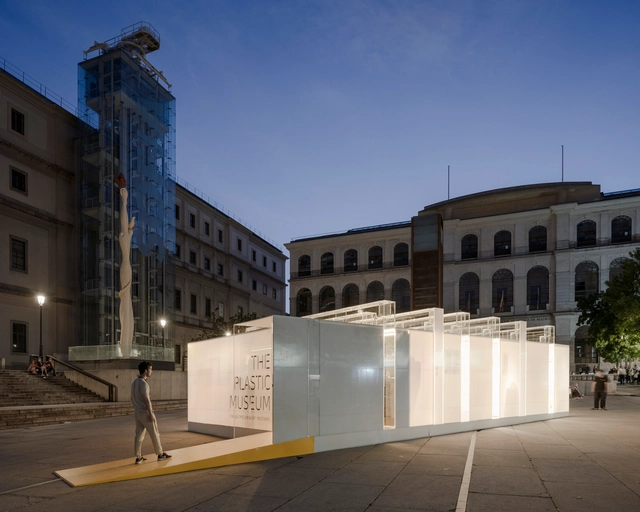
"Concéntrico wants to achieve a better city", says Javier Peña as he inaugurates the International Festival of Architecture and Design of Logroño in Spain. An event that since its first edition in 2015 has proposed rediscovering the spaces of interest in the historic center, reflecting on the urban environment through different proposals for installations and ephemeral exhibitions. This year, it celebrates its eighth meeting from the 1st to the 6th of September.
While the construction industry has been advancing for years in emerging fields like nanotechnology and 3D printing, it remains one of the most lagging in terms of technology adoption. Many innovations never progress past the experimental stage, and while there is a constant push to reverse this trend, we are simultaneously faced with a troubling fact: the construction industry is one of the world's largest producers of pollutants and waste.
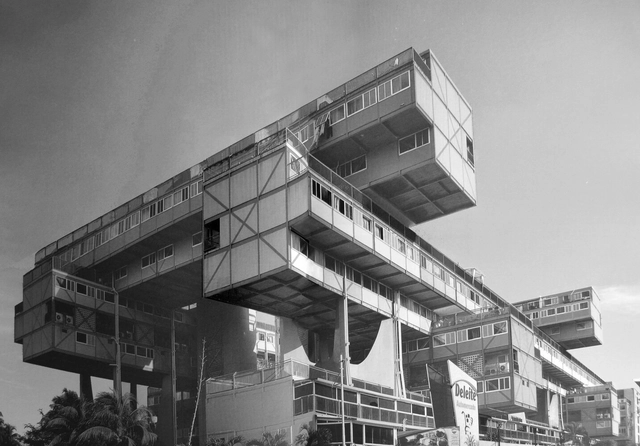
Clásicos de Arquitectura: Árbol para Vivir / Fruto Vivas. Image Cortesía de IX BIAU
Venezuelan architect José Fructoso Vivas, better known as Fruto Vivas, has passed away at 94 in Caracas on Tuesday, August 23.
Recognized for his design of projects such as the Tree for Living social housing, the Táchira Club, the Divino Redentor Church, and the Mausoleum of the Four Elements where the body of Hugo Chávez is preserved, Vivas has always aimed to further integrate the life of the human being to nature.
LaBoqueria is an architecture studio in Barcelona that has the experience of multiple local and international collaborations. This global, multidisciplinary and participative perspective allows them to have a renewed and different vision of architecture.
Focusing on social, economic and environmental aspects, they seek to approach their projects in a comprehensive way, bringing together the different people involved in the process. Among their works are the housing building La Balma carried out together with the architects' cooperative Lacol; the Reformation of premises together with Marta Peinado Alós; and the Ca's Bouer House together with Jordi Queralt.
ArchDaily, interested in collaborative and participatory processes through the theme Democratization of Design, conducted an interview with LaBoqueria to learn about their main inspirations, challenges and visions.
August 19 is World Photography Day. To mark this occasion, we present the winning entries of the recent photography competition "Interculturality and Inhabited Heritage" ("Interculturalidad y Patrimonio Habitado").
99+Imaginaris invited renowned architects from around the world to speculate on the future of Barcelona. Within the context of the Model Festival, curators Eva Franch i Gilabert and Josep Maria Montaner, alongside the design, coordination, and exhibition design by the Enric Miralles Foundation, brought together a wide-ranging series of sketches, ideas, visions, and models—from an edible Barcelona by Areti Markopoulou to a Barcelona of inflection points by Zaida Muxí.
The resulting exhibition catalog is a diverse archive of drawn manifestos—a document that allows us to review and debate future ways of living in the city. The curatorial text for 99+Imaginaris, along with the individual visions of its contributors, is presented below.
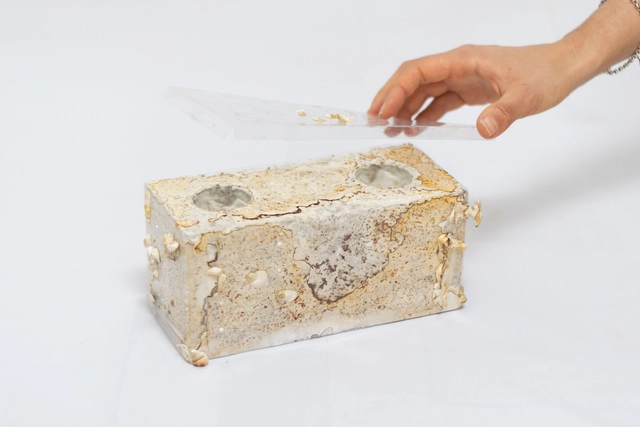
Although the construction industry has spent years making strides in new fields such as biomaterials, nanotechnology, and 3D printing, it simultaneously remains one of the slowest to adopt new technology. Many of these innovations never progress past the experimental stage. How can this situation be reversed?
To promote sustainable construction in Latin America, the CEELA Project, in collaboration with the Colegio de Arquitectos del Ecuador - Pichincha, has established the "Social Habitat and Sustainability Award" for built projects and interventions as part of the BAQ 2022 Biennial Competition.
Is there a future for our cities if we do not adopt a sustainable way of life? For some time, urban sustainability has been approached more from the perspective of climate change than from a holistic vision that integrates society and how we live as a community.
What new ways of living are we experiencing amidst today's social, economic, and ecological shifts? We must bring to the table the various reference cases emerging around the world to understand the latest trends in how we inhabit our cities.
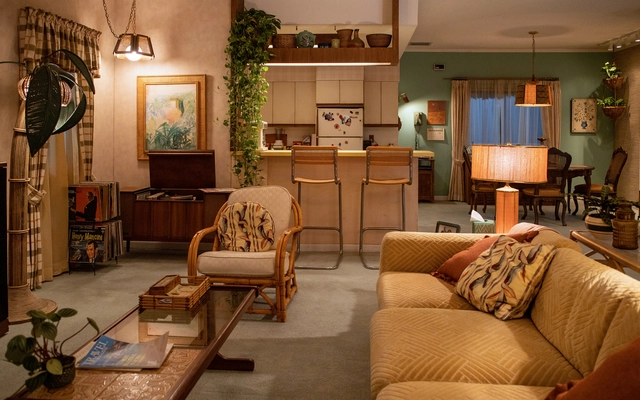
Fotografías de la escenografía en la serie Gordita Chronicles. Image Cortesía de Amy Wheeler
Amy Lee Wheeler is the production designer for "Gordita Chronicles", an HBO series that tells the story of a girl and her family from the Dominican Republic who immigrates to Miami in 1985, after the country's political and economic instability. Upon arrival, the "American dream" brings them an unpleasant surprise after discovering a materialistic city concerned about social status.
How was the home where she lived and the school where she studied? How was the office where her father worked? These were some of the spaces that Amy Lee Wheeler had to design and set with furniture and colors of iconic vintage styles, drawing inspiration not only from old movies, books, and catalogs but also from personal photographs. The construction of the set in Puerto Rico and the ongoing pandemic presented unique and unprecedented challenges, so ArchDaily interviewed her to learn about the work process behind the scenes.
This July 11 marks World Population Day, an annual event established by the United Nations Development Programme (UNDP) in 1990 to raise awareness of global demographic issues. This is a critical issue today; not only is the global population projected to reach nearly 10 billion by 2050, but the latest UN-Habitat reports estimate that, by then, two-thirds of the world will live in cities.
Every year, World Population Review assesses urban growth and the number of residents living in metropolitan areas to understand global development trends. While the list of the 20 most populous cities in the world features recurring Asian hubs like Tokyo, Delhi, and Shanghai, it also includes several Latin American metropolises such as Sao Paulo, Mexico City, and Buenos Aires. Consequently, we have compiled a list of the ten most populous cities in Latin America to understand their growth and role in the global context.
Is there a future for our cities without a sustainable way of life? For some time now, urban sustainability has been viewed primarily through the lens of climate change rather than a holistic vision that integrates society and the way we live in community.
What new ways of living are we experiencing amid social, economic, and ecological shifts? We need to bring to the table different reference cases from around the world and understand the latest trends shaping how we live in our cities.
We want you, our readers, to not only be the first to share examples of co-living, cooperatives, and any new types of social housing you consider benchmarks, but also to share your thoughts on the matter in the form below. Selected comments will be published in an upcoming article.
At ArchDaily en Español, we recognize the need to stay in constant contact with architecture students, who will be responsible for designing and building the cities of the future. For this reason, we periodically open a call for applications to join our editorial team through our internship program.
If you currently reside in Chile, this could be your opportunity to contribute local content to the most visited architecture platform in the world, which inspires and informs hundreds of thousands of architects globally. If you are interested, please read on.
Is there a future for our cities if we do not transition to a sustainable way of life? For some time, urban sustainability has adopted a perspective focused more on climate change than on a holistic vision that incorporates society and the way we live in community.
What new ways of living are we experiencing amidst social, economic, and ecological shifts? Ultimately, we must bring to the table examples from different parts of the world to understand the latest trends in how we live in our cities.
We want to hear from you—not only about examples of co-living, cooperatives, and any new type of social housing you consider a benchmark, but also your thoughts on the matter. Selected comments from the form below will be published in an upcoming article.
Many of us agree with Roman Mars of 99% Invisible when he says that we "tend to not notice things that are well-designed"—yet we also agree that design is often considered a privilege for the few. Consequently, we must ask ourselves what truly constitutes democratic design, using this reflection to help define and contribute our vision toward a more equitable society.
From the perspective of architecture and design, democratization can be examined from several angles, ranging from debates on addressing everyday needs to strategies for inclusive design. At the core of these discussions lies a shared goal: finding ways to improve accessibility and livability in our daily lives.
Is it truly possible to design for everyone? And if so, how do we achieve it? We posed this question to you, our readers, in an open call. After reviewing the vast number of responses from industry professionals, students, and architecture enthusiasts, we were struck by a common thread: we not only experience design directly or indirectly in our daily lives, but we also need it to dismantle stereotypes and paradigms. Read a selection of these perspectives below.
El proceso de HerCity usando la herramienta MethodKit en GoDown, Nairobi, Kenia. Image Cortesía de ONU-Habitat
Many of us agree that design is still not considered for everyone. That is why we must ask ourselves what is truly democratic in the matters of design - in order to define our vision toward a more just society. From the perspective of architecture and urbanism, we can look at this democratization from different angles, including citizens in participatory processes, in order to find answers to our constant search to improve habitability and accessibility.





.jpg?1655403902&format=webp&width=640&height=580)