Masterclass: How to Keep Clients from Choosing the Contractor Over You and Become Indispensable
Masterclass: How to Keep Clients from Choosing the Contractor Over You and Become Indispensable

Through this congress, we aim to promote knowledge about the connection between cognitive sciences, neuroscience, architecture, and design, offering a broad overview of scientific, theoretical, and philosophical knowledge that integrates diverse perspectives for the practice of design and architecture with a humanistic approach.

Introduction to Design for Play and Urban Childhoods is a workshop that seeks to foster a general understanding of the value of play and its impact on the holistic development of children, while reflecting on how this directly relates to the way cities and their respective public spaces are designed, planned, and built.

IED Rio is offering four free online classes this September, corresponding to four full online courses scheduled for the second semester. These sessions serve as a lead-up to the launch of in-person courses in 2022. The classes—covering lighting design, style generation, the role of the physical store in a post-pandemic landscape, and visual thinking for business—will be led by industry-leading designers, including Diana Joels, Michela Mezzavilla (Spain), Rafo Castro, Carolina Baltar, and Rafael Andrade.

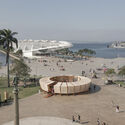
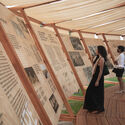
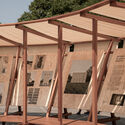
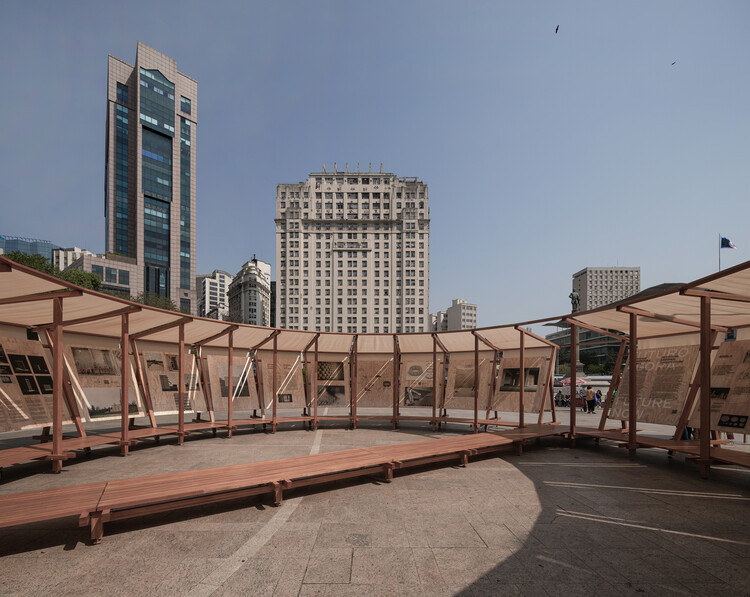
A sustainable, reforested timber pavilion featuring 24 photographic and typographic panels will be installed in the heart of Praça Mauá from September 8 to October 17. The exhibition, Future Now – Revisiting Earth Architecture, offers new perspectives on the challenges of contemporary architecture and addresses urgent global issues. The showcase provides an architectural experience that bridges the latest in high-tech innovation with one of the oldest building materials—earth (such as clay and mud)—and its contemporary applications.

The 2021 Guatemala Architecture Biennial is a platform that brings together leading professionals in the region through symposia, lectures, and exhibitions. Held in parallel are the Danta Awards, which recognize both students and professionals.

On September 22 at 7:00 p.m., Roca Barcelona Gallery and Technal invite you to the screening of Reusing Posidonia, a documentary about an exemplary project carried out on the island of Formentera that demonstrates the possibility of building with lower resource and energy consumption, fewer CO2 emissions, and greater comfort and habitability. Following the screening, there will be a discussion with the audience featuring architect Carles Oliver, author of the project and winner of the 2018 FAD Architecture Award; documentary director Marta Palacín; and building sustainability consultant Gerardo Wadel.

How do we resolve the tensions between imported Western imported styles and the notion of what is African? That tension between the courtyard and the balcony, the glass skin and the brise soleil; or the oft-derided eating habits not accommodated in the living room, or the abundantly ubiquitous zinc roofing sheets so often discarded or the coming to terms with crime-induced burglary and the esteeming of the kitchen entrance.
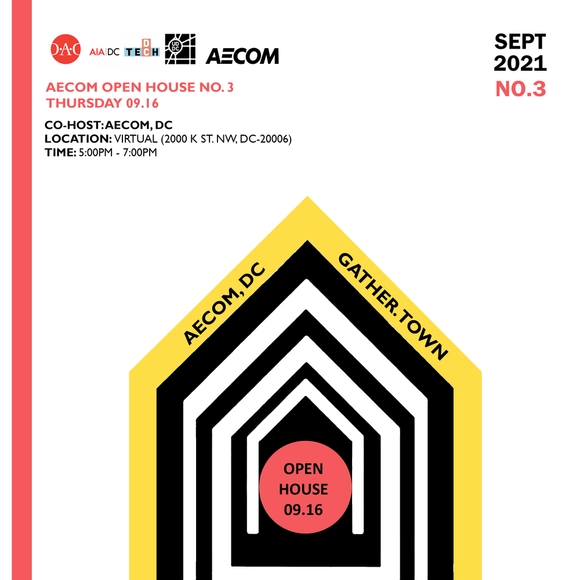
Join the AIA|DC Urban Design Committee & Technology Committee for our 2021 Open House Series at leading architectural and urban design firms in DC as they virtually showcase projects currently in planning, design, or construction phases.

CBDX: BORDERLANDS Jury Panel Discussion + Awards Announcement
From September 8 to 10, you can attend the 6th International Congress, a biennial event organized by the Architecture and Society Foundation, where the city takes center stage as the focus for reflection and debate on its reality and future from various perspectives.

A debate on the infrastructure and resources currently available in the country to project a sustainable and equitable urban mobility for the future, while considering the environmental, urban, and social impacts of the current model.

In times of change, AOA proposes an optimistic approach to the challenges facing cities and their citizens within both local and global contexts. We aim to highlight existing opportunities for positive change during and after crisis situations, thereby promoting more resilient cities in both the short and long term.
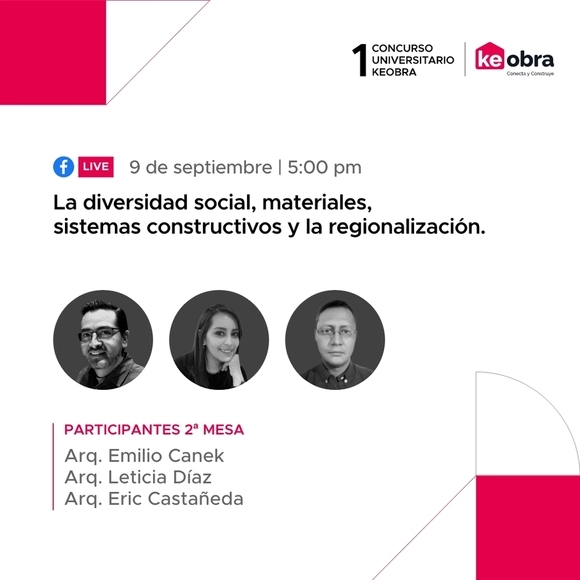
As part of the activities for the First Keobra University Competition, we invite students, alumni, faculty, and the general public to attend Round Table #2: "Social Diversity, Materials, Construction Systems, and Regionalization."
The daily rush prevents us from seeing and experiencing our cities. Whether by bus, subway, car, motorcycle, bicycle, or on foot, we are constantly rushing, failing to realize that time is our most valuable asset. In this haste, cities go unnoticed. Our focus is simply on commuting, day after day.
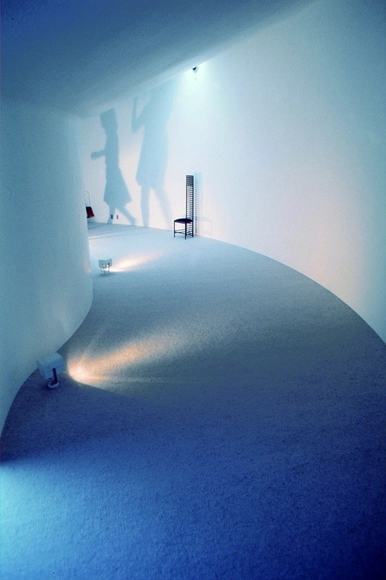
Form and void are inseparable concepts in Japanese culture. This course proposes an analysis of selected architectural works, supported by the aesthetic notion of Ma, to explore different conceptions of space-time in Japan. The course aims to present the conceptual, spatial, and material aspects of these projects to foster an understanding of the potential relationships between form and void, as well as to approach the void as a form of potential rather than an absence. The course is intended for anyone interested in architecture and Japan in general.
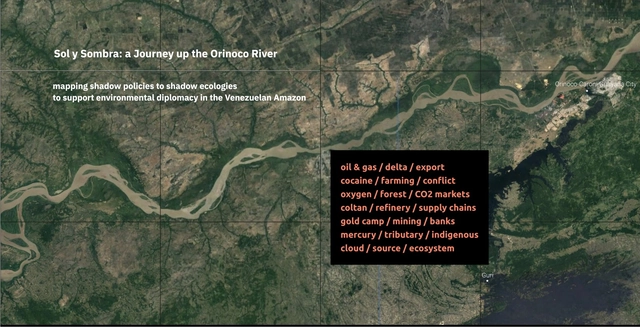
The Sol y Sombra project lab has prototyped an interactive tool, for the analysis and 3D visualisation of territories such as the Orinoco River in the Venezuelan Amazon, which reveals its geographical, political, and economic complexity, by geolocating and overlaying interests, conflicts and possibilities. The tool highlights potential development opportunities, locations for emergent markets in clean natural resources and new labour economies and suggests these can generate added value for local and global communities.

From Wednesday, September 1st, and throughout the month, the Archivo Núcleo Cerrillos exhibition will be open to the public. Organized by the CNAC and curated by Cristián Gómez-Moya, a researcher at the Faculty of Architecture and Urbanism of the University of Chile, the exhibition is defined as a research and creation laboratory. It examines the archives, documents, and aesthetic experiences surrounding the Faculty, which was located in the Cerrillos commune from 1957 to 1976.