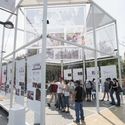
In March 2020, the fourth edition of Hello Wood will arrive in Argentina. This creative, professional, and social program teaches students to think with their hands and learn through experience. The program is currently seeking creative minds to join as project leaders.
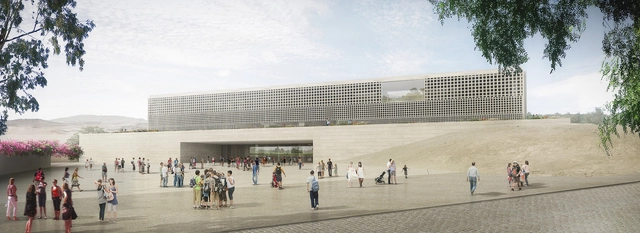
Museo Nacional del Perú en cosntrucción, una de las contadas obras públicas elegida por concurso púlbico. Image Cortesía de Alexia León Angell
We are pleased to start the year by sharing major news that is spreading across Peru. For many, it comes a bit late; for others, the timing is perfect. Regardless, it is finally here: public works in Peru can now be carried out through architectural competitions.
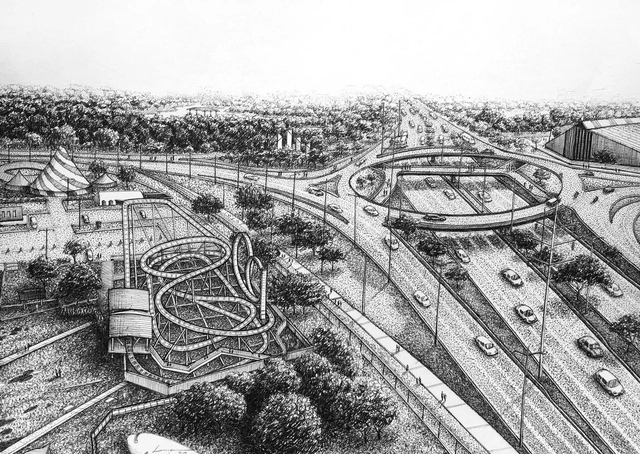
On August 12, the winners of the International Ideas Competition for the design of the Antenna and Observation Tower as an Urban Landmark for Expo 2023 were announced. Organized by the Sociedad Central de Arquitectos(SCA) and the Colegio de Arquitectos de la Provincia de Buenos Aires (CAPBA), and sponsored by the Federación Argentina de Entidades de Arquitectos (FADEA), the “Antenna and Observation Tower” is the fourth of six international competitions launched in recent months for Expo 2023.
Imágen: ArtefactoryLab. Image Cortesía de Estudio Herreros
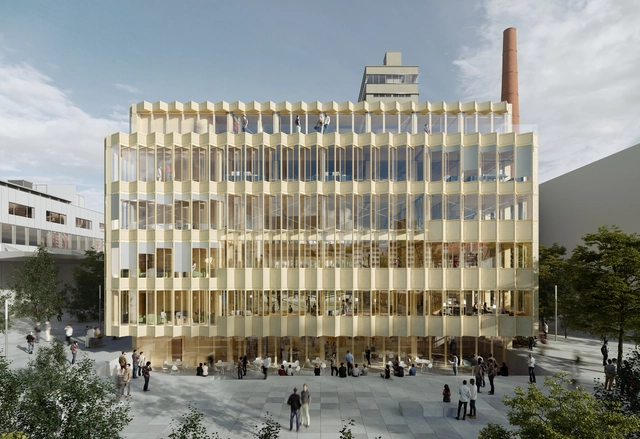
The "Smart Living Lab," a research and development center for the built environment of the future founded in 2014 and located in the blueFACTORY innovation district, launched an open call in 2018 for the design of its new building. This competition was open to all interested design firms from both Switzerland and abroad, ensuring equal opportunities and fostering high-quality projects.
First Place: "Entre sombras" / Josué Coeto Velasco, Ignacio González, Abraham Méndez, Hueman Hidalgo. Image
The TEMA Pavilion Competition was created to provide young architects and students from the University of Guadalajara student body with the opportunity to design an ephemeral project that expresses ideas beyond the typical academic requirements of an architecture or design school. On November 11, the proposals were evaluated by internationally recognized architecture and design practices, including José Amozurrutia and Carlos Facio / TO; Andrea Castilla and Deha Chehade / Chehade Carter Interior Design; and architect Diego Vergara Álvarez.
The Richard H. Driehaus Architecture Competition seeks to revitalize traditional architecture in overlooked areas of Spanish towns, while promoting the work of local artisans and builders. In this first phase, municipalities submitted proposals to rehabilitate or remodel various architectural spaces. Out of all the submissions, Alzira (Valencia), Santa Cruz de la Palma (Tenerife), Santiago de Compostela (La Coruña), and Guadix (Granada) were selected.
https://www.archdaily.com/1120993/4-rehabilitation-proposals-in-spanish-cities-for-the-richard-h-driehaus-architecture-competitionArchDaily Team
Recognizing outstanding heritage practices, the fourth edition of the European Award for Architectural Heritage Intervention AADIPA has announced 15 shortlisted works in Category A (Intervention in built heritage) and 10 in Category B (Exterior spaces).
On June 13, during the 4th International Biennial of Architectural Heritage Intervention—an event organized by the directors with the support of COAC, AADIPA, and the Generalitat de Catalunya—the finalists and winners of each award category will be announced.
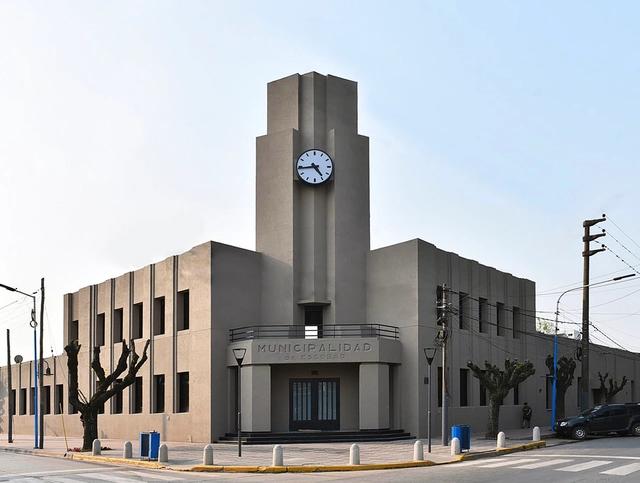
A numerical coincidence links the municipality of Escobar with the life of architect Francisco Salamone. In 2019, the district celebrates 60 years since its creation—having achieved municipal independence in 1959—an anniversary inviting its residents to reflect on both its history and its future. August also marked the 60th anniversary of Salamone's death. In 1938, he was commissioned to design the Municipal Palace in Escobar. The project, however, was left unfinished due to budget constraints, making it the only project by the architect in Buenos Aires that remains incomplete today. To mark this double anniversary, the local government is revisiting the original design to finally complete the building.
Paying attention to Lima's many perspectives is something that should be a daily occurrence, though unfortunately, this is not the case in our city. Sometimes we do not even notice what happens in the streets; at other times, we have a biased view, or we simply prefer to look at the city from the most comfortable angle. It is important to turn our attention to the many urban actors whose multidisciplinary visions, when integrated, can offer an interesting, enriched, and diverse outlook on the city.
In tribute to this diverse city of nearly ten million inhabitants, the UNESCO Office in Lima has gathered academics, historians, archaeologists, urban planners, architects, artists, and Lima enthusiasts for the inaugural UNESCO Talks event, titled “Lima, muchas miradas”.
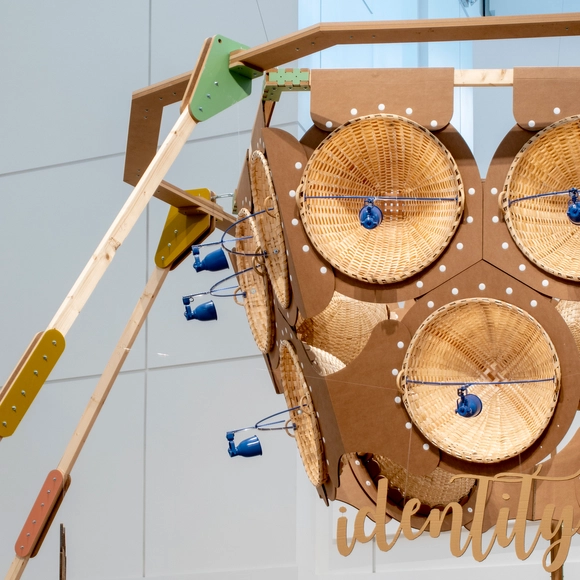
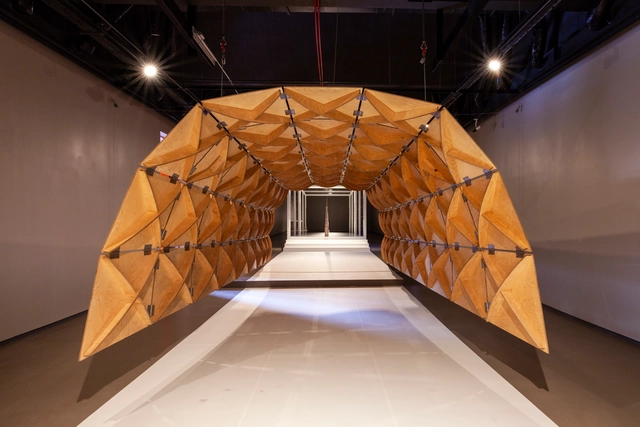
Of the two million people currently living in the region of Galicia, an estimated 5,000 work in the production and sale of crafts. Through the exhibition “Pensar coas mans. Las nuevas siete lámparas de la belleza artesanal” (Thinking with Hands: The New Seven Lamps of Craft Beauty), located at the Museo Centro Gaias in The City of Culture, Izaskun Chinchilla presents an art installation of 250 pieces. Created in collaboration with 65 artisans, the project seeks to restore the prestige of craftsmanship and prompt reflection on its collective value.
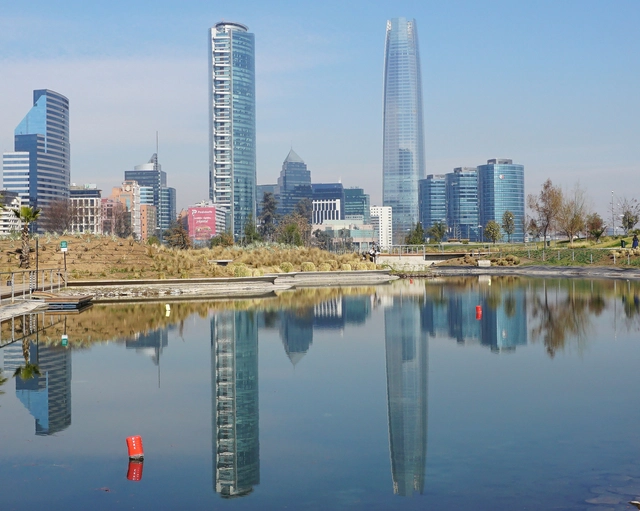
The Safe Cities Index (SCI) by The Economist Intelligence Unit ranks 60 representative cities worldwide based on indicators covering digital security, health security, infrastructure, and personal security.
Focusing on Latin America —and setting aside the repeated leadership at the top of the list by Tokyo, followed by Singapore, Osaka, Amsterdam and Sydney— where do this region's cities rank in terms of safety for 2019?
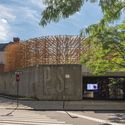
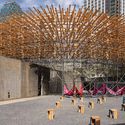
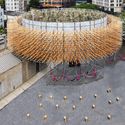
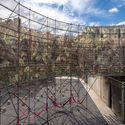
The installation Hórama Rama by Pedro y Juana (Ana Paula Ruiz Galindo and Mecky Reuss) opened this summer as part of the 20th edition of the Young Architects Program 2019 at MoMAPS1. This architectural installation is an immersive jungle landscape set within a large-scale cyclorama that sits atop the courtyard walls of MoMAPS1 and runs from June 28 through September 2, 2019.
2019 brought a wealth of enriching experiences through some of Mexico City's most prominent events, including the inaugural Porto Academy Workshop, the annual Design Week Mexico festival, and the Abierto Mexicano de Diseño, among others. These events hosted design and architecture exhibitions that captured the creative output of the moment—showcases that will serve as future reference points for understanding the architectural discourse of this era.
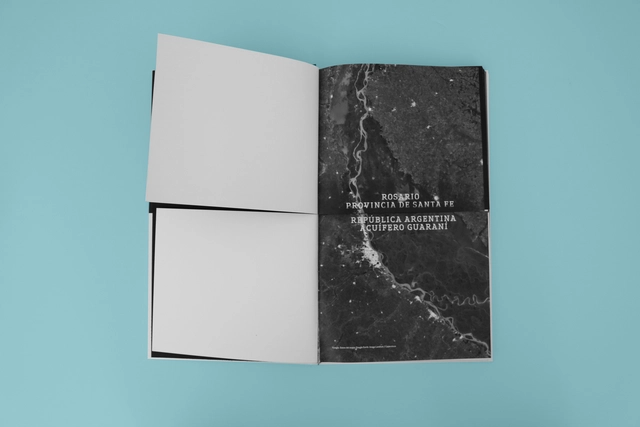
Reading "Poéticas Colectivas" is a unique experience: the pages divide into two, three, and then become one. The boundaries of the pages dissolve, and both knowledge and architectural works intersect on both a literal level—the pages—and a theoretical one—the ideas.
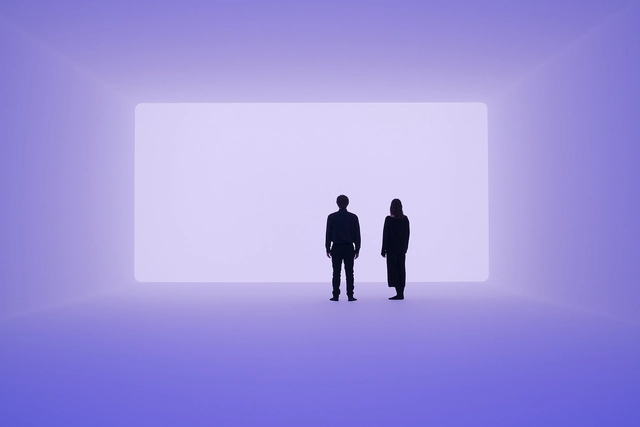
"SOM: Art + Engineering + Architecture" is an exhibition opening at the Antiguo Colegio de San Ildefonso in Mexico City. Presented in collaboration with MEXTRÓPOLI, the global architecture and urbanism festival organized by Arquine magazine, the exhibition offers a comprehensive overview of SOM's structural engineering practice, its integration with architectural design, and the firm's long tradition of collaboration with the visual arts.
https://www.archdaily.com/1120731/som-presents-exhibition-in-mexico-city-art-plus-engineering-plus-architectureArchDaily Team
With the launch of ODA19, this year we celebrate the eleventh anniversary of the Obra del Año (ODA) Award, the highest accolade in the architectural world where the winners are chosen by popular vote. Starting today, Monday, April 1, and for the next three weeks, our readers are responsible for determining which projects inspired us during 2018, faithfully representing the identity of our local contexts while shaping the way architecture is practiced around the world.
Over the next three weeks, the entire ArchDaily en Español network (Plataforma Arquitectura, ArchDaily México, ArchDaily Colombia, and ArchDaily Perú) will serve as the platform to celebrate the best built architecture in Spain and Spanish-speaking countries in Latin America.
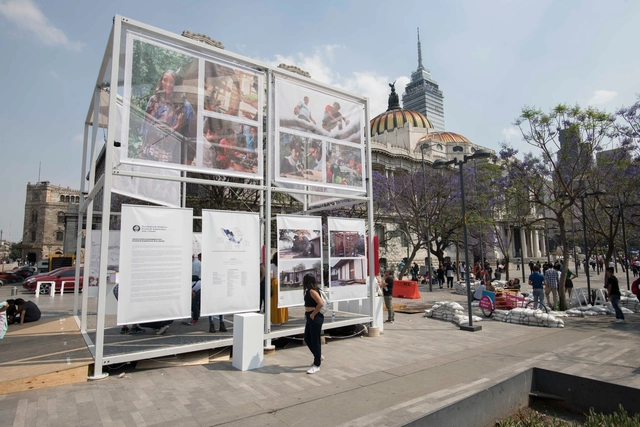
CUBO is the name of the installation created by the School of Architecture, Art, and Design at Tecnológico de Monterrey, which was presented in March at Alameda Central in Mexico City. The pavilion was designed as an open, flexible, and itinerant meeting point, hosting cultural events as well as exchanges of ideas and goods. CUBO (Urban Cell for Well-being and Opportunities) is a social innovation project that served as a stage for civic engagement, fostering participatory processes in communities through recreation, reconciliation, and learning.





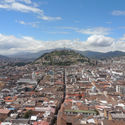

.jpg?1567177603 "Global Ranking: 40. Image © Flickr User: Eneas De Troya Licensed under CC BY 2.0")


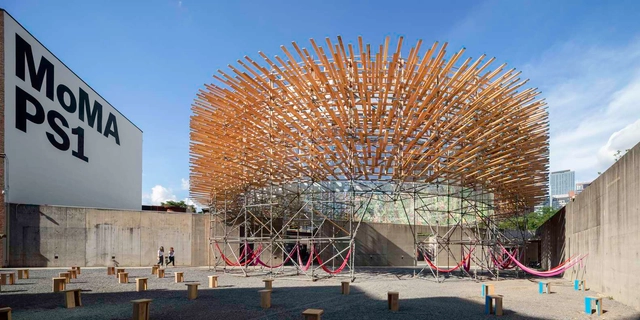

.jpg?1551806000 "© Benny Chan")
_Tom_Harris_(15).jpg?1551806141 "© Tom Harris")
.jpg?1551806155 "© Benny Chan")
.jpg?1551806066 "© Benny Chan")