Over four days, the public space of Pontevedra, Spain, was transformed by urban interventions designed to foster imagination and play. This marked the inaugural edition of Experimenta Pontevedra, held from June 21 to 24, 2018, in the Spanish city.
Pontevedra, which received the UN-Habitat Award for its pedestrian-friendly urban model, has become a benchmark for many cities in recent years, having achieved a milestone where over 70% of urban trips are made on foot or by bicycle within a 15-year period. Accordingly, as the organizers explain, Experimenta Pontevedra is part of this urban development strategy. With the pedestrianization of the city center now fully established, the initiative seeks to foster public spaces that stimulate the imagination and playfulness of their users.
Sometimes, we cover projects so innovative and futuristic that they seem unlikely to ever leave the drawing board. Fortunately, we are occasionally proven wrong. This is the case with Ecocapsule, a micro-home that generates all the energy it needs and can be taken anywhere in the world, which has just made its international debut.
An initial run of 50 units has been launched for clients in the United States, Japan, Australia, and the European Union. From the outside, one would never guess that these tiny homes pack so many features: the exterior is covered in photovoltaic panels, equipped with a small wind turbine, and capable of collecting and filtering its own water.
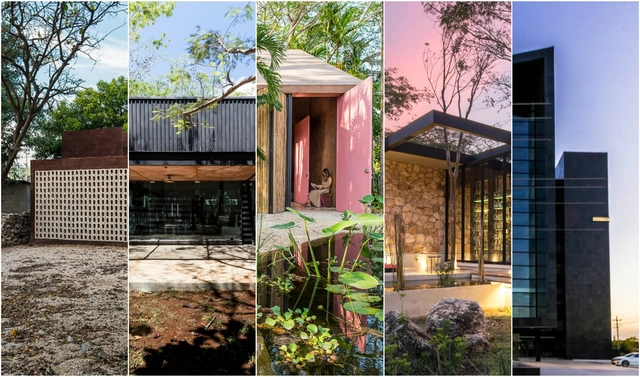
AS Arquitectura, Xavier Abreu Sacramento, Alejandra Abreu Sacramento, and Efraín Góngora First Place in Category and Grand Prize of the XII Yucatecan Architecture Biennial 2018 Casa del Árbol
The Arquitetas Invisíveis collective is pleased to invite researchers, professionals, students, and artists interested in reflections linking architecture across its various scales with gender issues, in different disciplinary fields, to participate in the call for submissions for the 3rd issue of the Arquitetas Invisíveis Magazine.
The Arquitetas Invisíveis collective, the group responsible for publishing the magazine, will also feature selected submissions from this call on its platform – www.arquitetasinvisiveis.com – as deemed appropriate. The magazine and the website stem from a desire to share knowledge and reflections, as well as to contribute to advancing gender discussions in architecture and related fields. This initiative aims to offer a platform to showcase the work of individuals addressing gender in architecture, while fostering interdisciplinary exchange by welcoming contributions from diverse fields—including History, Geography, Sociology, Anthropology, Art, Psychology, and Journalism, among others, as well as non-academic work.
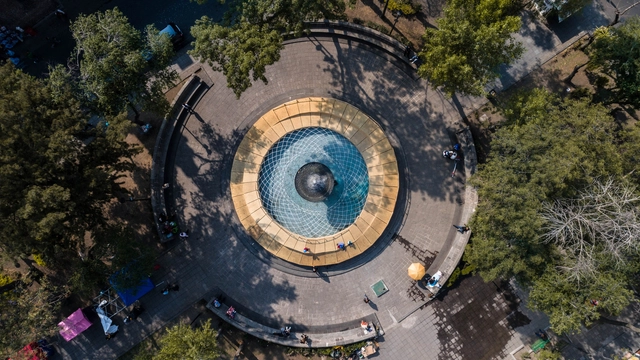
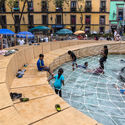
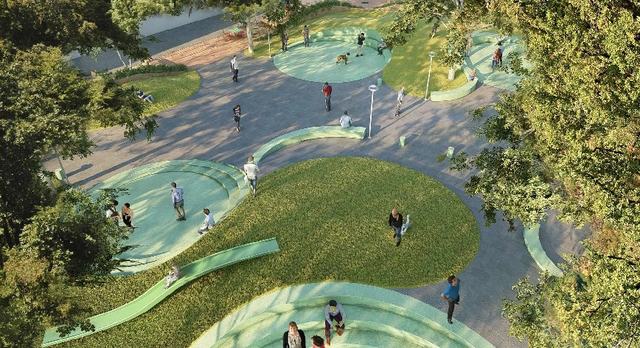
Aros is the winning project of the "Juguetes Urbanos" (Urban Toys) competition, organized by the Laboratory for the City and the Mexico City Government. The competition called for a play-based proposal within Plaza Loreto, located in the historic core of Mexico City's Centro Histórico.
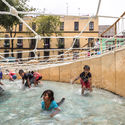
Mexico City's fountains have long been gathering places where children play while waiting for their families to finish the workday. These spots are crucial, perhaps because water carries significant cultural weight in the city; during spring and summer, they regularly draw crowds who engage with public space in this active way.
As the end of the year approaches, and after celebrating six years in Mexico, we would like to thank you all once again for making 2018 our best year yet. Thanks to your ongoing support and our close connection with our readers, we are now reaching many more architects worldwide to inspire them to create better urban environments for everyone.
Archademy is the world's first accelerator for architects and interior designers. Inspired by startup accelerators, it focuses on structuring small firms to boost professional performance in just a few months.
Much like a consultancy, Archademy offers a customized package for architecture and interior design firms, along with mentoring sessions and workshops. The accelerator also aims to build a professional network, thereby generating job opportunities and collaborations.
Cortesía de Colegio Oficial de Arquitectos de Madrid [COAM]
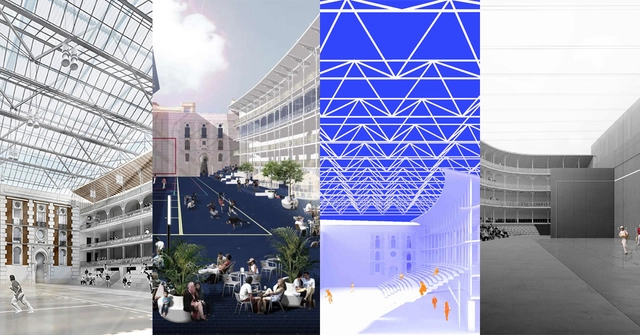
On Thursday, November 22, the jury convened by the Madrid City Council, in collaboration with the Colegio Oficial de Arquitectos de Madrid (COAM), announced the results of the rehabilitation project for the historic Beti-Jai Fronton in Madrid, Spain.
The competition opened for registration last June, receiving a total of 73 proposals for the intervention on the landmark building. The objective was to find the best proposal to reconcile the preservation of the building's heritage value—declared a Bien de Interés Cultural (Asset of Cultural Interest)—with the most appropriate technical solutions for its future use as a sports and cultural venue.
On Saturday, April 14, the continental award ceremony for the Prix Versailles will be held at Castillo Hidalgo in Santiago, Chile. The awards will honor the architecture and design of 24 completed retail, hotel, and restaurant projects across South America, Central America, the Caribbean, and North America.
Learn more about the event and past winners below.
Having previously been the subject of a 2015 art installation by Isaac Julien titled Stones Against Diamonds, Italian-Brazilian architect Lina Bo Bardi will now have her life portrayed on screen in the film Ghost of Lina Bo Bardi, directed by Julien.
Ever since we announced the results of the competition for the "New Bío Bío Regional Theater," promoted by the Regional Government and the Architecture Area of the National Council of Culture and the Arts, we had been eagerly awaiting the completion of the winning proposal.
https://www.archdaily.com/1114641/the-narrative-behind-the-theater-designed-by-smiljan-radic-eduardo-castillo-and-gabriela-medrano-for-the-biobio-region-in-chilePola Mora
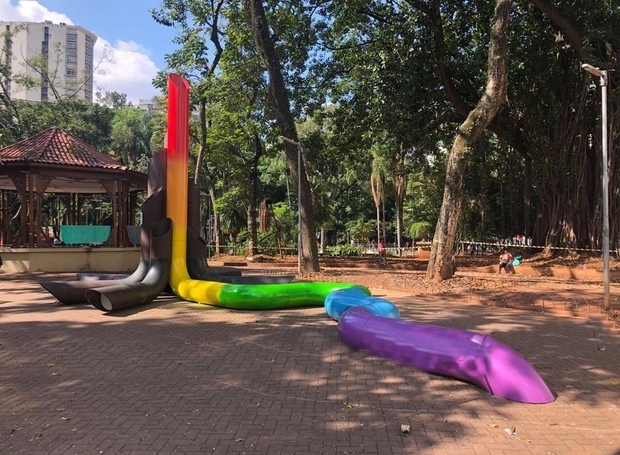
Meu Coração Bate Como o Seu, the sculpture designed by Guto Requena and built in downtown São Paulo at Praça da República in honor of the LGBT community, has had its wiring destroyed and its internal light bulbs stolen.
Conceived to celebrate 40 years of community activism in São Paulo, the act against his work is, for Requena, homophobic in nature: "The country is becoming too violent, so I have no doubt that the vandalism of my work was intended to target the LGBT community."
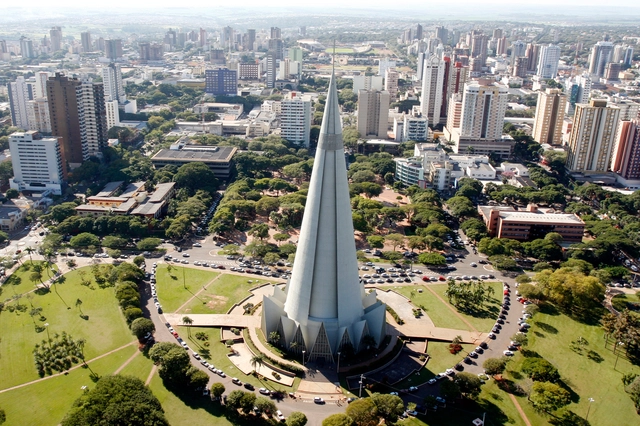
Municipal public buildings, licensed urban spaces, and private buildings of collective interest and use will be required to display the names of the authors of the architectural and/or urban design project, as well as the technical professional responsible for the construction. This is mandated by a bill recently approved by the Maringá City Council. The text now goes to the city's mayor, Ulisses Maia, for approval.
Dérive LAB is a multidisciplinary laboratory based in Santiago de Querétaro, Mexico, that seeks to explore, understand, and inspire alternative (new) ways of living and thinking about urban life. Through research, design, and action, they focus on developing art, architecture, urban design, and other disciplinary projects that impact three specific scales: public life, the built environment, and everyday objects.
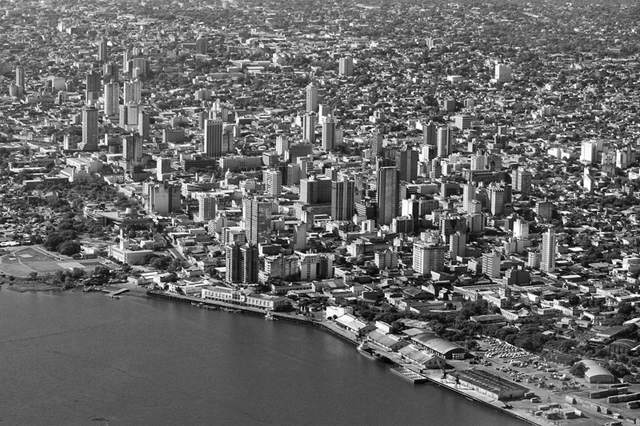
Aerial view of Asunción (adapted). Image via Flickr User: Tetsumo Licensed under CC BY 2.0
After establishing itself—with ten editions already—as a key reference event for understanding the current and future state of architecture and urbanism in the Ibero-American community, the XI BIAU will take place for the first time in the city of Asunción in October 2019. The program of activities will include the presentation of selected works, keynote lectures, specialized presentations, and panel discussions organized around the central theme: aĩ paragua y (I inhabit - water).
The site where this new plaza will be created is currently underutilized as a public parking lot, failing to leverage the favorable pedestrian conditions of this location, which is surrounded by housing and commerce and strategically located at the intersection of Calle 3 Sur and Av. Del Parque Sur. This gave rise to the National Ideas Competition: Design of Plaza 3 - San Isidro, organized by the College of Architects of Peru alongside the Municipality of San Isidro, with the goal of promoting the development of a reclaimed public space for the benefit of the district's community by creating a welcoming gathering place. At the same time, the urban design proposal is expected to serve as a benchmark for future related competitions.
Ten pieces made of different materials challenge the laws of balance. Using the same typology at different scales, each composition in the Balance collection explores the equilibrium between technique, people, and the ideas that inspire us. Each piece was produced using various traditional crafts, artisanal techniques, and Mexican industrial technologies that Joel has explored at different points in his career.
Architects and engineers have launched a call for free technical assistance in the design, renovation, or construction of social housing—already established by a 2008 law—to "be more than a law; to become a State Policy, as part of the social right to housing guaranteed by the Constitution."
The appeal was made at the opening of the Seminar on Technical Assistance for Social Housing, hosted by CAU/BR and the Federal Council of Engineering and Agronomy (CONFEA) in Brasília on the 15th of this month. If the proposal is adopted, Brazil would have the equivalent of a "SUS" (Unified Health System) for social housing. The proposal is part of the "Open Letter to Candidates in the 2018 Elections for the Right to the City," recently released by CAU/BR and the Institute of Architects of Brazil (IAB).
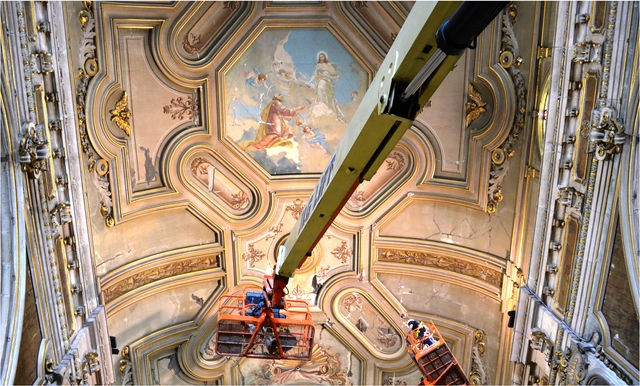
On the occasion of Pope Francis's visit to Chile, the Metropolitan Cathedral Chapter requested conservation work on the Cathedral's vaulted ceiling to improve safety and the condition of the ornamentation after recent earthquakes, aiming to safeguard the many faithful who visit the Cathedral daily.
“The Place of Sharing” is already taking shape on site. On the third day of work, foundations are being prepared and steel structures installed to support the Casa de Brincar e Não Só – Not Only a Playhouse, which is being built through August 10 at the Guarda Housing Complex (CHG) in Perafita, Matosinhos, Portugal. The initiative is part of the Self-Construction Laboratory organized by Casa da Arquitectura – Portuguese Center for Architecture.
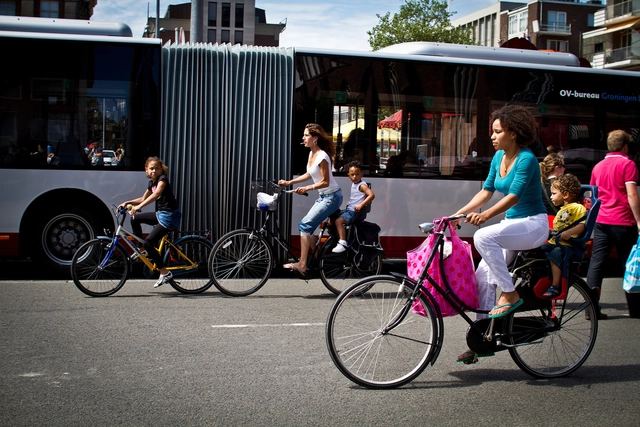
The city of Groningen, located in the north of the Netherlands, is an international benchmark for urban mobility. With just over 200,000 inhabitants, Groningen is considered the country's cycling capital—roughly 61% of all trips in the city are made by bicycle.
This shift in mindset dates back to the 1970s, when Dutch cities began to be dominated by cars and local realities were altered. The trend at the time was to redevelop older neighborhoods to make room for vehicles traveling to the center.
https://www.archdaily.com/1114738/groningen-a-dutch-benchmark-for-urban-mobilityLucas Augusto
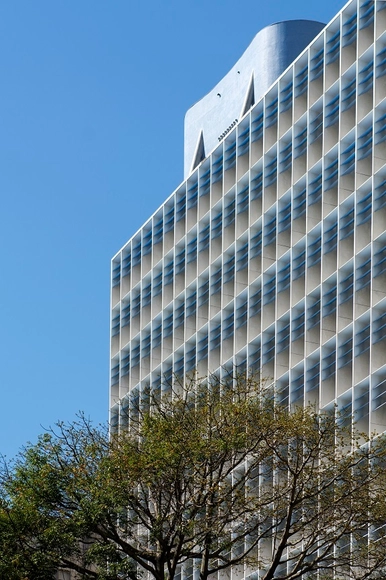
Once again, anyone passing by the bustling Araújo Porto Alegre Street, on the corner of Graça Aranha Avenue in downtown Rio de Janeiro, will be able to marvel at the grandeur of the Gustavo Capanema Palace and understand why it is a Modernist icon, both for Brazil and the world. More than 70 years after the building’s inauguration in 1946, all the innovative design of its facades—introduced by the masters of architecture and art of the 1930s—has been fully restored and will be unveiled by the National Institute of Historic and Artistic Heritage (Iphan) on September 20.
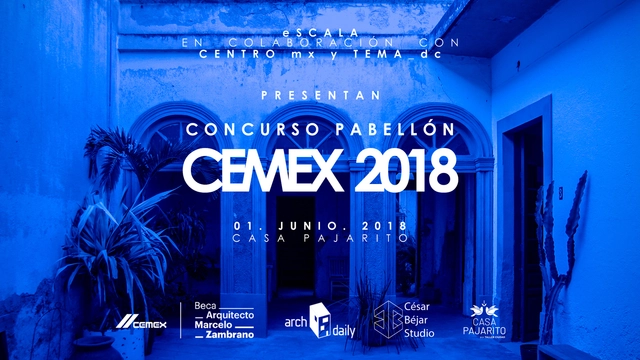
The 2018 CEMEX Pavilion competition was established to offer Guadalajara's student community an opportunity and a platform to express their aspirations, interests, concerns, and critiques of the architectural profession. This is materialized through an intervention in the courtyard of a heritage home in the city's historic center, which currently serves as both a workshop and a cultural center.
Supported by CEMEX and the Arq. Marcelo Zambrano Scholarship, the first edition of the 2018 CEMEX Pavilion competition was launched. Aimed at the student community of the Guadalajara Metropolitan Area, the competition invited participants to intervene in a heritage property in the city's downtown core, aiming to provide students with a fresh platform to express their concerns and passions about the profession through a built work, bridging the gap to professional practice.
On Monday, April 16, Chilean architect María Isabel Tuca, a prominent academic and professional association leader, passed away in Santiago. In 2000, she became the second female president of the Chilean Association of Architects, following Eliana Caraball in the mid-1980s.
In an interview with the Chilean newspaper El Mercurio after taking office, Tuca recalled that despite the warnings of the nuns at her school ("that was a career only for men," they told her), she chose to study architecture at the University of Chile, graduating in 1965.
.jpg?1531429636&format=webp&width=640&height=580)












.jpg?1533131645&format=webp&width=640&height=580)