Arquiteturas Film Festival / 10th edition
Theme: Where life happens
Dates: June 27 – July 1, 2023
Arquiteturas Film Festival / 10th edition
Theme: Where life happens
Dates: June 27 – July 1, 2023

For this edition, we are pleased to welcome guest editors Dr. Célia Gonsales (UFPel) and Dr. Ana Elísia da Costa (UFRGS).
The submission deadline is May 30, 2022. Submissions will be accepted in Portuguese, English, and Spanish.
The TRANSFER Architecture Video Award is an independent prize, launched in 2019, to recognize the most creative and innovative videos in the fields of architecture, the city, and landscape on an international level.

The strategic focus of the 29th Colombian Biennial of Architecture and Urbanism centers on the importance of viewing HABITAT as a fundamental right of the citizenry.
The way we live and use our environment must contribute to the preservation of ecosystems and nature; however, reality confronts us with a critical situation. In many of our cities and urban developments, the urgent need for environmental solutions and strategies that align with existing ecological structures is evident. These solutions must enable the recovery of vast urban areas and ensure our safety against all types of risks. We intend to address crucial issues, such as housing, cities, and urban developments, which have been built partially, in remote areas, often excluding segments of the population.
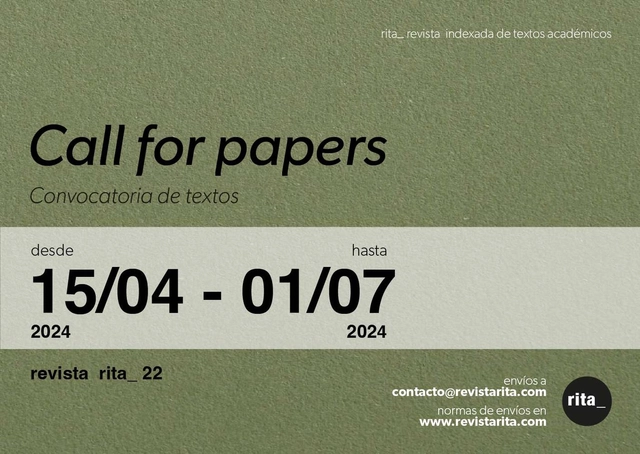
The call for academic papers for the upcoming 22nd issue of rita_ journal is now open. Submissions in Spanish or Portuguese are invited from faculty, graduate students, and professionals holding a master's or doctoral degree.
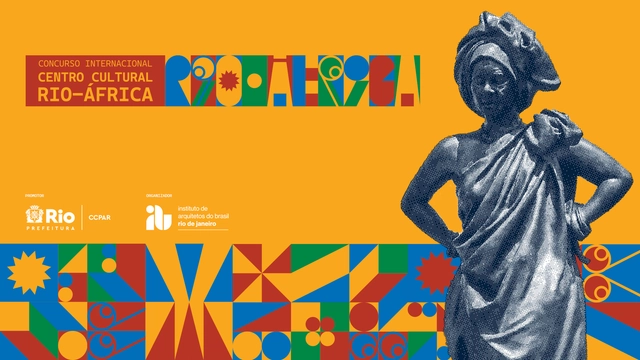
The Institute of Architects of Brazil (IAB-RJ) is hosting the International Competition for the New Rio-Africa Cultural Center in Rio de Janeiro. The competition serves as an affirmative action measure that strengthens and realizes the principle of equality in our society, promoting historical reparation and the inclusion of professionals. Its purpose is to provide Black architects from Brazil and Portuguese-speaking African countries (Angola, Cape Verde, Guinea-Bissau, Mozambique, and São Tomé and Príncipe) access to frameworks for reflecting on historical ownership and space.
Dearq journal, a publication of the Faculty of Architecture and Design at the Universidad de los Andes (Bogotá, Colombia), has announced an open call for submissions on any topic. We invite interested contributors to submit original, unpublished research articles—not currently under consideration elsewhere—in either Spanish or English, covering architecture, urbanism, and related fields.

The Arquiteturas Film Festival invites filmmakers, distributors, and industry professionals to submit works related to the 2022 theme, "Slow Down!".
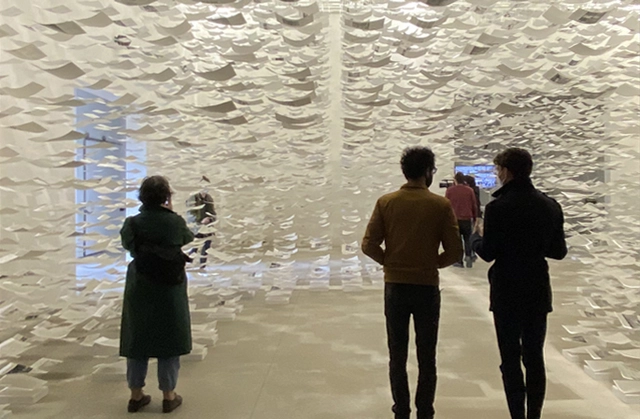
The Ministry of Transport, Mobility and Urban Agenda (Mitma), through the Directorate-General for Urban Agenda and Architecture, has launched a project competition with a jury for the contract to provide curatorial services, exhibition design, and touring curation for the Spanish Pavilion at the 18th International Architecture Exhibition, the 2023 Venice Biennale, as indicated on the State Contracting Platform.
rita_ magazine is now accepting academic paper submissions for its upcoming 19th issue. The call is open to faculty, graduate students, and professionals with a master's or doctoral degree, and submissions may be in either Spanish or Portuguese.
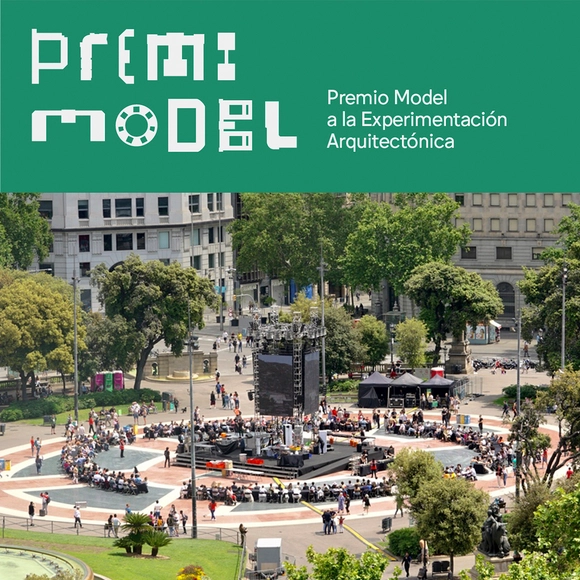
Model. Barcelona Architectures Festival (Model) is the latest experimental and visionary architecture festival on the global cultural scene. The project was founded by the Barcelona City Council and the Architects' Association of Catalonia (COAC) in 2022, and this year, it will be managed by the Mies van der Rohe Foundation.
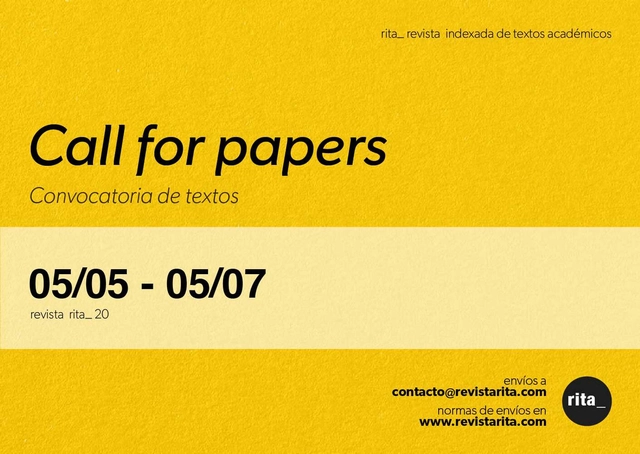
The call for academic papers for the upcoming 20th issue of rita_ magazine is now open. The call invites submissions in Spanish or Portuguese from faculty, graduate students, and professionals holding a master’s or doctoral degree.

The submission process for issue No. 10 of TULHA magazine, published by the Tutorial Education Program (PET) in Architecture and Urbanism at PUC-Campinas, is now open. The issue welcomes scientific, textual, design-based, and graphic essays that explore architecture and urbanism. This year, the magazine follows a thematic axis titled "City, Space, and Preservation of Memory."
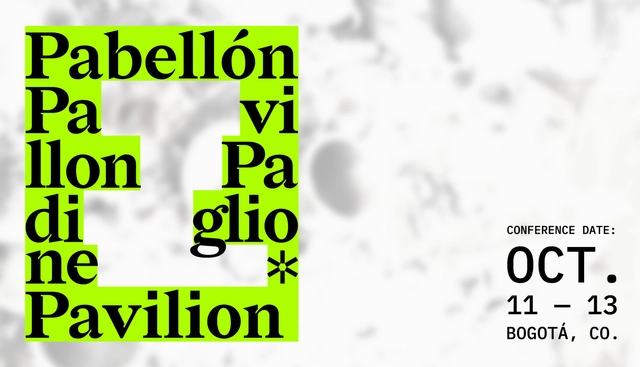
ARQDIS Pavilion 2023 is an international conference (October 11–13) in Bogotá, Colombia, that will explore cutting-edge projects and research across the creative disciplines.
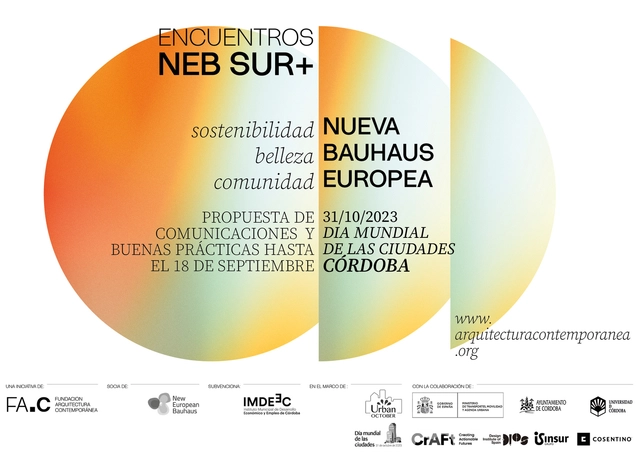
How can we foster more beautiful, sustainable, and inclusive processes and environments? What should be the vocation of Mediterranean cities in relation to the principles of the New European Bauhaus? What are the challenges and opportunities for an NEB center in Southern Europe?
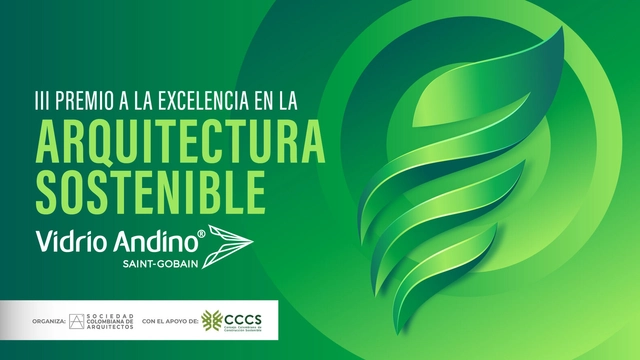
The Colombian Society of Architects, aiming to strengthen the promotion of sustainable architecture in Colombia and with the mission of consolidating this effort through concrete incentives, is calling for project submissions for the "III Award for Excellence in Sustainable Architecture – Vidrio Andino."
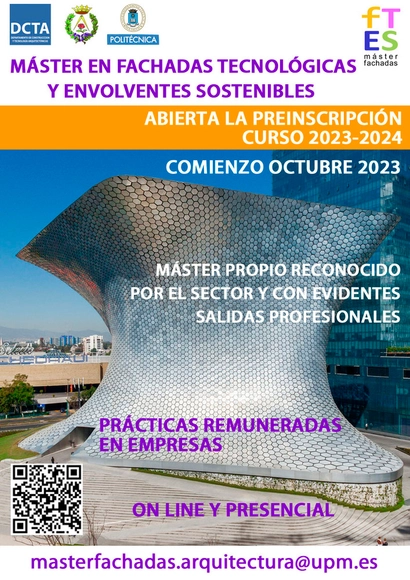
Learn more about the Master's in Facades at the Technical University of Madrid (UPM). Pre-registration for the 2023-24 academic year is now open for both in-person and online formats. The program begins in October 2023.
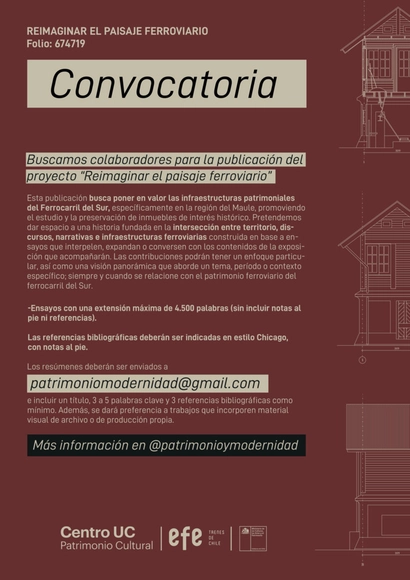
The team behind "Reimagining the Railway Landscape: Heritage Infrastructures of the Southern Railway in the Maule Region" (file no. 674719), a project funded by the 2023 Fondart Regional (Dissemination line, single modality), invites submissions for a publication that will accompany the project's upcoming exhibition.
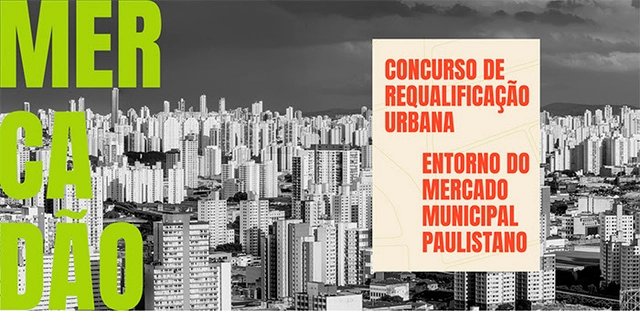
The competition aims to select an urban renewal project for the area surrounding the Mercado Municipal Paulistano. This area currently encompasses a range of functions beyond commerce, having evolved into a central tourist hub for the city.
The competition seeks two complementary approaches: a strategic intervention plan covering an area accessible within a 15-minute walk, with the Market at its center, and a set of physical interventions to improve the space within a broader twelve-block perimeter, addressing key urban challenges in the area, such as the relationship with the Tamanduateí River and the railway line.
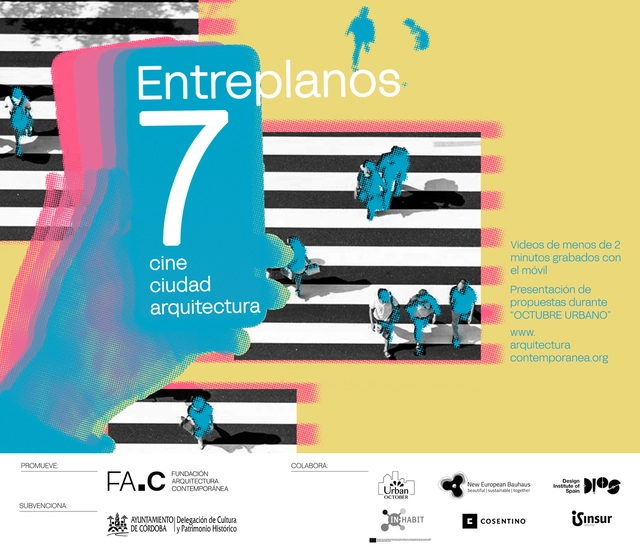
"Entreplanos: Cinema, City, Architecture" is an open-call competition for short films of up to two minutes, shot entirely on a mobile phone. Entries must address themes related to the city and architecture.
![[V!RUS JOURNAL] CALL FOR PAPERS: "A QUESTION OF METHOD" - Featured Image](https://snoopy.archdaily.com/images/archdaily/media/images/5e4b/fce4/6ee6/7e0b/9d00/080a/slideshow/open-uri20200218-531-p6vfw0.jpg?1582038235&format=webp&width=640&height=580)
The upcoming issue of V!RUS journal (www.nomads.usp.br/virus) will address the theme QUESTION OF METHOD (see the full call for papers at: https://bit.ly/2Sj5CaX). The deadline for submissions is March 10, 2020 (publication in July 2020). Articles may be submitted in Portuguese, Spanish, or English.
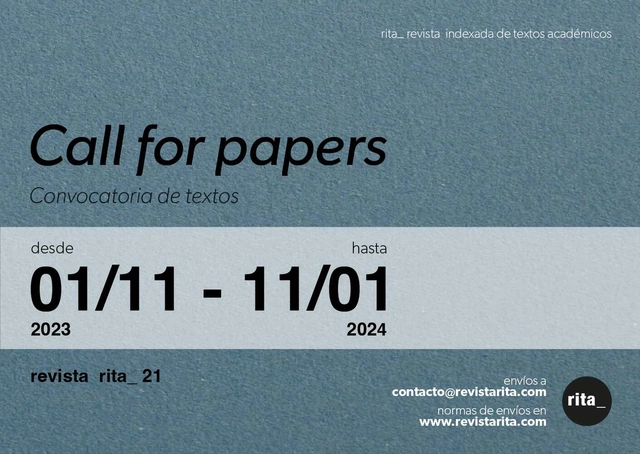
The call for academic papers for the upcoming 21st issue of rita_ journal is now open. Submissions in Spanish or Portuguese are invited from faculty, graduate students, and professionals holding a master's or doctoral degree.
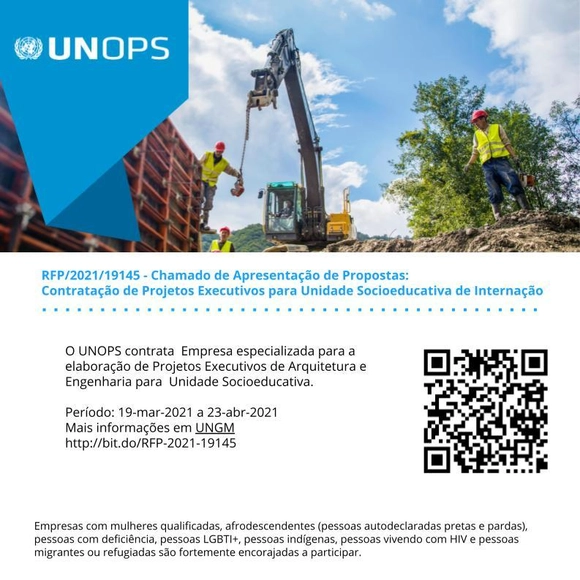
Procurement of a specialized firm for the development of executive architectural and engineering designs for a socio-educational detention facility in the municipality of Niterói, Rio de Janeiro, Brazil.

At a time when urbanization has become planetary and humanity has become a geological force capable of profoundly altering Earth's thermodynamic cycles, it is urgent to reinvent the urban way of life and rehearse other forms of coexistence between humans, animals, and plants—between cities, forests, rivers, and mountains. Furthermore, it is urgent to design, with our feet on the ground and in collaboration with the peoples and sciences of the Earth, the conditions for future habitability.