Romullo Baratto

Romullo Baratto is an architect with a PhD from FAUUSP and Managing Editor of ArchDaily. He previously coordinated the editorial team of the 11th São Paulo Architecture Biennial and served as Managing Editor of ArchDaily Brasil, where he led the platform to win the FNA Award—the first time the honor was granted to a media outlet. He collaborated on the editing of the book "Concrete Jungle", published by gestalten, and has curated architecture exhibitions in Brazil, Chile, Denmark, and Italy, as well as delivered lectures and moderated debates in Spain, the United States, and Portugal. His doctoral thesis investigates the urban landscapes of São Paulo through cinema. His work spans academic research and editorial practice, communicating architecture through texts, interviews, lectures, curatorship, and photography. Follow him on Instagram @romullobf.

BROWSE ALL FROM THIS AUTHOR HERE

"Architecture has to sing, it has to move": An Interview with Carlos Castanheira

Subscriber Access | 

No País dos Arquitectos is a podcast created by Sara Nunes, who is also responsible for the architectural film production company Building Pictures. The podcast aims to profile the professionals, projects, and stories behind leading contemporary Portuguese architecture. With just over 10 million inhabitants, Portugal is a highly fascinating country in this professional field, and its architectural production far outstrips its population or territorial scale.

In its first episode, Sara spoke with architect João Luís Carrilho da Graça about his Lisbon Cruise Terminal, and then welcomed João Mendes Ribeiro for a conversation on heritage, adaptive reuse, and landscape architecture, centered on the rehabilitation of the Coimbra Botanical Garden greenhouse. The third episode featured architect Inês Lobo and focused on the Public Library and Regional Archive of Angra do Heroísmo. Below, you can listen to and read the conversation from the fourth episode, with Carlos Castanheira about the Treetop Walk project.
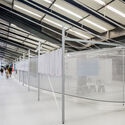
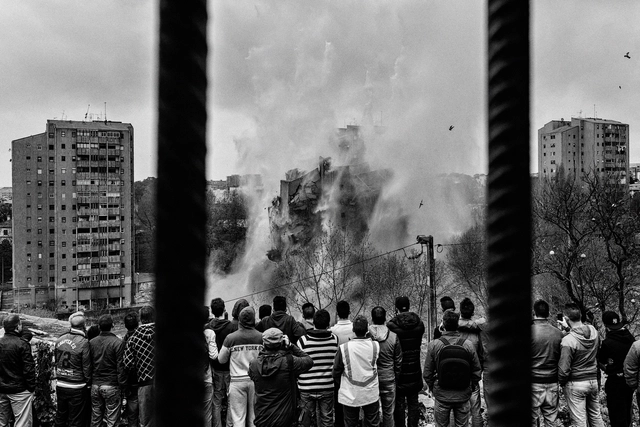
"Architecture has to sing, it has to move": An Interview with Carlos Castanheira - 1 的图像 4"Architecture has to sing, it has to move": An Interview with Carlos Castanheira - 2 的图像 4"Architecture has to sing, it has to move": An Interview with Carlos Castanheira - 3 的图像 4"Architecture has to sing, it has to move": An Interview with Carlos Castanheira - 4 的图像 4Architecture has to sing, it has to move: An Interview with Carlos Castanheira - More Images+ 9

Avant-garde as Method: Book Launch on the Soviet Vkhutemas School of Art, Design, and Architecture

On Monday, May 3rd, at 5:00 PM, the FAUUSP YouTube channel will host the launch of Anna Bokov’s book, "Avant-Garde as Method: Vkhutemas and the Pedagogy of Space, 1920-1930." The work stands as one of the most significant publications on the often-overlooked Soviet school of art, design, and architecture from 1920s Moscow. The school was the first to implement mass art and technological education, which were considered essential to the dominant modernist paradigm in the Soviet Union. Better known in the West as the sibling of the Bauhaus, Vkhutemas (Higher Art and Technical Studios) possesses a history that diverges somewhat from the German experience, which has been extensively studied by researchers worldwide. In contrast, Vkhutemas has had only one major pioneering book prior to Bokov’s, released by researcher Selim Khan-Magomedov in the 1990s.

"We understand architecture as culture": interview with Goma Oficina

Subscriber Access | 
"We understand architecture as culture": interview with Goma Oficina - Featured Image
Gife Pavilion. Photo © Rafaela Netto

Groups and collectives working on the fringes of the architectural discipline are, fortunately, increasingly common. However, few strive to expand the boundaries of the profession across as many different fronts as Goma Oficina, from São Paulo, currently composed of Ana David, André Stefanini, André Bonani, Christian Salmeron, João Wallig, Fernando Banzi, Guilherme Tanaka, Lauro Rocha, Maria Cau Levy, Paula Marujo, Victoria Braga, and Vitor Pena.

Understanding architecture as culture in its broadest sense, Goma has been working since 2010 on projects located in a loosely defined territory, characterized by transdisciplinarity and overlaps between different fields. Their most recent work includes exhibitions, books, research, debates, installations, and models spanning the areas of architecture, graphic design, photography, and art.

"We understand architecture as culture": interview with Goma Oficina - Imagen 1 de 4"We understand architecture as culture": interview with Goma Oficina - Imagen 2 de 4"We understand architecture as culture": interview with Goma Oficina - Imagen 3 de 4"We understand architecture as culture": interview with Goma Oficina - Imagen 4 de 4We understand architecture as culture: interview with Goma Oficina - More Images+ 6

Casa da Arquitectura opens an exhibition on the history of Portugal at the Venice Biennales

On May 8, Casa da Arquitectura opens the exhibition Radar Venice – Portuguese Architects at the Biennale 1975-2021, which offers a critical analysis of the many ways in which democratic Portugal exhibited and exposed itself at the world's most prestigious Architecture Biennale.

Curated by Joaquim Moreno and Alexandra Areia, Radar Venice reveals the objects that were part of each Portuguese participation and discusses the very concept of national and/or official “representation.” The documentation for each edition is complemented by socio-political information, while also highlighting the oral memory associated with the construction of the Portuguese participation. 

Des-Habitat: Publication questions the relationship between Brazilian modernism and Indigenous art

Subscriber Access | 

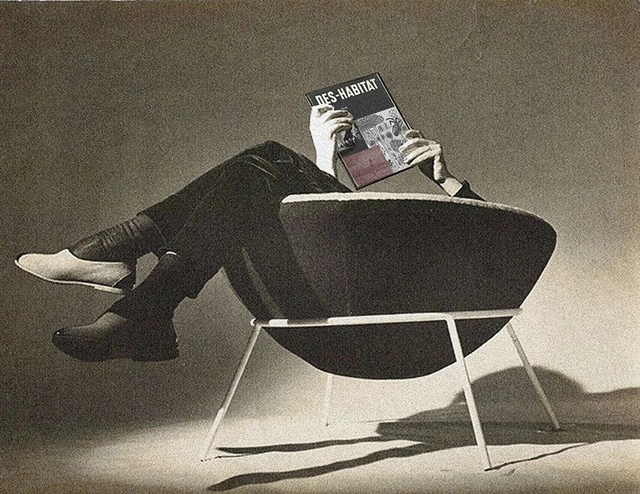
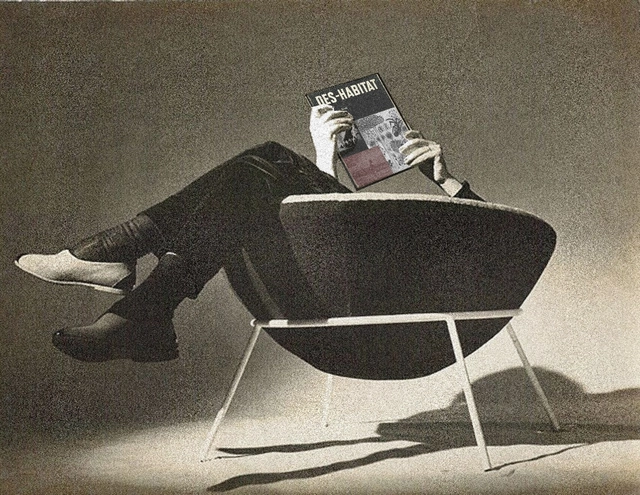
In this visual essay, Paulo Tavares intervenes in Habitat, an arts and design magazine edited by architect Lina Bo Bardi in the 1950s. Habitat disseminated not only images of modern art and architecture but also images of Indigenous artifacts. In doing so, it simultaneously presented its audience with the vocabulary of modernism and native forms of cultural expression, aligning itself with the primitivist imaginaries of the avant-garde.

By re-signifying dominant images and imaginaries, Des-Habitat guides us through a visual narrative on the coloniality of modern architecture and its media, opening a horizon for the potential decolonization of its legacies.

The recovery of seven houses affected by the Pedrógão Grande wildfire: interview with Tiago Saraiva / ateliermob

Subscriber Access | 

With the goal of getting to know the architects, projects, and stories behind landmark Portuguese architecture, Sara Nunes, from the architectural film production company Building Pictures, launched the podcast No País dos Arquitectos, where she talks with leading names in contemporary Portuguese architecture.

In this week's episode, Sara talks with Tiago de Mota Saraiva, from ateliermob, about the rebuilding of seven homes affected by the 2017 Pedrógão Grande wildfire. Catch up on previous interviews from the podcast No País dos Arquitectos and read the transcript of the interview with Saraiva below:

The recovery of seven houses affected by the Pedrógão Grande wildfire: interview with Tiago Saraiva / ateliermob - Image 1 of 4The recovery of seven houses affected by the Pedrógão Grande wildfire: interview with Tiago Saraiva / ateliermob - Image 2 of 4The recovery of seven houses affected by the Pedrógão Grande wildfire: interview with Tiago Saraiva / ateliermob - Image 3 of 4The recovery of seven houses affected by the Pedrógão Grande wildfire: interview with Tiago Saraiva / ateliermob - Image 4 of 4The recovery of seven houses affected by the Pedrógão Grande wildfire: interview with Tiago Saraiva / ateliermob - More Images+ 9

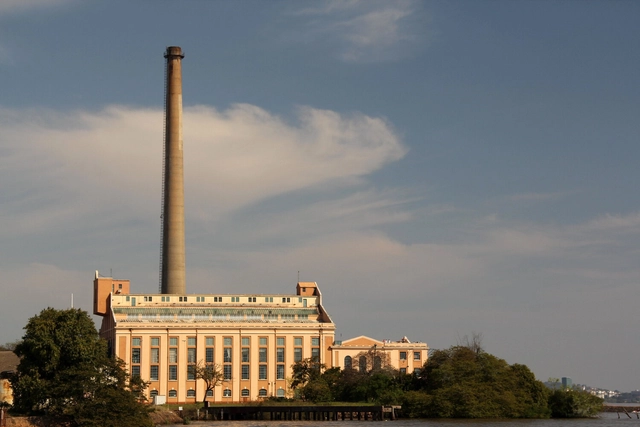
Arqpoa: Porto Alegre Gets an Online Architecture Guide

Porto Alegre now has an online guide aimed at preserving the history and memory of its architectural heritage, both historic and contemporary. Conceived by architects and urban planners Rodrigo Poltosi and Vlademir Roman, the Guia Arqpoa brings together texts, photographs, and information on 100 architectural, urban, landscape, historical, and cultural works in the city. The mapping is based on the buildings and public spaces featured in the print publication released in 2017, titled Guia de Arquitetura de Porto Alegre, and allows this initial list to be expanded through the collaboration of new contributors.

Brazilian Houses: 25 Residences Built in the Northeast Region

Subscriber Access | 

With over 56 million inhabitants spread across nine states, Brazil's Northeast region features a coastline of approximately three thousand kilometers, stretching from the Parnaíba Delta in Piauí to the south of Bahia. Internationally renowned for its beaches—which truly live up to their reputation—the region is as culturally diverse as it is geographically vast, showcasing rich cultural expressions, of which architecture is an integral part.

In this article, we celebrate the most ubiquitous of architectural typologies—the house—through examples built in the states of Alagoas, Bahia, Ceará, Pernambuco, Piauí, Rio Grande do Norte, and Sergipe. These projects demonstrate exquisite care regarding their surroundings and material choices, while also defying stereotypes and clichés often associated with architecture in northeastern Brazil. 

Brazilian Houses: 25 Residences Built in the Northeast Region - Imagen 1 de 4Brazilian Houses: 25 Residences Built in the Northeast Region - Imagen 2 de 4Brazilian Houses: 25 Residences Built in the Northeast Region - Imagen 3 de 4Brazilian Houses: 25 Residences Built in the Northeast Region - Imagen 4 de 4Brazilian Houses: 25 Residences Built in the Northeast Region - More Images+ 21

Atelier Marko Brajovic develops a project in the Amazon that explores the potential of biophilia and the fourth industrial revolution

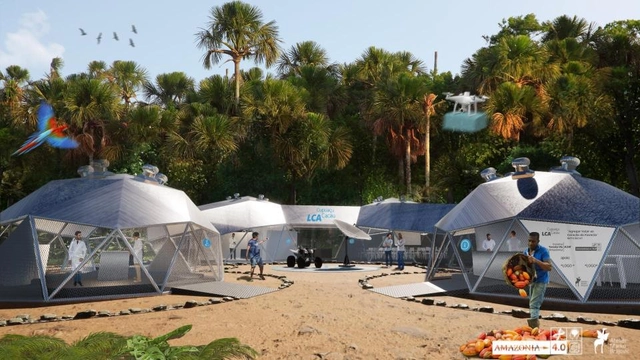
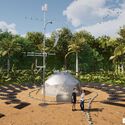
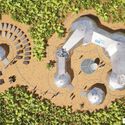
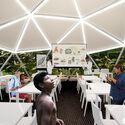
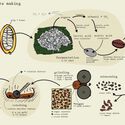
Known for projects situated at the intersection of research, design, biomimicry, and sustainability, Atelier Marko Brajovic recently developed a proposal for the Amazon Creative Laboratories, a series of biospheres composed of geodesic structures inspired by the internal geometry of the cacao fruit. The project aligns with the premises and goals of the Amazon 4.0 initiative, which aims to combine the economic potential of Amazonian socio-biodiversity with the new technologies and opportunities emerging from the Fourth Industrial Revolution.

Atelier Marko Brajovic develops a project in the Amazon that explores the potential of biophilia and the fourth industrial revolution - 1 的图像 4Atelier Marko Brajovic develops a project in the Amazon that explores the potential of biophilia and the fourth industrial revolution - 2 的图像 4Atelier Marko Brajovic develops a project in the Amazon that explores the potential of biophilia and the fourth industrial revolution - 3 的图像 4Atelier Marko Brajovic develops a project in the Amazon that explores the potential of biophilia and the fourth industrial revolution - 4 的图像 4Atelier Marko Brajovic develops a project in the Amazon that explores the potential of biophilia and the fourth industrial revolution - More Images+ 7

Ibirapuera Park demarcates areas to ensure social distancing

To provide greater safety for those wishing to enjoy nature, Urbia has marked 40 circles on the lawn of Praça da Paz in Ibirapuera Park. The concessionaire, which manages the largest park in São Paulo, adopted this measure to encourage social distancing among visitors.

Measuring approximately 4 meters in diameter, the circles were marked using organic waste from the park's own vegetation management, making them entirely sustainable. This allows visitors to remain safe within their own social distancing zones. Additionally, masks must be worn at all times while inside the park.

Rehabilitation and memory of public facilities: interview with Nuno Valentim

Subscriber Access | 

No País dos Arquitectos is a podcast created by Sara Nunes, who also runs the architectural film production company Building Pictures. The podcast aims to profile the professionals, projects, and stories behind leading contemporary Portuguese architecture. With just over 10 million inhabitants, Portugal is a fascinating country when it comes to this professional field, boasting an architectural output that punches far above its population or territorial scale.

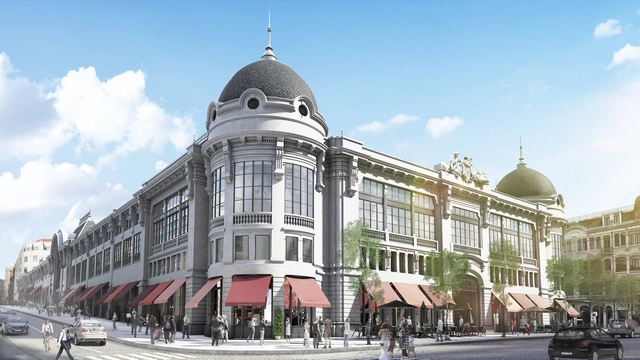
In this week's episode, Sara talks with architect Nuno Valentim about the rehabilitation of the Bolhão Market. Listen to the interview and read the transcript of the conversation below:

Rehabilitation and memory of public facilities: interview with Nuno Valentim - Imagem 1 de 4Rehabilitation and memory of public facilities: interview with Nuno Valentim - Imagem 2 de 4Rehabilitation and memory of public facilities: interview with Nuno Valentim - Imagem 3 de 4Rehabilitation and memory of public facilities: interview with Nuno Valentim - Imagem 4 de 4Rehabilitation and memory of public facilities: interview with Nuno Valentim - More Images+ 5

Results of the competition for the requalification of Bernardo Monteiro Avenue in Belo Horizonte

In 2019, to mark its founding anniversary, Belo Horizonte received a gift in the form of an architectural competition. The national contest sought preliminary technical studies for the requalification of the historic and landscape heritage of Bernardo Monteiro Avenue. 

This heritage site, characterized by a dense grove of large, leafy Ficus trees, was affected by infestations of the so-called "ficus whitefly." This caused defoliation and dried branches, severely compromising many of the trees, damaging the area's historical-cultural identity and public character, and forcing the relocation of the craft, flower, food, and antique markets that once operated there.

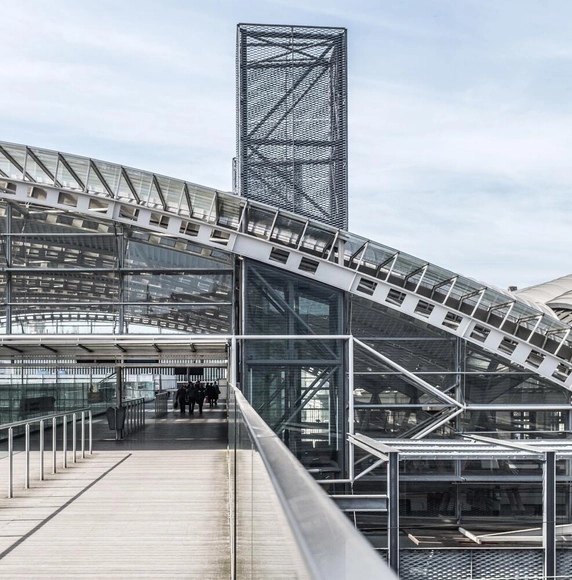
Transportation and Large-Scale Infrastructure: Interview with Nuno Brandão Costa

Subscriber Access | 

With the goal of introducing the architects, projects, and stories behind landmark Portuguese architecture, Sara Nunes, from the architectural film production company Building Pictures, launched the podcast No País dos Arquitectos, where she talks with leading figures of contemporary Portuguese architecture.

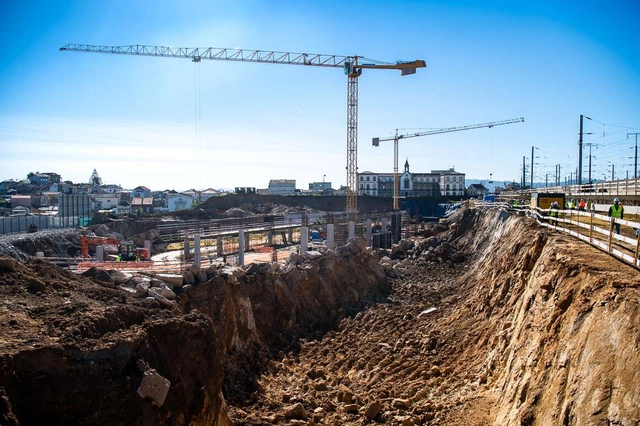
In this week's episode, Sara talks with Nuno Brandão Costa about the Campanhã Intermodal Terminal project in Porto. You can catch up on other interviews from the No País dos Arquitectos podcast and read the transcript of the interview with Costa below:

Modernity and Colonialism: Interview with Paulo Tavares on "Des-Habitat" Magazine

Subscriber Access | 

Between the 1950s and 1960s, Lina Bo Bardi was the editor of Habitat magazine, known for publishing articles and research on the cultural and artistic expressions of Indigenous peoples. The publication, which remained in circulation until 1965, was a pioneer of the synthesis between universal modernism and local primitivism—a central element in the mythology of Brazilian modernity. Nearly six decades later, architect and curator Paulo Tavares undertakes a sort of "un-editing" of the magazine, putting this notion of synthesis into perspective in light of contemporary debates exploring the intersection of modernity and colonialism. Recently published by n-1 edições, Des-Habitat utilizes graphic and editorial devices to create a near-facsimile of the original publication led by Bo Bardi, overlaying a new layer—critical, revisionist, and necessary—onto a discussion that continues to reveal new ramifications.

Bodies, Cinema, and Space: See the Full Program for the Arquiteturas Film Festival

Following the themes of previous editions that addressed contemporary issues concerning the built environment, the Arquiteturas Film Festival, taking place from June 1 to 6 in Lisbon, continues to offer an open forum for discussion through personal, collective, and global audiovisual stories from around the world.

The 8th edition of Arquiteturas explores the theme Bodies Out of Space through an exploration of the social construction of space, connected by a thread running through narratives of domination. These are also narratives about an identity that is often stripped away or forced to represent our bodies. Challenging current assumptions, we view this perceptual paradigm—an epitome of the vision of our times—as fundamentally social, spatial, and bodily.

Bodies, Cinema, and Space: See the Full Program for the Arquiteturas Film Festival - Image 1 of 4Bodies, Cinema, and Space: See the Full Program for the Arquiteturas Film Festival - Image 2 of 4Bodies, Cinema, and Space: See the Full Program for the Arquiteturas Film Festival - Image 3 of 4Bodies, Cinema, and Space: See the Full Program for the Arquiteturas Film Festival - Image 4 of 4Bodies, Cinema, and Space: See the Full Program for the Arquiteturas Film Festival - More Images+ 3

Experimentation and Collaboration in Architecture: Interview with Cristina Veríssimo and Diogo Burnay

Subscriber Access | 

No País dos Arquitectos é um podcast criado por Sara Nunes, responsável também pela produtora de filmes de arquitetura Building Pictures, que tem como objetivo conhecer os profissionais, os projetos e as histórias por trás da arquitetura portuguesa contemporânea de referência. Com pouco mais de 10 milhões de habitantes, Portugal é um país muito instigante em relação a este campo profissional, e sua produção arquitetônica não faz jus à escala populacional ou territorial.

No episódio desta semana, Sara conversa com os arquitetos Cristina Veríssimo e Diogo Burnay sobre o projeto da Residência Universitária do campus da Ajuda na Universidade de Lisboa. Ouça a entrevista e leia a transcrição da conversa, a seguir:

Experimentation and Collaboration in Architecture: Interview with Cristina Veríssimo and Diogo Burnay - More Images+ 3

Brazilian Steel Construction Center launches call for Scientific Initiation grants

The Brazilian Center for Steel Construction (CBCA) has launched its 2021 call for proposals for its Undergraduate Research Scholarship. The nationwide selection process is open to undergraduate students in architecture and civil engineering, who must be supported by an advising professor from the same higher education institution.

Ricardo Bak Gordon talks about the Coach Museum, designed with Paulo Mendes da Rocha and MMBB

Subscriber Access | 

No País dos Arquitectos is a podcast created by Sara Nunes, who also runs the architectural film production company Building Pictures. The podcast aims to showcase the professionals, projects, and stories behind landmark contemporary Portuguese architecture. With just over 10 million inhabitants, Portugal is a highly compelling country in this professional field, and its architectural output far exceeds what its population or territorial scale would suggest.

In this week's episode, Sara talks with architect Ricardo Bak Gordon about the design of the National Coach Museum in Lisbon, developed in partnership with Paulo Mendes da Rocha and the office MMBB Arquitetos. Listen to the interview and read the transcript of the conversation below:

Ricardo Bak Gordon talks about the Coach Museum, designed with Paulo Mendes da Rocha and MMBB - Imagem 1 de 4Ricardo Bak Gordon talks about the Coach Museum, designed with Paulo Mendes da Rocha and MMBB - Imagem 2 de 4Ricardo Bak Gordon talks about the Coach Museum, designed with Paulo Mendes da Rocha and MMBB - Imagem 3 de 4Ricardo Bak Gordon talks about the Coach Museum, designed with Paulo Mendes da Rocha and MMBB - Imagem 4 de 4Ricardo Bak Gordon talks about the Coach Museum, designed with Paulo Mendes da Rocha and MMBB - More Images+ 4