This research originated within the Scuola di Dottorato Iuav, following the interests established by the Architectural Composition curriculum by interpreting the work through the lenses of innovation, tradition, and reconstruction. The study examines the work of Peruvian architect Juvenal Baracco, specifically his project for the Peruvian Air Force Officers' School (1981–1984) in Lima, by deconstructing the architectural elements and analyzing their specific characteristics in depth.
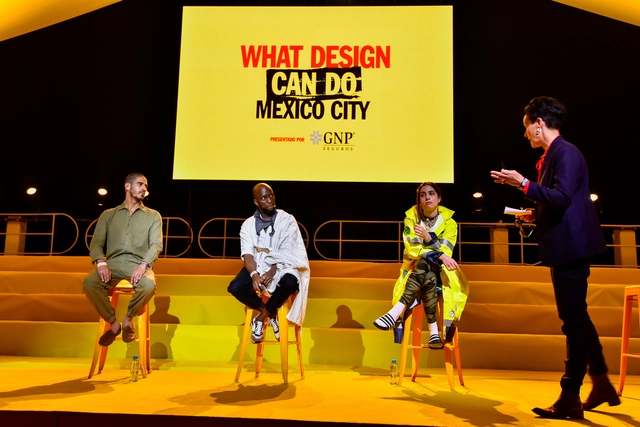
The second edition of the What Design Can Do festival in Mexico City at the Ángela Peralta (open-air) theater is almost here! Join the global community of creatives who are moving the world on October 28th and 29th.
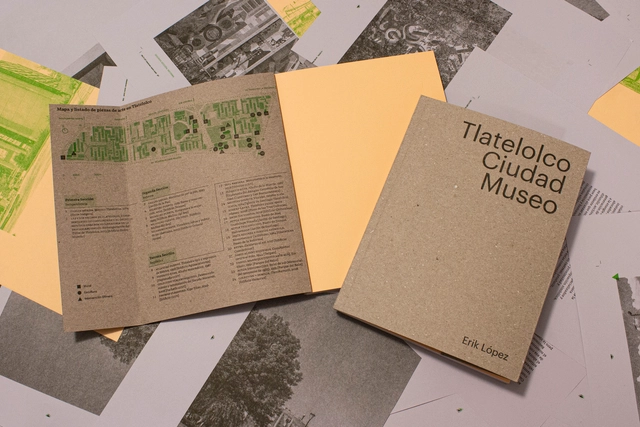
"Tlatelolco Ciudad Museo" is a project of photography, experimental museography, and shared memory that showcases the cultural, social, architectural, and historical diversity of the Nonoalco-Tlatelolco Urban Complex through the art pieces that exist—and have existed—within it.
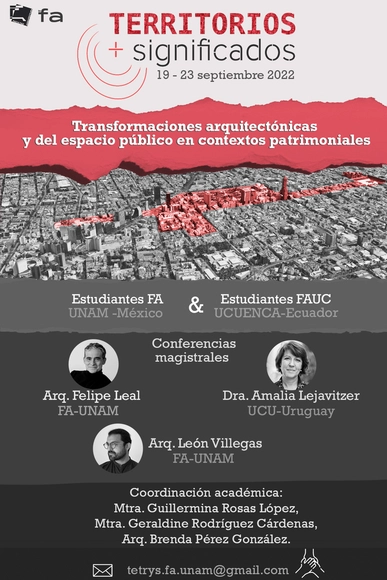
Guillermina Rosas López, Geraldine Rodríguez Cárdenas, and Brenda Pérez González
Participating institutions: Faculty of Architecture, UNAM; Faculty of Architecture and Urbanism of the University of Cuenca, Ecuador; Department of Humanities and Communication of the Catholic University of Uruguay; and the Franz Mayer Museum in the Historic Center of Mexico City. The international workshop is coordinated by academics Guillermina Rosas López, Geraldine Rodríguez Cárdenas, and Brenda Pérez González.
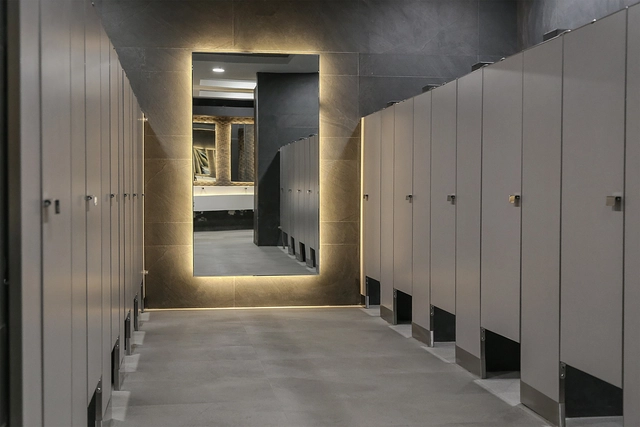
SANILOCK®, a Mexican company dedicated to the design, manufacture, sale, and installation of restroom partitions for non-residential buildings, is celebrating 35 years in the market. Since 1987, the company has provided a new and stronger architectural design for public restroom partitions.
When specifying materials for projects, the thermal insulation level of windows is essential to ensure comfort inside buildings. A key challenge lies in balancing thickness with performance, as thin monolithic glass offers low thermal insulation, while highly efficient insulated glass is often too thick.
The company Vitro Architectural Glass has recently launched VacuMax™ Vacuum Insulating Glass (VIG), a high-performance glass consisting of two 4 mm tempered glass panes, including a Solarban® 60 solar control low-e coating on surface #2. By using a vacuum space for separation, high-performance thermal glazing is achieved in a thickness of just 8.3 mm.
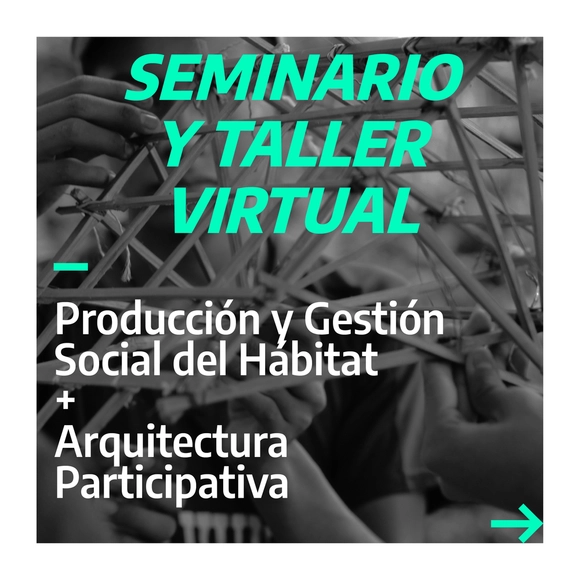
At Comunal, we believe it is essential to engage in dialogue, exchange ideas, and reflect critically on how we produce our habitat, while recognizing participation as both a collective right and an ethical-political stance.
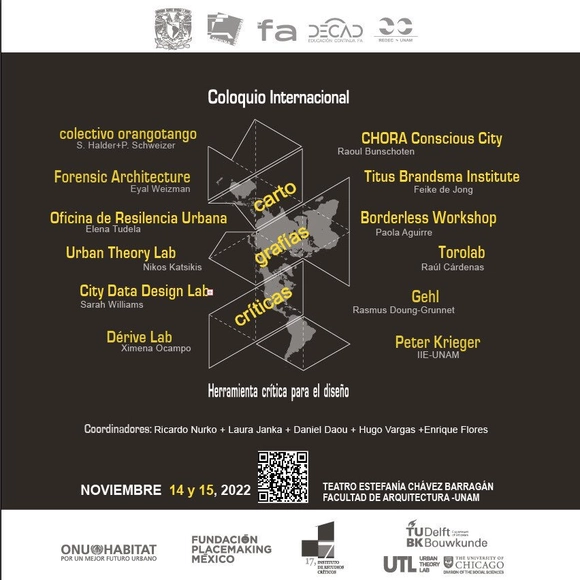
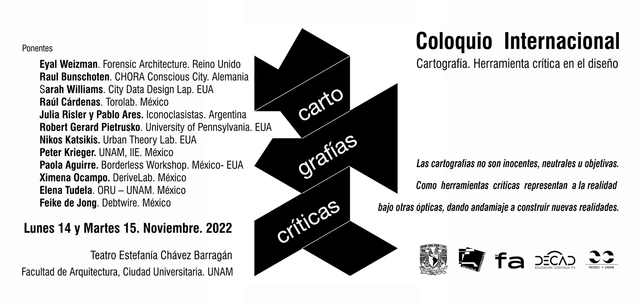
The International Colloquium: Cartography, a Critical Tool for Design, brings together internationally renowned speakers in critical cartography from various disciplines to present diverse perspectives and visions of mapping. The event is structured around three interrelated themes: creative mapping, descriptive mapping, and critical mapping. The first segment explores various approaches to mapping through innovative processes and methodologies in critical cartography; the second group analyzes cartography as an intersubjective and interdisciplinary medium in the current Anthropocene era; finally, the third group presents counter-mapping, participatory cartographies, and spatial practices as critical processes aimed at highlighting and emancipating other realities.
We live in a world immersed in images and their representations. We carry devices that show us the world in real time and locate us through our movements and desires with every application we navigate. In a world saturated with data, yet simultaneously filled with increasingly complex concrete realities, critical cartography reveals new visions and versions of the world we inhabit. It constructs an alternative atlas of ongoing and projective dynamics, challenging us to consider what spaces we are designing in the face of complex challenges across different spatial scales—climate change, violence, migration, extraction, and financial flows. Critical cartography is concerned with crossing, analyzing, and synthesizing data to make information more accessible and intelligible; manifesting complex systems where the human element is not the only priority, thus allowing us to think about nature on a different scale; and mediating participatory processes to visualize and measure social conflicts and inequalities within their spatial context. Maps are not innocent, neutral, or objective. As critical tools, they present—and represent—the planet through different lenses, providing a framework to intervene in and construct new worlds. As we participate in the construction and production of the spaces we inhabit, architects, urbanists, landscape architects, and designers find that critical cartography reveals different narratives and descriptions to us. This raises the following questions: What role has mapping and cartography played in the construction of social space? How do critical cartographies influence us as producers of the spaces we inhabit? How can we leverage critical cartography as a design tool to understand, interpret, and project space? The Faculty of Architecture at the National Autonomous University of Mexico (UNAM) invites you to the colloquium "Cartography: A Critical Tool for Design," where these questions will be addressed through the presentation of various approaches to emerging cartographies. The event will showcase work from diverse actors involved in mapping and cartography through their research, practical methodologies, and field experiences in mapping processes, iconographic design, and atlas development. Discussions will range from big data analysis to participatory cartography; from methods based on geographic information systems to entirely analog explorations; and from everyday urban narratives to speculations on new utopias. The presentations are aimed at professionals, faculty, and students involved in the design and production of the urban and social spaces we inhabit, with the goal of exploring cartography and the mapping process as a critical tool for design.
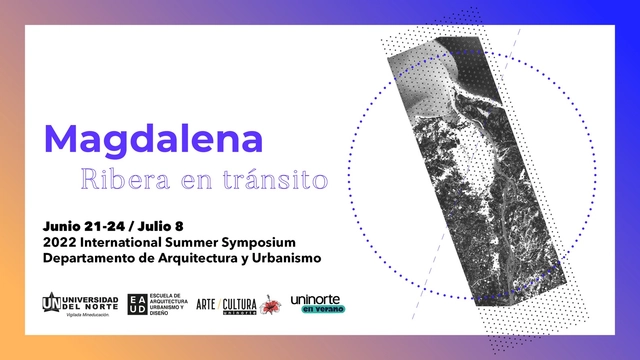
How do we reinterpret cultural relationships with water and the city? What is the importance of biodiversity and birdlife during moments of habitat change? How do we connect history—past, present, and future visions—to rethink our interactions with the Magdalena River basin? How are culture, art, and identity key to understanding our amphibious relationship? These are some of the questions that will be addressed at the first international symposium, Magdalena - Ribera en tránsito (Magdalena - Riverbank in Transit), which will take place from June 21 to 24 and on July 8 at the Universidad del Norte in Barranquilla, Colombia.
The most important real estate event in Mexico and Latin America
As part of the 30th anniversary of the Association of Real Estate Developers (ADI)—which has established itself as the leading voice in the sector and solidified real estate as a key economic engine for the country—and following two years of a pandemic that posed an enormous challenge to the industry, ADI is celebrating a new edition of its Real Estate Development Expo: The Real Estate Show 2022. Commitment to Mexico's progress.
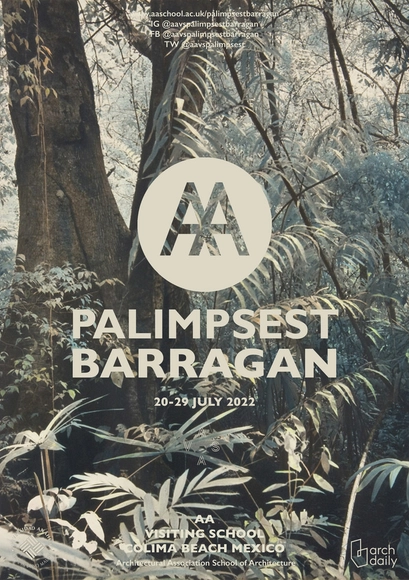
‘Palimpsest Barragan’ offers a unique opportunity to engage closely with a 20th-century modernist architectural masterpiece by Luis Barragán. As a hidden and still unrecognized gem nestled in a paradisiacal jungle on the Pacific coast, the ruins of this unfinished building have faded into obscurity. Much like Mexico’s pre-Hispanic pyramids, the site is currently in a state of progressive decay. The workshop will not only ‘unearth’ the project and finally place it on the map of architectural discourse, but it may have an even greater impact by initiating a debate surrounding the preservation of the disintegrating ruin.
“The only way of discovering the limits of the possible is to venture a little way past them into the impossible,” says Arthur Charles Clarke.
Knowledge inspires others. Sharing it allows us to open up and connect with one another. Facilitating this exchange fosters empathy and an awareness of otherness. This activity aims to integrate the team through knowledge and strengthen academic synergies by cultivating an awareness of otherness and a respect for the expertise of others.
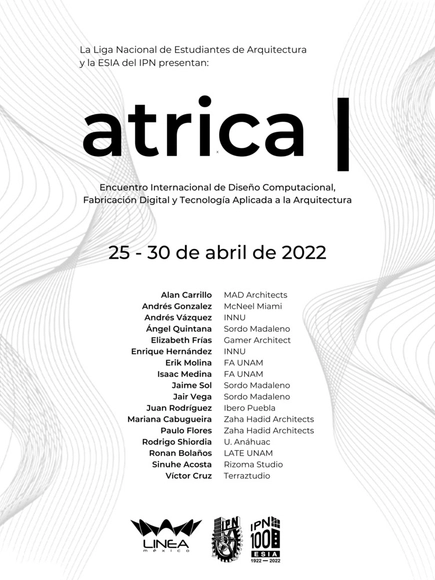
The National League of Architecture Students (LINEA Mexico) and the Higher School of Engineering and Architecture present the 2022 edition of the International Meeting on Computational Design, Digital Fabrication, and Technology Applied to Architecture, better known as Atrica. The event will take place from April 25 to 29, 2022, at ESIA Tecamachalco in Mexico.
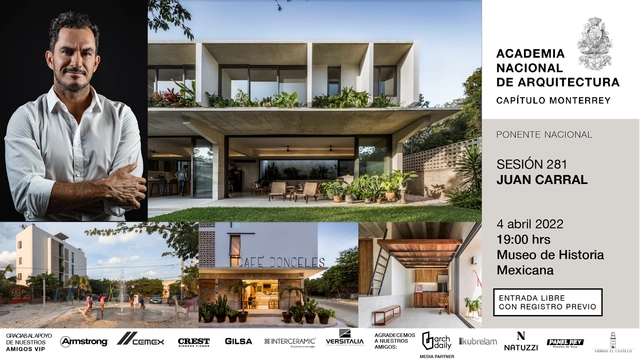
After two years of using the Zoom format, we are pleased to return to the in-person sessions of the National Academy of Architecture, Monterrey Chapter, at the Museo de Historia Mexicana, which we have traditionally held on the first Monday of every month since 1995. On this occasion, our guest speaker is architect Juan Carral O'Gorman, who is visiting us from Quintana Roo.